Seoul
South Korea · East Asia
Korea’s capital of Joseon palaces, hanok lanes and a Michelin-starred Gangnam, with hotels from Gwanghwamun to the 101st floor of Lotte World Tower.
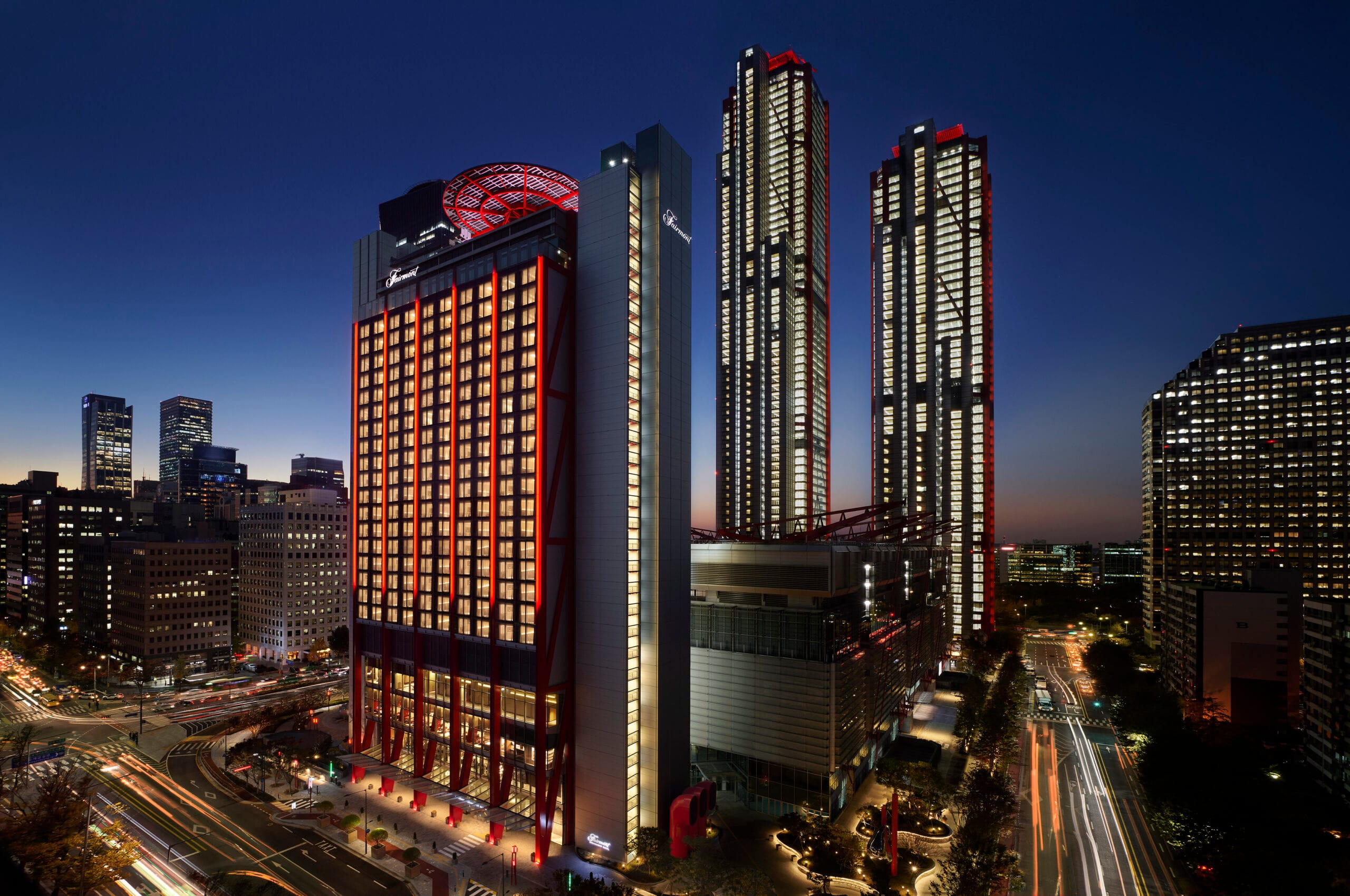
Photo: Fairmont Ambassador Seoul
Why visit
Why visit Seoul
Seoul’s distinction is the speed with which it moves between registers. In the morning, Changdeokgung, inscribed by UNESCO in 1997, was rebuilt after the Japanese invasions of the late sixteenth century and served for about 250 years as the dynasty’s main seat. Its rear garden, the Huwon or Secret Garden, with its lotus pool, pavilions and some 56,000 specimens of trees and plants, can be seen only on a guided tour. By evening you can be in a Hannam gallery or a Seongsu café, in a district of converted industrial warehouses that has few tourists.
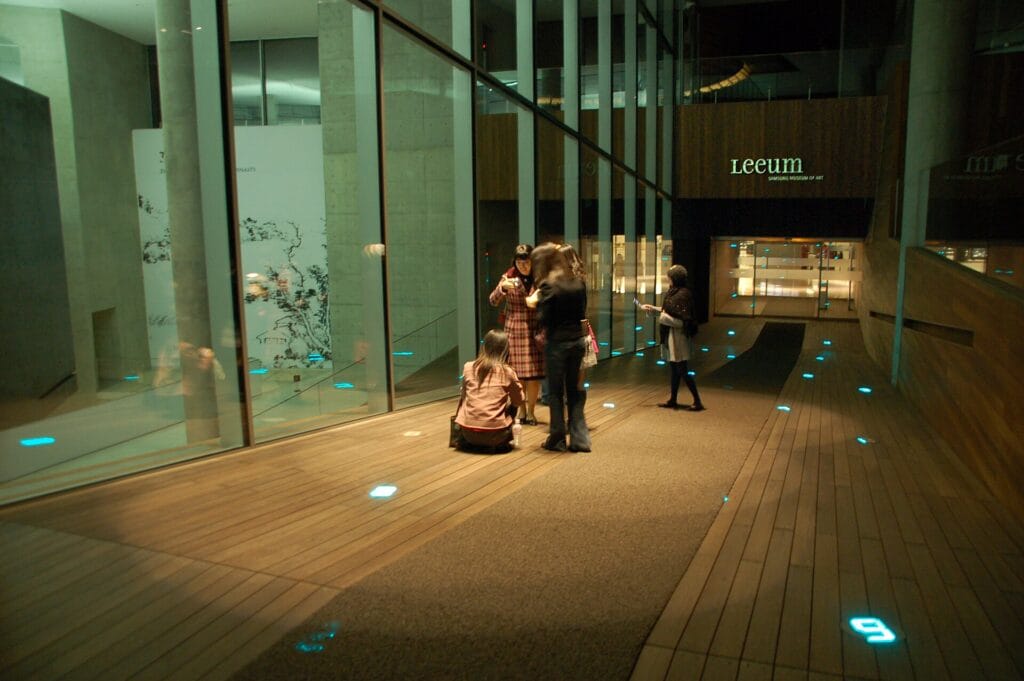
The city is also a serious place for contemporary architecture. Zaha Hadid’s Dongdaemun Design Plaza is a sculptural civic space; the Leeum Museum, in Itaewon, gathers three buildings by Mario Botta, Jean Nouvel and Rem Koolhaas around a sculpture garden; and KPF’s Lotte World Tower, at 555 metres, is Seoul’s first super-tall. In Cheongdam and Apgujeong, fashion houses have commissioned buildings by Christian de Portzamparc, David Chipperfield, Kengo Kuma and others.
And the food is a reason in itself. It begins from jang, kimchi and fermented pastes and extends to a fine-dining scene that has expanded rapidly since the first Michelin guide in 2017.
Explore
What to see
Start with the palaces. Gyeongbokgung, dating to 1395, is the grandest of Seoul’s five Joseon-era palaces; wearing a hanbok gets you free entry, and the guard-changing ceremony takes place several times a day. It is closed on Tuesdays. Changdeokgung’s Secret Garden adds about an hour on a guided tour, and slots fill quickly, so book ahead. Bukchon Hanok Village is a hillside of traditional wooden houses between the two palaces, and it is residential, so go early on a weekday and keep your voice down.
Insadong has galleries, calligraphy shops and teahouses, and nearby Ikseon-dong is a small hanok alley of trendy cafés and restaurants. The Museum of Modern and Contemporary Art, on Samcheong-ro near Gyeongbokgung, is mostly underground and keeps to a human scale, with a public path through courtyards and historic buildings; Kukje Gallery 3, by SO-IL, is a white volume wrapped in metal fabric nearby.
For markets, Gwangjang, the city’s oldest traditional market, is best at a late lunch; at Noryangjin Fish Market you choose live seafood from tanks and have it cooked upstairs. A good day trip is the DMZ, about 50 kilometres north of Seoul, with the Joint Security Area booked through an authorised tour operator. A day-by-day guide to Seoul’s palaces, city wall and museums shows how to put it together.
Hotels
Where to stay in Seoul
The district sets the tone of a stay. Gwanghwamun puts you beside the palaces and the old city; Namsan is hillside, quiet and close to Itaewon and Hannam; Gangnam is for fashion, restaurants and business; Yeouido is the financial island; and Jamsil, in the south-east, is the high-rise end.
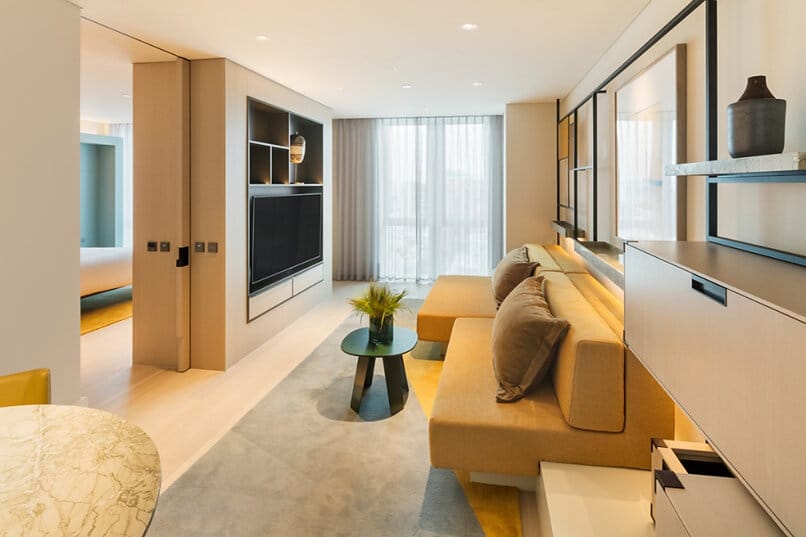 Andaz · Apgujeong, GangnamAndaz Seoul GangnamAndaz Seoul Gangnam stands on the site of KT's old Sinsa branch in Apgujeong, telephone-exchange land from the company's state-owned years, with interiors by Studio Piet Boon that take their geometry from the Korean wrapping cloth.Explore →
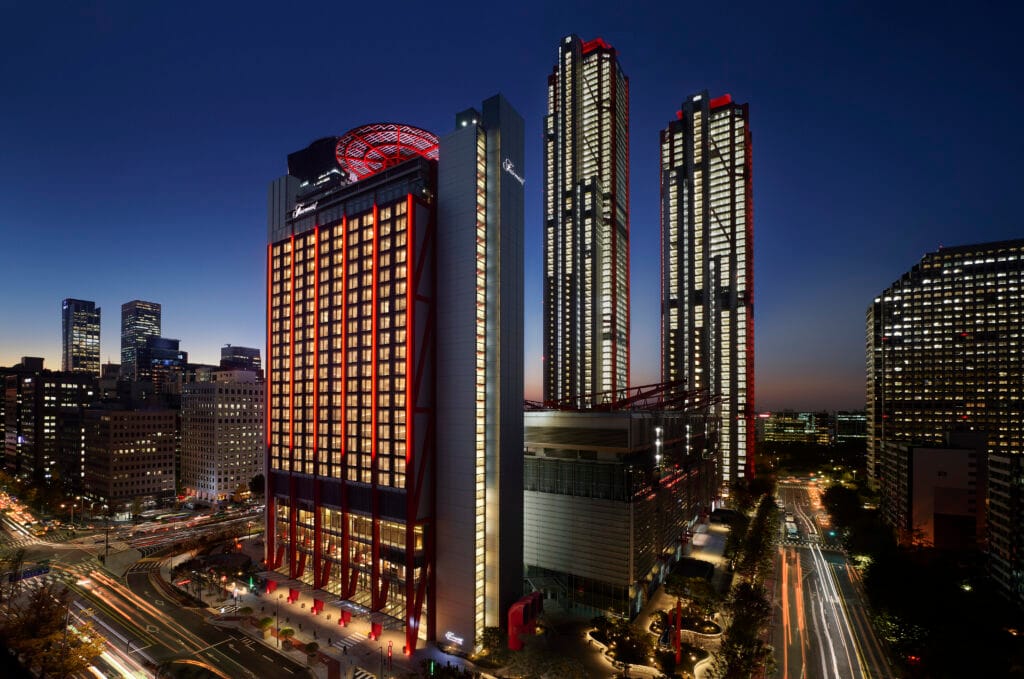 Fairmont · YeouidoFairmont Ambassador SeoulFairmont Ambassador Seoul is the hotel end of Parc.1 on Yeouido, a complex stalled for years by a court fight over church-owned land, and built inside the red steel frame of Richard Rogers's practice.Explore →
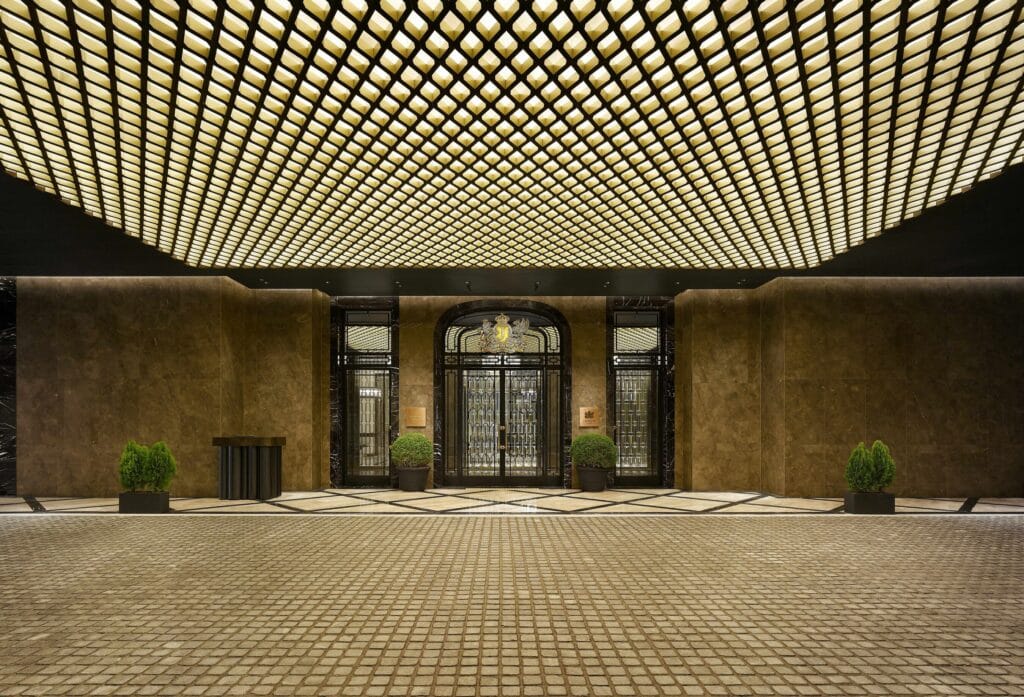 The Luxury Collection · GangnamJosun Palace, a Luxury Collection Hotel, Seoul GangnamJosun Palace takes its name and crown from a hotel of 1914 that stood on royal ground across the Han, and puts them in a Gangnam office tower on the site of the old Renaissance Hotel.Explore →
Dining
Where to eat in Seoul
Seoul’s fine-dining scene has grown faster than almost any in Asia. The guide’s 2026 edition counts 178 selected restaurants in Seoul, and the number of starred restaurants in Korea has risen from 24 in 2017 to 40 by 2025. Mingles, Kang Min-goo’s Korean fine-dining restaurant in Cheongdam-dong, is the only three-star restaurant in the guide. Mosu, Ahn Sung-jae’s restaurant, returned with two stars after a 14-month hiatus and a reopening in Itaewon, and Sosuheon also holds two. Stars change every year, so check the current guide.
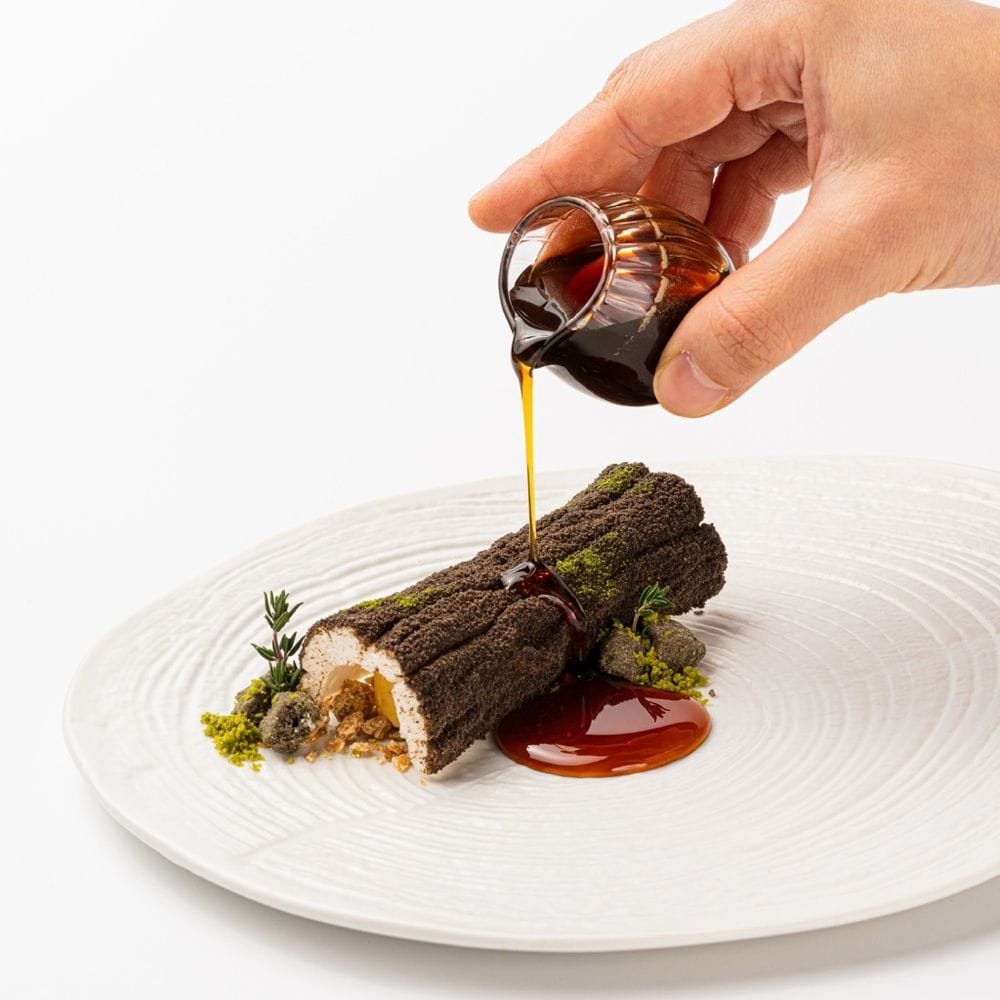 Contemporary · Cheongdam-dong, Gangnam-guJungsikYim Jung-sik's contemporary Korean cooking in Gangnam; two Michelin stars.Explore →
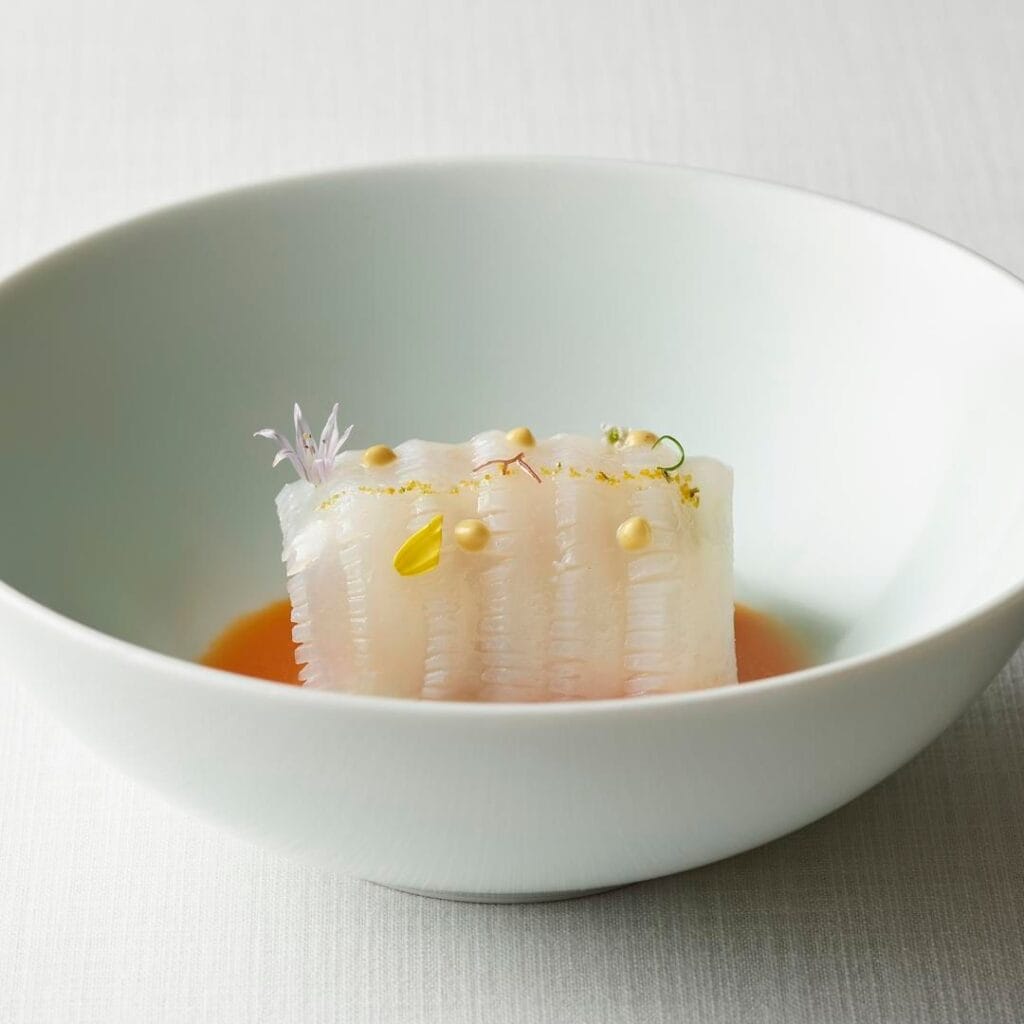 Korean · Jangchung-dong, Jung-guLa Yeon at The Shilla SeoulThe Shilla Seoul's Korean restaurant, updating classical dishes with a light touch; two Michelin stars.Explore →
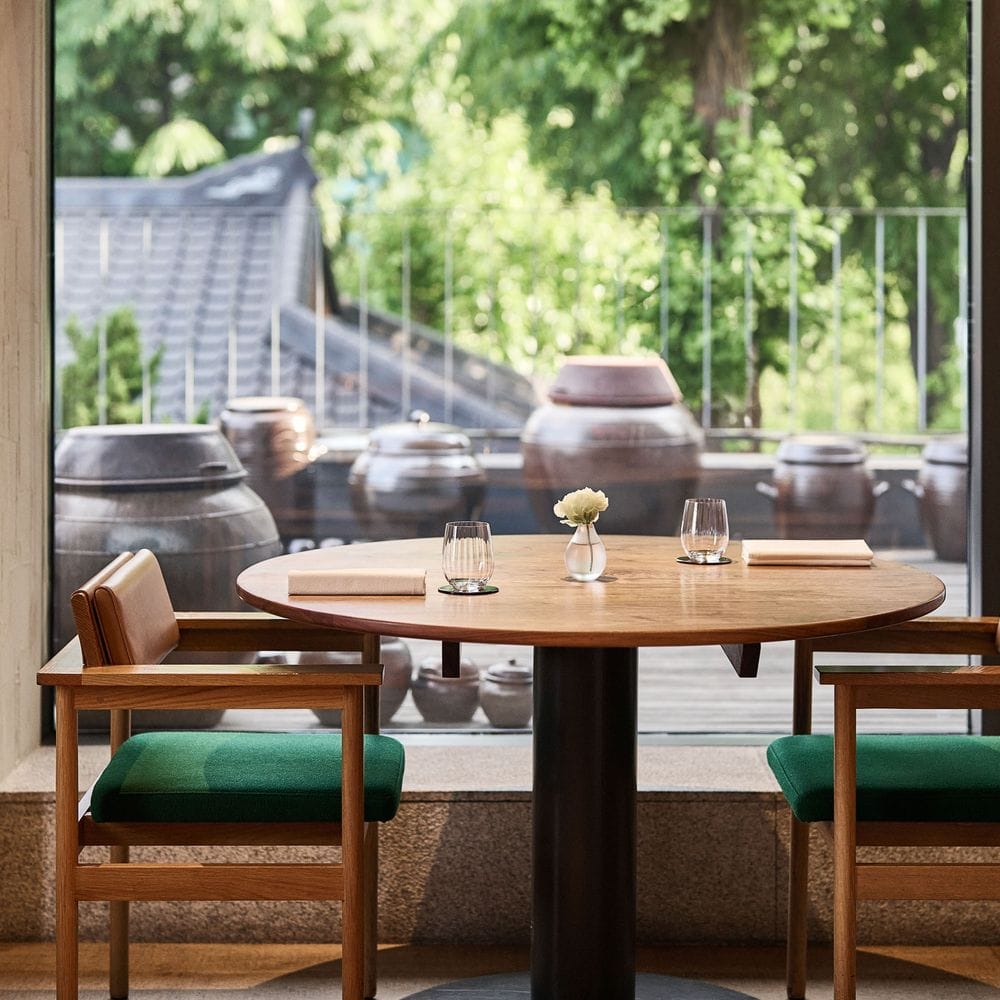 Contemporary · Cheongdam-dong, Gangnam-guMinglesMingoo Kang's modern Korean tasting menu built on fermented jang; three Michelin stars.Explore →
Experiences
Experiences in Seoul
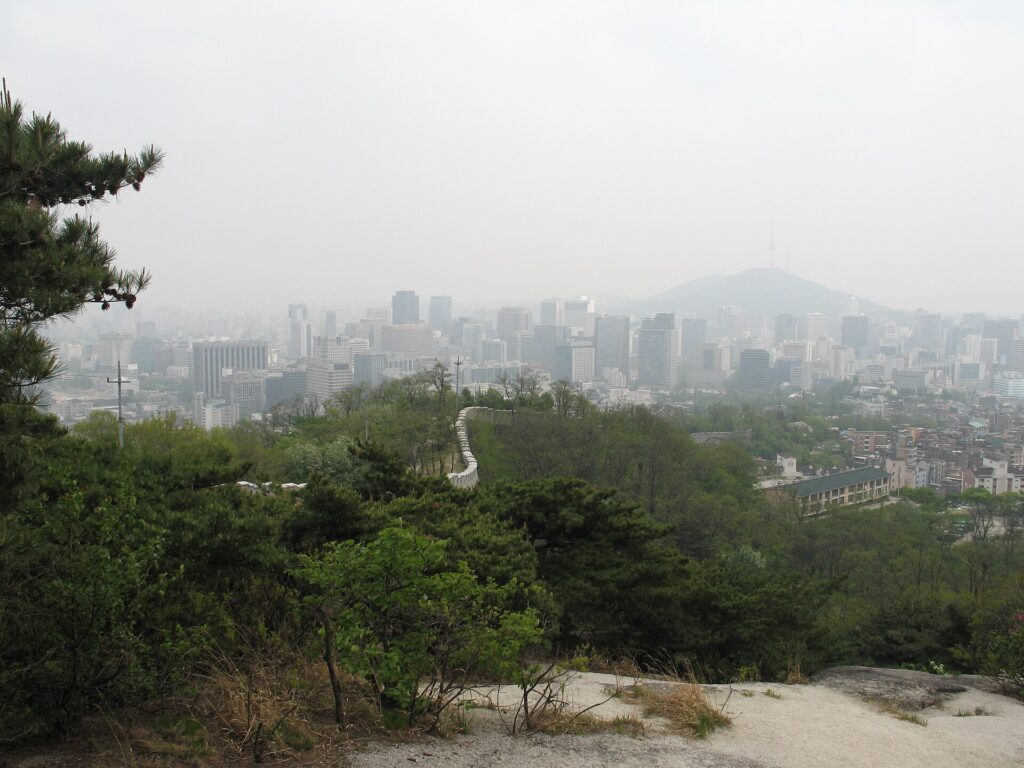 TrekWalk the Seoul city wall over Inwangsan and BaegakA day on the two highest sections of Seoul's Joseon city wall, across the granite ridges behind the royal palaces.Explore →
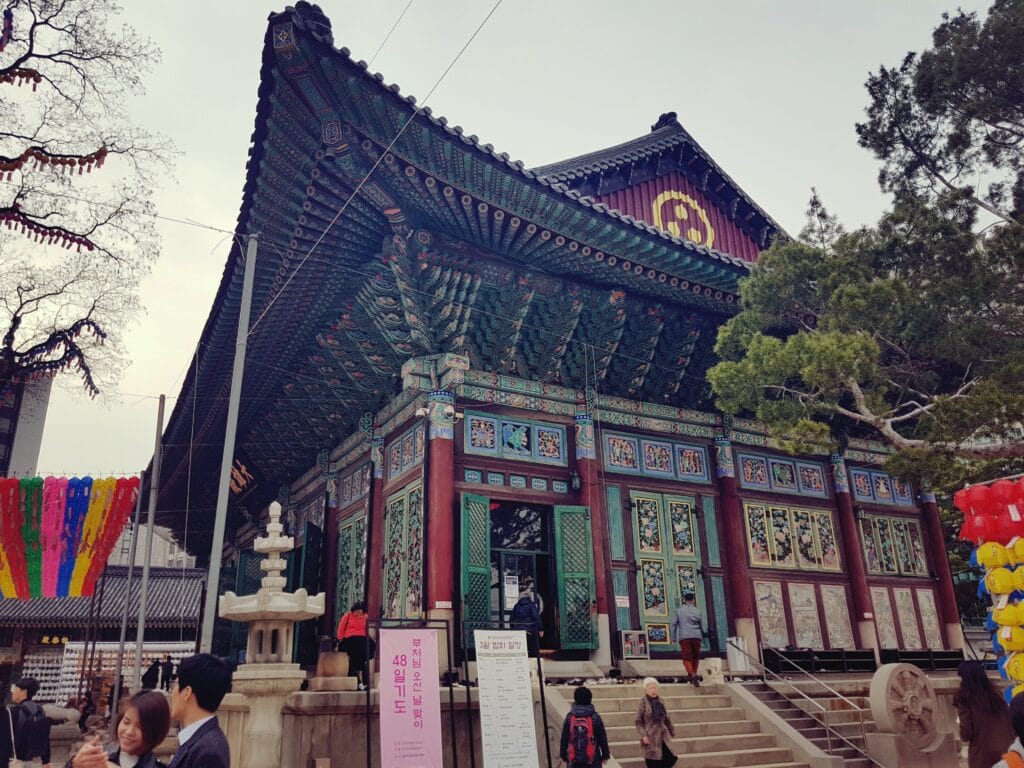 SpiritualSpend the night in a Buddhist temple in KoreaKorea’s Templestay programme opens working monasteries to overnight guests. The day follows the monastic one: chanting before dawn, meals eaten in silence, meditation, tea with a monk.Explore →
The Journal
Latest on Seoul
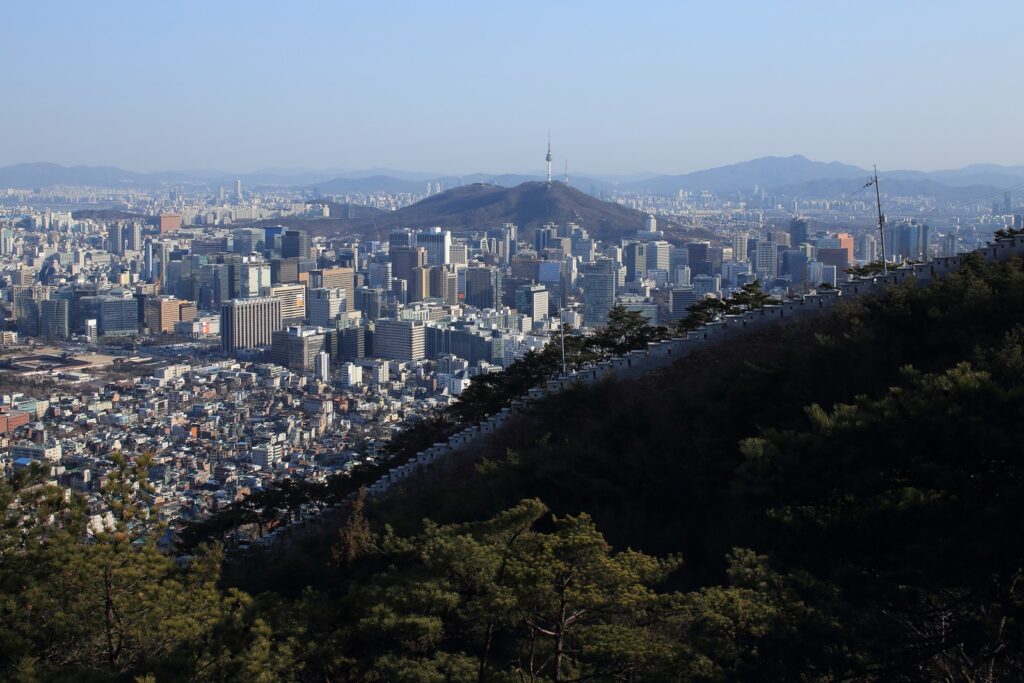 TravelHanyangdoseong: Walking the City Wall of Seoul4 October 2026
- Seoul’s Flagship Street: Gehry, Portzamparc and Dumas Compared
- The National Museum of Korea: What to See in Two Hours
- Frieze Seoul Closes Its Fifth Edition and Prepares to Move
- Michelin Guide Seoul & Busan 2026: Mosu Returns With Two Stars
- Four Seasons Hotel Seoul Partners with Sulwhasoo on K-Beauty Stays
Before you go
Practical information
Best time to visit
Spring (April to May) and autumn (September to October) are the best seasons. Spring brings cherry blossom but is busy; summer is hot and humid, with monsoon rains especially in July; autumn has cool weather and strong foliage; and winter is cold, dry and less crowded.
Getting around
Incheon Airport is about 60 kilometres from central Seoul. The AREX Express runs direct to Seoul Station in about 43 minutes, and the airport limousine bus serves areas including Myeongdong, Hongdae and Gangnam, sometimes dropping you closer to your hotel. A T-money card works on the AREX, the subway and most buses.
Read more
The subway runs on more than twenty lines, roughly from 5.30am to midnight, with English signage as standard. Taxis are plentiful, and Kakao T is the way to book; Orange taxis are standard and black taxis premium. Use Naver Map or Kakao Map for directions, as Google Maps is of limited use in Korea, and note that Grab does not operate here.
Practical notes
Gyeongbokgung is closed on Tuesdays, and the Changdeokgung garden needs a guided tour. Cards are accepted almost everywhere, though carry won for markets and small vendors; tipping is not customary.
Continue exploring
More from South Korea
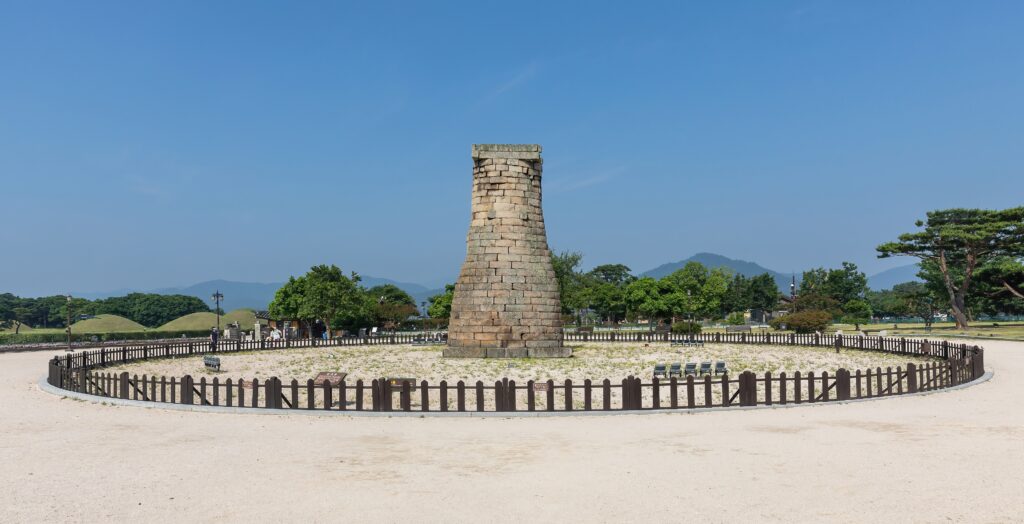 South KoreaGyeongjuThe old capital of Silla: royal tombs, Asia's oldest surviving observatory, Bulguksa and Seokguram, and two lakeside hotels at Bomun Lake.Explore Gyeongju →
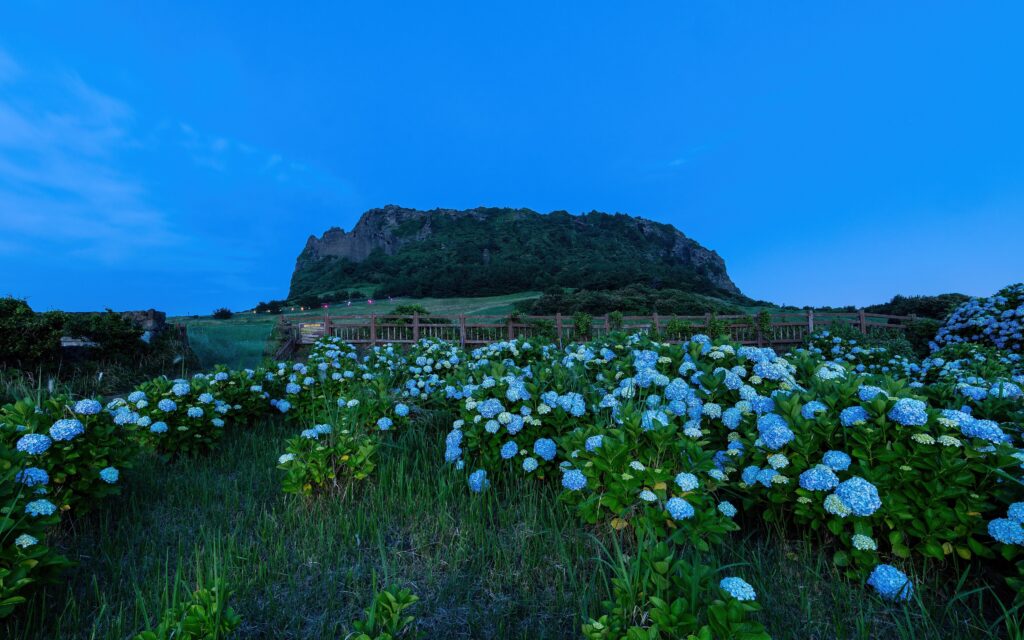 South KoreaJejuKorea's volcanic island: Hallasan, UNESCO lava tubes and the Seongsan tuff cone, the haenyeo divers, the Olle coastal trail and two large resorts.Explore Jeju →South KoreaBusanSouth Korea's second city and largest port, on the south-east tip of the peninsula, with a beach district of towers and a growing MICHELIN Guide scene.Explore Busan →