Experience · Spiritual · Seoul
Spend the night in a Buddhist temple in Korea
Korea’s Templestay programme opens working monasteries to overnight guests. The day follows the monastic one: chanting before dawn, meals eaten in silence, meditation, tea with a monk.
Templestay opened to international visitors in 2002, around the football World Cup, as a way of sharing Korean traditional culture. It is run by the Cultural Corps of Korean Buddhism, part of the Jogye Order, and has grown into a nationwide network: in a 2018 release the organisation counted about 130 participating temples. The idea has not changed: you do not visit a temple, you follow its day.
What the day looks like
Programmes vary by temple, but the elements are consistent. There is a tour and orientation, sessions of Seon meditation, tea with a monk, and yebul, the chanting ceremony held before dawn, mid-morning and in the evening. Meals are balwoo gongyang, eaten mindfully from traditional bowls. Many programmes include bowing practice, including the 108 prostrations. Some add cultural activities such as lantern-making or woodblock printing.
Choosing a format
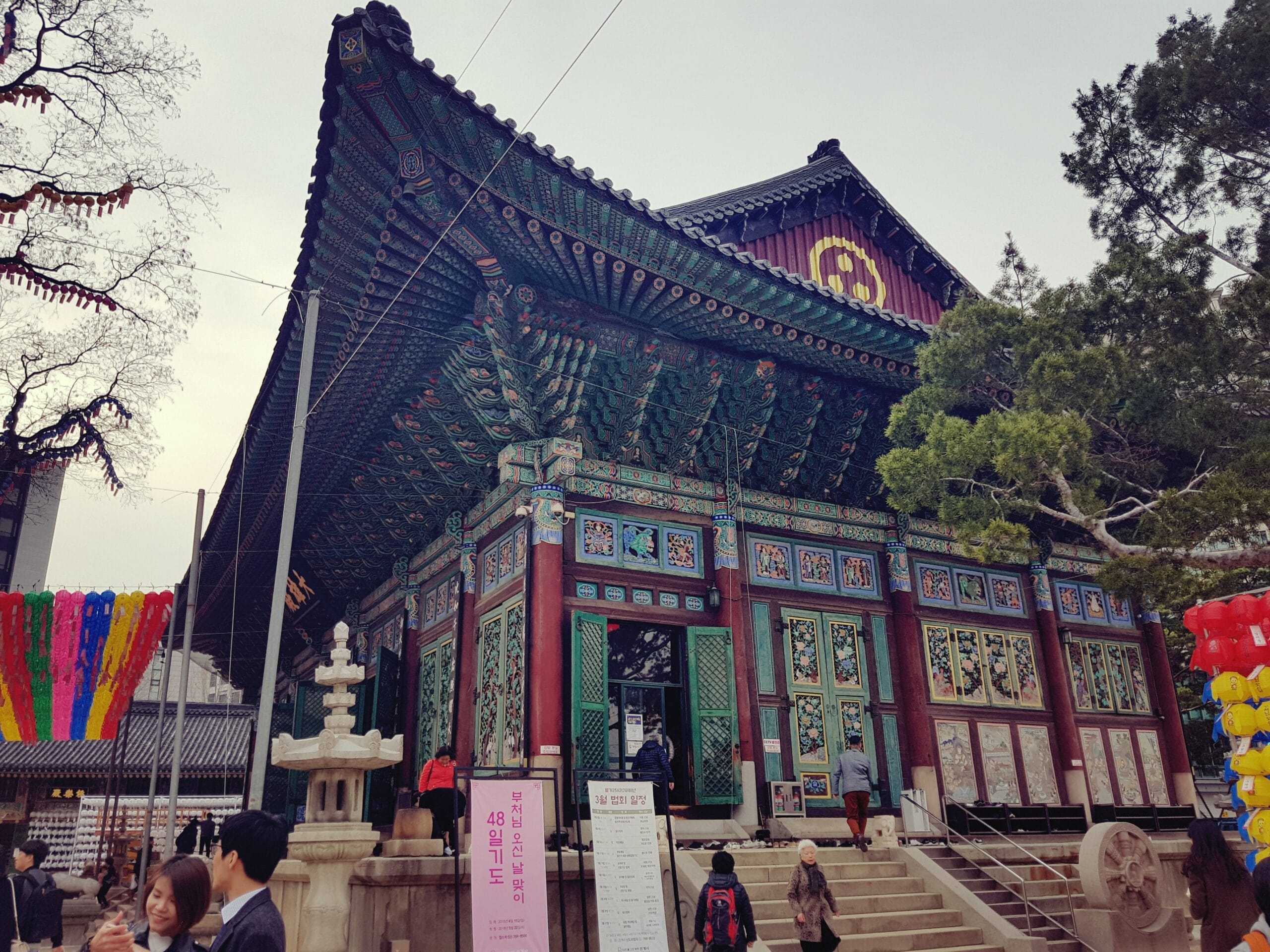
The official programme distinguishes experience-oriented stays, usually over a weekend, from rest-oriented stays, which are quieter, and short programmes of two or three hours. Seoul has seven participating temples, including Jogyesa, Bongeunsa and Myogaksa, which makes a one-night stay possible without leaving the city. Temples in the mountains offer a deeper change of pace.
How to approach it
Accommodation is simple, usually a shared room with floor bedding, and the schedule starts early. Dress modestly and follow the guidance of the temple. Treat it as a practice rather than a spa: the rhythm is the point. Reservations are made through the official Templestay website or directly with the temple.
Why OKYTO recommends it
Because it is among the most accessible ways to see Korean Buddhism from the inside, run by the tradition itself, and because the experience is defined by constraint rather than comfort.

Continue