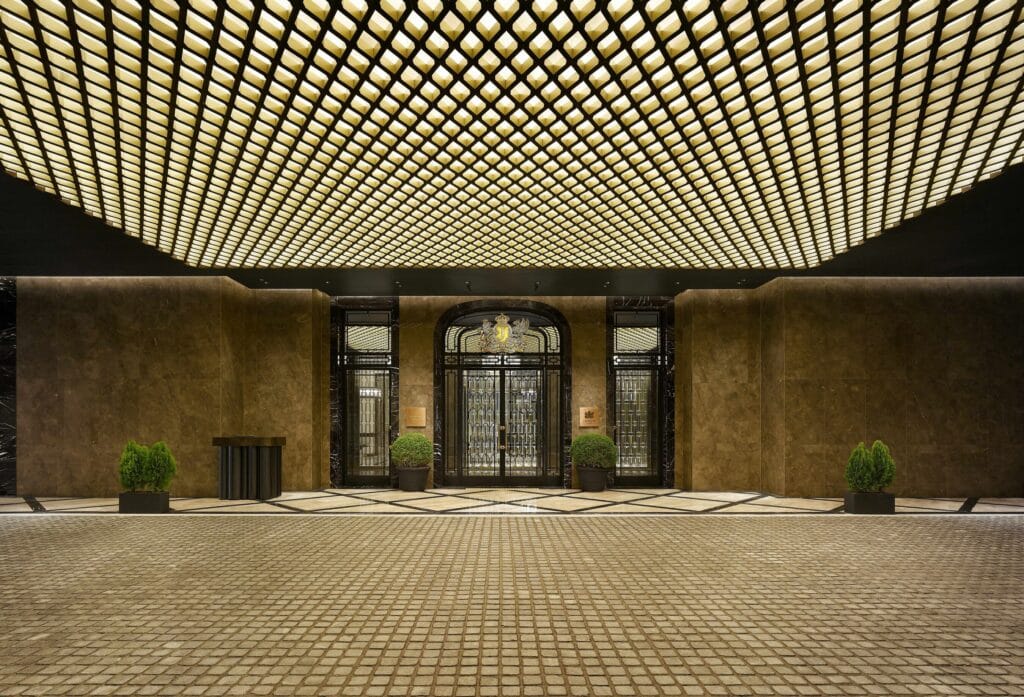
The Shilla Seoul
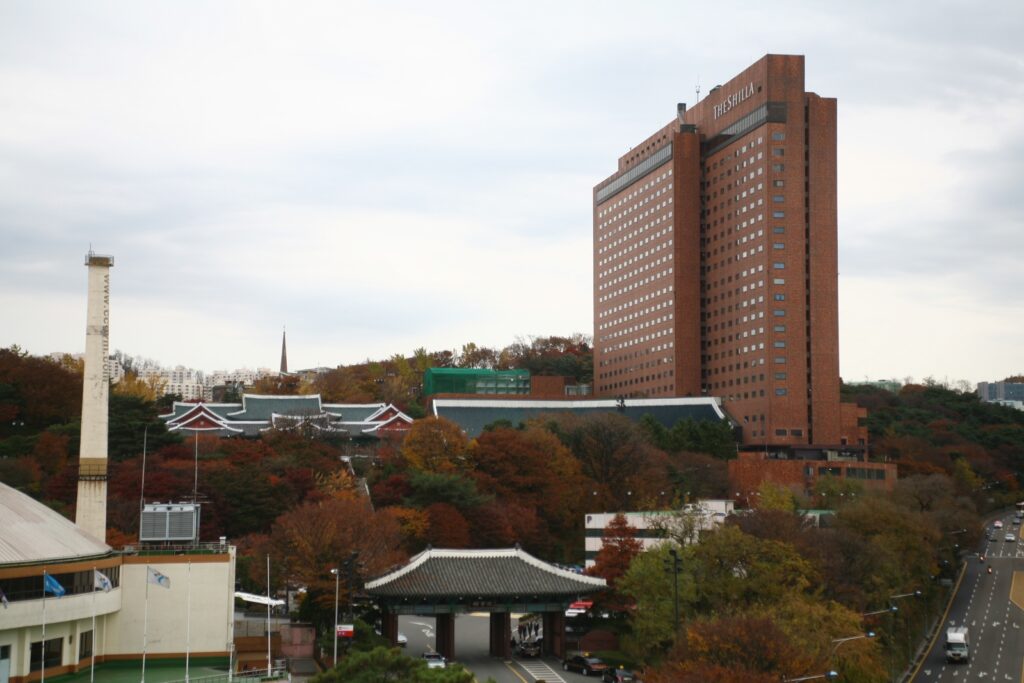
The Shilla was built in 1979 beside the state guesthouse Samsung bought on Namsan, on ground that once held a colonial memorial temple; the guesthouse is still in use, and the Joseon city wall has held back the hotel's plan to grow.
- Neighbourhood
- Jangchung-dong, Jung-gu
- Rooms
- 464
- Status
- Open
- Design
- Peter Remedios (2013 renovation)
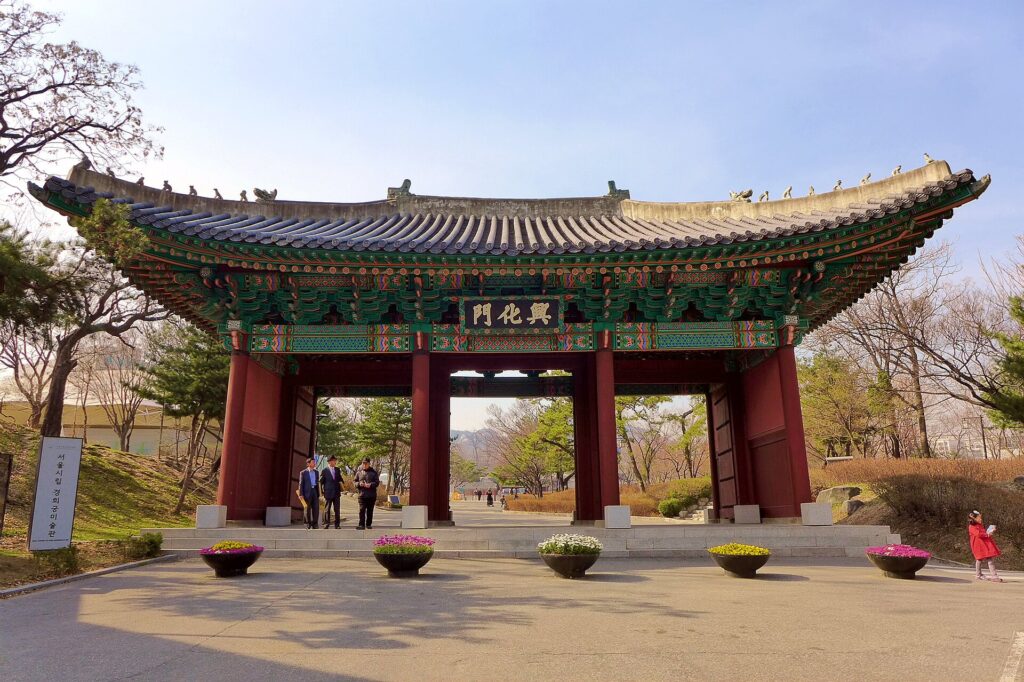
In 1932 the colonial government built a Buddhist temple on the lower slope of Namsan, in Jangchung-dong, in memory of Itō Hirobumi, and gave it as its entrance Heunghwamun, a gate taken from the palace of Gyeonghuigung. Bakmunsa was pulled down after liberation, and in 1967 the government put up a building of its own on the ground: Yeong Bin Gwan, a guesthouse for foreign heads of state, which by the hotel's count received nearly forty of them, Haile Selassie among them, in its years in that role.
In July 1973 a newly formed Samsung company bought the guesthouse; work on a hotel beside it began that November, and The Shilla, named after the Silla kingdom, opened on 8 March 1979, at first under a management contract with Japan's Okura. The palace gate stood at its front under a Yeong Bin Gwan nameboard until 1988, when it was returned to Gyeonghuigung.
The guesthouse and the hotel
Yeong Bin Gwan is still there, now the hotel's banquet and wedding hall: two storeys modelled on a traditional Korean mansion, around an inner garden of some 500 square metres, with interiors restyled by Peter Remedios in 2010. Its old role passed to the hotel next door. Korean business press has described the Shilla as the country's VIP hotel from the day it opened, on the strength of that predecessor, and Chinese leaders, Xi Jinping among them, have stayed here on visits to Seoul.
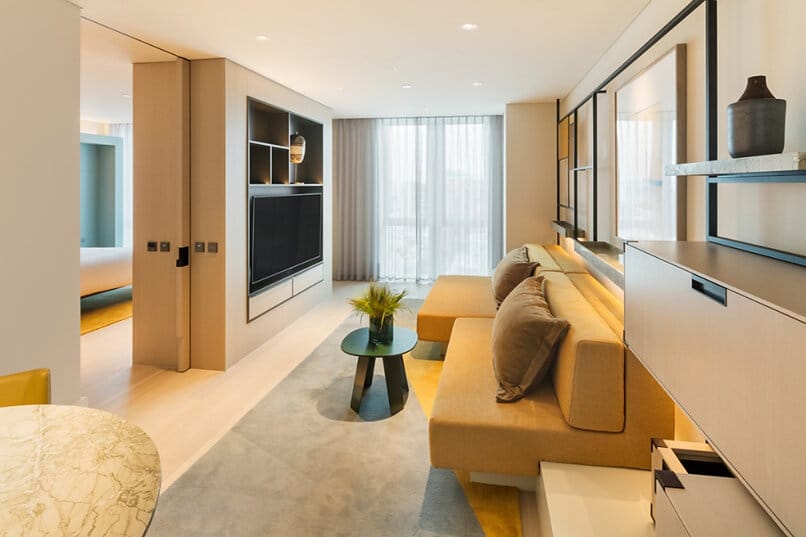
Guests sleep in the main building, among 464 rooms. Only one of them follows the older Korean house. The Korean Suite on the ninth floor is the hotel's single ondol room, 66 square metres, heated from the floor and furnished for sitting on it, which the hotel offers to families with young children.
La Yeon, the Korean restaurant on the 23rd floor, held three Michelin stars from the first Seoul edition until 2023 and has held two since, and in the 2026 guide it is the highest-rated hotel restaurant in the selection. From late March to mid-November the outdoor pool club, Urban Island, opens on a third-floor terrace with a rooftop looking to Namsan, charged separately in 2026 to guests whose rate does not include it.
The wall
The mountain is the hotel's other inheritance. Where Four Seasons Hotel Seoul puts its guests beside the palaces, the Shilla sits among gardens on the north-eastern slope of Namsan, and Hanyangdoseong, the city wall begun in 1396, runs along the edge of its grounds. Seoul's own guide to the wall's Namsan section describes a stretch walked from the Shilla towards the Banyan Tree Club, and the hotel's two running courses leave its main entrance and climb, over four to five kilometres, to the mountain's northern ring road. OKYTO's guide to walking Hanyangdoseong covers the wall from end to end.
The same wall has set the limits of what the hotel can become. In 2011 Hotel Shilla proposed a hanok hotel on its land, a low cluster of timber buildings under tiled roofs. Seoul's planning committee turned it back four times, over parking, scale and its distance from the wall, before approving it in March 2016 with 91 rooms where 207 had been sought and the building set back 29.9 metres from the wall.
Work started in 2020 on a smaller plan and stopped, first when archaeological remains were found on the site and then in the pandemic. In 2025 the company filed a suspension running to the end of 2030, adding that the dates could move with profitability and the business climate. For the time being the Shilla remains what it has been since 1979: a modern hotel beside the guesthouse it bought.
Sources: The Shilla Seoul; Encyclopedia of Korean Culture; Kyunghyang Shinmun; Seoul Shinmun; NewDaily; Hankyung Business.
Location
- Address
- 249 Dongho-ro, Jung-gu, Seoul 04605, South Korea
- Website
- Official website