Four Seasons Hotel Seoul
A Gwanghwamun site planned for offices became Four Seasons' first hotel in Korea, built over a Joseon-era street that its designers made part of the interior.
- Neighbourhood
- Gwanghwamun, Jongno-gu
- Status
- Open
- Design
- Heerim Architects & Planners (architecture); LTW Designworks, André Fu/AFSO and AvroKO (interiors)
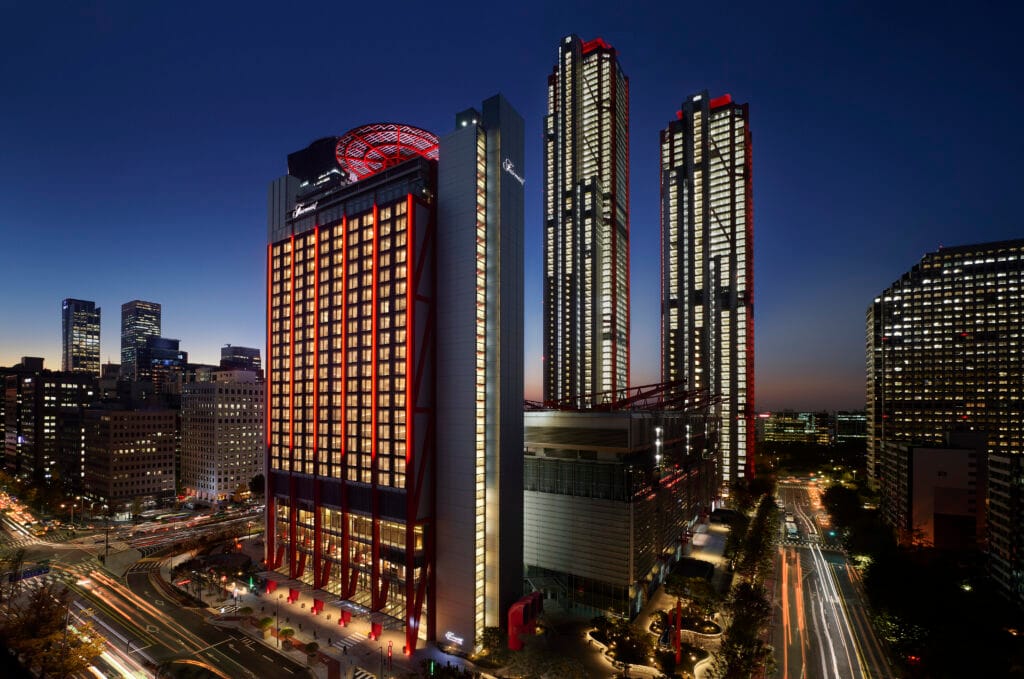
Four Seasons Hotel Seoul began as an office project. The plot at the Gwanghwamun junction, where Saemunan-ro meets Sejong-daero below the gate of Gyeongbokgung, had been planned for offices. In 2012 the property fund that Mirae Asset had raised for it switched to a luxury hotel instead. Korean financial reporting at the time noted that no fund in the country had yet been devoted solely to a luxury-brand hotel. The result, Four Seasons' first hotel in Korea, has 317 rooms in a 25-storey tower and opened in October 2015.
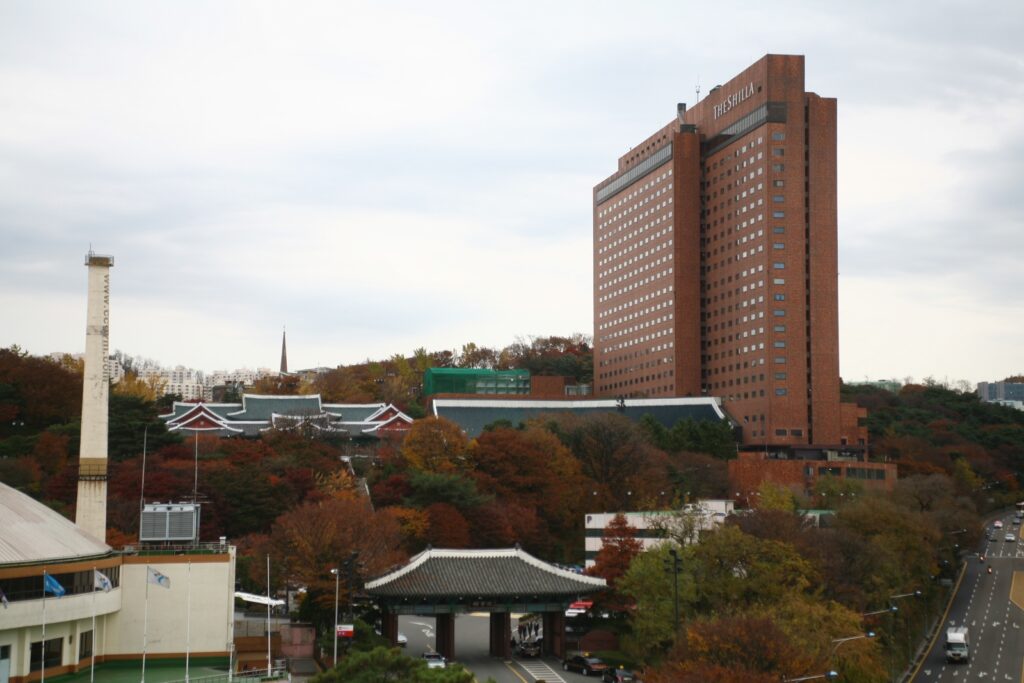
The site sits at the centre of the old capital. Sejong-daero is Seoul's ceremonial avenue, lined with ministries, embassies and newspaper buildings, and the palaces and the hanok lanes of Bukchon and Seochon lie just north. Seoul's other leading hotels sit elsewhere: The Shilla on the slopes of Namsan, Signiel in the upper floors of Lotte World Tower in Jamsil.
A street under the hotel
Digging the foundations reached the older city. Archaeologists found the remains of a street from the Joseon era, buried for at least five hundred years, with hundreds of objects from daily life: pottery, roof tiles, metal tools. Part of it was kept in view. In The Market Kitchen, on the hotel's lower level, a glass floor looks down onto the remains.
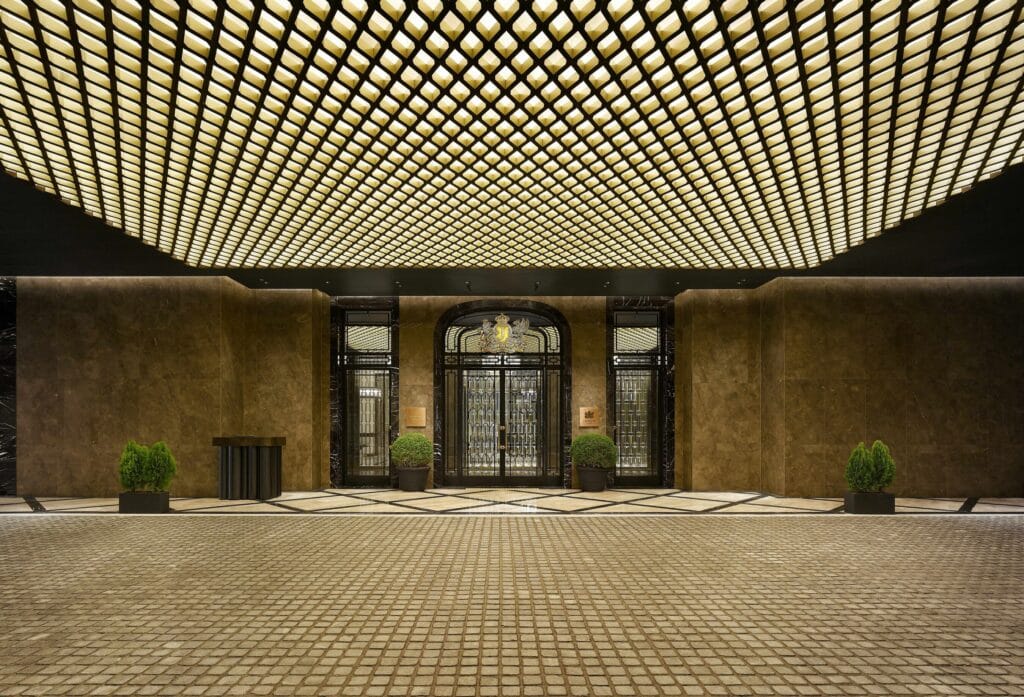
The find did more than supply a display. LTW Designworks, which designed the rooms and public spaces, made the buried street the theme of the interior. The lobby reinterprets the hanok, the traditional Korean house: a pavilion of translucent silk panels held in timber beams, raised, in LTW's words, to evoke the setting of a royal palace, with screens of two-tone metal wire standing in for silk at closer range. The hotel describes its exterior as a tribute to the same house form. More than 160 contemporary works of art, most by Korean artists, run through the building, beginning with Choi Byung Hoon's stone sculpture In One Stroke at the entrance.
After Gwanghwamun empties
A district of ministries and monuments is busy by day and much quieter at night. The hotel's restaurants and bars were divided among three design studios: André Fu took the Chinese and Japanese rooms, AvroKO the Italian restaurant, the buffet and the bar, and LTW the lobby lounge.
Charles H. is on the same lower level as the excavated street, behind an unmarked door, and was designed in the manner of a Prohibition-era speakeasy. It is named after Charles H. Baker, the American writer whose 1939 drinking book gathered cocktails from his travels. Within it, H. Bar is an eight-seat counter that serves cocktails in courses. Upstairs, Yu Yuan cooks Cantonese food in rooms that Fu based on the Shanghai of the 1920s, and is best known for its Beijing duck. With an Italian and a Japanese restaurant besides, a guest can spend several evenings without leaving the building.
Silk, weave and a view of the palace
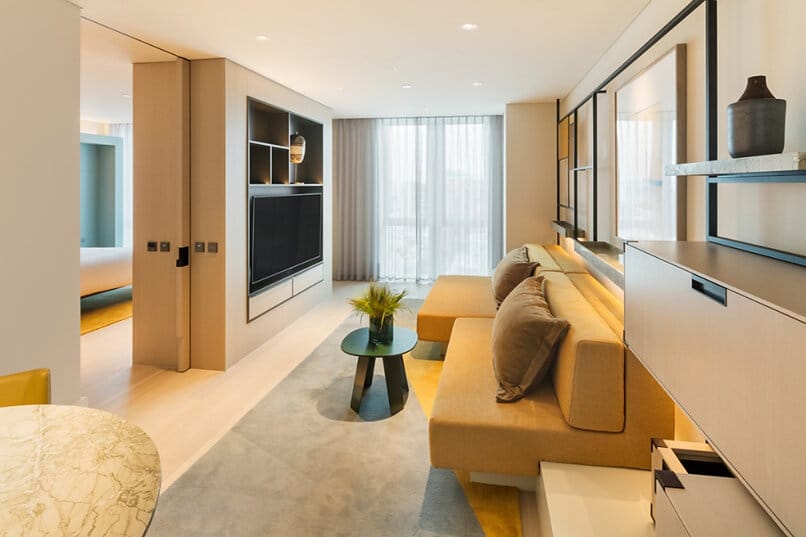
LTW carried the Korean references into the rooms in the materials rather than in decoration. The wallpaper takes its woven texture from saetgollai, a Korean cotton-weaving technique, and the carpets reinterpret traditional bamboo blinds. The headboards are drawn from the hanbok. Standard rooms start at 41 square metres. The hotel names Gyeongbokgung as the view only from its executive suites.
The most Korean room in the hotel is not a bedroom. The sauna follows the bathing culture of the jjimjilbang and draws on the Joseon-era hanjeungso, the sweating room. It has cold, warm and hot baths, dry and wet rooms, and beds for an afternoon sleep, and its windows look towards the palace. For families, the hotel adds rooms of up to 75 square metres and a children's lounge on the 10th floor.
Sources: Four Seasons; Four Seasons; Construction+ Asia; Money Today; Financial News; MICHELIN Guide.
Location
- Address
- 97 Saemunan-ro, Jongno-gu, Seoul 03183, Korea
- Website
- Official website