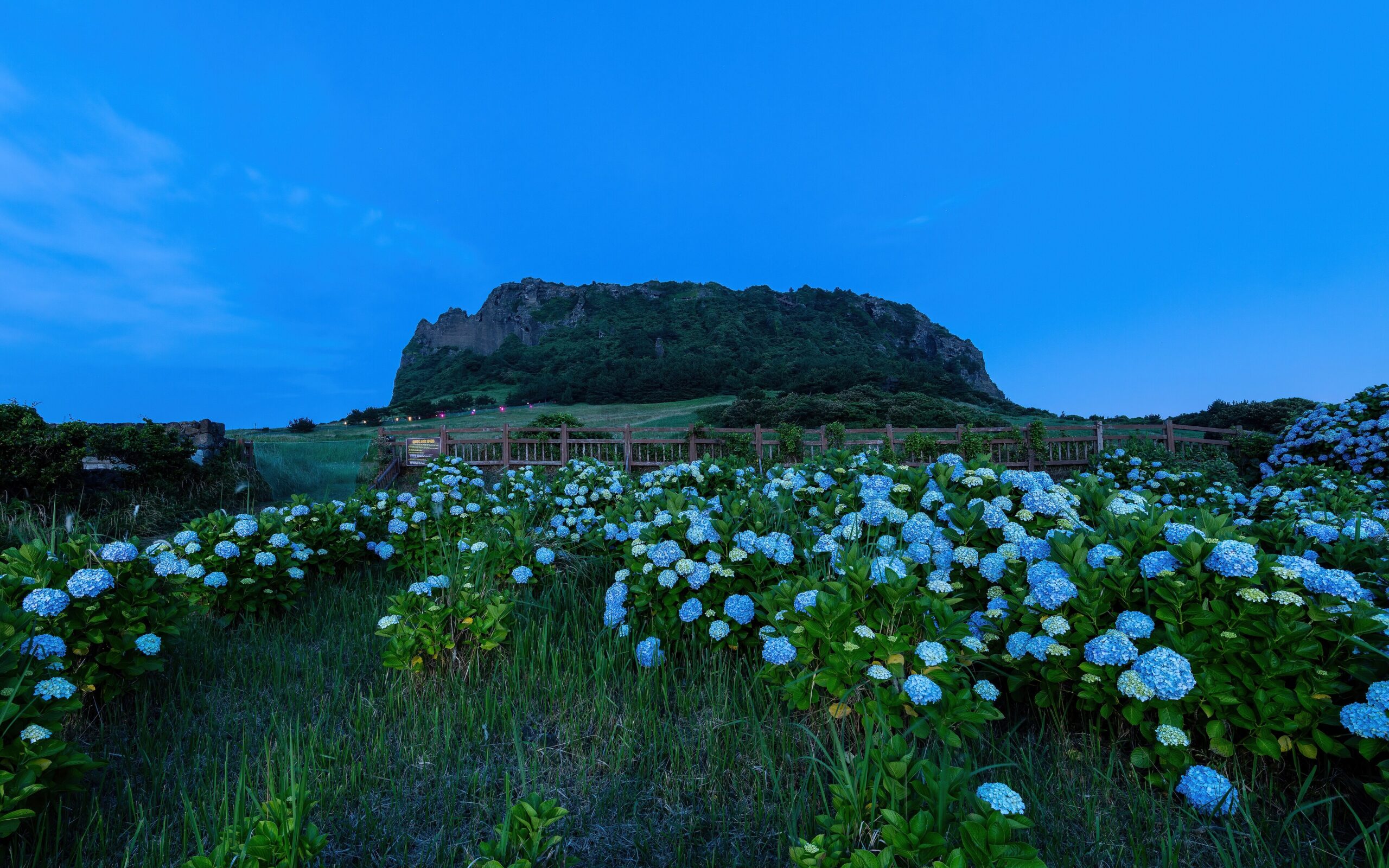
Jeju
South Korea · East Asia
Korea's volcanic island, circled by the 437-kilometre Olle walking trail, with lava coasts, women divers and resort hotels in the south.
Why visit
Why visit Jeju
Go to walk. The Jeju Olle has 21 main routes and several short sub-routes, 437 kilometres of marked path in all, each stage a day's walk that can be done on its own. Our guide to the Olle explains how to choose.
Go also for a landscape unlike the mainland: black basalt shores, stone walls dividing the fields, tangerine orchards, and the villages of the haenyeo, the women who dive without breathing equipment for abalone and sea urchins.
Explore
What to see
Route 7 of the Olle. The most popular stage, on the south coast from Seogwipo, past the sea stack of Oedolgae and cliffs of columnar basalt.
Route 10. Dunes and lava flats below the bell-shaped mountain of Sanbangsan, with views to the islands of Gapado and Marado.
Seongsan Ilchulbong. The crater that rises from the sea in the east, seen from the oreum of Route 1.
Udo. A small island reached by ferry, with an easy half-day walk.
Hallasan. The volcano at the centre of the island. The two summit trails require a reservation, and the rules change; see our Hallasan page.
Hotels
Where to stay in Jeju
On the south coast, the JW Marriott Jeju, designed by Bill Bensley, stands near Route 7 of the Olle. In Jeju City, the Grand Hyatt Jeju occupies the island's tallest tower.
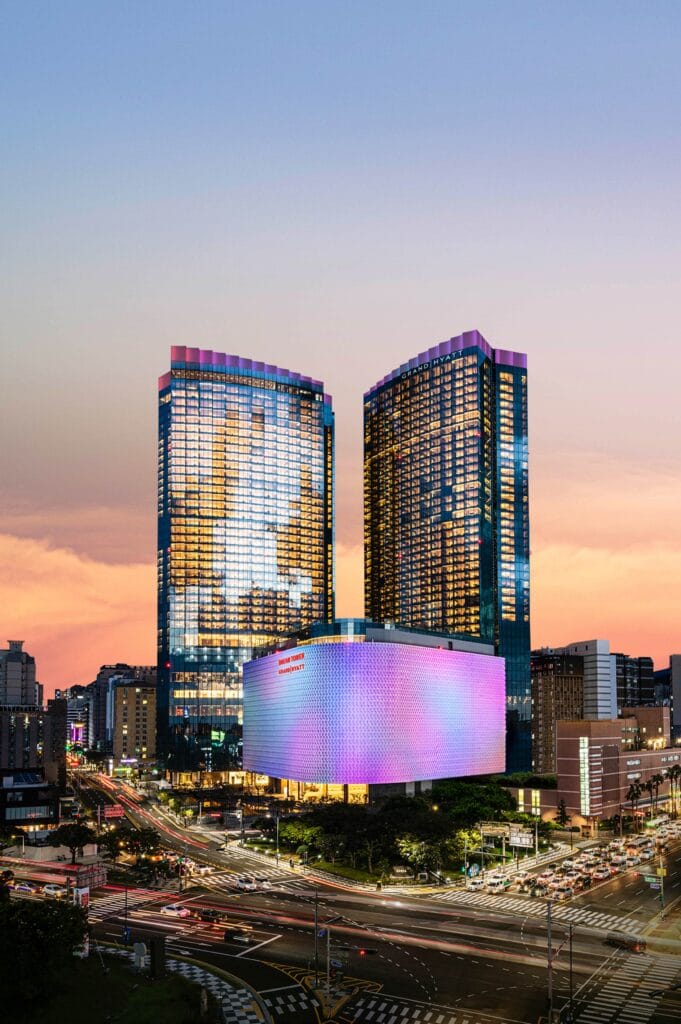 Jeju City (Jeju Dream Tower)Grand Hyatt JejuThe largest Grand Hyatt in Asia Pacific: 1,600 rooms from 65 square metres in Jeju City's Dream Tower, with 14 restaurants and bars.Explore →
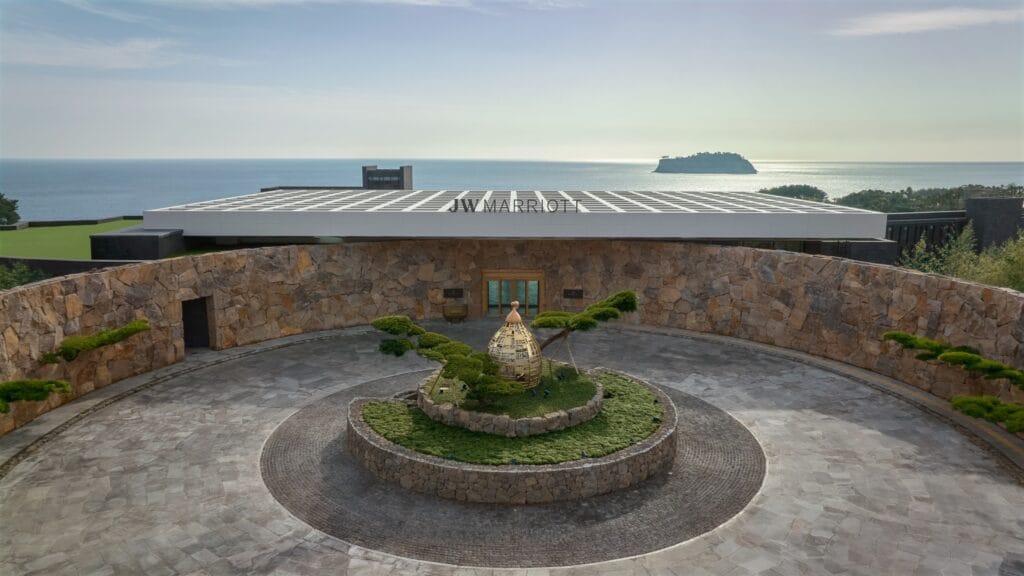 Seogwipo, south coastJW Marriott Jeju Resort & SpaA low-built cliff-top resort by Bill Bensley on Jeju's south coast, with four pools and Olle Route 7 connected to it.Explore →
Before you go
Practical information
Best time to visit
Spring and autumn are the best seasons. Summer is hot and humid and brings typhoons.
Getting around
Jeju is an hour by air from Seoul. Buses run round the coast and taxis are inexpensive, so it is easy to stay in one hotel and walk different routes on successive days.
Practical notes
Walkers stamp a trail passport at the start, midpoint and finish of each Olle route. Three or four days allow two or three routes and a day in the east of the island.
Continue exploring
More from East Asia
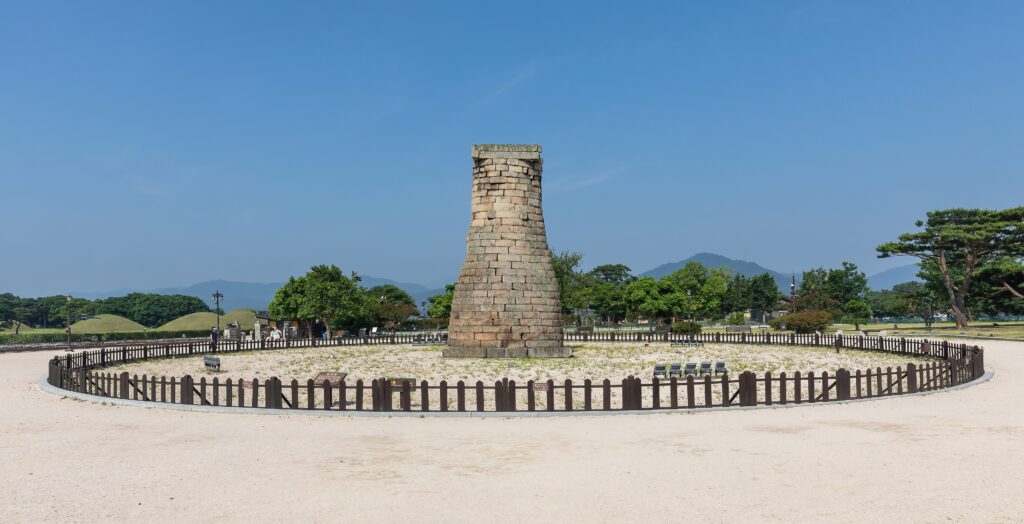 South KoreaGyeongjuThe old capital of Silla: royal tomb mounds in the middle of town, gold crowns, a seventh-century observatory and the temple of Bulguksa.Explore Gyeongju →
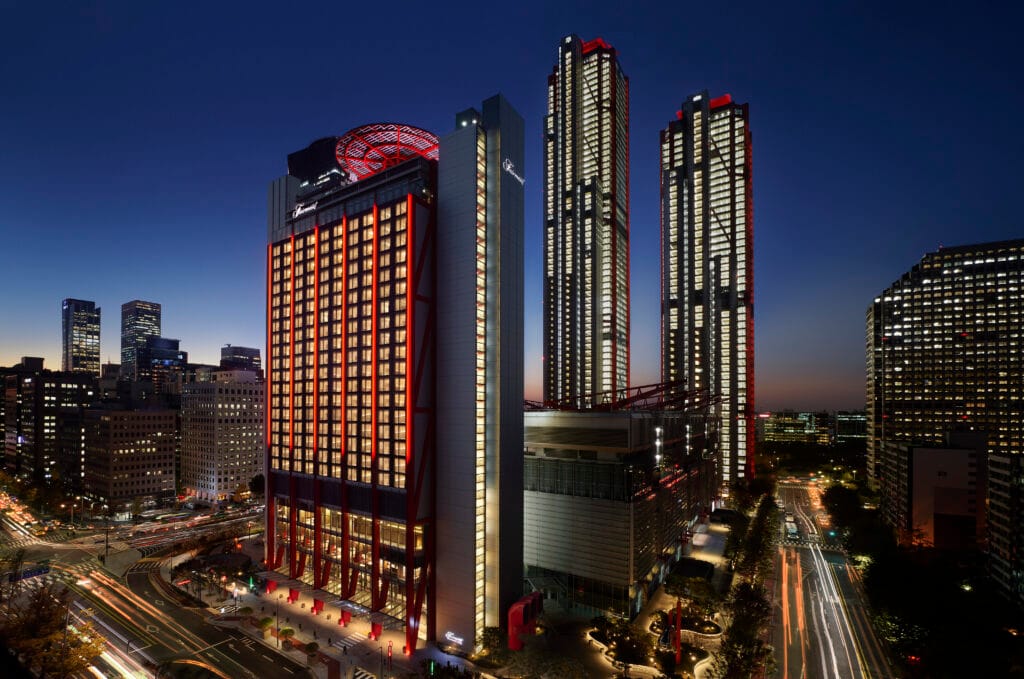 South KoreaSeoulRoyal palaces and hillside neighbourhoods meet one of Asia's most inventive dining scenes, led by a new generation of chefs.Explore Seoul →
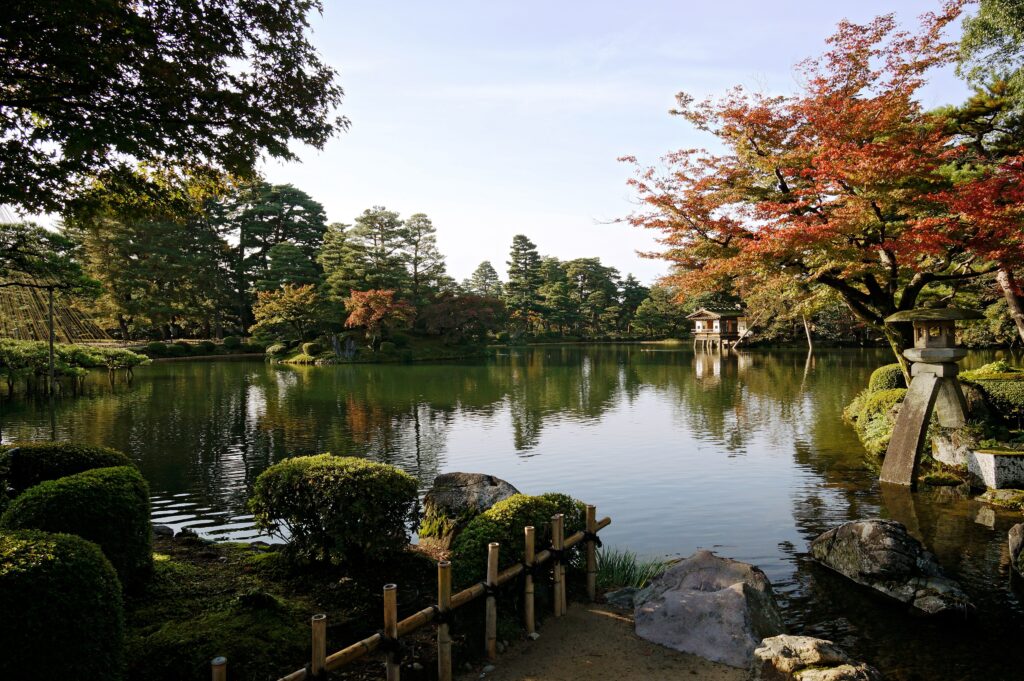 JapanKanazawaA feudal castle town that was never bombed: Kenrokuen garden, teahouse districts, gold leaf workshops and SANAA's 21st Century Museum, two and a half hours from Tokyo by shinkansen.Explore Kanazawa →