Bangkok
Thailand · Southeast Asia
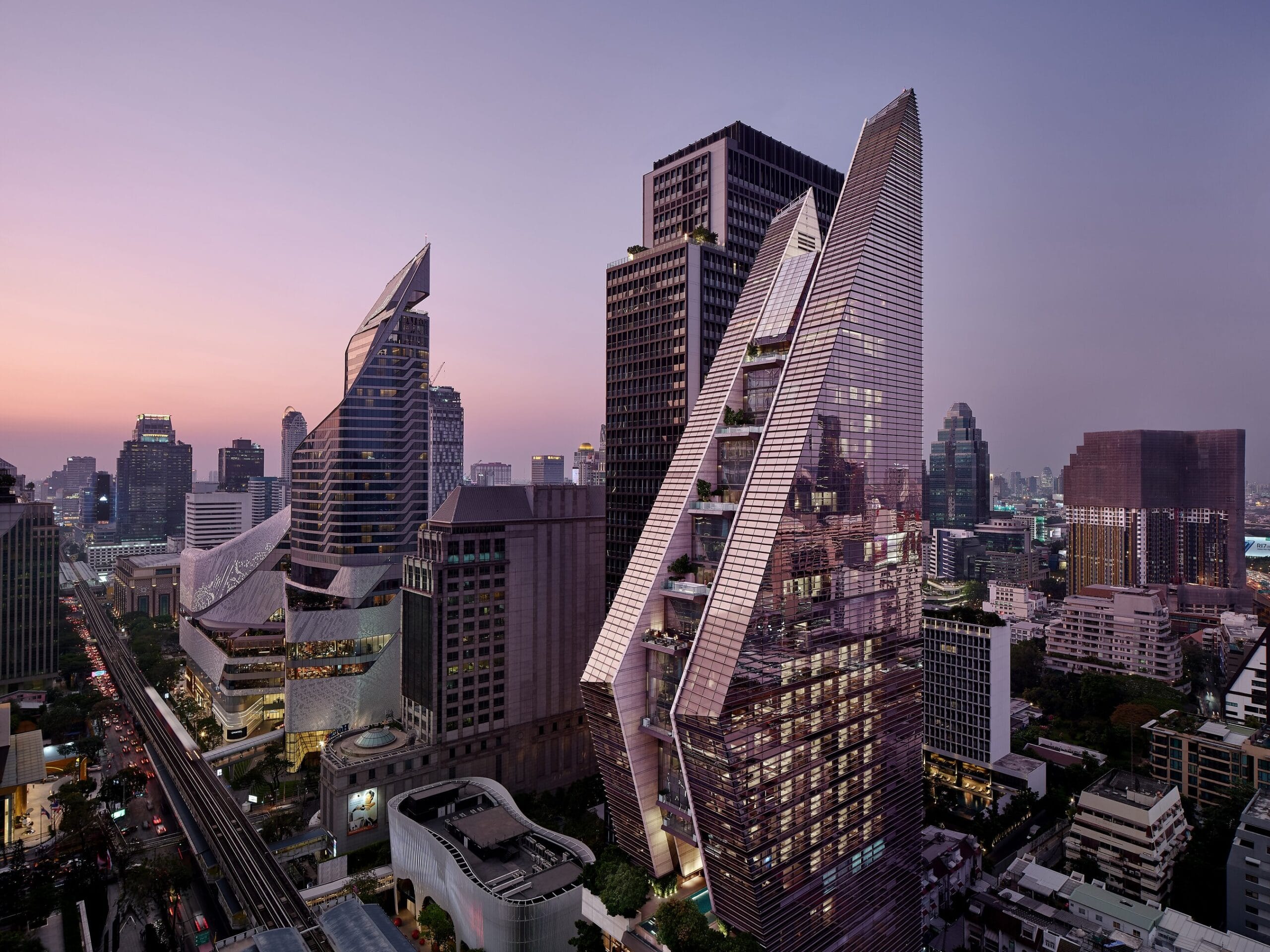
Thailand’s river capital: the Grand Palace and Wat Pho on the east bank, Wat Arun opposite, a creative quarter along Charoen Krung and a restaurant scene that holds both of Thailand’s three-star kitchens.
Photo: Rosewood Bangkok
Why visit
Why visit Bangkok
Bangkok works on two scales. The first is old Rattanakosin, where the Grand Palace combines Thai glazed-tile roofs, nineteenth-century European-style façades and gilded stupas with Khmer influence. Inside its walls, Wat Phra Kaew keeps the 66-centimetre Emerald Buddha, carved from green jade and regarded as the kingdom’s protective talisman. A few minutes’ walk away, Wat Pho holds the 46-metre reclining Buddha and is considered the birthplace of Thai massage.
The second is the living city, and it is where the longer visit pays off. Across the river, Thonburi, the former capital, still has canals, wooden houses and riverside temples, best seen by long-tail boat. Yaowarat, Bangkok’s Chinatown, comes alive after sunset, when its street food, shrines and gold shops fill the pavements. Charoen Krung, between the two, is where warehouses have become galleries and heritage buildings bars; Warehouse 30 and the Thailand Creative and Design Center, in the old General Post Office, anchor it.
It is also the city where Thai cooking has changed most. In the 2026 MICHELIN Guide, Bangkok holds both of Thailand’s three-star restaurants and most of its two- and one-star entries, across Thai, German, French, Indian, Korean, Japanese and Italian kitchens. Eating well here does not require a tasting menu. The street cooks of the old town sit at the other end of the same scene.
Explore
What to see
Start with the old city. The Grand Palace has been the royal residence since 1782 and still hosts certain royal ceremonies. The dress code is strictly enforced, with shoulders and knees covered and no flip-flops, and sarongs are lent at the entrance. Be wary of anyone on the pavement outside who says the palace is closed for a ceremony, a long-running scam; the official ticket office is in the first courtyard.
Wat Pho is the oldest and largest temple in Bangkok, rebuilt from 1788 under Rama I and expanded under Rama III. It has 91 small chedis, four large ones for the first four Chakri kings and about a thousand Buddha statues. Medical knowledge was engraved on marble plaques there, and a massage school has operated on the grounds since 1955. The rear gardens and side sanctuaries are quieter than the reclining Buddha hall.
Wat Arun, the Temple of Dawn, stands on the west bank. Its Khmer-style central prang is clad in Chinese porcelain shards and shells set in stucco, and the climb to the halfway point is steep and narrow, so closed shoes help. A ferry from Tha Tien pier crosses in about five minutes, and the view back from the Wat Pho side at sunset is a favourite.
For a different Bangkok, walk Charoen Krung from Saphan Taksin towards Talat Noi, or cross to Thonburi by boat.
Hotels
Where to stay in Bangkok
Choose by district. The river puts you in the historic city with the best views and easy boat access to the temples; Silom, Lumpini and Ploenchit suit business and shopping; and Sukhumvit suits those who want nightlife and restaurants on the doorstep.
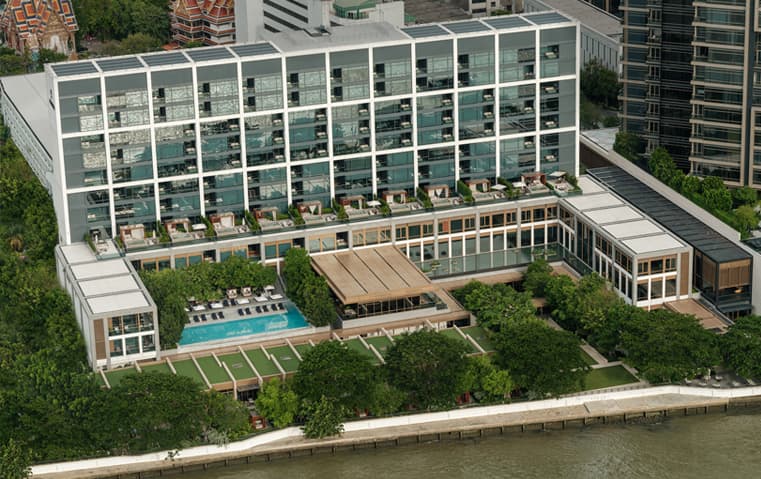 Capella · Charoen Krung, Yannawa (Sathorn riverside)Capella BangkokCapella's first hotel in Thailand is one of the two hotels on the Chao Phraya Estate on Charoenkrung Road: a low building one room deep, so that all 101 suites and villas face the river.Explore →
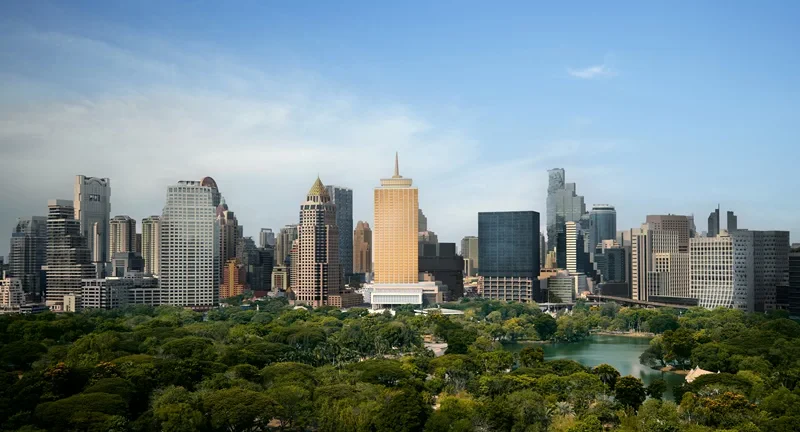 Dusit Thani · Silom, facing Lumpini ParkDusit Thani BangkokKhunying Chanut Piyaoui's 1970 landmark came down in 2019; its successor gives all 257 rooms Lumpini Park and wears the old golden spire inside a new one.Explore →
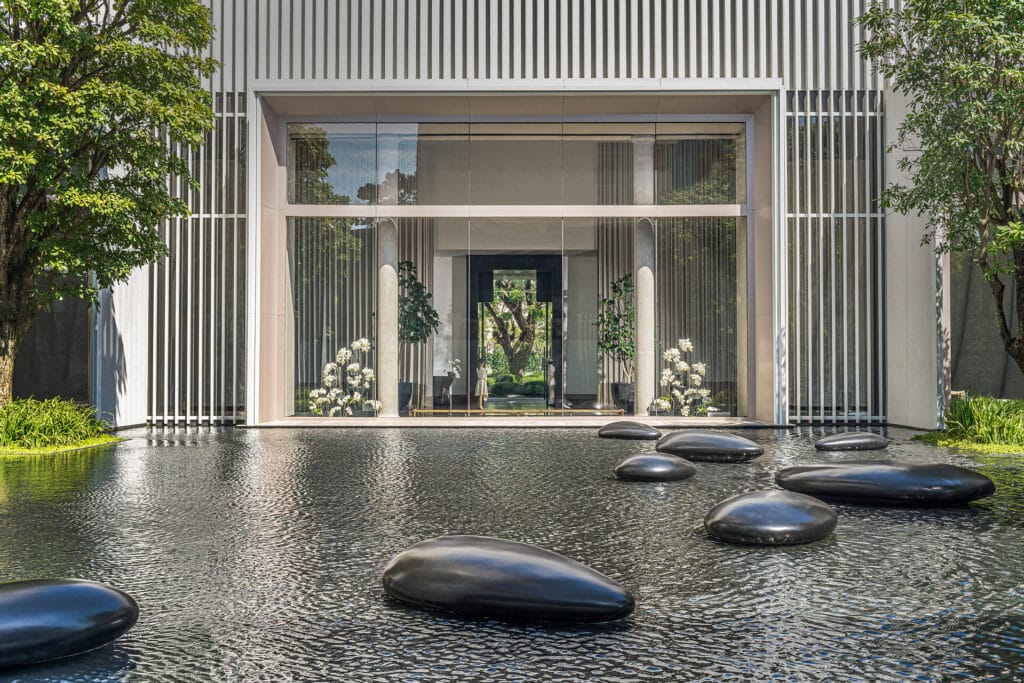 Four Seasons · Creative District, Chao Phraya riversideFour Seasons Hotel Bangkok at Chao Phraya RiverOn a stretch of Charoen Krung riverfront that its developer chose not to build out, Jean-Michel Gathy laid out a 299-room Four Seasons as low courtyards stepping down to 200 metres of the Chao Phraya.Explore →
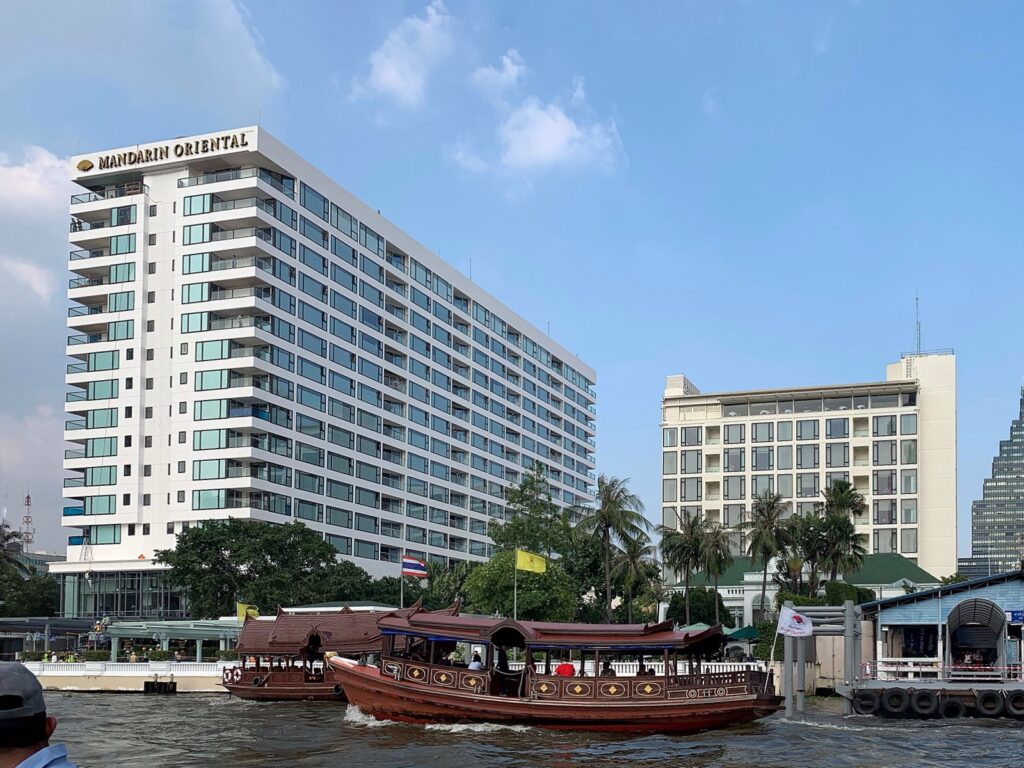
- Mandarin Oriental, BangkokMandarin Oriental · Riverside, Bang Rak
- Rosewood BangkokRosewood · Ploenchit, Pathum Wan
- Aman Nai Lert BangkokAman · Nai Lert Park, Lumpini
- Fairmont Bangkok SukhumvitFairmont · Sukhumvit (Soi 20), Khlong Toei
- RAKxa Integrative WellnessRAKxa · Bang Krachao
- The Peninsula BangkokThe Peninsula · Thonburi riverside, Khlong San
Dining
Where to eat in Bangkok
Thai cooking is the heart of the table, and Bangkok’s best restaurants treat it with unusual ambition. Sorn takes the cooking of the southern peninsula, long thought of as rustic and fiercely hot, and gives it the care of a fine-dining kitchen; it holds three Michelin stars. Sühring, a restored 1970s villa off Yen Akat Road where the German-born Sühring twins cook the food they grew up with, was promoted to three stars in the 2026 guide. Check the current guide before booking.
 SukhumvitGagganGaggan Anand's phone-free food theatre of progressive Indian cuisine; one Michelin star from 2026.Explore →
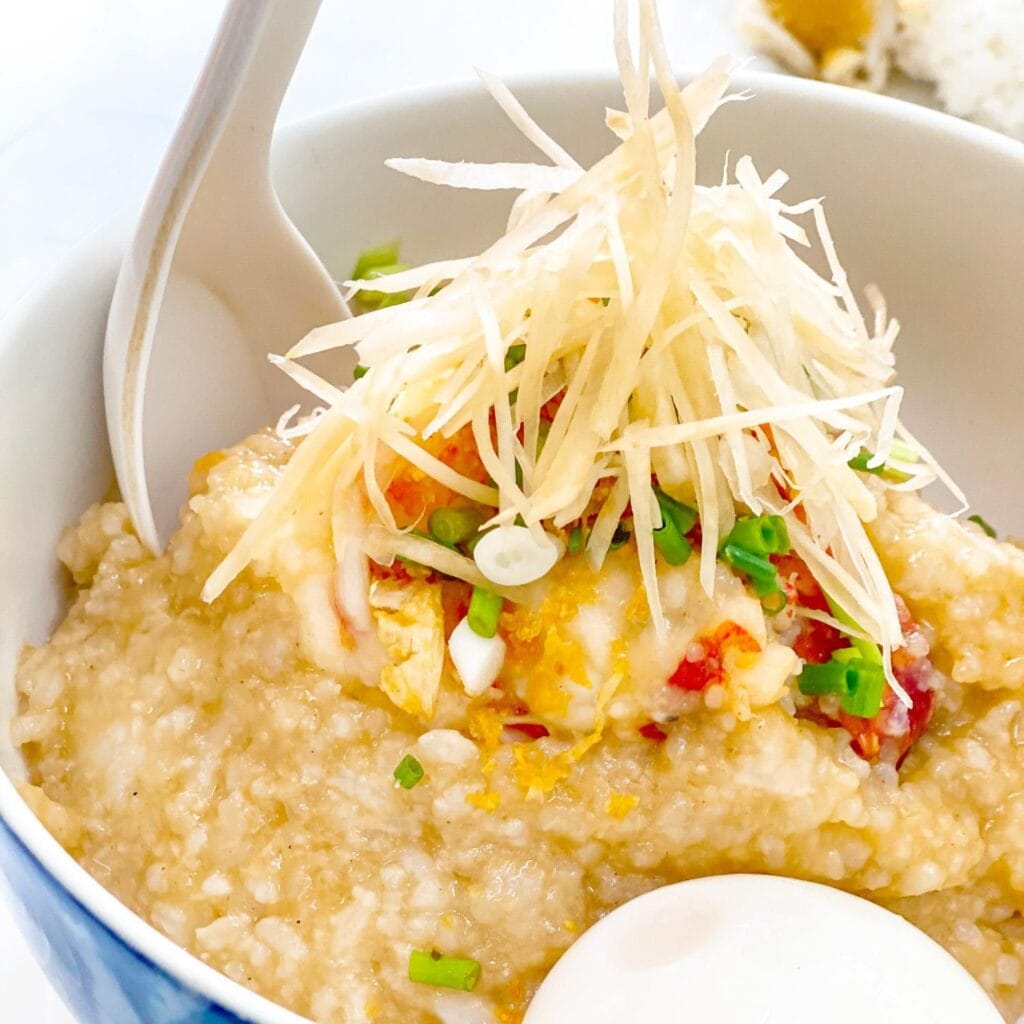 Thai · Old Town (Phra Nakhon)Jay FaiBangkok's street-food icon in the old town, famous for crab omelettes; one Michelin star.Explore →
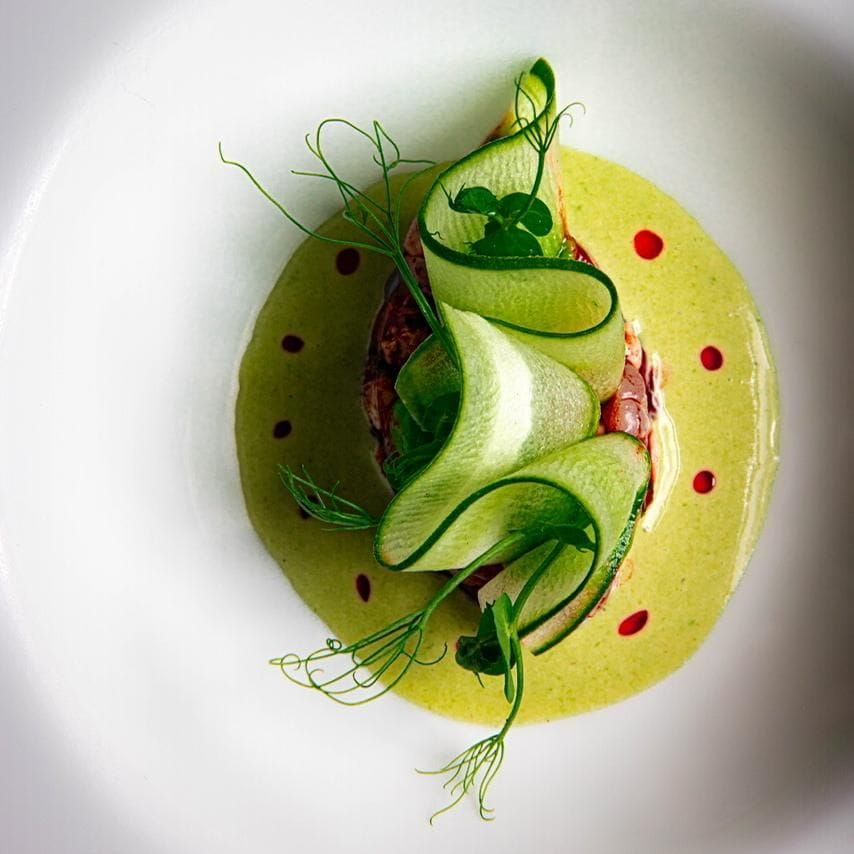 Thai · SilomLe DuChef Ton's seasonal Thai cooking in Silom; one Michelin star since 2019.Explore →
Experiences
Experiences in Bangkok

The Journal
Latest on Bangkok
- Thailand’s Three Great Wellness Retreats, and How to Choose
- Capella Bangkok No.2 in The 50 Best Hotels 2026
- Paul Jones Returns to Mandarin Oriental Bangkok as General Manager
- Fairmont Bangkok Sukhumvit Opens as the Brand’s First Hotel in Thailand
- The Langham, Custom House, Bangkok Sets a December Opening
Before you go
Practical information
Best time to visit
November to February is the cool, dry season, with daytime highs of about 32–33°C and little rain, though room and flight prices rise. March to May is hot, April the hottest month, and Songkran in mid-April is a nationwide water fight. June to October is the wet season, with 14 to 18 rainy days a month, usually short heavy downpours. Localised flooding is not uncommon and heavy rain can worsen traffic, so allow extra time.
Getting around
The BTS Skytrain is an elevated, air-conditioned line that has run since 1999, and the MRT underground has two lines (blue and purple) that connect to the Skytrain at Sukhumvit and Saladaeng (Silom). Avoid weekday rush hours, 7am to 10am and 5pm to 8pm.
Read more
From Suvarnabhumi Airport, the Airport Rail Link takes about 30 minutes to Phayathai, with an interchange at Makkasan for the MRT. Don Mueang is reached by the Red Line, which links to Bang Sue Grand Station. On the river, four Chao Phraya Express Boat routes link sites such as the Grand Palace, Wat Arun and ICONSIAM, with schedules that vary by route and day. Taxis can be hailed, and tuk-tuk fares are not fixed, so agree one before setting off.
Practical notes
Dress for temples with covered shoulders and knees, and be sceptical of anyone outside the Grand Palace who says it is closed. Carry small notes for taxis and river boats, and expect some taxi drivers to refuse the meter in rush hour.
Continue exploring
More from Thailand
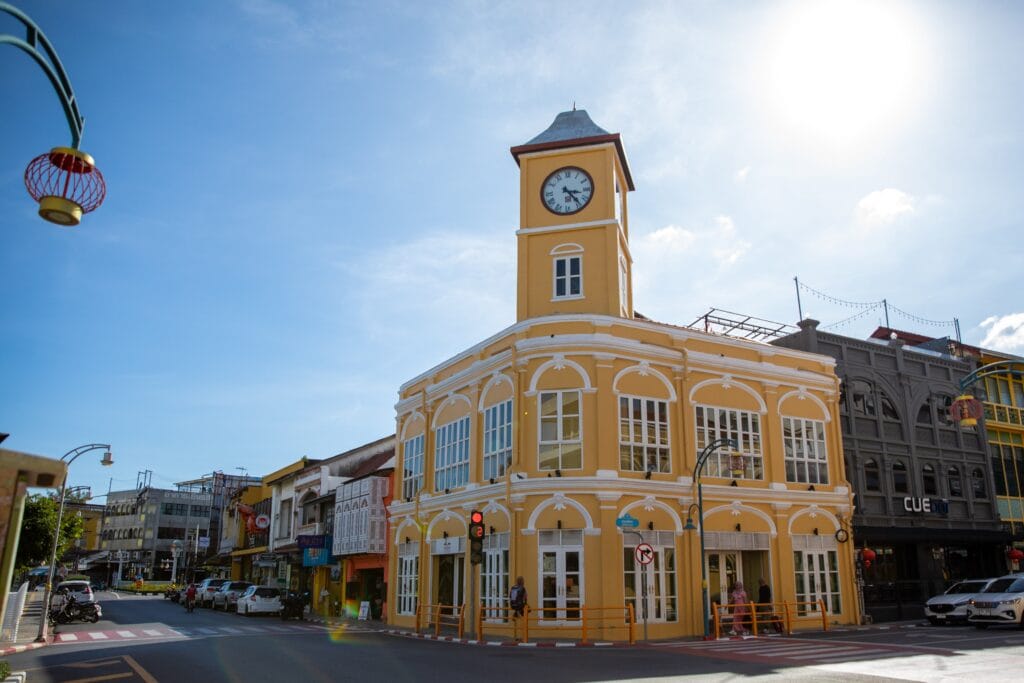 ThailandPhuketThailand's largest island: secluded west-coast resorts, the Sino-Portuguese streets of the old town and boats to Phang Nga Bay.Explore Phuket →ThailandHua HinA Gulf of Thailand seaside town that began as a royal resort in the 1920s, home to the Railway Hotel and to Chiva-Som, Thailand's original health resort.Explore Hua Hin →ThailandKoh SamuiThailand's second-largest island, on the Gulf side, with coconut lowlands, a granite interior and hillside wellness retreats such as Kamalaya.Explore Koh Samui →