Kyoto Architecture Through Its Hotels: Kengo Kuma, a 1926 Exchange and a Rebuilt Ryokan
Kyoto's recent hotels read as architecture: Kengo Kuma's three, a 1926 telephone exchange, a 1936 hall and a rebuilt river ryokan.
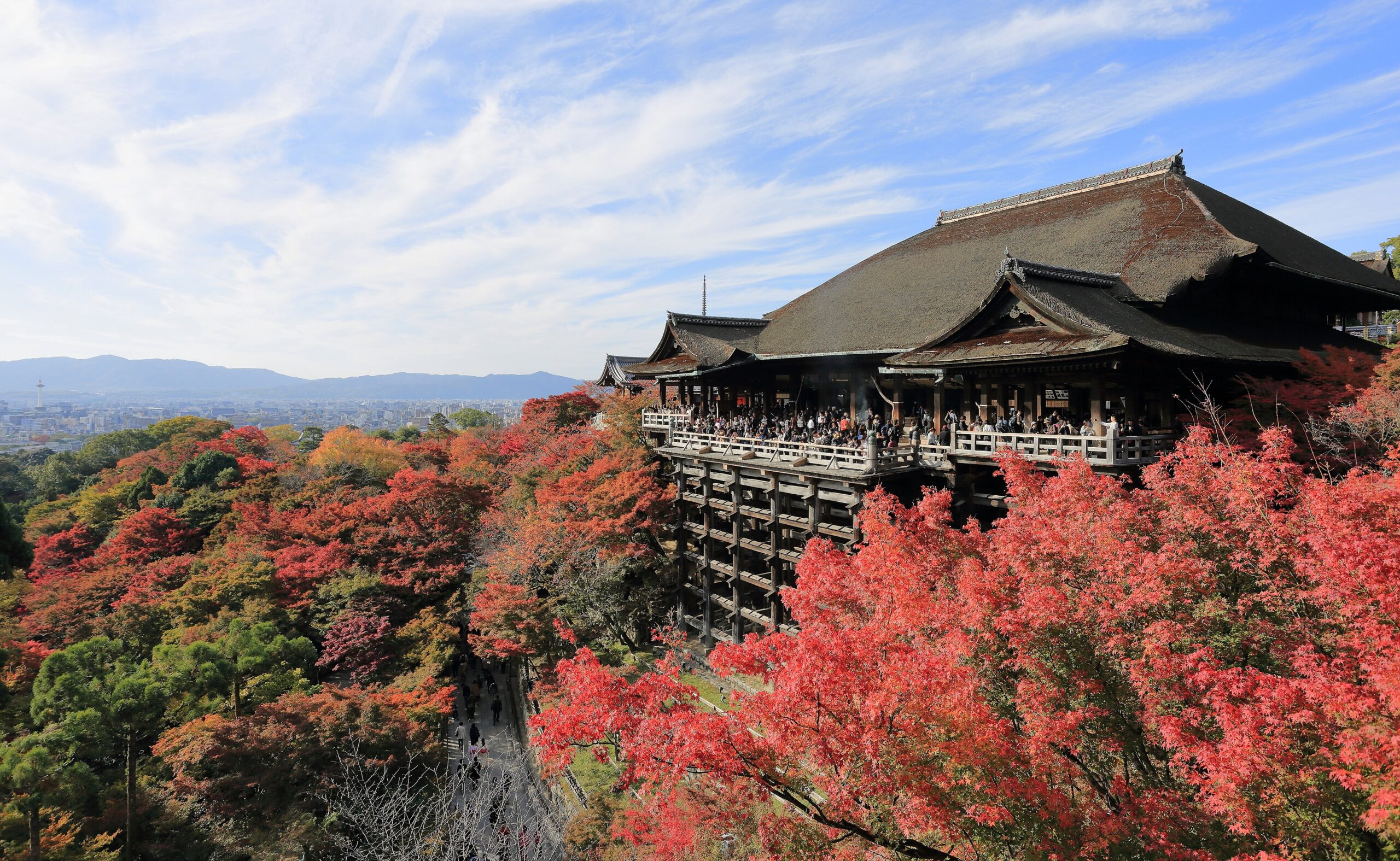
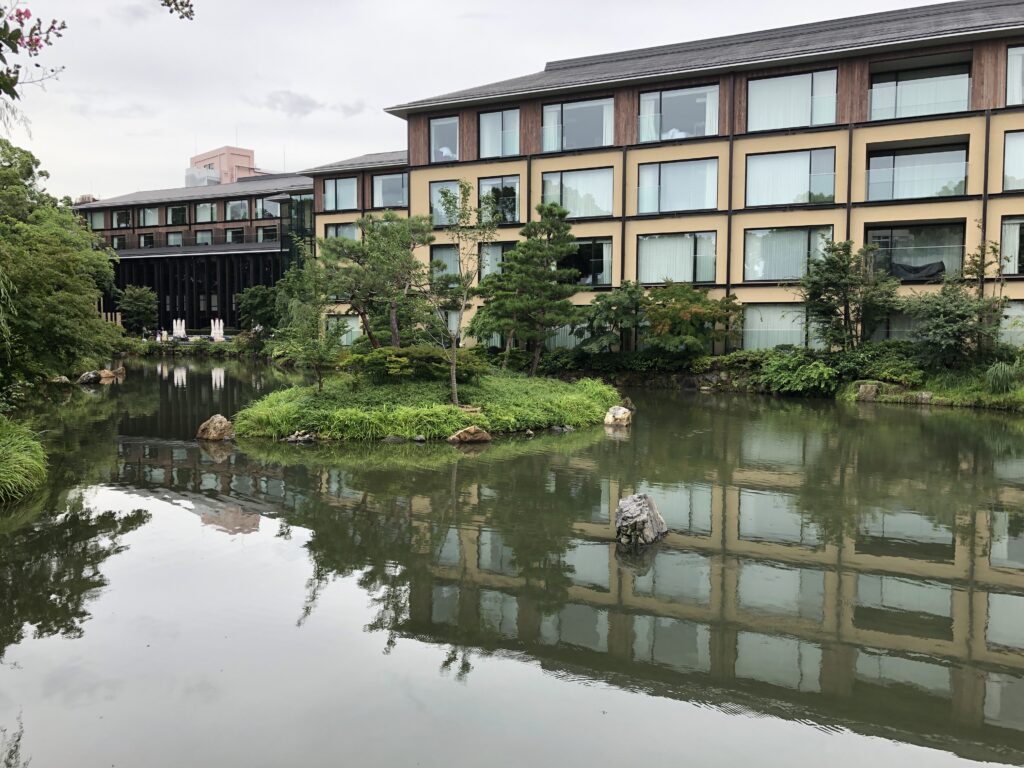
The most interesting new buildings in Kyoto are not museums but hotels. Rather than replacing the old city, they reuse it: a telephone exchange, a former school site, a merchant’s estate, a century-old wooden inn.
Kengo Kuma and the Kyoto grain
Kengo Kuma has shaped three of the city’s recent hotels, and each reads the surrounding Kyoto differently. Ace Hotel Kyoto fills the red-brick Shin-Puh-Kan, a 1926 telephone exchange by Tetsuro Yoshida, arranging rooms behind gridded wooden frames around a courtyard of plants and water.
Capella Kyoto sits in the geiko district beside Kennin-ji, on the site of an old primary school. Interiors by Brewin Design Office follow the machiya idea of a gradual sequence from public to private, with plaster, timber and shoji. Banyan Tree Higashiyama Kyoto is the wooded counterpart near Kiyomizu-dera, with a triple-height lobby, a suspended bamboo sculpture and a Noh stage.
Old buildings, new uses
Imperial Hotel, Kyoto occupies the restored 1936 Yasaka Kaikan on Hanamikoji in Gion, a building whose public identity predates the hotel by decades. Hotel The Mitsui Kyoto stands on the Mitsui family’s former Kyoto estate opposite Nijo Castle, with a thermal spring spa.
Park Hyatt Kyoto shares its site with the 1877 ryotei Kyoyamato, so a stay can include a meal in a building older than the hotel.
A river ryokan
Hoshinoya Kyoto is the most atmospheric of the group. Architect Rie Azuma restored wooden buildings more than a century old on the bank of the Oi River in Arashiyama, and guests arrive from a lounge at the end of the Togetsukyo bridge by a short private boat ride. It is a good place to see how a ryokan can be rethought without losing its quiet.
How to read them
A useful way to compare the hotels is by what they keep: Ace retains a façade and a structure, Capella a site and a streetscape, Imperial a hall, Hoshinoya a village of wooden houses. The city’s old fabric has become the brief rather than the obstacle.
Sources: Dezeen: Ace Hotel Kyoto; Dezeen: Capella Kyoto; Galerie: Banyan Tree Higashiyama Kyoto; Yolo Journal: Hoshinoya Kyoto. Check the official websites for current information.
Stay
Hotels in this guide
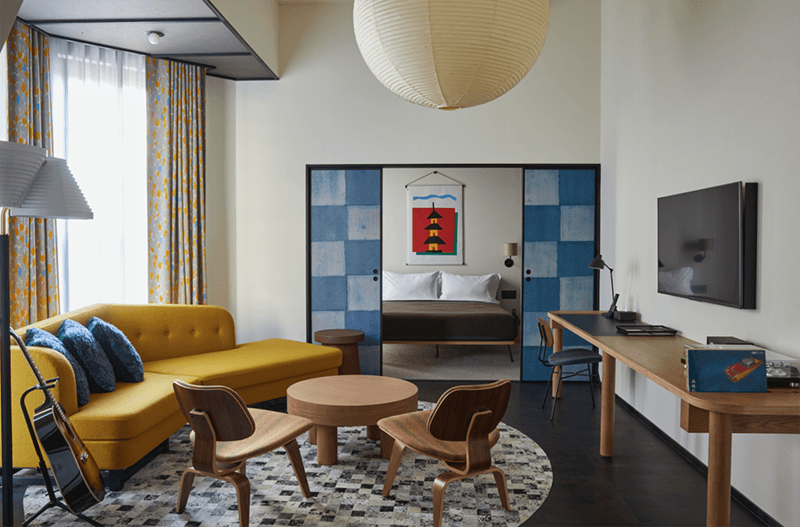 KyotoAce Hotel KyotoAce's first hotel in Asia: 213 rooms in a 1926 telephone exchange and a Kengo Kuma wing in central Kyoto.Kyoto · CapellaCapella KyotoCapella's first hotel in Japan: 89 rooms by Kengo Kuma in the Miyagawa-cho geiko district, beside Kennin-ji.KyotoBanyan Tree Higashiyama KyotoFifty-two rooms by Kengo Kuma between Kiyomizu-dera and Kodai-ji, with a natural onsen and a Noh stage.KyotoImperial Hotel, KyotoFifty-five rooms in the restored 1936 Yasaka Kaikan on Hanamikoji, in the heart of Gion.
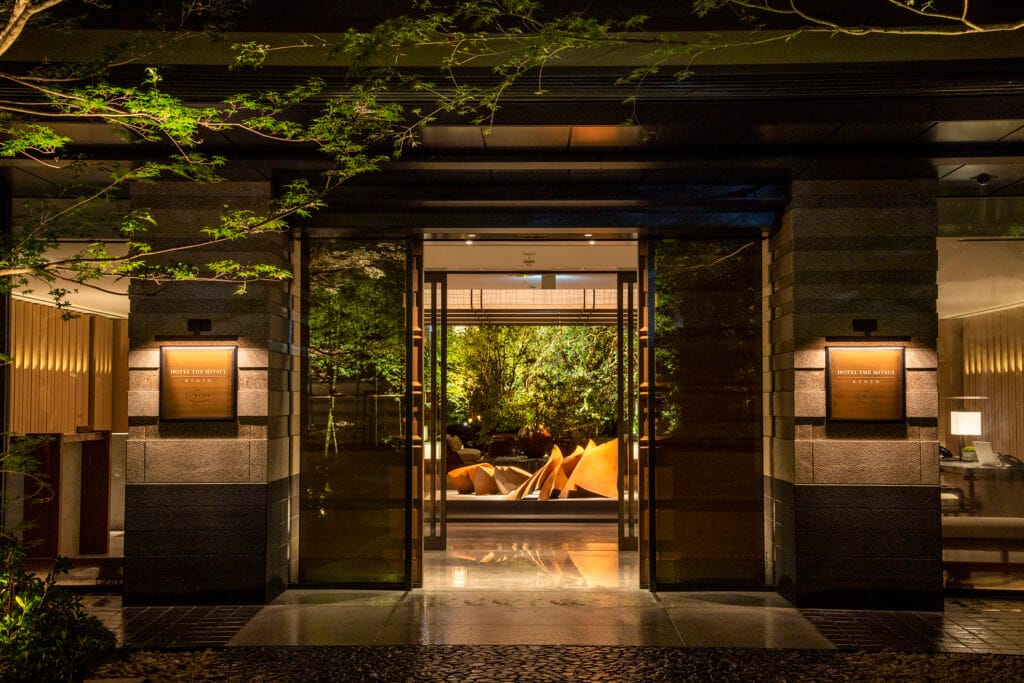 KyotoHotel The Mitsui KyotoA hotel on the Mitsui family's former Kyoto estate opposite Nijo Castle, entered through a 300-year-old gate.
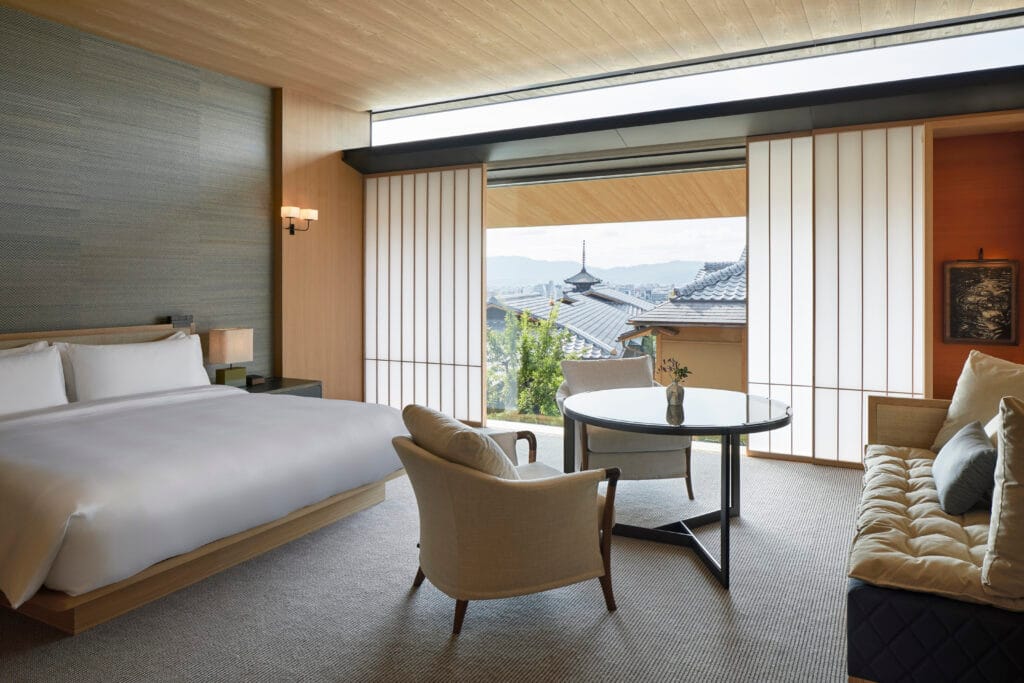 Kyoto · Park HyattPark Hyatt KyotoSeventy rooms beside Kodai-ji in Higashiyama, sharing a historic site with the 1877 ryotei Kyoyamato.KyotoHoshinoya KyotoA 25-room riverside ryokan-style retreat in Arashiyama, reached by boat along the Oi River.
Continue
More guides to Kyoto
 Kyoto · Craft & ShoppingKyoto Tea, Machiya and Ritual: A Guide to the City’s Living CraftsA short guide to Kyoto's living crafts: tea, the machiya townhouse, kaiseki and the Gion festival.Kyoto · Where to StayWhere to Stay in Kyoto’s Higashiyama: A Guide to the Hotels Beside the TemplesWhere to stay on Kyoto's eastern hillside, from Kengo Kuma's Banyan Tree to the restored Yasaka Kaikan in Gion.
Experiences
Experiences in Kyoto
Journal
From the Journal
Feature · TravelKyoto’s Decade of New Hotels, and How to Choose Between ThemFrom Four Seasons in 2016 to Capella and the Imperial in 2026.October 3, 2026Feature · Design & ArchitectureHoshinoya Kyoto and Hoshinoya Tokyo: One Architect, Two Ways to Reinvent the RyokanOn the Oi River in Arashiyama the ryokan is rebuilt around a century-old house.October 8, 2026Feature · Design & ArchitectureKyoto’s Machiya: The Wooden Townhouses and How to Stay in OneThe narrow wooden houses of Kyoto's merchants were shop, workshop and home in one long plan.October 4, 2026