Ace Hotel Kyoto
Ace's first hotel in Asia moved into the 1926 telephone exchange that Kyoto listed before any other building, and let Japanese craftspeople furnish it.
- Neighbourhood
- Karasuma Oike, central Kyoto
- Rooms
- 213
- Status
- Open
- Design
- Kengo Kuma & Associates (architecture and restoration); Commune Design (interiors); original 1926 building by Tetsuro Yoshida
The red-brick building on Karasuma Street was the Kyoto Central Telephone Office, designed in 1926 by Tetsuro Yoshida, an architect of the Ministry of Communications who went on to design the Tokyo Central Post Office. When Kyoto began listing its own cultural properties, this was the first building on the list.

From 2001 to 2016 it housed a shopping centre called Shin-Puh-Kan, a name chosen to bring a new wind to the city. NTT Urban Development then rebuilt the block around it and reopened it in 2020 under the same name, with Kengo Kuma & Associates restoring Yoshida's three storeys and adding a wing of seven around a planted courtyard. The new facade is a grid of Kyoto cedar, precast concrete blackened with iron oxide and slatted aluminium awnings, drawn from the lattices of the city's machiya, and the lobby ceiling is cedar joined in the interlocking kigumi manner. OKYTO places it among Kyoto's architecture hotels.
Ace Hotel Kyoto, the American group's first hotel in Asia, takes the upper floors of both buildings, with 213 rooms. Only the Historic rooms and the Ace Suite are in Yoshida's telephone office; the rest are in Kuma's wing. The restaurants lean on California: tacos and cocktails by the Los Angeles chef Wes Avila, an Italian-American rooftop, the first Stumptown coffee shop in Japan, and alongside them a Japanese steakhouse, Kōsa.
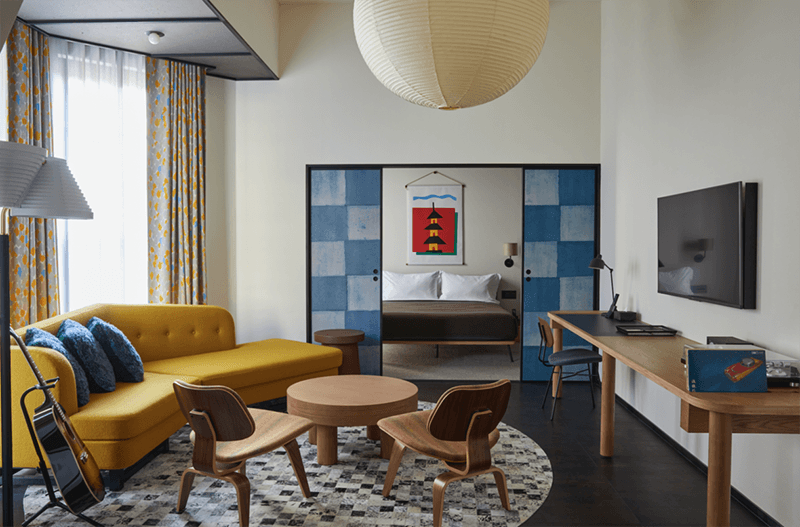
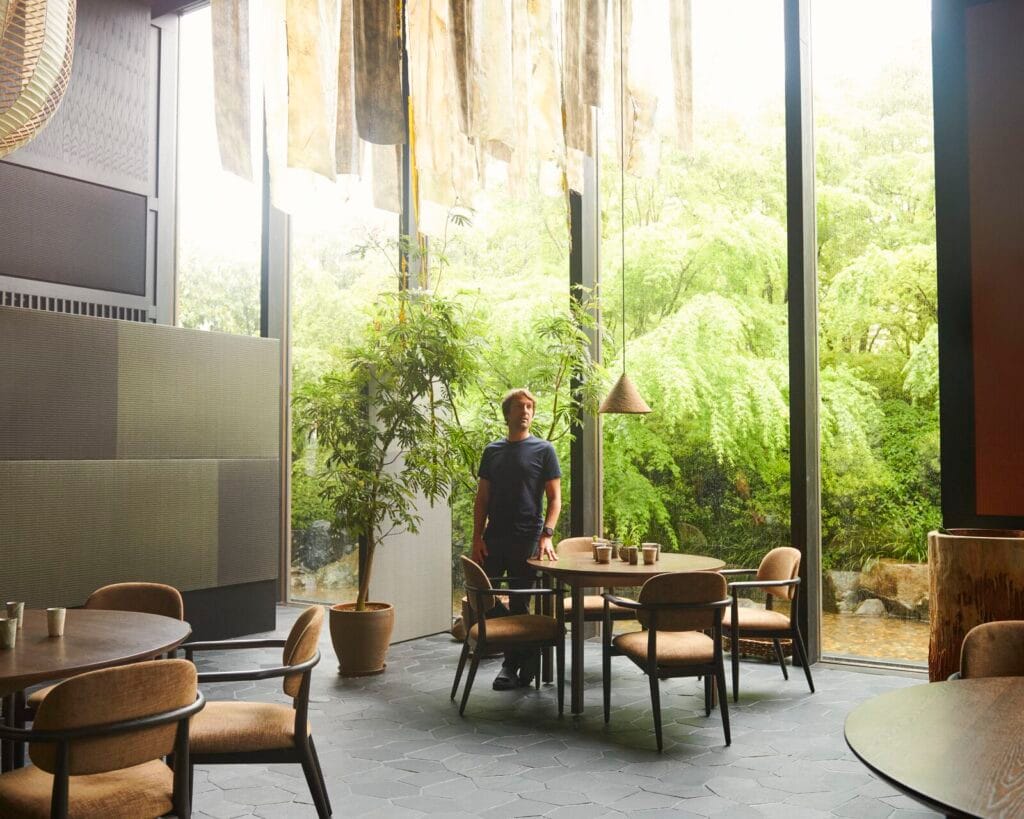
The interiors went the other way. Commune Design of Los Angeles, led by Roman Alonso, built them around Japanese craft: furniture shaped by Charlotte Perriand's years in Japan in the 1940s, ceramic vessels by Kazunori Hamana, walls of Shigaraki stoneware tile, lanterns of paper and bamboo from the Kyoto maker Kobishiya Chube. The lettering is handmade too. Samiro Yunoki, the stencil-dyer of the mingei movement, born in 1922, drew the hotel's logo and its typeface and made the noren in the lobby and the artwork hung in every room.
Sources: Impress Watch; Interior Design; Ace Hotel Kyoto
Location
- Address
- 245-2 Kurumayacho, Nakagyo-ku, Kyoto 604-8185, Japan
- Website
- Official website