ExperienceJeju, South Korea
Climb Hallasan, the highest mountain in South Korea
A full-day ascent of the 1,947-metre volcano at the centre of Jeju to the crater lake of Baengnokdam, by reservation.
Trek
What the experience is
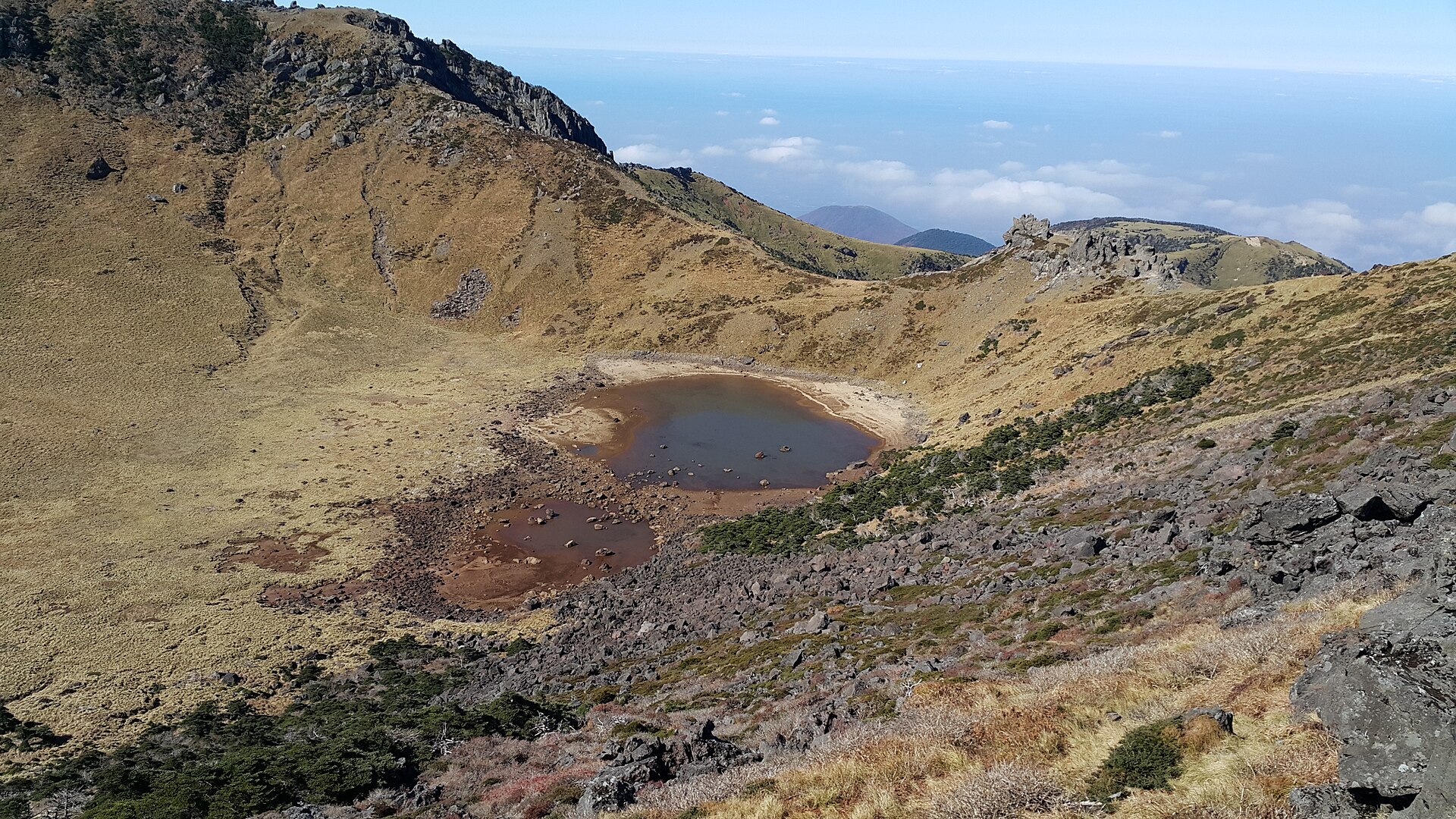
Hallasan is the volcano that made Jeju. At 1,947 metres it is the highest point in South Korea, and its long, gentle slopes fill the middle of the island. The summit holds a crater more than 400 metres across with a lake, Baengnokdam, the “white deer lake”. About 360 smaller volcanic cones, called oreum, are scattered over its flanks. The last eruption on record was in 1007. The mountain is a national park and part of the World Heritage site of Jeju Volcanic Island and Lava Tubes.
The trails
Five trails climb the mountain. Only two go to the summit, and both require an advance online reservation. Seongpanak, from the east, is 9.6 kilometres each way: long and steady, mostly in forest, on rock steps and boardwalk. Gwaneumsa, from the north, is 8.7 kilometres, steeper and more varied, with the better views of the cliffs below the crater. A good plan is to go up Seongpanak and come down Gwaneumsa, which requires transport at both ends.
The other three trails, Eorimok (4.7 kilometres), Yeongsil (3.7 kilometres) and Donnaeko (9.1 kilometres), climb to the high plateau at Witse Oreum, below the summit cliffs. Yeongsil, the shortest, passes a wall of rock pinnacles and open moorland and gives much of the mountain’s character in half a day.
When to go
Late spring, when the azaleas flower on the plateau, and autumn are the best seasons. Winter ascents in snow are popular with Koreans and require crampons. Weather on the summit differs from the coast; the crater is often in cloud, and the lake is low or dry outside the rainy months.
Good to know
Only the summit needs a reservation. Since May 2025 the Seongpanak trail can be walked freely as far as the Jindallaebat shelter, and the Gwaneumsa trail as far as Samgakbong, but the crater rim of Baengnokdam is reached on a timed booking made on the park’s official site, Visit Halla. It is capped at 1,000 walkers a day from Seongpanak and 500 from Gwaneumsa. In winter, from October to March, the trails close to new walkers at 11:30 on these two routes and the summit must be left by 13:30. There are also cut-off times: walkers must start by a set hour in the morning and pass the upper shelters by a set time, or they are turned back. The times change with the season.
There is no water above the trailheads and no food for sale on the mountain. Carry both, with a windproof layer. The summit round trip takes most people eight to nine hours.
Why OKYTO recommends it
The climb is not difficult, only long, and it shows the island whole: forest of oak and fir, the bare upper slopes, and from the rim, on a clear day, the coast on every side. For those who do not want the full day, Yeongsil is one of the best short mountain walks in Korea. Our Jeju pages cover the island, the Jeju Olle guide describes the coastal alternative, and the JW Marriott Jeju on the south coast is the most comfortable base.
The Details
Essentials
- Location
- Seongpanak or Gwaneumsa trailhead, Jeju
- Duration
- One full day (8 to 9 hours for the summit); half a day for Yeongsil
- Best time
- May to June and September to November; winter with crampons
Planning
- Level
- Demanding (17 to 19 km round trip, about 1,200 m of ascent; not technical)