Italian Cooking in Asia: Bombana, Romito, Airaudo and the Kitchens That Cook Local
Italian cooking in Asia, as OKYTO covers it: the restaurant families of Umberto Bombana, Niko Romito and Paulo Airaudo, and the kitchens from Busan to Bali that cook Italian with local produce.
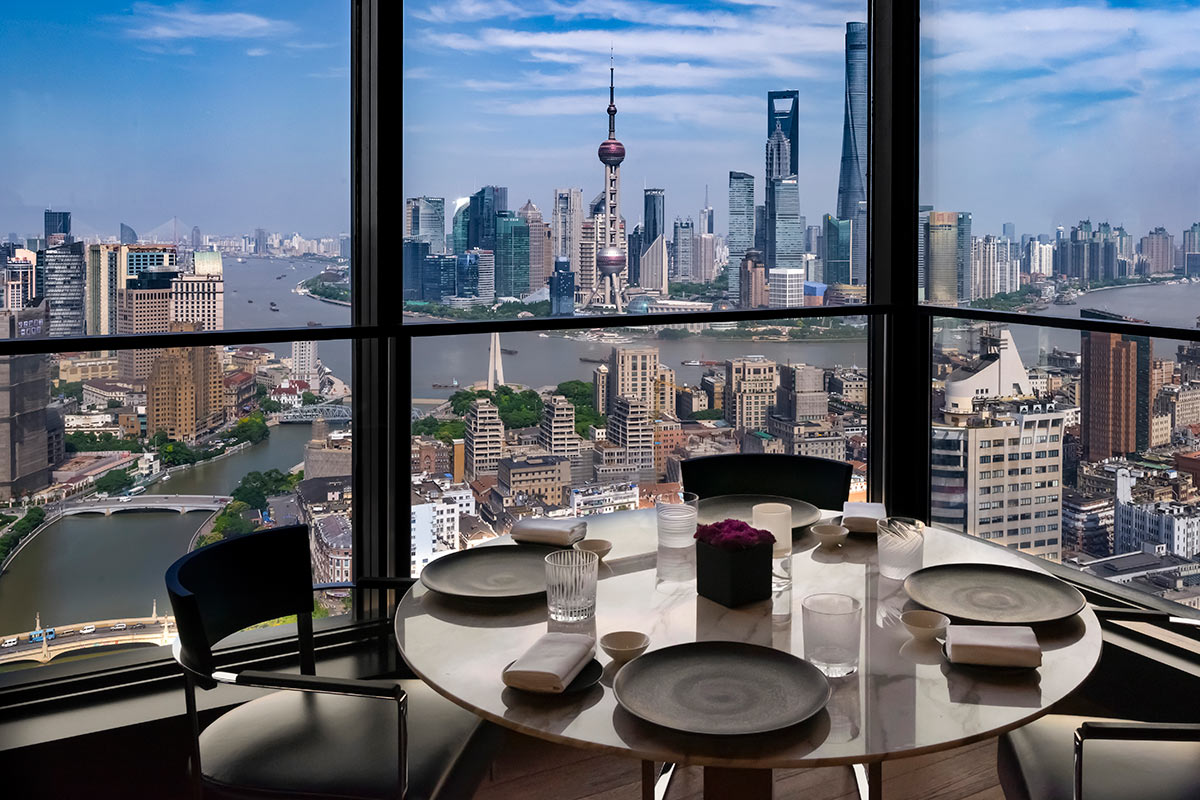 Photo: Bvlgari Hotels & Resorts
Three chefs each have several of the Italian restaurants OKYTO covers in Asia: Umberto Bombana, whose restaurants run from Hong Kong to Bangkok; Niko Romito, whose Il Ristorante follows the Bulgari hotels; and Paulo Airaudo, with seafood in Hong Kong and pasta in Bangkok. Around them, a group of smaller kitchens cook Italian with the produce of the place, from a farm on a Busan hill to a bay in Flores. This guide follows both.
Umberto Bombana
Bombana’s flagship is 8½ Otto e Mezzo Bombana, his classical Italian restaurant in Central, with three Michelin stars. In Hong Kong he also runs Octavium, two stars, with classic cooking and house-made pasta, and Tuber, a truffle-themed restaurant at K11 MUSEA, with one. The 8½ name has travelled: 8½ Otto e Mezzo Bombana Shanghai, above Yuanmingyuan Road, holds two stars, and 8½ Otto e Mezzo Bombana Macau, at Galaxy Macau, led by Marino D’Antonio, one. In Bangkok, Cannubi, at Dusit Thani, is led by Andrea Susto and holds one star.
Niko Romito and the Bulgari hotels
Niko Romito’s Il Ristorante follows the Bulgari hotels, and the three on OKYTO each hold one star: on the 40th floor of Bvlgari Hotel Tokyo, on the 47th floor of Bulgari Hotel Shanghai, and at Bvlgari Hotel Beijing, where the cooking is described as pared back.
Paulo Airaudo and the high floors
Paulo Airaudo’s Noi, at Four Seasons Hong Kong, serves a seafood-led set menu and holds two stars; in Bangkok, Sartoria pairs modern Tuscan pasta with Thai produce on the 56th floor of The Empire in Sathorn, and won a star in the 2027 guide. Hong Kong’s other one-star Italians include Tosca di Angelo, Angelo Aglianò’s Southern Italian cooking on the 102nd floor of The Ritz-Carlton, and Estro, a Neapolitan chef’s tasting menus on Duddell Street.
A family and a fashion house have rooms in the region too: the Iaccarinos, from the south of Italy, at Don Alfonso 1890, in the Palazzo Versace at Grand Lisboa Palace, Macau, with one star; and, in Beijing, the Milanese fashion brand behind GIADA Garden, a Northern Italian restaurant at the China World Hotel, also starred.
Tokyo
Tokyo cooks Italian with Japanese produce. Prisma, Tomofumi Saito’s one-man kitchen in Minami-Aoyama, holds two stars; in Ginza, FARO, where Mizuki Yamaguchi also offers a vegan menu, and Gucci Osteria da Massimo Bottura hold one each. Arva, at Aman Tokyo, reads Japanese produce through its chef’s Veneto experience, and in Soshigaya, Zupperia Osteria Pitigliano serves Tuscan country soups and handmade pasta, with a Bib Gourmand.
Italian with local produce
In Karuizawa, Yuichi Chikaya builds Ha-Na-Re on local producers and the restaurant’s own garden. In Busan, a husband-and-wife team who still farm the land serve a fresh-pasta tasting menu at Fiotto, on Dalmaji Hill, from their family’s vegetables. In Phuket, Arva, Amanpuri’s Italian harvest kitchen, cooks Bang Tao seafood in a Thai wooden pavilion, and Red Sauce, at Rosewood Phuket, serves nonna-style pasta on a terrace over Emerald Bay. In Bali, Maurizio Bombini’s Mauri, in Seminyak, serves an Apulian-rooted tasting menu; in Sanya, Rosewood’s Chop House, now billed as Italian, is built on steak and house-cured charcuterie; in Labuan Bajo, La Cucina serves wood-fired pizza over the bay; and in Ho Chi Minh City, Apero keeps to carbonara and tiramisu in An Khánh.
Before booking
The stars quoted are those on each restaurant’s page; ratings change every year. Each page gives the address, hours and booking details.
Sources: OKYTO restaurant pages for each address and their cited sources, including the MICHELIN Guide.