Capella in Asia: Seven Hotels, Seven Stories, One Singapore Owner
Founded by the Ritz-Carlton veteran Horst Schulze and owned since 2017 by Singapore's Kwee family, Capella has built a small Asian collection in which each hotel is a story: a Sentosa estate, Bensley's tents and opera house, a Shanghai lane, a Bangkok riverbank, a Taipei mansion and a Kyoto school.
Capella is the youngest of the luxury groups with a real Asian identity. Horst Schulze, a co-founder of Ritz-Carlton, started the company in 2002; in 2006 he formed a joint venture for Asia with the Kwee family of Singapore, owners of the developer Pontiac Land, and in 2017 he sold the group to them, and its headquarters moved to Singapore. Since then Capella has opened slowly and deliberately, and each hotel has been built around a strong narrative, often by a designer with a recognisable hand. OKYTO covers seven.
Singapore: the colonial estate
The first, Capella Singapore, opened on Sentosa in 2009, with Foster + Partners joining two 1880s colonial buildings, once British officers’ quarters, to new curving wings in the forest. It remains the group’s flagship and the place where its style of discreet, personal service was set.
Bensley’s two Capellas
Bill Bensley, profiled in OKYTO’s guide to his hotels, gave Capella two of its most theatrical properties. In Bali, Capella Ubud was meant to be a hotel of about a hundred rooms until he persuaded the owner to build 22 tents in the Keliki forest without cutting a tree, furnished as an imagined explorers’ camp; OKYTO covered its opening. In Hanoi, Capella Hanoi, five minutes’ walk from the Opera House, became a theatre of opera and the stage, with a past invented for it; it has since earned three Michelin Keys, as described in Capella Hanoi and Amanoi earn three keys.
Shanghai: the lane houses
Capella Shanghai occupies Jian Ye Li, a 1930s estate of shikumen lane houses in the former French Concession. Only a third of the old fabric survived intact, and the rest was rebuilt; the result is 55 villas along the lanes, each with its own entrance and roof terrace, and one of the most discussed restorations in Shanghai.
Bangkok: one room deep
On the Chao Phraya Estate, beside the Four Seasons, Capella Bangkok opened in 2020 as a low building only one room deep, so that every one of its 101 suites and villas faces the river. It has become the group’s most decorated hotel: second in the World’s 50 Best Hotels in 2026, as OKYTO reported in Capella Bangkok No.2, and holder of three Michelin Keys.
Taipei and Kyoto: the mansion and the school
The latest openings carry the narrative method into design-led cities. Capella Taipei (2025) is André Fu’s modern mansion, four floors of an insurer’s headquarters on Dunhua North Road reached by its own cobbled drive; OKYTO’s portrait of André Fu explains his idea of the hotel as a house. Capella Kyoto (2026), the group’s first hotel in Japan, stands on the site of a school founded in 1869 by its neighbourhood’s townspeople, built by Kengo Kuma together with a rebuilt neighbourhood theatre.
What makes a Capella
The seven hotels share little in architecture and a great deal in approach: small room counts, a strong local story, a designer allowed to tell it fully, and an emphasis on the personal host, the Capella Culturist, who designs guests’ days around the place. Compared with the larger networks of Four Seasons or Rosewood, Capella’s Asian collection is closer to a set of individual houses than to a chain.
Mentioned
In this story
 Singapore · CapellaCapella SingaporeA resort on Sentosa, opened in 2009.Discover →Bali · CapellaCapella Ubud, BaliCapella Ubud was meant to be a hotel of about a hundred rooms until Bill Bensley talked its owner into 22 tents…Discover →
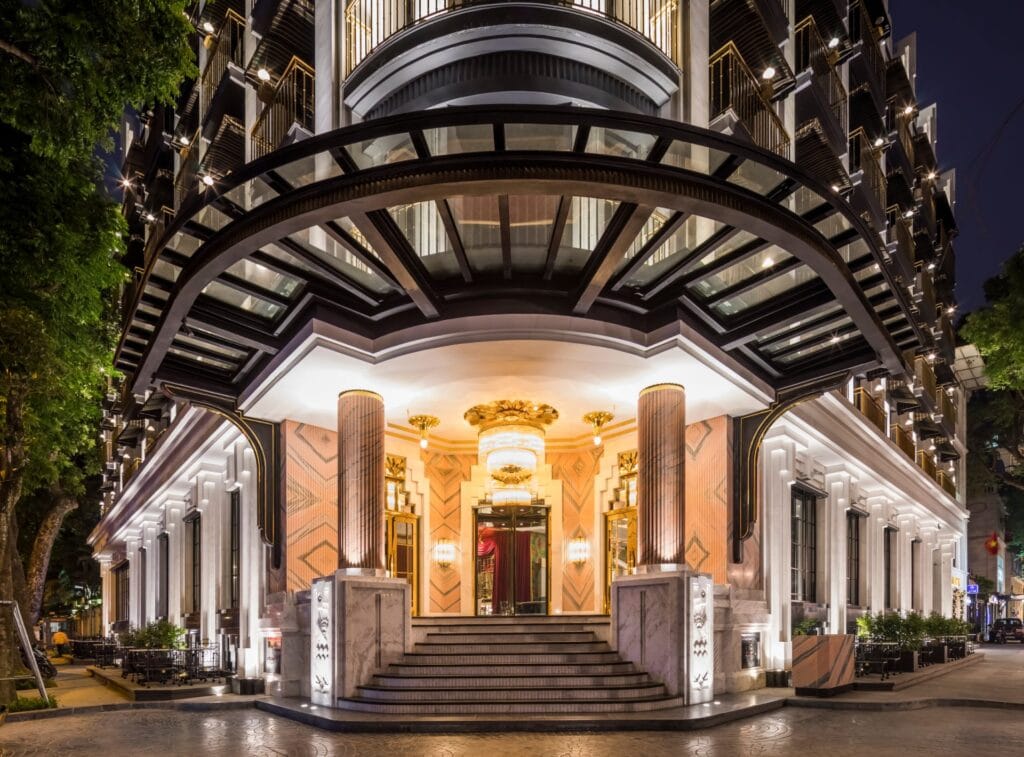 Hanoi · CapellaCapella HanoiFive minutes' walk from Hanoi's Opera House.Discover →Shanghai · CapellaCapella Shanghai, Jian Ye LiIn Jian Ye Li, a 1930s shikumen estate in the former French Concession, Capella runs 55 lane-house villas.Discover →