Luang Prabang
Laos · Southeast Asia
The old royal capital of Laos, a town of monasteries and colonial villas between two rivers, now two hours from Vientiane by train.
Why visit
Why visit Luang Prabang
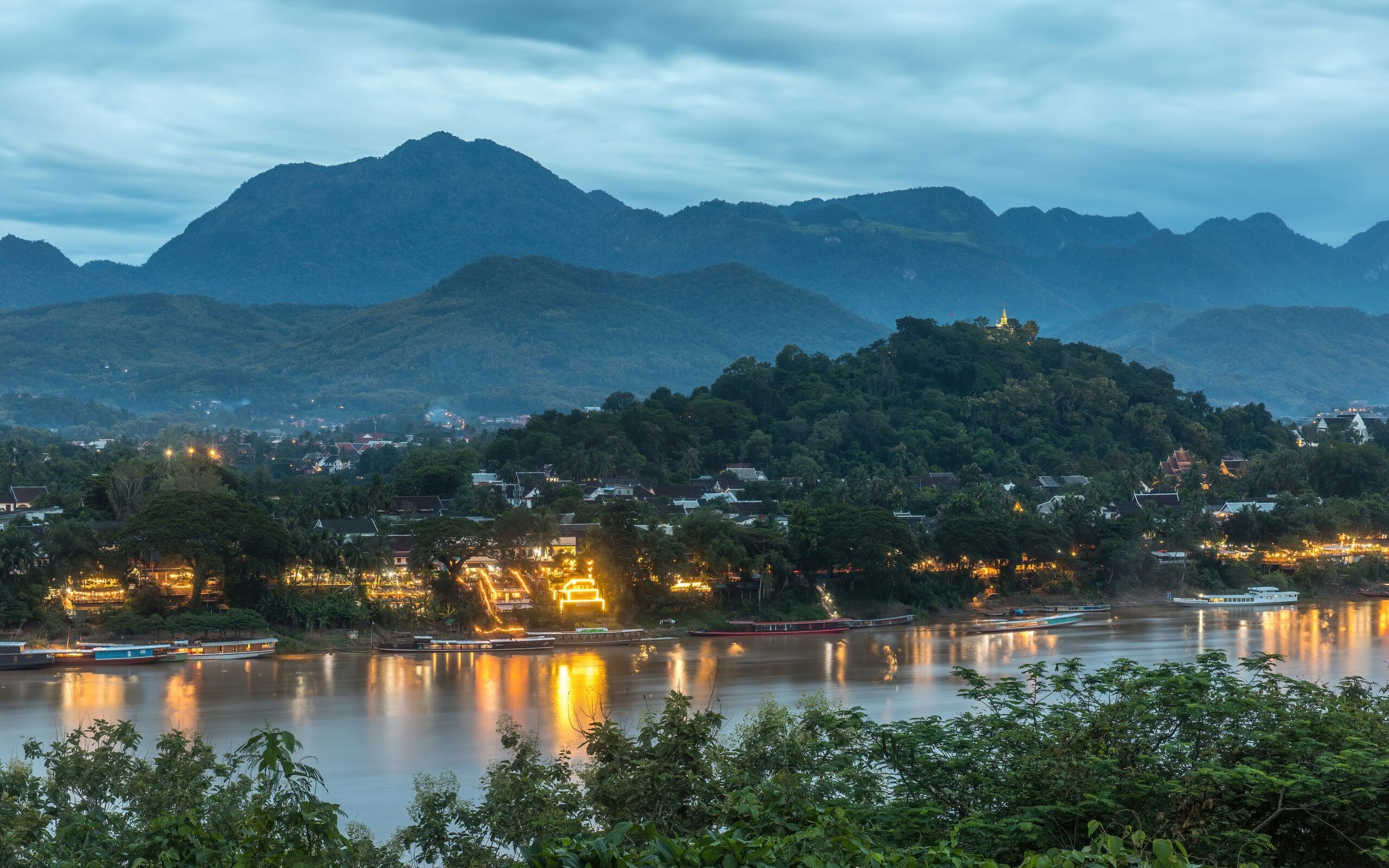
Go for a town that has kept its scale. There are more than thirty monasteries on a peninsula that can be walked in half an hour, and between them streets of two-storey houses with shutters and balconies, many now small hotels and cafés. Few places in Southeast Asia combine temples, rivers and townhouses so closely.
Go also for the rhythm of the day: the river in the afternoon, the view from Mount Phousi at sunset and the night market after dark. Rise early and the town is at its best, when mist still lies on the Mekong and the lanes are empty. The guide to Luang Prabang sets out three days.
Explore
What to see
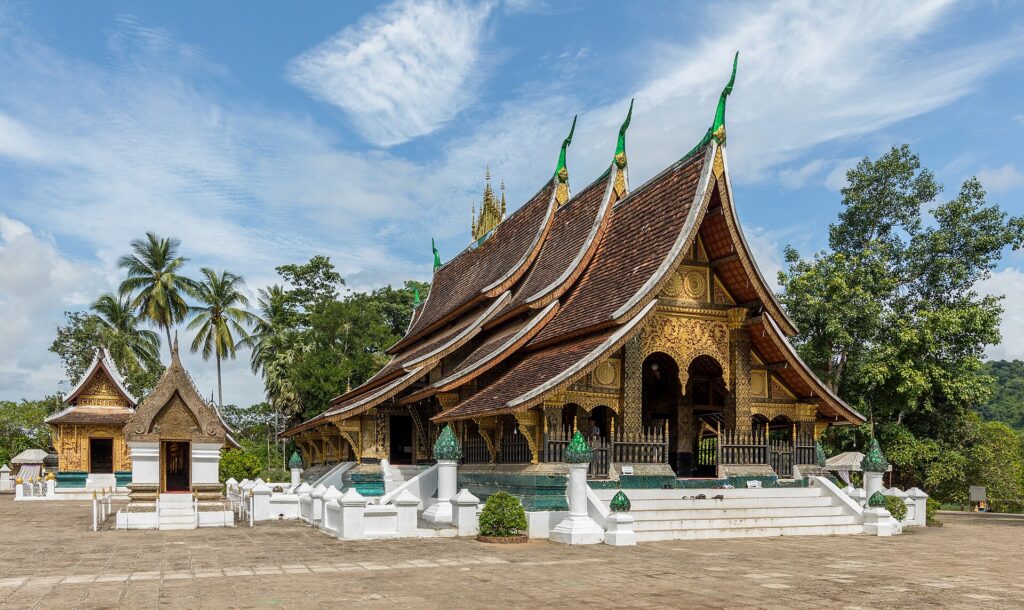
Wat Xieng Thong. The finest of the monasteries, founded in 1560 at the tip of the peninsula, with roofs that sweep almost to the ground and a mosaic of a tree of life on its rear wall.
The Royal Palace Museum. The former palace holds the Phra Bang, the gold Buddha image from which the town takes its name.
Mount Phousi. The hill at the centre of the town, climbed by steps for the view over both rivers.
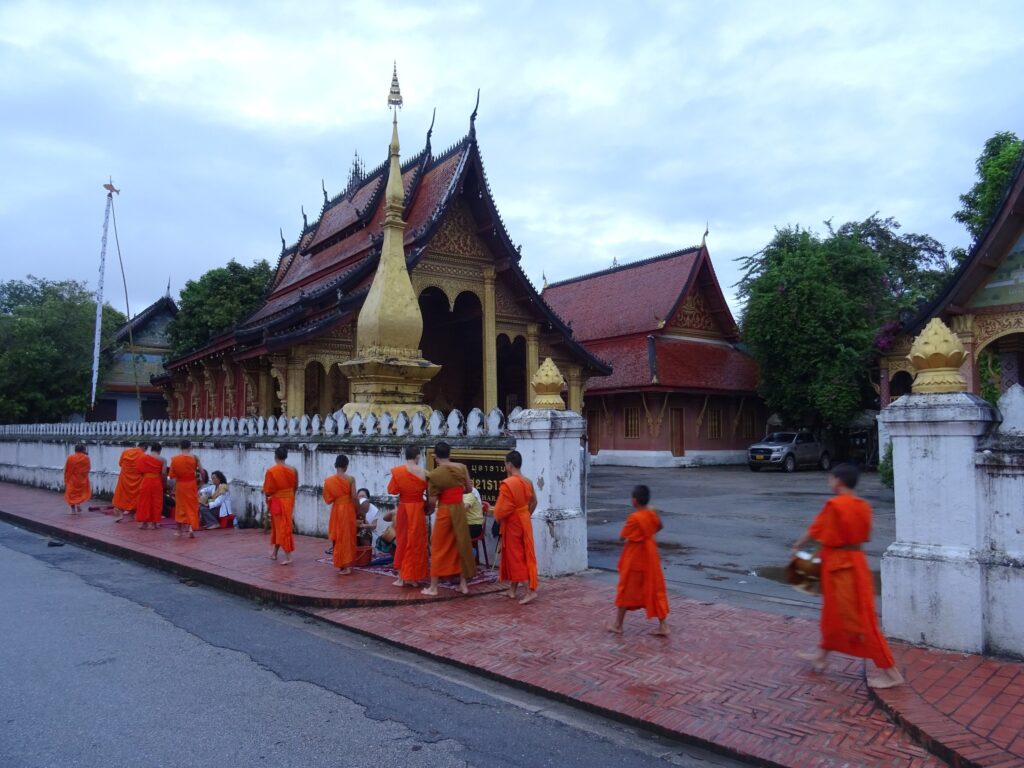
The alms round. At dawn the monks and novices walk in file to receive food. It is a religious act, and the crowds that gather have become a concern for residents. Watch the dawn alms round from a respectful distance, in silence, away from the monks’ path, or take part properly.
Out of town. The Kuang Si waterfall, with its turquoise pools, lies to the south. The Pak Ou caves, filled with Buddha figures, are reached by boat up the Mekong. Travellers with longer can continue to the Plain of Jars and walk among the jars.

Hotels
Where to stay in Luang Prabang
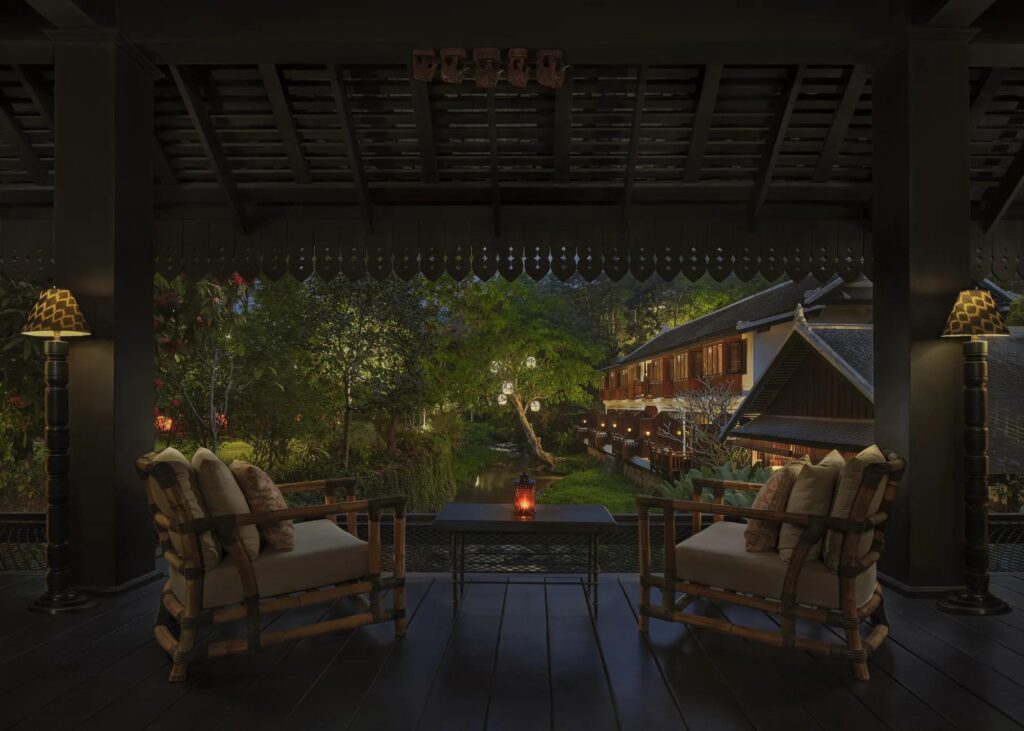
Luang Prabang offers three kinds of stay. In the old town, colonial houses have become small hotels, close to the monasteries and the night market, and best for travellers who want to walk. On a hill above the town, La Résidence Phou Vao looks over the roofs and the valley, quiet and a short drive from the centre.
Dining
Where to eat in Luang Prabang
Lao cooking is built on sticky rice, fresh herbs, grilled river fish and laap, a salad of minced meat or fish. The town’s French past survives in its bakeries and cafés, and the night market has food stalls in the lanes beside it. For a longer, more formal dinner, Manda de Laos serves refined Lao dishes to share around a lotus pond, just outside the heritage zone, and Tamarind, on the Nam Khan, is a Lao restaurant and cooking school that explains the cuisine.
The Journal
Latest on Luang Prabang
Before you go
Practical information
Best time to visit
November to February is cool and dry. March and April are hot and hazy with smoke from field burning. The rainy months from June to September are green and quiet.
Getting around
The Laos-China railway links the town with Vientiane and with Kunming, though the station is some distance from the old town, and there are flights from Bangkok, Hanoi and Siem Reap. The old town is walked or cycled. Boats cross and travel the Mekong, and cars or tuk-tuks reach the waterfall.
Practical notes
Three days are enough for the town and its surroundings. Dress with shoulders and knees covered in the monasteries and at the alms round. Rice for offerings should be bought from the market or through a hotel you trust, and the monks should not be photographed at close range.
Continue exploring
More from Southeast Asia
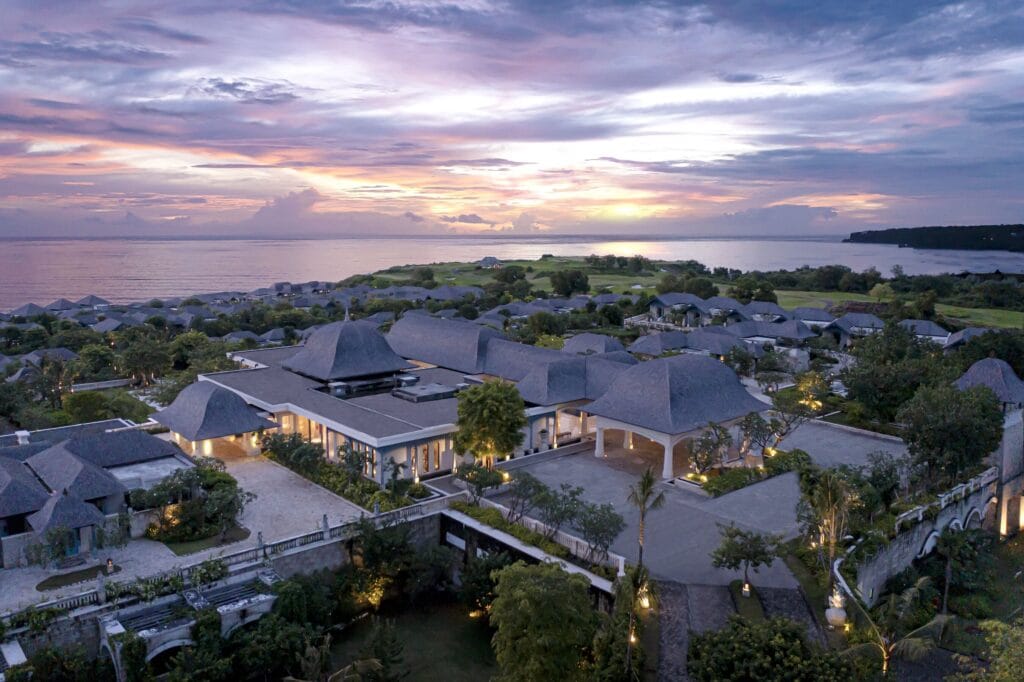 IndonesiaBaliAn island of water temples and rice terraces, with Ubud’s river valleys, the Bukit cliffs and Seminyak’s beach strip each holding a distinct set of hotels and restaurants.Explore Bali →
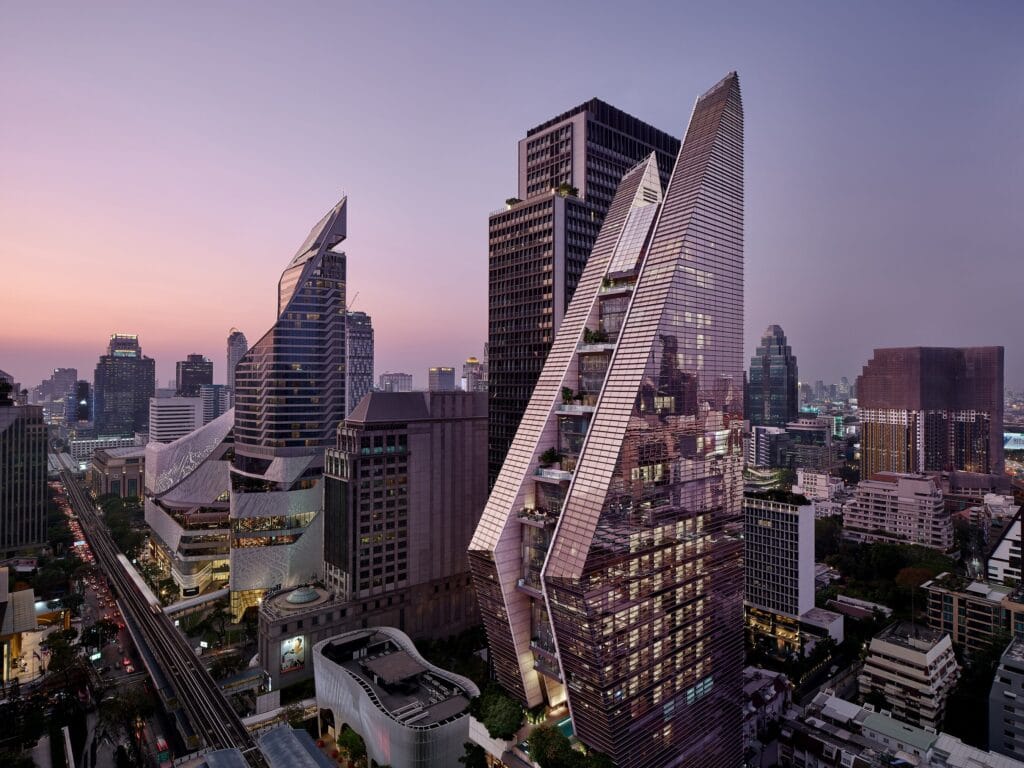 ThailandBangkokThailand’s river capital: the Grand Palace and Wat Pho on the east bank, Wat Arun opposite, a creative quarter along Charoen Krung and a restaurant scene that holds both of Thailand’s three-star kitchens.Explore Bangkok →
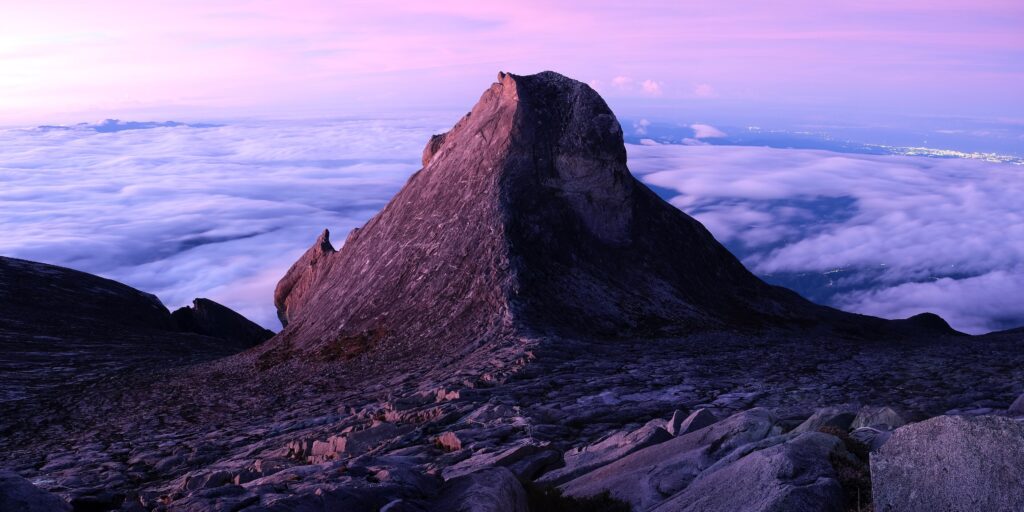 IndonesiaBorneoThe world's third-largest island, with Sabah's islands, rainforest and Mount Kinabalu, and the Niah Caves of Sarawak.Explore Borneo →