
Chengdu
China · Greater China
The capital of Sichuan: pandas, teahouses and the first three-star kitchen in the city’s Michelin Guide, with Leshan, Sanxingdui and Mount Qingcheng within a day’s reach.
Why visit
Why visit Chengdu
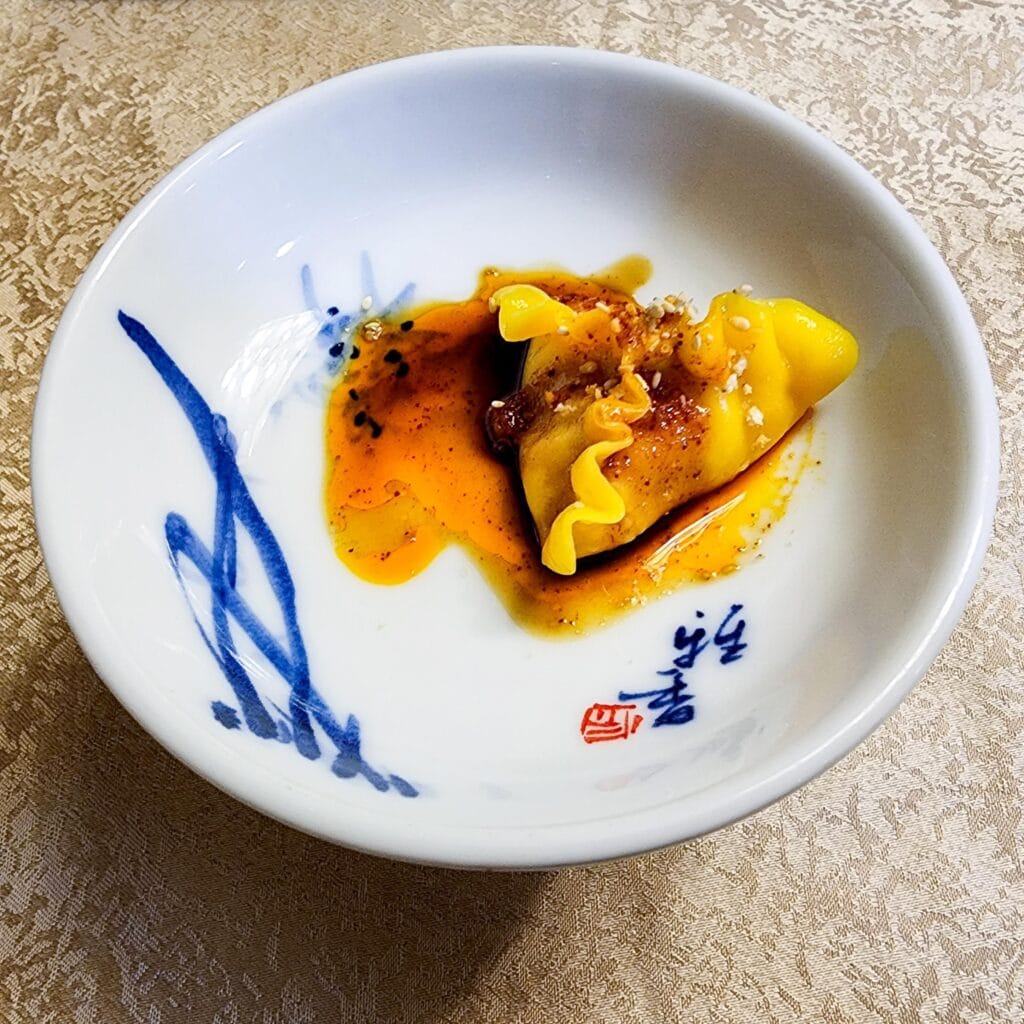
Chengdu’s defining flavour is mala, the numbing heat of Sichuan cooking. The tingle comes from native Sichuan peppercorns, which have a citrusy buzz, and the heat from chillies, which Portuguese traders brought from South America in the seventeenth century. Behind the heat is a more subtle kitchen: salt, pickled vegetables and pixian douban, a fermented broad bean and chilli paste, give the cooking its depth. Mapo tofu, hot pot and spicy noodles are the visible part of it.
The city’s other pleasure is its pace. A teahouse seat in People’s Park, with a bamboo chair and a pot that is endlessly refilled, is a better introduction than any museum. Wenshu Monastery, an ancient temple known for tea, vegetarian food and quiet, sits close to the lanes of Kuanzhai, and Daci Temple, near Chunxi Road, has a tea courtyard open to visitors. Jinli, a lantern-lit lane, shares its gate with Wuhou Temple, a shrine to Zhuge Liang.
The region around is rich in older history. Dujiangyan is a 2,280-year-old waterworks that still irrigates the plain and the easiest UNESCO site to reach from the city. Leshan, part of the same UNESCO property as Mount Emei, is about 130 kilometres south. And at Sanxingdui, near Guanghan, bronze eye masks and large standing figures belong to the Bronze Age Shu culture and date from roughly 2,800 to 4,500 years ago; the new museum, designed by MAD Architects, is built of six wooden buildings that glow after sunset.
Explore
What to see
The Chengdu Research Base of Giant Panda Breeding is about 10 kilometres from Tianfu Square. It is a leading centre for conservation, research and breeding, with the world’s largest ex-situ population of artificially bred giant pandas and the largest captive population of red pandas. Book the morning ticket, since pandas are active until about 10am and mostly asleep afterwards. Visitors on public transport use the west gate on Metro Line 3.
In the city, walk Kuanzhai Alley and People’s Park, where the Heming Teahouse is a classic place for the slow routine, then Wenshu Monastery. Taikoo Li Chengdu, which opened in 2015 beside Chunxi Road, weaves low lanes and Daci Temple into a retail district. Allow separate days for the excursions: Dujiangyan needs its own timed slot, allocated separately from Mount Qingcheng’s, and a high-speed line opened in 2024 makes a three-day trip to Jiuzhaigou workable. A guide to Chengdu beyond the pandas covers Sanxingdui, Leshan and a Taoist mountain retreat.
Hotels
Where to stay in Chengdu
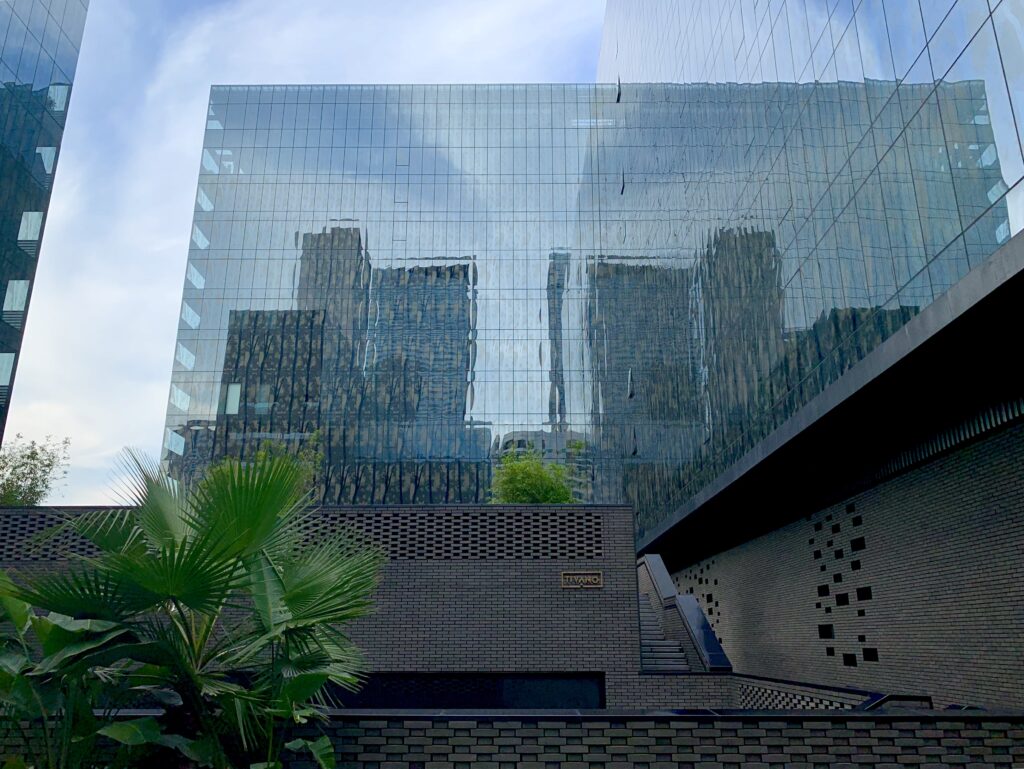
Stay in the centre for the city and out at the mountain for the quiet. The centre, around Chunxi Road and Taikoo Li, has the shops, teahouses and most of the restaurants; Qingcheng is for a retreat built around the mountain.
Dining
Where to eat in Chengdu
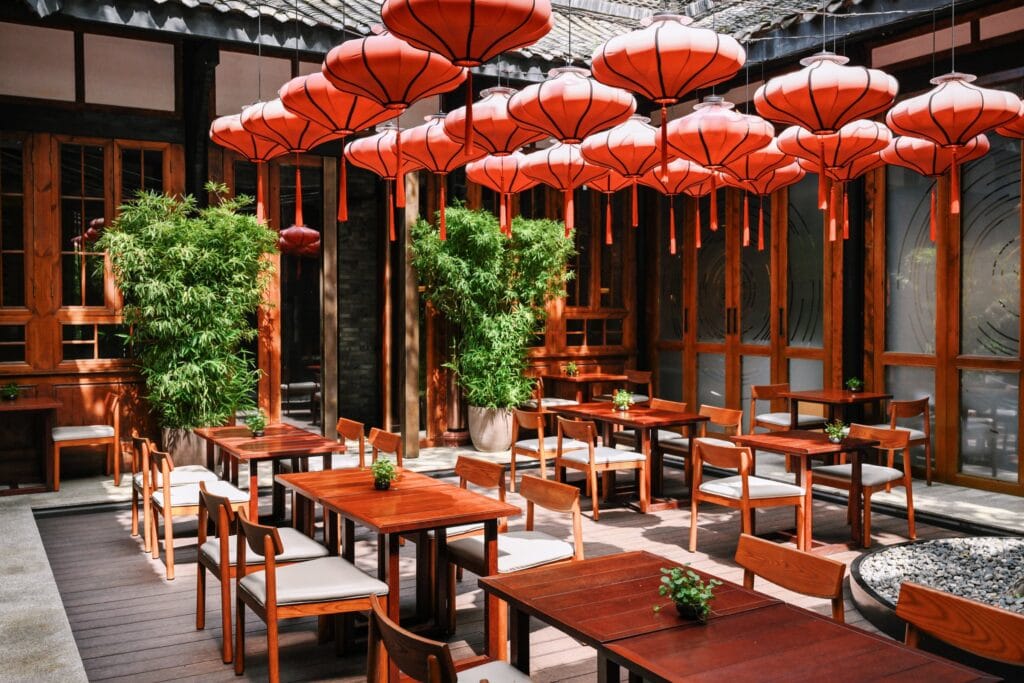
Sichuan cooking is the main event, and the city’s best restaurants take it seriously. In the 2027 MICHELIN Guide, Xin Rong Ji, a branch of the Taizhou restaurant group, became Chengdu’s first three-star restaurant, one of 15 starred restaurants in the city. Yu Zhi Lan, the small, quiet restaurant of owner-chef Lan Guijun, holds two stars, and new one-star entries include Zinan for Sichuan cooking. Stars change each year, so check the current guide.
Experiences
Experiences in Chengdu
 Cultural ImmersionSee the Giant Buddha of Leshan from the river and the cliffView the 71-metre Tang dynasty Buddha of Leshan by boat and by the cliff stairway.Explore →
 WildlifeMeet giant pandas at dawn in ChengduThe breeding centre on the edge of Chengdu holds more giant pandas than anywhere else on earth. They are awake, eating and playing for only a few hours after opening, so the visit starts early.Explore →
The Journal
Latest on Chengdu
 TravelLeshan and Mount Emei: The Giant Buddha and the Sacred Mountain4 October 2026
- Understanding Sichuan Food: The Flavours Behind the Heat
- Michelin Guide Chengdu 2027: Xin Rong Ji Gets Three Stars
- IHG Signs Regent Chengdu for 2029 Opening
- Taikoo Li Chengdu at Ten: Lanes, a Temple and 30 Million Visitors a Year
- Chengdu Science Fiction Museum Opens for the World Science Fiction Convention
Before you go
Practical information
Best time to visit
Spring (March to May) and autumn (September to November) bring mild weather, with early summer also workable. Winter, December to February, is cool, damp and cloudy at roughly 3 to 11°C, and June to August is hot and humid, with the heaviest rain and thunderstorms in July and August.
Getting around
The metro is generally the most convenient and reliable way to sightsee, with taxis and ride-hailing useful at night, with luggage or beyond the lines. Four lines are all a visitor needs: Lines 1 and 2 interchange at Tianfu Square, Line 10 serves Wuhou Temple and Shuangliu Airport, and Line 18 serves Tianfu Airport. Shuangliu is close to the city; Tianfu is about 50 kilometres out, with Line 18 reaching Chengdu South in roughly 34 minutes. Check which airport your ticket names.
Read more
For trains, Leshan and Emei services leave from Chengdu East, not Chengdu South. Chengdu to Chongqing by high-speed rail takes about 1 hour 15. Suburban sites such as Dujiangyan and Mount Qingcheng may need trains, buses, private cars or tours.
Practical notes
Alipay’s ride-code is the way to pay for the metro. Panda-base tickets and the Dujiangyan and Mount Qingcheng slots are booked in advance, so plan before arriving, and confirm which airport your flight uses before choosing a hotel.
Continue exploring
More from China
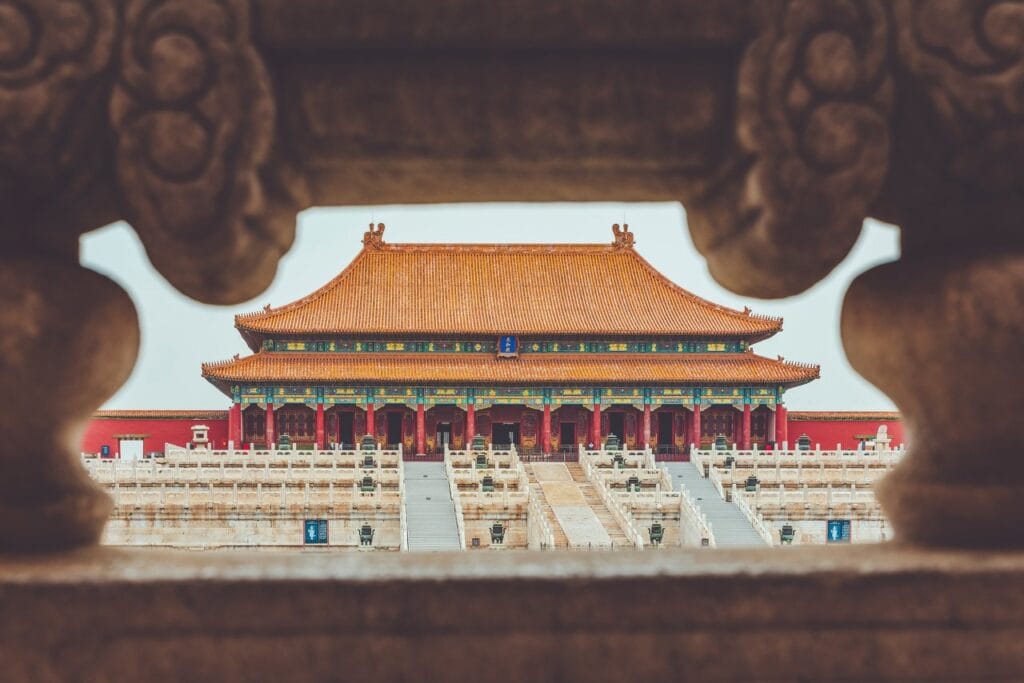 ChinaBeijingChina’s capital, laid out on a 7.8-kilometre Central Axis, with surviving hutong lanes, a contemporary-art district in a former East German-designed factory complex and a Michelin list led by Chaozhou and Taizhou kitchens.Explore Beijing →
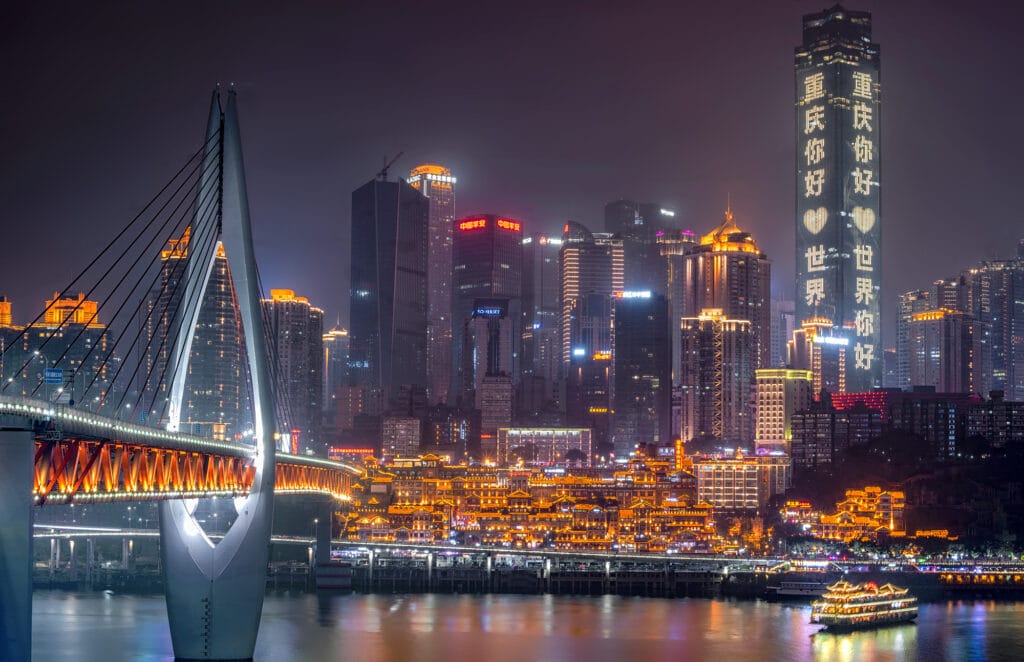 ChinaChongqingA municipality built on steep hills where the Jialing meets the Yangtze, known for hot pot, riverfront towers and the Dazu rock carvings.Explore Chongqing →
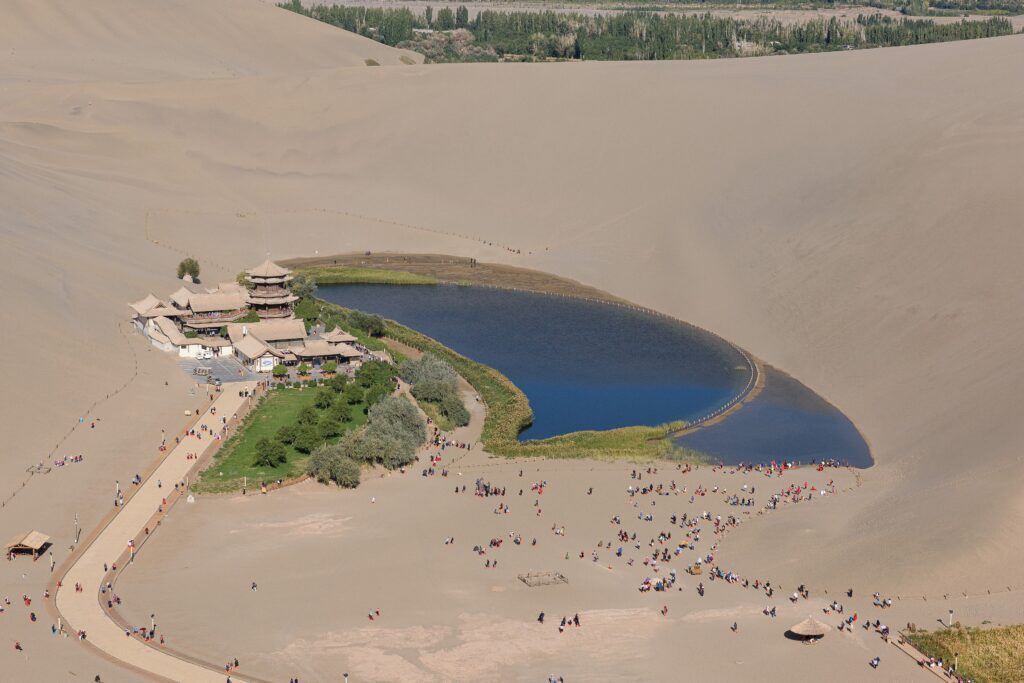 ChinaDunhuangA Silk Road oasis in Gansu, where Buddhist cave paintings, singing dunes and the ruined gates of the Han frontier lie within a day of one another.Explore Dunhuang →