Yunnan
China · Greater China
South-west China's plateau province, from Kunming and Dali to the gorges of the Three Parallel Rivers, the Tea Horse Road and the rice terraces of the south.
Why visit
Why visit Yunnan
Yunnan rewards a long route more than a single stop. The three great rivers run within a hundred kilometres of each other, divided by ranges of more than 6,000 metres, and Tibetan, Naxi, Lisu, Bai and Yi communities live at different altitudes on the same slopes. UNESCO calls the area an epicentre of Chinese biodiversity.
It is also a province where the place you sleep can be part of the journey. Songtsam, founded in 2000 by the former documentary film-maker Baima Duoji, has built Tibetan-owned lodges that make the north-west easy to travel without losing its character, and the lodge-to-lodge route is the most natural way to see it. Further south, tea country around Pu’er, where the old tea forests of Jingmai Mountain were inscribed in 2023, belongs to a different, tropical Yunnan.
Explore
What to see
In Dali, the old town stands at about 1,980 metres on the western shore of Erhai Lake, beneath the Cangshan range. The Three Pagodas of Chongsheng Temple date from the ninth century, when Dali was the seat of the Nanzhao and Dali kingdoms, and the lake is best seen from a bicycle or e-bike on the lakeside loops.
Lijiang’s UNESCO-listed old town, at about 2,400 metres, is a web of cobbled lanes, courtyard houses and canals, with Jade Dragon Snow Mountain rising behind the Black Dragon Pool. It grew with the Tea Horse Road trade and is the home of the Naxi people; the Lijiang page covers the town in more detail. Tiger Leaping Gorge, cut by the Jinsha River between Jade Dragon and Haba Snow Mountains, is about 3,790 metres deep, and its high trail takes two days. Rockfall is a risk, and the June to August monsoon is best avoided.
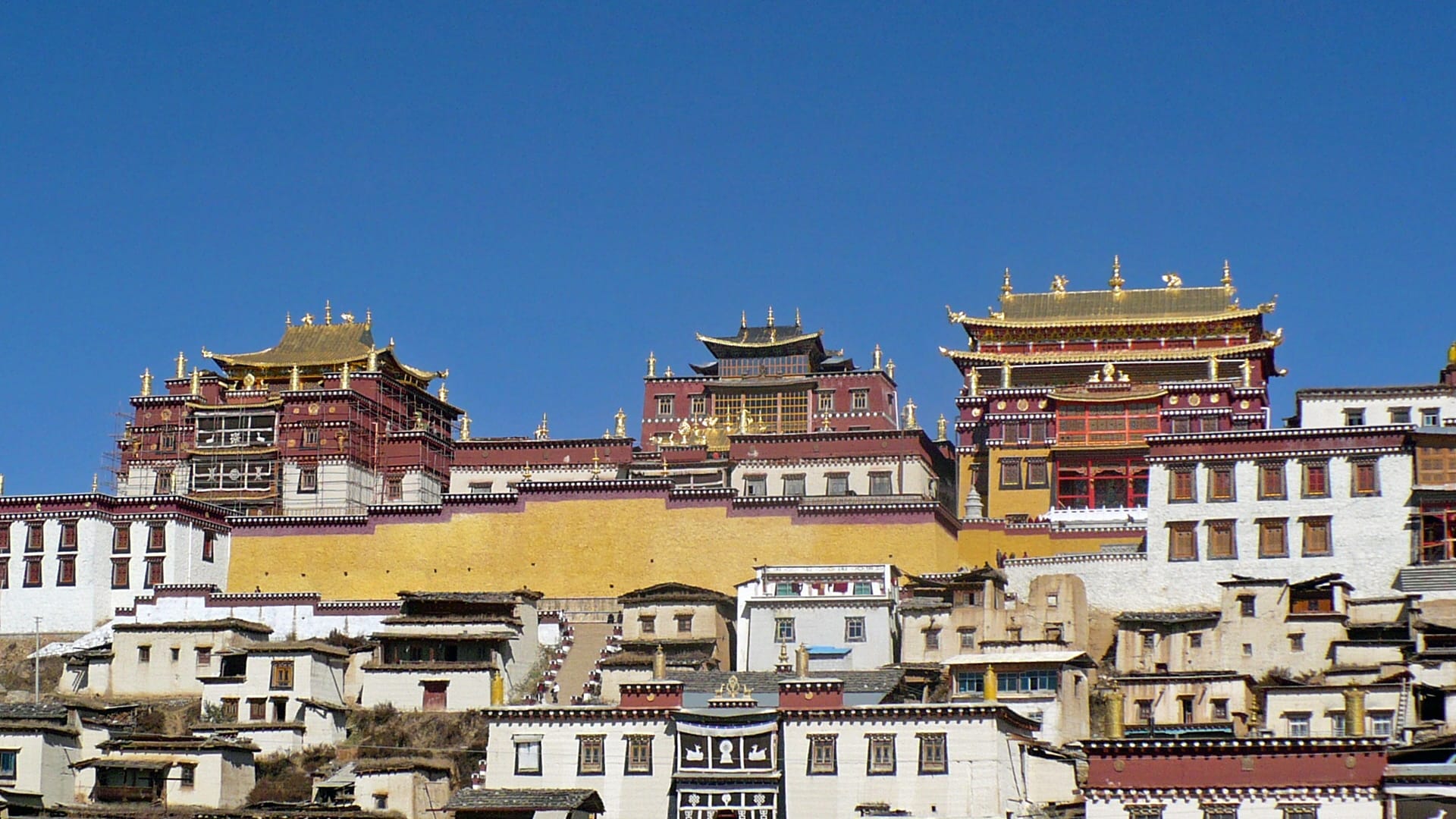
In Shangri-La, Songzanlin Monastery, founded in 1679, is Yunnan’s largest Tibetan Buddhist monastery, and Pudacuo National Park, at 3,500 to 4,100 metres, is known for its autumn colour. Meili Snow Mountain’s Kawagebo, at 6,740 metres, has never been climbed and climbing has been banned since 1994.
In the south, the Hani terraces of Yuanyang, listed by UNESCO in 2013, are at their best when the fields are flooded between October and April, and the way to see them is to watch the sunrise over the terraces. The Stone Forest, listed in 2007 as part of the South China Karst, is a day trip of about 88 kilometres from Kunming. Xishuangbanna, near the border, offers Dai Buddhist temples and tropical forest, and is better treated as a separate trip.
Hotels
Where to stay in Yunnan
Yunnan rewards choosing a few bases rather than a hotel in every town. Kunming works as an arrival night: Songtsam Linka Kunming, the group’s first urban property, has 53 rooms and suites in a building by the Pritzker Prize-winning architect Wang Shu on the shore of Dianchi Lake, and Shangri-La Kunming offers a larger city address.
 Shangri-La · Panlong District, beside the Kunming CBDShangri-La KunmingShangri-La Kunming stands on the plot of the old Camellia Hotel, bought in 2012 and slow to build, and opened in 2026 as a small tea merchant's mansion lifted to the 18th floor.Explore →
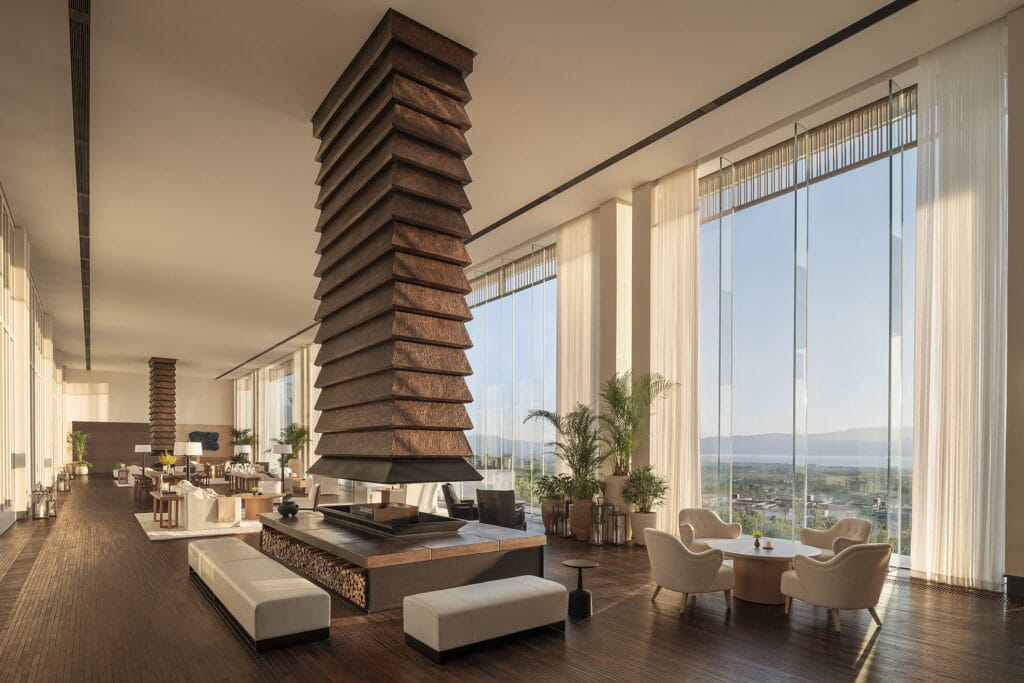 EDITION · Cangshan slopes, DaliThe Dali EDITIONHalfway up the Cangshan mountains above Erhai Lake, the Dali EDITION opened in June 2026 as a courtyard village of aged timber, bluestone and lake pebbles, with a working tea plantation at its centre.Explore →
Dining
Where to eat in Yunnan
Yunnan cooking draws on its minorities and its altitude: wild mushrooms, sour and spicy dishes from the Dai people in the south, and across-the-bridge noodles, the dish most associated with the province, served as a bowl of hot stock with ingredients added at the table. Kunming is the easiest place to taste the range. In Kunming, Jianxinyuan serves classic Yunnan dishes including across-the-bridge noodles, and Shiping Huiguan cooks in a restored heritage courtyard. Yingjiang Dai Weiyuan is the place for Dai flavours. At the InterContinental Kunming, Shang Tao cooks Yunnan produce through the seasons. Outside the capital, the best meals are often in guesthouses and lodges, where the menu follows the season and the village.
Experiences
Experiences in Yunnan
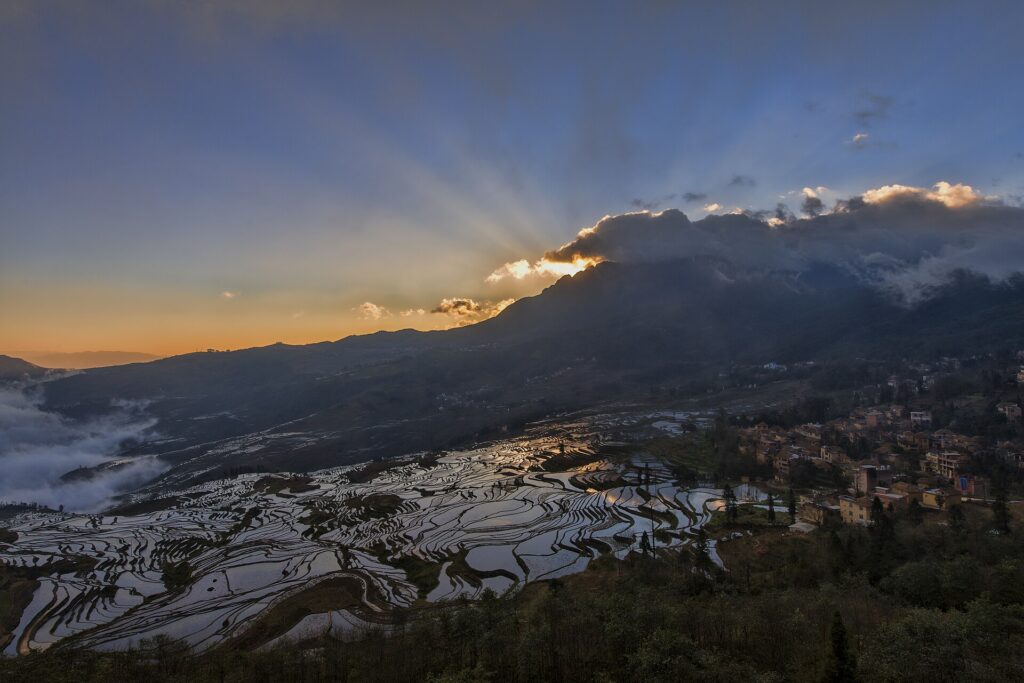 NatureWatch sunrise over the Yuanyang rice terracesDawn over thousands of flooded rice terraces built by the Hani people in southern Yunnan.Explore →
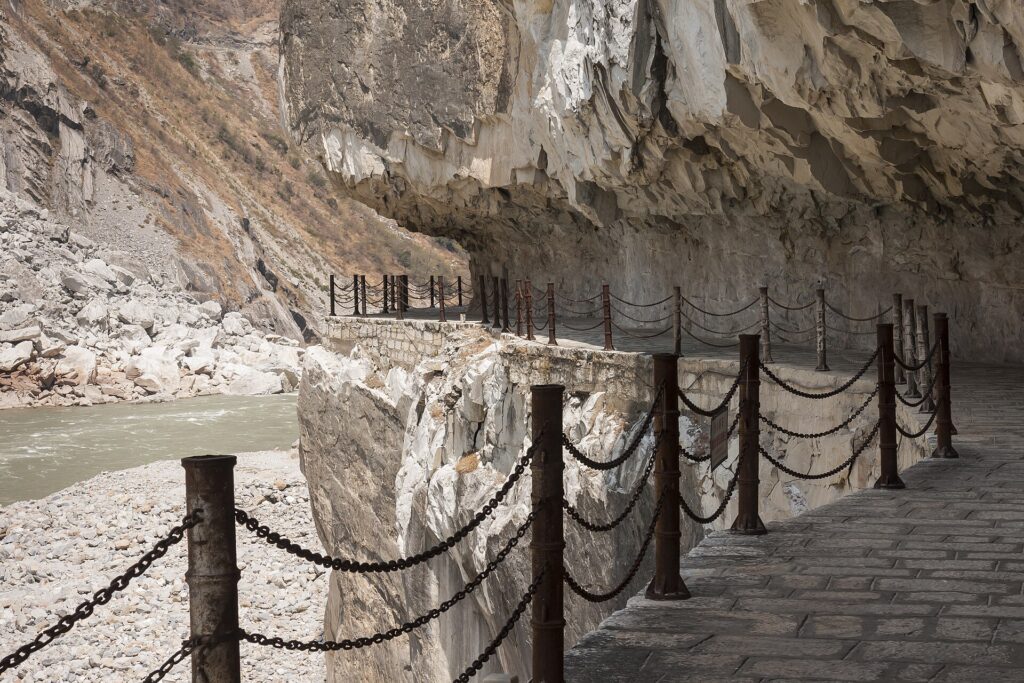 TrekTrek Tiger Leaping GorgeA 23-kilometre gorge on the upper Yangtze, with a high-level path that is walked in two days between guesthouses. The views of snow peaks and river are the reward; the stairs are the price.Explore →
The Journal
Latest on Yunnan
Before you go
Practical information
Best time to visit
Altitude matters more than month. Kunming’s mild climate gives it its nickname, while high ground such as Shangri-La can be below freezing in winter. Spring and autumn are broadly the most comfortable seasons for Lijiang and Dali. The June to August monsoon is best avoided at Tiger Leaping Gorge, and the Yuanyang terraces are most photogenic from October to April, when the fields are flooded.
Getting around
Kunming is the main gateway, with an international airport and rail links across the province. Dali is about 3.5 hours from Kunming by high-speed rail and about 1.5 hours from Lijiang. The road from Lijiang to Shangri-La takes about four hours, and a railway line into Diqing prefecture opened in 2023. The Stone Forest is a day trip of about 88 kilometres from Kunming.
Read more
Seven to ten days suits Kunming, Dali, Lijiang and Shangri-La; add Yuanyang or Xishuangbanna and it becomes two weeks. Most travellers use a driver for the mountain sections.
Practical notes
Pack layers, since the climate changes with altitude. Allow a day or two to adjust to the height in Shangri-La and beyond, and ask your lodge about conditions before setting out on mountain trails.
Continue exploring
More from China
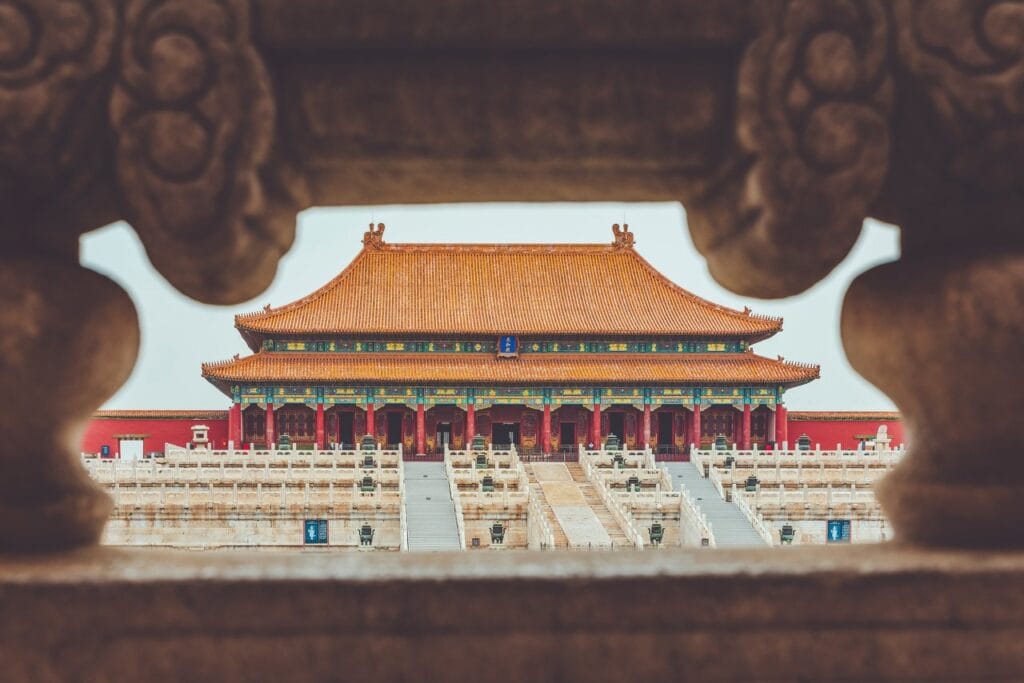 ChinaBeijingChina’s capital, laid out on a 7.8-kilometre Central Axis, with surviving hutong lanes, a contemporary-art district in a former East German-designed factory complex and a Michelin list led by Chaozhou and Taizhou kitchens.Explore Beijing →
 ChinaChengduThe capital of Sichuan: pandas, teahouses and the first three-star kitchen in the city’s Michelin Guide, with Leshan, Sanxingdui and Mount Qingcheng within a day’s reach.Explore Chengdu →
 ChinaChongqingA municipality built on steep hills where the Jialing meets the Yangtze, known for hot pot, riverfront towers and the Dazu rock carvings.Explore Chongqing →