Siem Reap
Cambodia · Southeast Asia
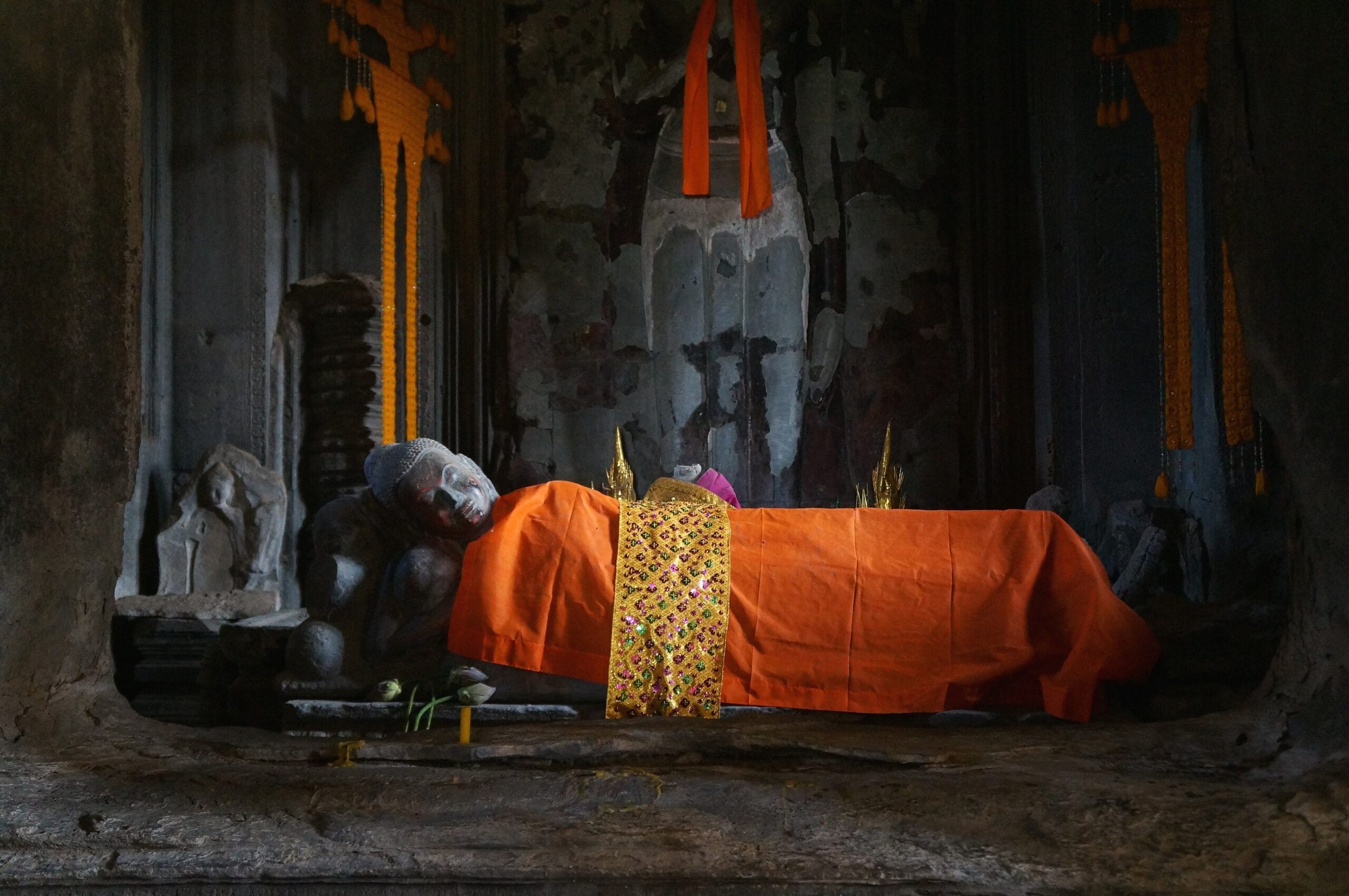
The gateway to Angkor: Angkor Wat, the faces of the Bayon and temples in the forest, with the Tonle Sap lake to the south.
Why visit
Why visit Siem Reap
Go for Angkor Wat, built by Suryavarman II in the first half of the twelfth century: a moat 190 metres wide, three rising enclosures, a central tower 65 metres high and nearly 1,800 carved figures of celestial women on its walls. It is the largest religious monument in the world, and still a working place of worship.
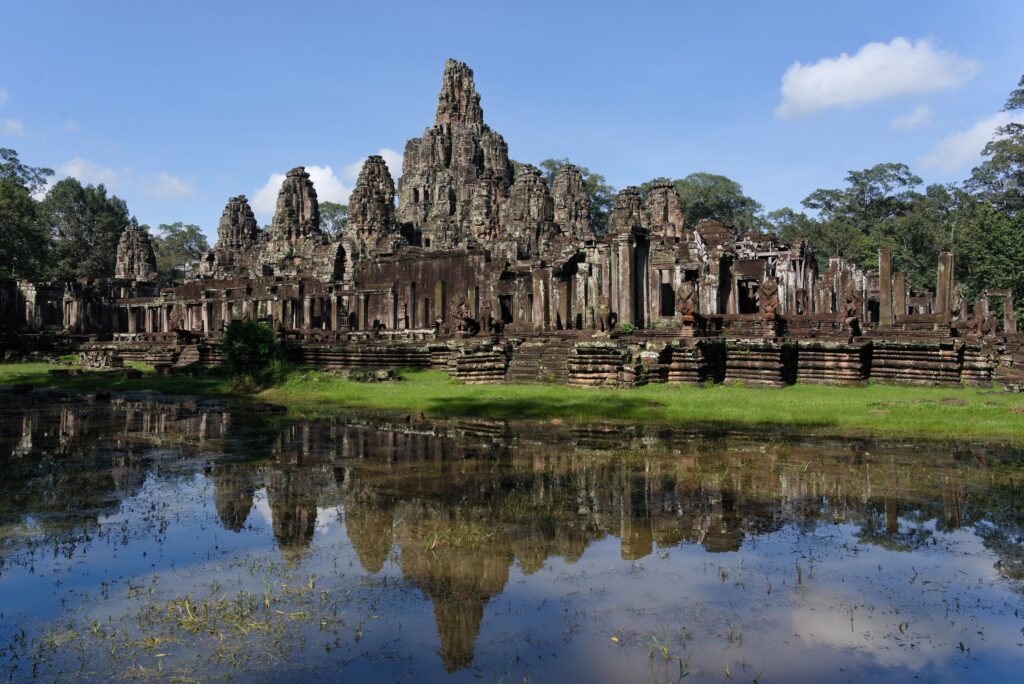
Go also for what lies around it. Angkor Thom and the Bayon, Ta Prohm in the grip of tree roots, and the small pink temple of Banteay Srei each show a different side of Khmer building. Seen over three days, they become a sequence rather than a checklist: one kingdom changing its mind about gods, scale and stone.
Explore
What to see
Angkor Wat. Best at dawn, when the light rises behind the towers, and again in the afternoon, when it falls on the western face. Arrive early for the sunrise at Angkor Wat, then return after lunch for the galleries once the tour groups have gone.
Angkor Thom. The walled city of Jayavarman VII, entered by the south gate, with the Bayon at its centre and the Terrace of the Elephants nearby. The Bayon is at its best in the mid-afternoon.
Ta Prohm. Left much as it was found, with the roots of great trees over its walls. Go early, before the paths fill.
Banteay Srei. A tenth-century temple of pink sandstone to the north, small in scale and finely carved.
Further out. The tenth-century capital of Koh Ker, to the north-east, has a seven-tiered pyramid and few visitors. To the south, the Tonle Sap is the largest lake in Southeast Asia, with floating villages and flooded forest; a boat to the stilt villages shows how life follows the water level.
Hotels
Where to stay in Siem Reap
Siem Reap has hotels at every level, and the choice is mostly one of atmosphere. In the town, close to the old market and the river, colonial-era grand hotels and former residences put restaurants and evening walks at the door; Raffles Grand Hotel d’Angkor is the historic address. On the road to the temples, Amansara occupies the guest residence that King Norodom Sihanouk had built for his family and visiting dignitaries in the early 1960s. On the rice fields outside, small resorts offer quiet and space, and Shinta Mani Siem Reap is the design-led choice.
Dining
Where to eat in Siem Reap
Khmer cooking is milder than Thai and makes much use of freshwater fish from the Tonle Sap, lemongrass and prahok, a fermented fish paste. Amok, fish steamed in coconut and spices, is the dish most visitors try first. Siem Reap has a lively restaurant scene around the river and the old market, and a day at the temples ends well with a long dinner there.
Experiences
Experiences in Siem Reap
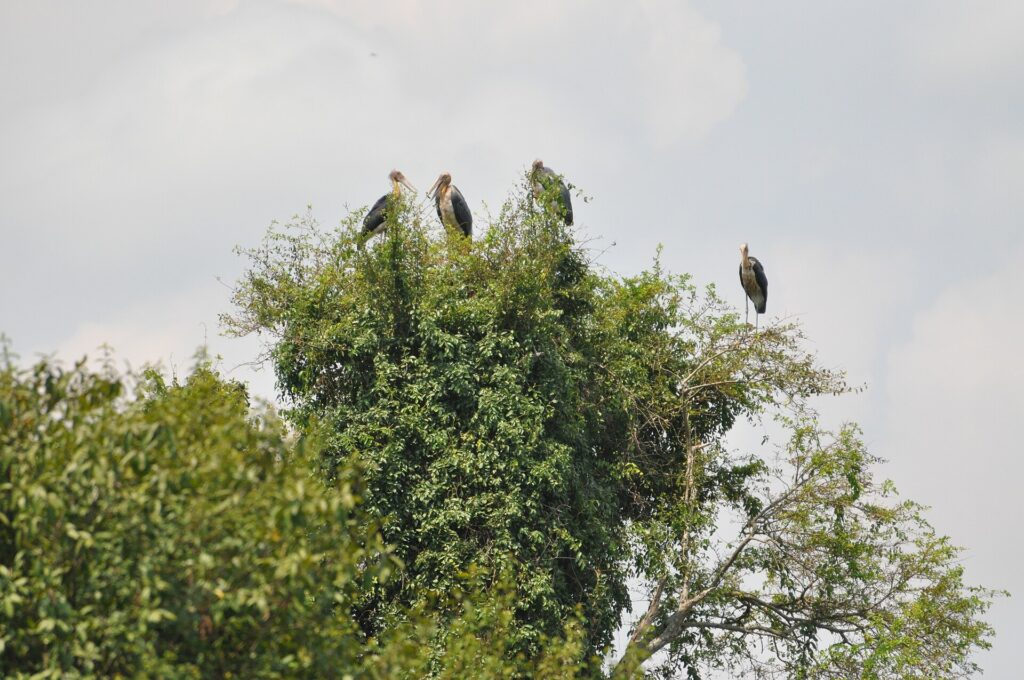 NatureWatch the waterbirds of Prek Toal on the Tonle SapA full day by boat from Siem Reap into the flooded forest of Prek Toal, among nesting storks, pelicans and ibises.Explore →
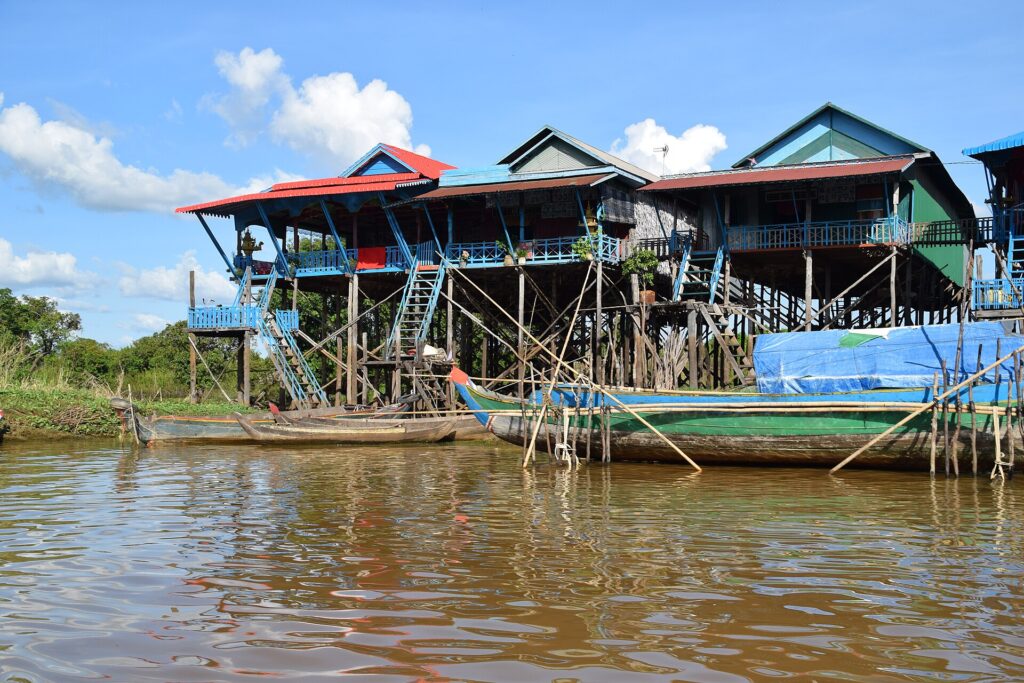 Cultural ImmersionTake a boat to the stilt villages of the Tonle SapA half-day boat trip from Siem Reap through a stilt village and flooded forest on the Tonle Sap lake.Explore →
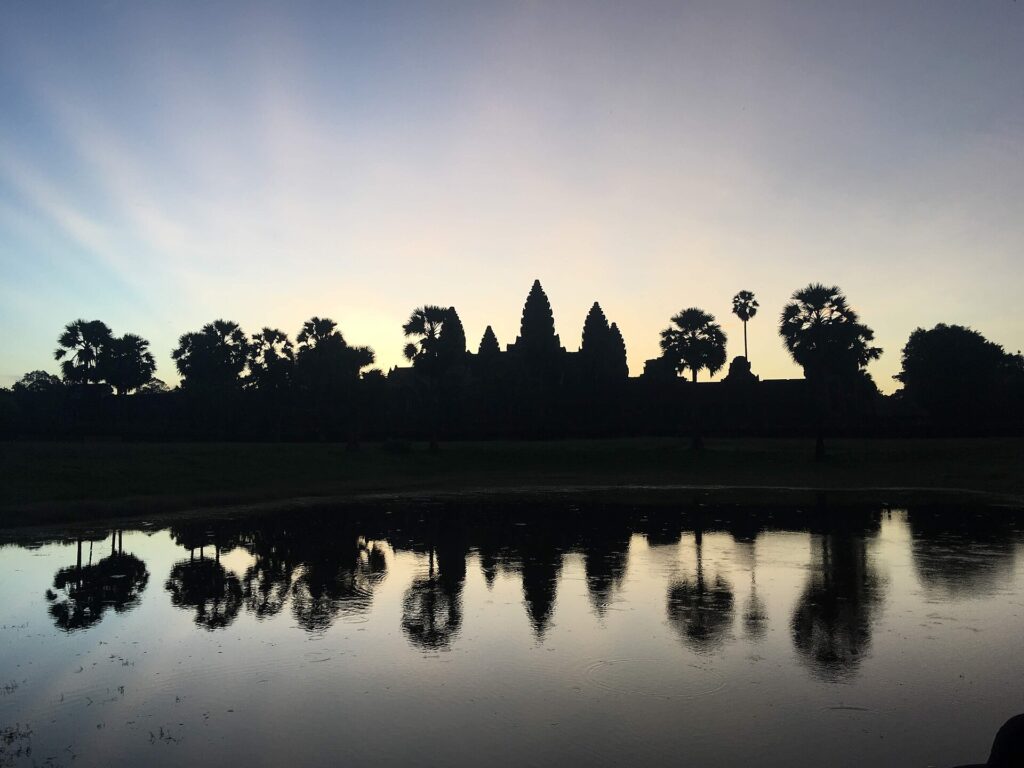 Cultural ImmersionSee sunrise at Angkor Wat, then walk its galleries while it is still earlyDawn at the pools in front of Angkor Wat, followed by the carved outer gallery while the morning is still early.Explore →
The Journal
Latest on Siem Reap
 TravelSiem Reap’s Grand Hotels: Raffles, Park Hyatt and Shinta Mani Compared8 October 2026
- Angkor Wat and Beyond: Planning Three Days Among the Temples
- Aqua Mekong: A River Journey Between Saigon and Angkor
- Raffles Grand Hotel d’Angkor Reopens After Six Months of Renovation
- Bill Bensley Opens the Third Shinta Mani in Siem Reap, With Ten Villas
- Park Hyatt Siem Reap Opens in the Former Hotel de la Paix
Before you go
Practical information
Best time to visit
November to February is cool and dry and is the high season. From June to October there are afternoon showers, green rice fields, full moats and far fewer people. March to May is hot, and the early hours at the temples matter most.
Getting around
Siem Reap-Angkor International Airport, opened in 2023, lies roughly 45 kilometres from the town, about an hour by road. Distances between temples are too great to walk. Most visitors hire a car, or a tuk-tuk for the nearer temples, with a licensed guide. River ships run between Vietnam and Cambodia by the Mekong and the Tonle Sap.
Practical notes
Passes are sold for one, three or seven days at the official ticket office and are checked at each temple; confirm current validity rules and prices before travelling. Shoulders and knees must be covered at the temples, and at the upper level of Angkor Wat, long trousers or a long skirt are advisable. Carry water and start early: the heat builds fast by midday.
Continue exploring
More from Southeast Asia
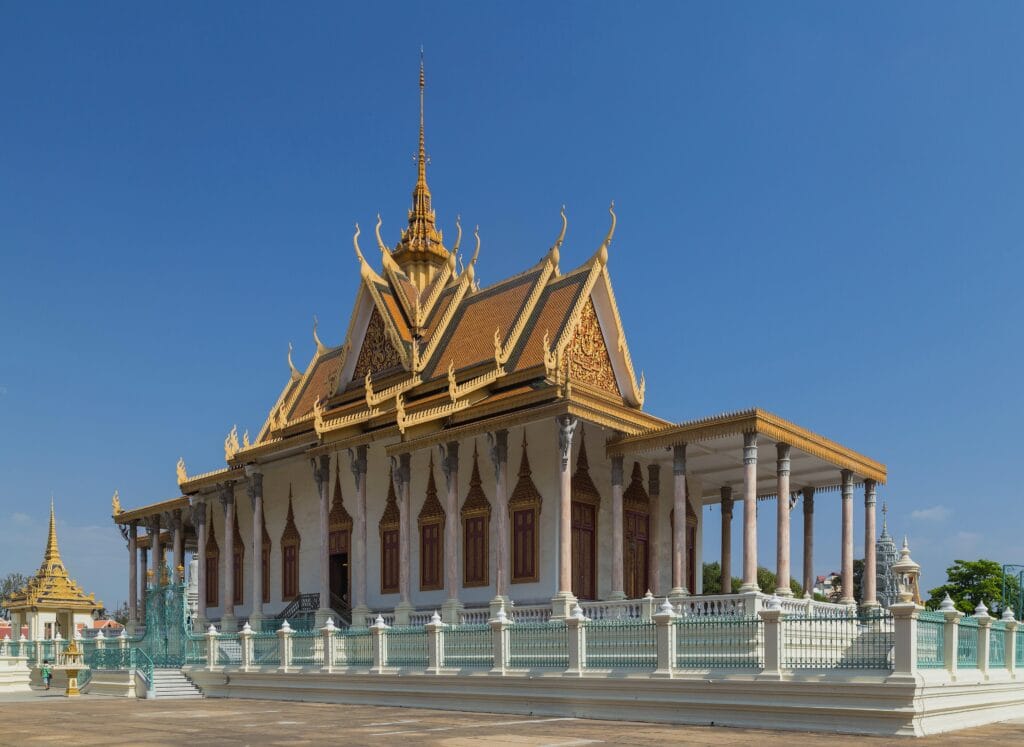 CambodiaPhnom PenhCambodia's riverside capital: the Royal Palace and Silver Pagoda, the National Museum of Khmer sculpture and the modern buildings of Vann Molyvann.Explore Phnom Penh →
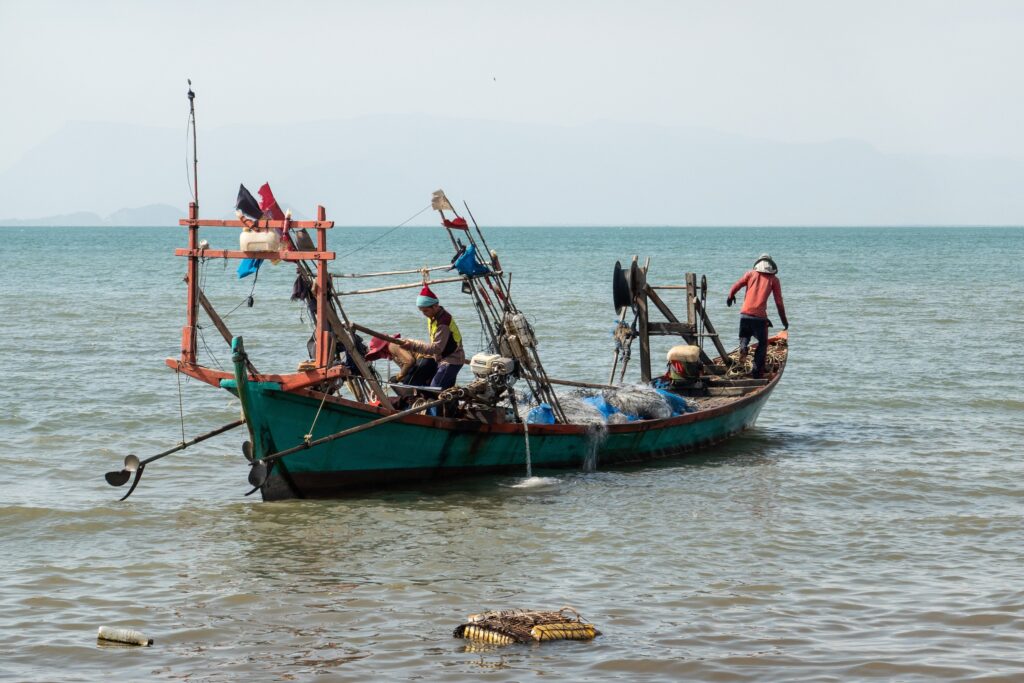 CambodiaSouthern CambodiaCambodia's south-west coast and hills: a private island beside Ream National Park, the crab town of Kep, and a forest camp in the Cardamom Mountains.Explore Southern Cambodia →
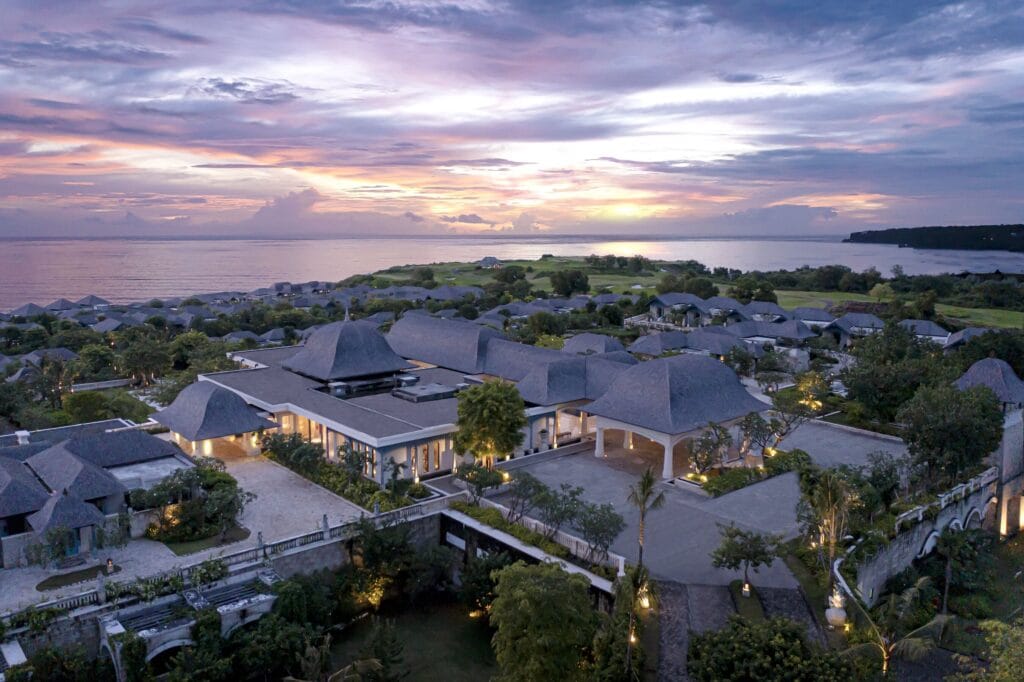 IndonesiaBaliAn island of water temples and rice terraces, with Ubud’s river valleys, the Bukit cliffs and Seminyak’s beach strip each holding a distinct set of hotels and restaurants.Explore Bali →