Phnom Penh
Cambodia · Southeast Asia
Cambodia's riverside capital: the Royal Palace and Silver Pagoda, the National Museum of Khmer sculpture and the modern buildings of Vann Molyvann.
Why visit
Why visit Phnom Penh
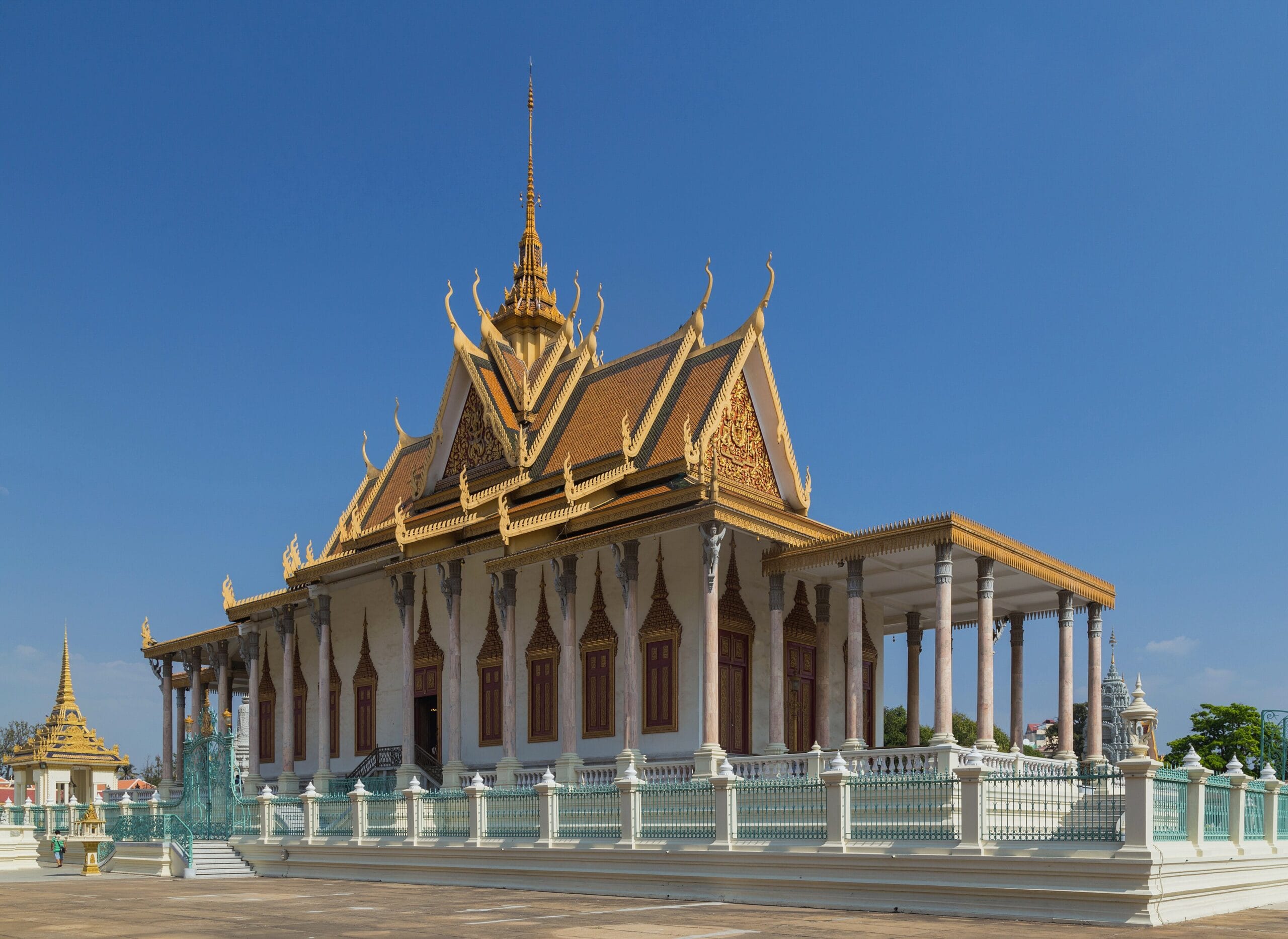
Go for the two things that cannot be seen at Angkor. The first is the best of Khmer sculpture, which was taken from the temples to the National Museum and stands there at eye level. The second is a living court: the Royal Palace, built from 1866, is still the residence of the king, and its Silver Pagoda has a floor of 5,329 silver tiles.
Go also for a capital with layers. French villas and an art deco market stand beside the buildings of Vann Molyvann, the architect who gave the newly independent country a modern style of its own in the 1960s. The three-day guide follows both.
Explore
What to see
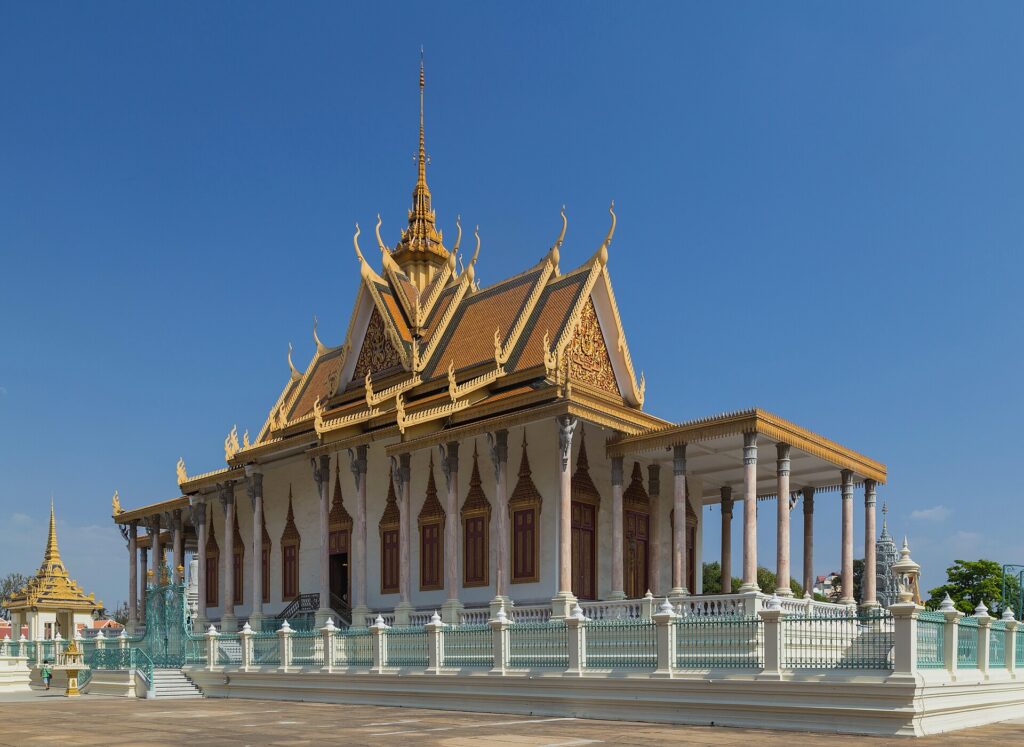
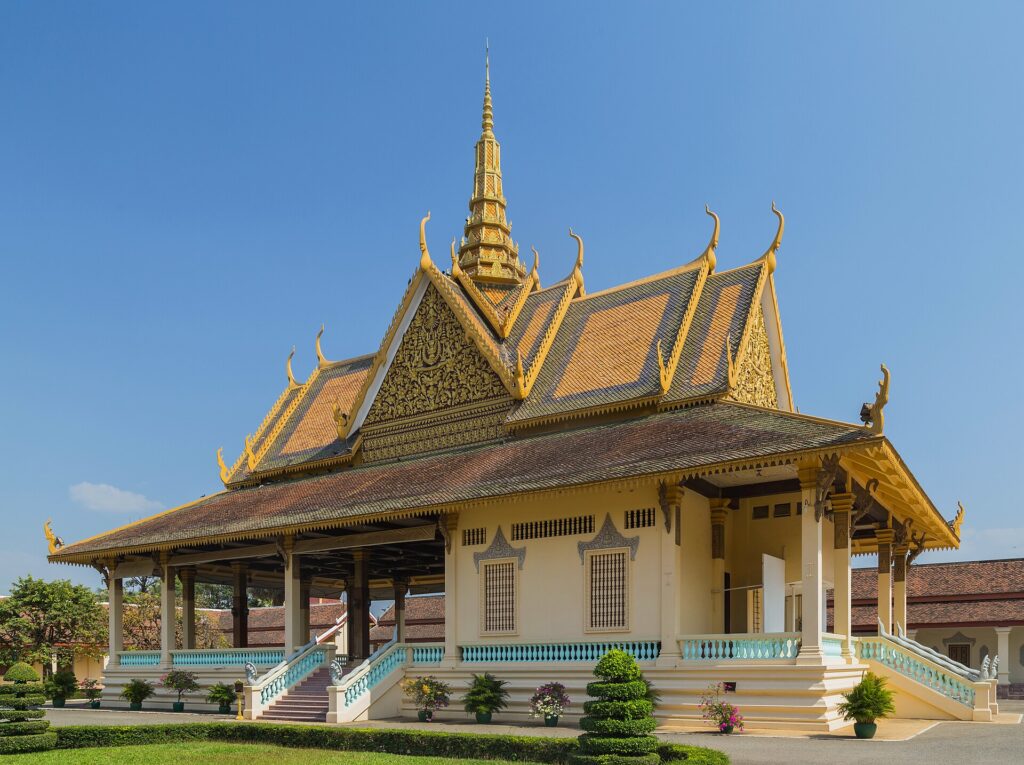
The Royal Palace is a walled compound of gilded roofs facing the river on Sisowath Quay. The Throne Hall of 1919 has a spire 59 metres high. The Silver Pagoda holds a crystal Buddha and a gold Buddha set with diamonds, and its cloister is painted with the Reamker, the Khmer Ramayana; a visit takes the better part of a morning.
The National Museum is a red building in Khmer style, designed by George Groslier and opened in 1920 just north of the palace, with its sculpture around a courtyard garden. Wat Phnom is the temple on the small hill that gave the city its name, and the Central Market of 1937 is an art deco landmark.
The modern city is the work of Vann Molyvann: the Independence Monument of 1958, the Chaktomuk Conference Hall of 1961 and the National Olympic Stadium of the early 1960s, among others. Tuol Sleng, the former Khmer Rouge prison, and Choeung Ek, the killing field outside the city, are sober, necessary visits for anyone who wants to understand the country.

Hotels
Where to stay in Phnom Penh
The choice is between the modern tower and the older city. Rosewood Phnom Penh occupies the top floors of the Vattanac Capital tower, with the Sora sky bar on a terrace 188 metres above the street and views of the Central Market.
Dining
Where to eat in Phnom Penh
Khmer cooking is milder than Thai and built on freshwater fish, herbs and prahok, a fermented fish paste. Amok, fish steamed in coconut and spices, is the dish most visitors try first. Cuisine Wat Damnak serves in a restored 1950s villa with a garden, Sombok is an all-day restaurant serving Khmer and international dishes, and Le Manolis is a French restaurant by the Mekong. For an evening, Langka Lane and Bassac Lane hold the cocktail bars and speakeasies, and the Night Market has stalls serving Cambodian, Chinese, Korean and Japanese food.
Before you go
Practical information
Best time to visit
The dry season runs from December to April. December and January are the most comfortable months, and March and April the hottest. Rain falls from May to November, mostly in afternoon downpours, and the rivers are at their highest in the autumn.
Getting around
Techo International Airport, which opened in September 2025 and replaced the old airport at Pochentong, lies south of the city in Kandal province; allow 45 minutes to an hour for the transfer. The centre is compact: the palace, the museum and the riverfront are within walking distance of one another, and tuk-tuks cover the rest. River ships between Vietnam and Siem Reap call at the city.
Practical notes
Two full days cover the main sights, and a third allows for the modern architecture or the river. Shoulders and knees must be covered at the Royal Palace and the Silver Pagoda. The palace closes in the middle of the day and for royal ceremonies. Phnom Penh combines with Siem Reap by a short flight or by road.
Continue exploring
More from Southeast Asia
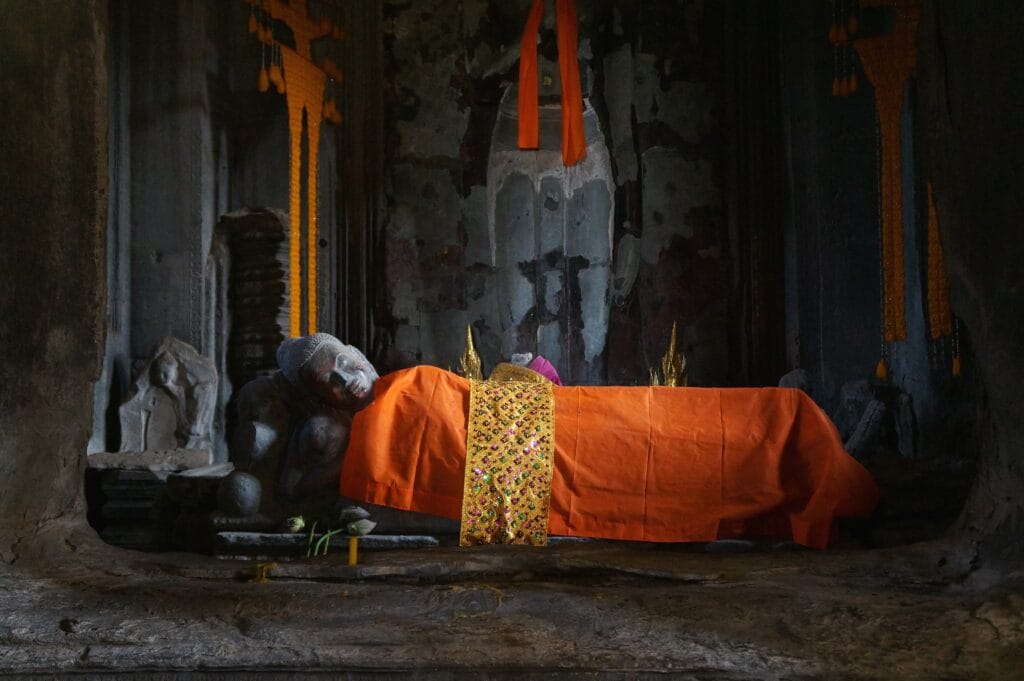 CambodiaSiem ReapThe gateway to Angkor: Angkor Wat, the faces of the Bayon and temples in the forest, with the Tonle Sap lake to the south.Explore Siem Reap →
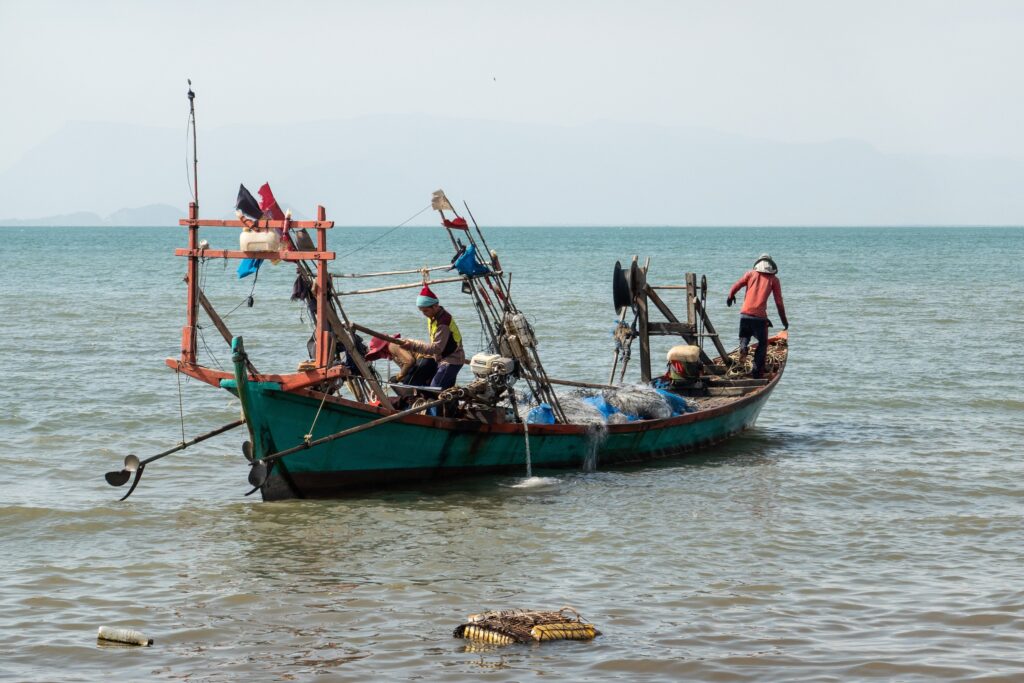 CambodiaSouthern CambodiaCambodia's south-west coast and hills: a private island beside Ream National Park, the crab town of Kep, and a forest camp in the Cardamom Mountains.Explore Southern Cambodia →
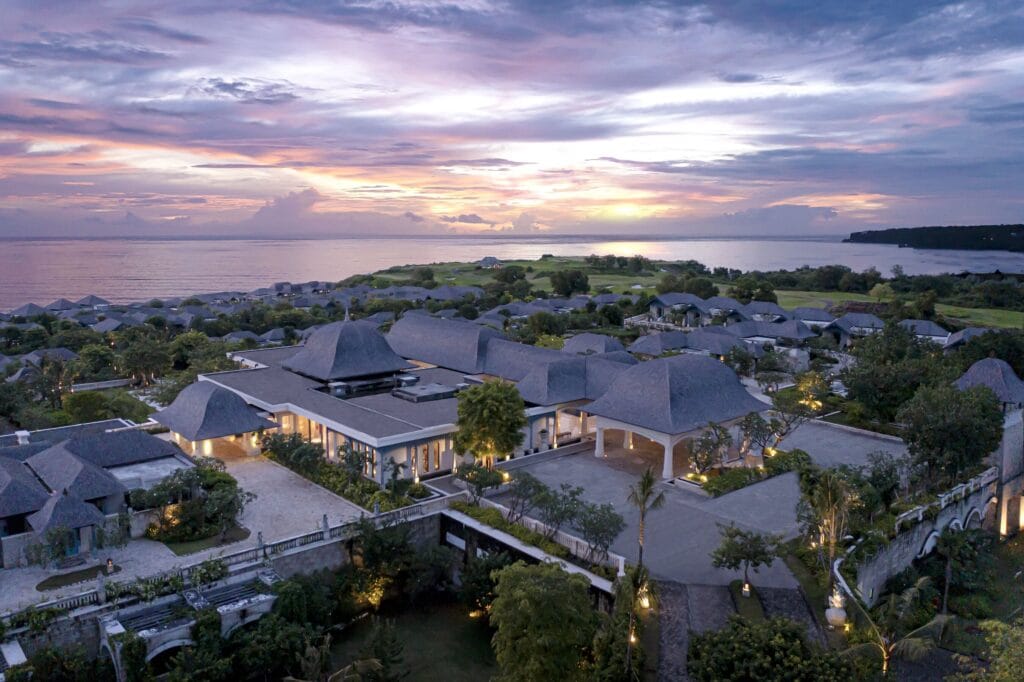 IndonesiaBaliAn island of water temples and rice terraces, with Ubud’s river valleys, the Bukit cliffs and Seminyak’s beach strip each holding a distinct set of hotels and restaurants.Explore Bali →