Regent Hong Kong
Regent's 1980 flagship outlived the waterfront complex it belonged to, and has returned under its first name, redesigned by an architect who watched it being built.
- Neighbourhood
- Tsim Sha Tsui, Kowloon
- Rooms
- 497
- Status
- Open
- Design
- Chi Wing Lo (redesign)
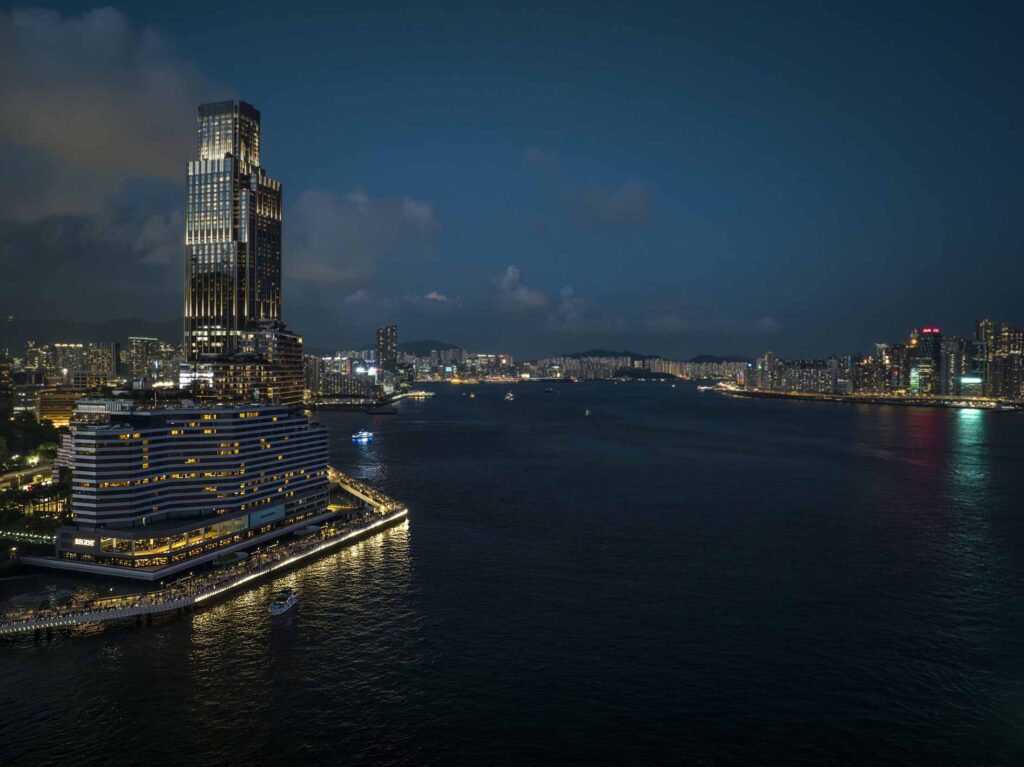
Photo: Regent Hong Kong
Of the luxury hotels on the Kowloon waterfront, Regent Hong Kong is both one of the oldest and one of the newest. Its address, 18 Salisbury Road, is at the water's edge where the Tsim Sha Tsui promenade meets the Avenue of Stars, facing the island across Victoria Harbour. It opened as The Regent in 1980, traded for two decades as the InterContinental, closed in April 2020 and returned under its first name on 8 November 2023, with 497 rooms, 129 of them suites. Few hotels get their original name back, and fewer get it back from a designer who remembers the building going up.
A survivor on Salisbury Road
Regent International Hotels was founded in 1970 by the American hotelier Robert Burns, and the Hong Kong hotel, built for New World Development, was meant to be its flagship. It set standards that other luxury hotels in Asia followed, among them the five-fixture bathroom: two basins, a bath, a separate shower and a separate toilet.
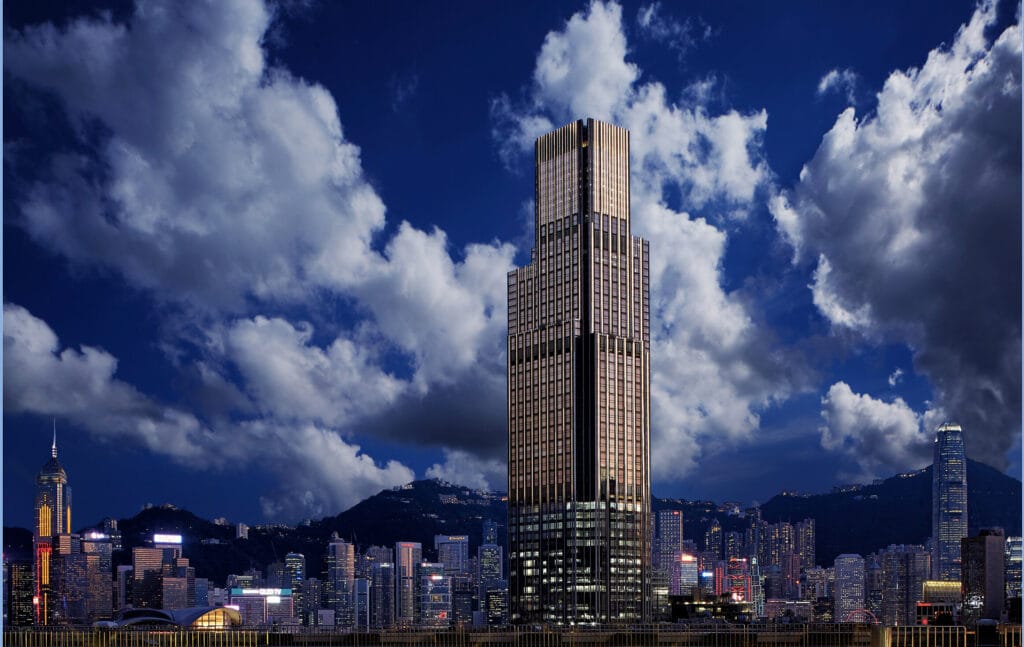
In 2001 New World sold the hotel and it became the InterContinental Hong Kong. The rest of the waterfront complex it belonged to, New World Centre, was then closed and demolished from 2010, and Victoria Dockside and Rosewood Hong Kong rose in its place. The hotel stayed, a low block at the edge of the harbour beneath a new tower. IHG's purchase of a controlling stake in Regent in 2018 made the old name available again, a revival that also produced Regent Shanghai on the Bund, and the InterContinental closed on 20 April 2020 for a complete rebuilding of its interiors.
A designer who watched it being built
The redesign is by Chi Wing Lo, a Hong Kong-born architect and designer based in Athens, who left the city in 1981 to study architecture. As a young man crossing the harbour by ferry, he had watched the Regent being built. He had never designed a hotel before; here his practice took on the architecture, interiors, furniture and the curation of the art. His stated principle is that "good work should be discovered but never scream at you". The gold, red and royal blue of the old interiors have given way to muted greys, oak and dark granite.
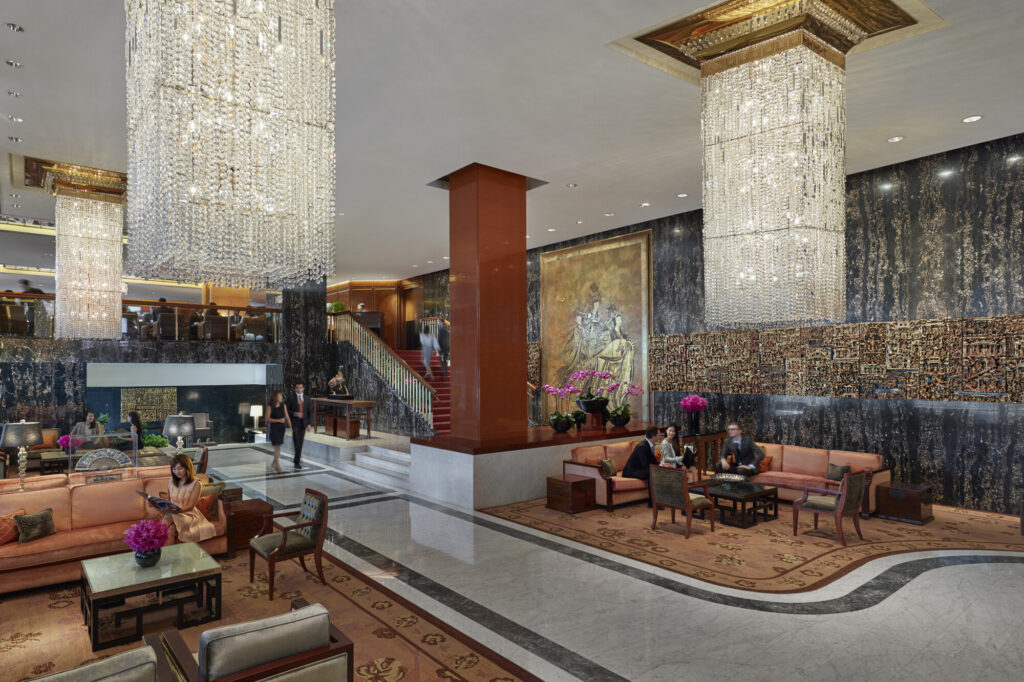
The arrival withholds the harbour until the last moment. Guests pass a fountain and eighteen golden domes over the driveway, go through heavy wooden doors bolted with glass, and enter a passage that Lo calls the Golden Illusion: sixteen screens of stacked glass bricks, inspired by LiuLi glasswork, that read as floor-to-ceiling chandeliers. Behind the onyx reception block, a screen assembled from fragments of the original art collection, including an antique Kano screen of cranes that once hung in the Plume restaurant, connects the new hotel to the old.
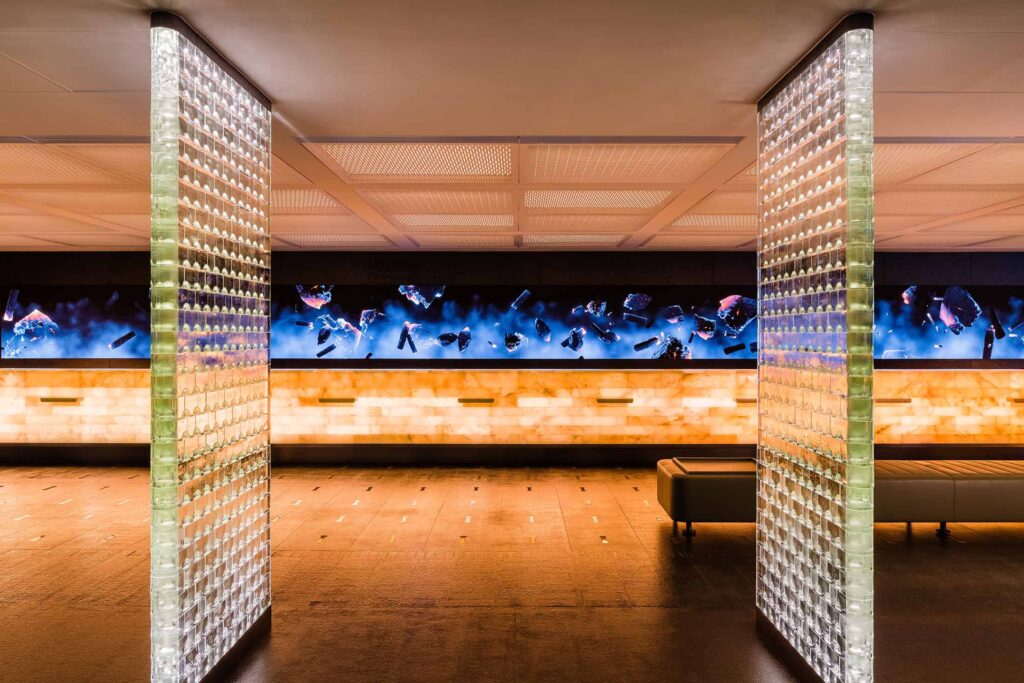 Photo: Regent Hong Kong
Only then does the building open to the water. In the Lobby Lounge the armchairs swivel on hidden mechanisms, so that a guest can turn to face the harbour. Lo summarised the approach in a sentence: "a view without a frame is simply a view that has not passed through the eyes' lens."
Rooms around a window
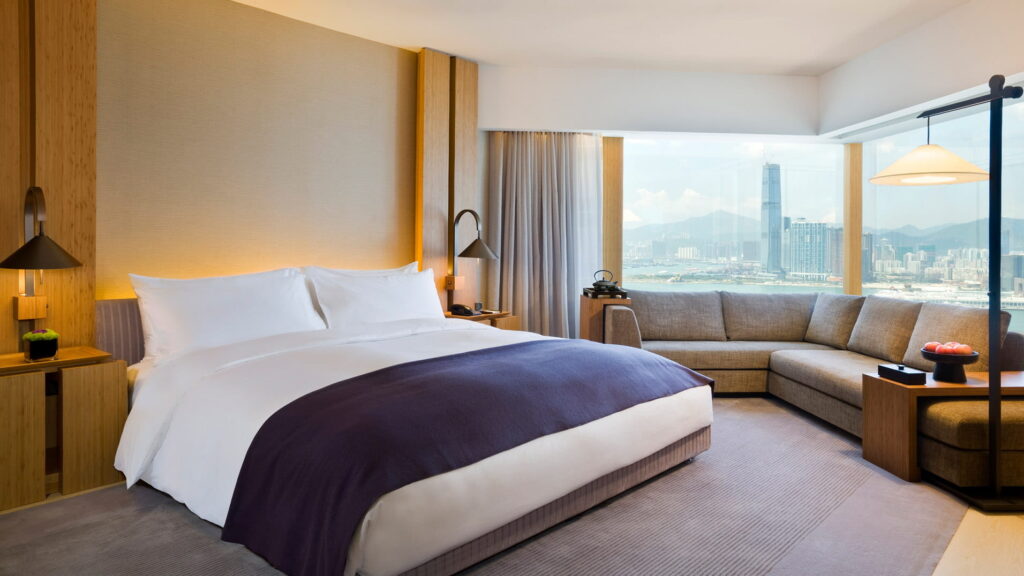
The rooms carry the idea indoors. In the harbour-facing categories a daybed is set into the window beneath a low, wave-like ceiling. Lo also designed what the hotel calls the Oasis bathroom: in some harbour rooms a sliding door opens it to the view from a freestanding tub, and in others a moongate of black granite leads to the bath and shower. Room sizes run from 30 square metres for a Classic room to 47 for the Kowloon-view studio suites, which face the piazza and pool instead of the water.
Because the design is organised around the harbour, the room categories named for it are the ones that show the hotel's idea most fully. The bathrooms that open to the bedroom offer less privacy than a conventional plan, and the rooms have no desk. Three signature suites, added in 2024, have private terraces and whirlpools above the water.
Harbour level
Some of the 1980 hotel was kept on purpose. The feng shui fountain at the entrance still screens arriving guests from the traffic on Salisbury Road. The floor-to-ceiling glass at the corners of the Lobby Lounge still lets the harbour fill the room, and the white marble staircase still leads to the ballroom where the city has held galas and weddings for decades. The Cantonese restaurant has its original name again, Lai Ching Heen, and with it the jade place settings it was known for.
The pool terrace is at harbour level, with a main pool and infinity spa pools that appear to run into the water, and a gym open at all hours. The hotel's wellness offer stops there.
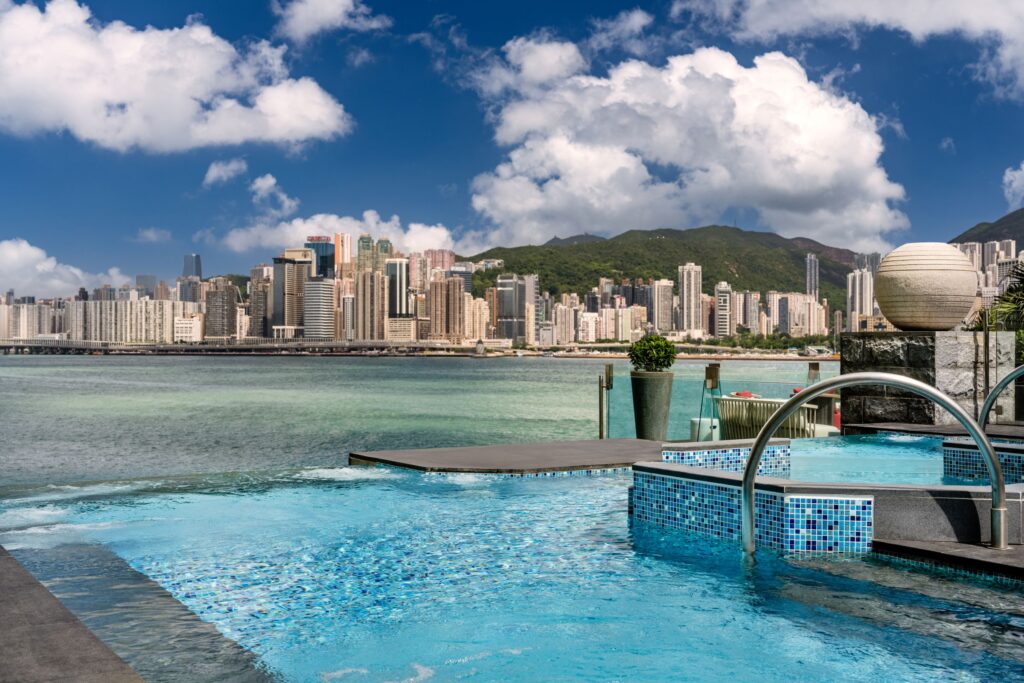 Photo: Regent Hong Kong
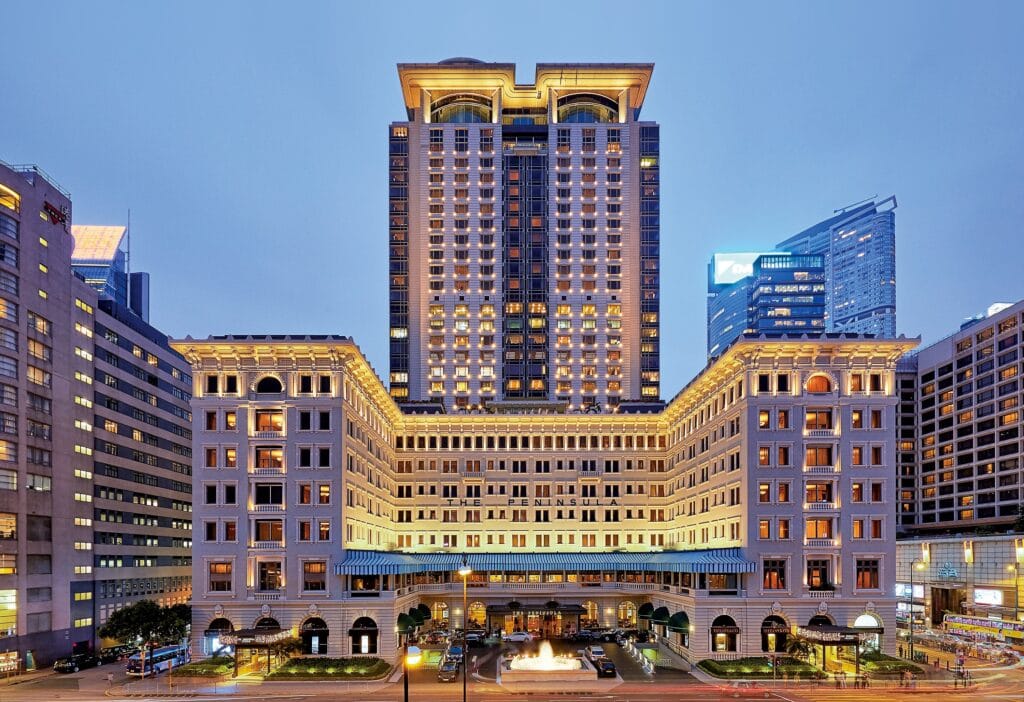
Its position sets the Regent apart from its two best-known neighbours. The Peninsula, a few minutes west, faces the harbour from behind its forecourt across Salisbury Road. Rosewood sees it from a tower above Victoria Dockside. The Regent sits at the waterline: from the lobby the harbour is at eye level, and the Star Ferry crosses directly in front. It connects to K11 MUSEA, and the Hong Kong Museum of Art is a short walk along the promenade; OKYTO's guide to art in Hong Kong and its guide to where to stay cover both sides of the harbour.
Sources: Regent Hong Kong; Regent Hong Kong; IHG; Regent Hong Kong; CNN Travel; TTG Asia; Business Traveller.
Location
- Address
- 18 Salisbury Road, Tsim Sha Tsui, Kowloon, Hong Kong
- Website
- Official website