Guangzhou Beyond Dim Sum: Shamian Island, the Opera House and the Pearl River Skyline
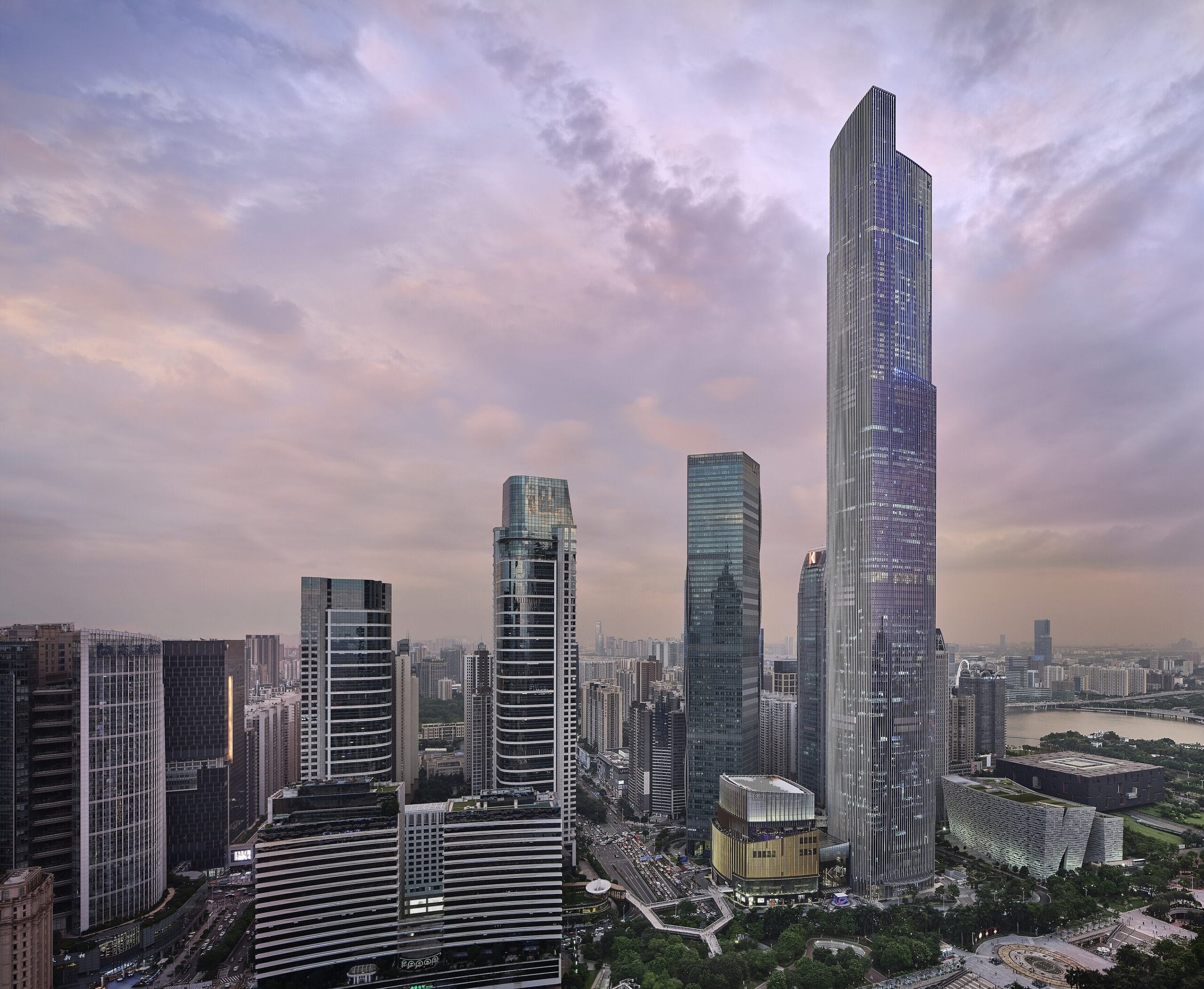
Guangzhou's two architectural eras: the colonial calm of Shamian Island and the towers and Zaha Hadid opera house of Zhujiang New Town.
Photo: Rosewood Guangzhou
Guangzhou is usually reduced to its breakfast table, but the city is best read as two places on one river: an old island laid out for foreign merchants, and a new district built to show what the city had become.
Shamian Island, a quiet concession
Shamian was leased to Britain and France in 1859 after the earlier foreign settlement was burned, and the island still keeps the shape of that arrangement: leafy avenues, large rooms set apart from each other and trees planted by foreign residents. China regained possession in 1946, and the island has been protected as a cultural complex since 1996. It is not Shanghai’s Bund. Consulates and banks were replaced by schools, government offices and a handful of cafés and hotels, so the mood is residential, with joggers, square dancers and older residents more visible than tourists.
Walk it slowly in the morning, along the riverside and then the avenues behind. The island’s one landmark hotel, the White Swan, faces the water and is the obvious place to stay if you want the old Guangzhou close at hand.
Zhujiang New Town, the new river front
Zhujiang New Town is a planned district of towers and cultural buildings, and its best-known piece of architecture is the opera house by Zaha Hadid Architects. Opened in 2011, it is shaped to resemble two pebbles on the bank of the Pearl River, and folds in the building define the routes through it and bring daylight deep inside. The main auditorium seats 1,800 and is lined with moulded glass-fibre reinforced gypsum panels. It is best experienced from inside, at a performance.
The towers beside it hold the city’s most high-profile hotels. Rosewood Guangzhou and Four Seasons Hotel Guangzhou occupy the upper floors of two skyscrapers and look over the river from a great height.
The teahouse in between
Between the two, there is the Cantonese table. A late morning of yum cha in a Guangzhou teahouse is the most natural pause in the day, and a way to see the city at its own pace. For the wider picture, from teahouses to Michelin-listed kitchens, see a gastronomic guide to Guangzhou.
Sources: Dezeen: Guangzhou Opera House by Zaha Hadid Architects; China Services Info: Colonial area remains long after wars (Shamian Island). Check the official websites for current information.
Stay
Hotels in this guide
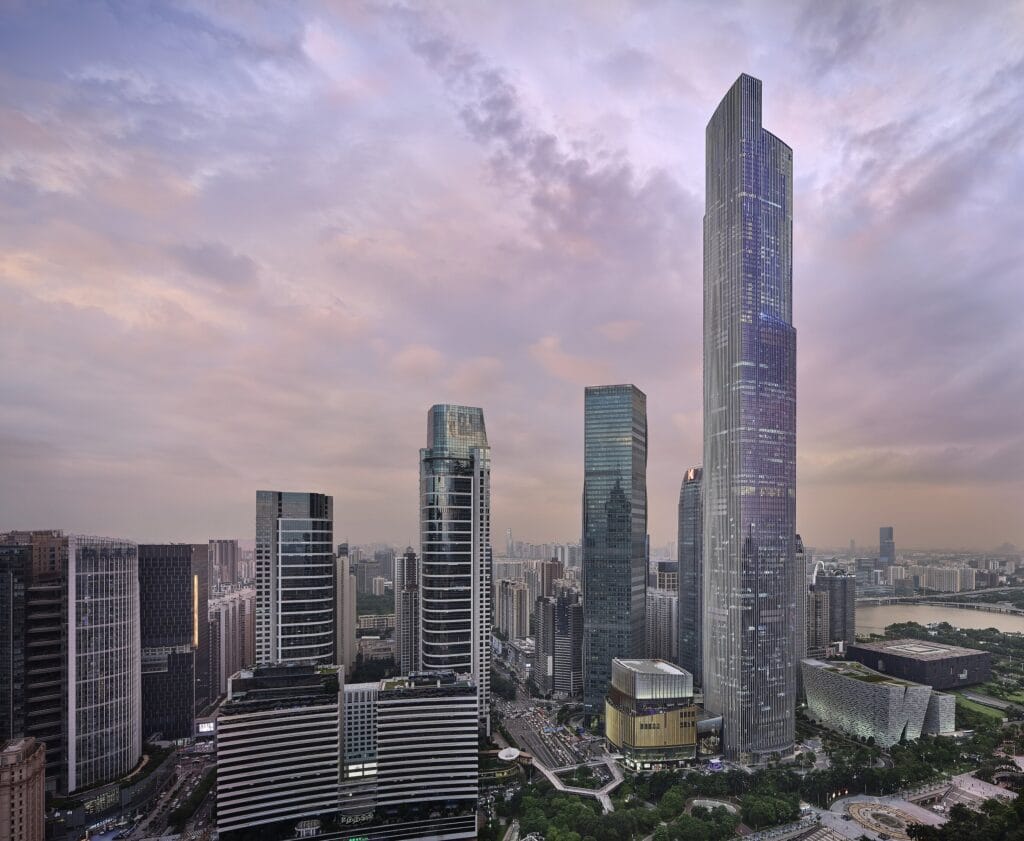 Guangzhou · RosewoodRosewood GuangzhouRosewood Guangzhou fills the top of the 530-metre CTF Finance Centre.Guangzhou · Four SeasonsFour Seasons Hotel GuangzhouFour Seasons Hotel Guangzhou is arranged around an atrium lit from 120 metres.
Journal
From the Journal
 Feature · Food & DrinkYum Cha: How to Order, Pour and Eat at a Cantonese TeahouseDim sum is the food and yum cha is the occasion.October 8, 2026News · Design & ArchitectureFour Seasons Guangzhou Unveils a New Sky-High AtriumA redesigned atrium brings a new architectural focal point to Four Seasons Guangzhou.September 25, 2026
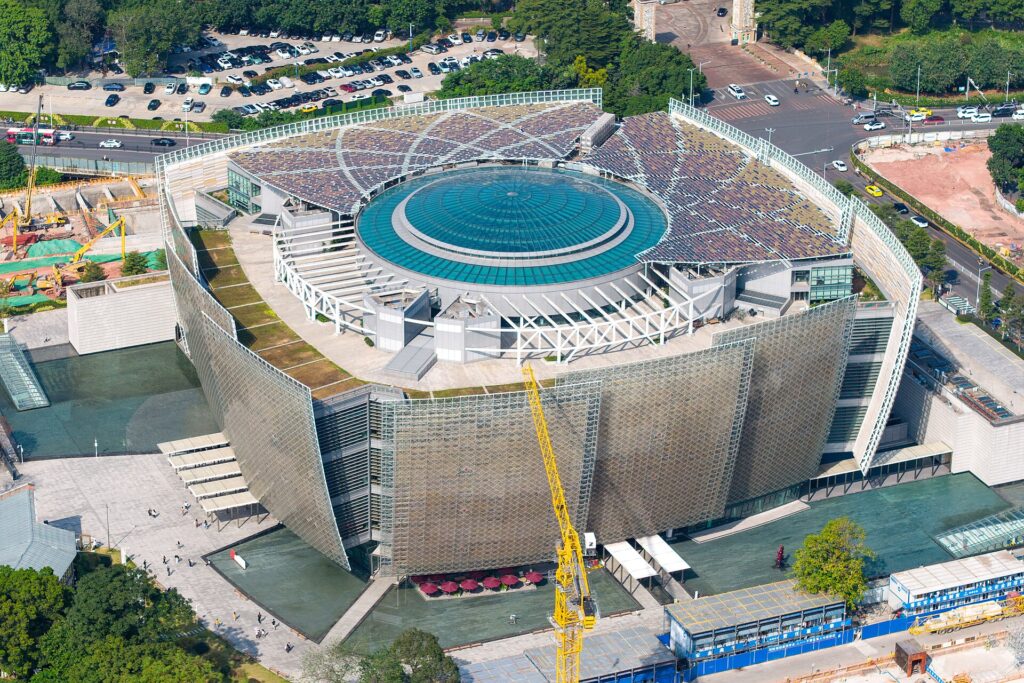 News · CultureGuangzhou Museum of Art Opens Its New Building by the Pearl RiverThe 80,000 sq m museum in Haizhu, near the Canton Tower.November 30, 2023