Tokyo
Japan
Japan's capital is a city of contrasts, where dense business districts, historic shrines and quiet residential streets sit side by side. For travellers, Tokyo rewards curiosity, from its exceptional dining culture to its design, its craft traditions and a remarkable range of hotels.
Why go
Tokyo is a city to experience rather than simply visit. Its scale is vast, a metropolis of distinct neighbourhoods rather than a single centre, yet daily life runs with a precision and courtesy that make it remarkably easy to navigate.
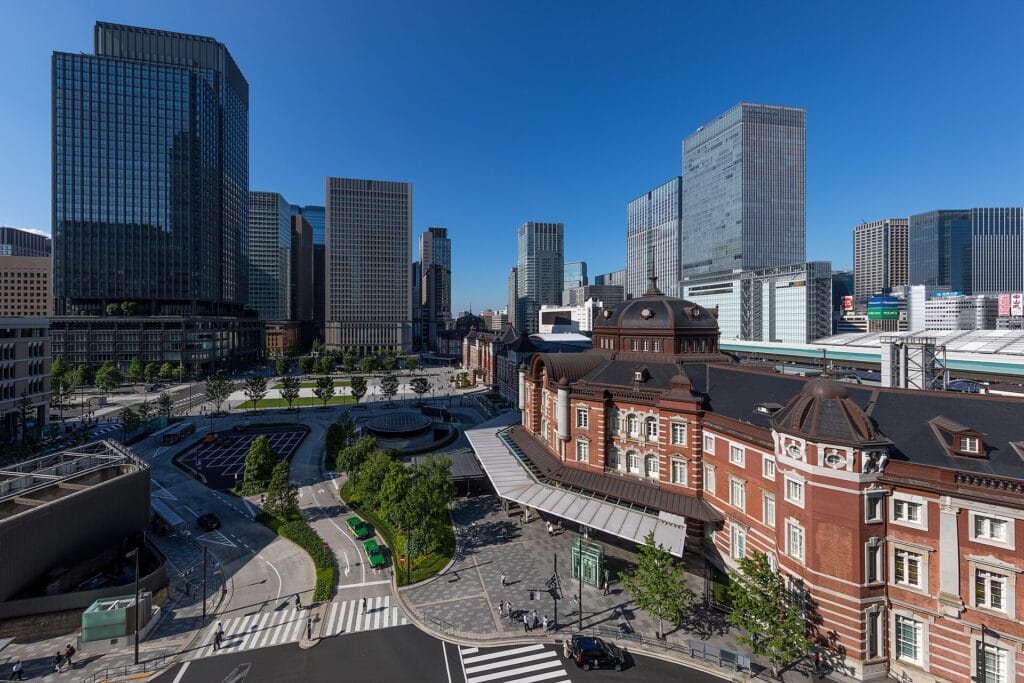
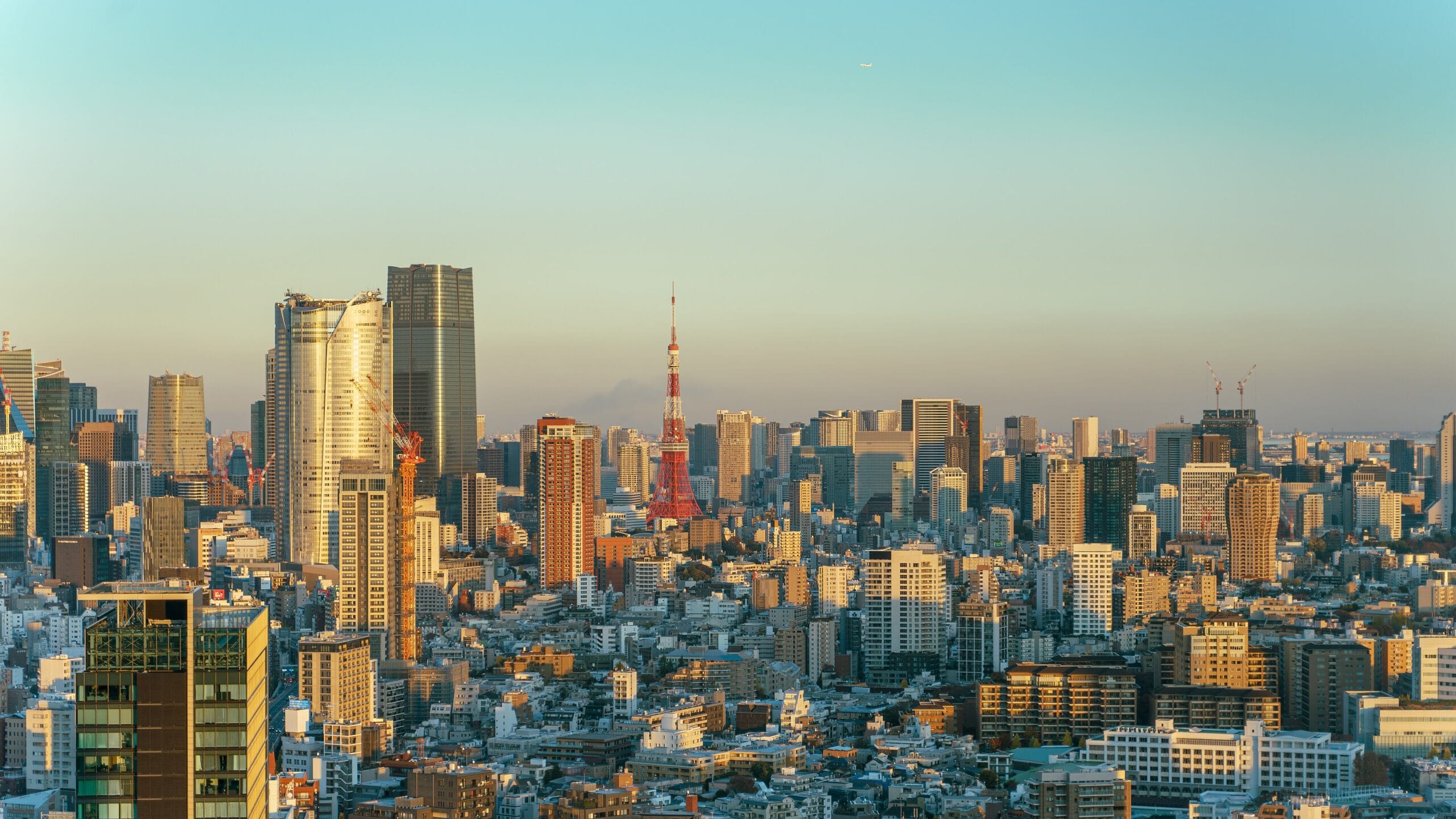
Its appeal lies in contrast. The towers of Marunouchi and Otemachi stand a short walk from the moats and gardens of the Imperial Palace; shrines and temples sit within quiet residential streets; and small, specialised counters coexist with some of the most ambitious restaurants anywhere. Craft is taken seriously in every field, from knives and ceramics to tailoring, coffee and cocktails.
For travellers interested in design, food and hospitality, Tokyo rewards repeated visits. Each district has its own rhythm, and the city is best approached slowly, one neighbourhood at a time, rather than as a checklist.
Best time to visit
Spring and autumn are the most comfortable seasons. Cherry blossoms usually begin to open in the last days of March, with full bloom typically in the first week of April, a beautiful but very busy period when hotels fill early. May brings mild weather and fresh greenery.
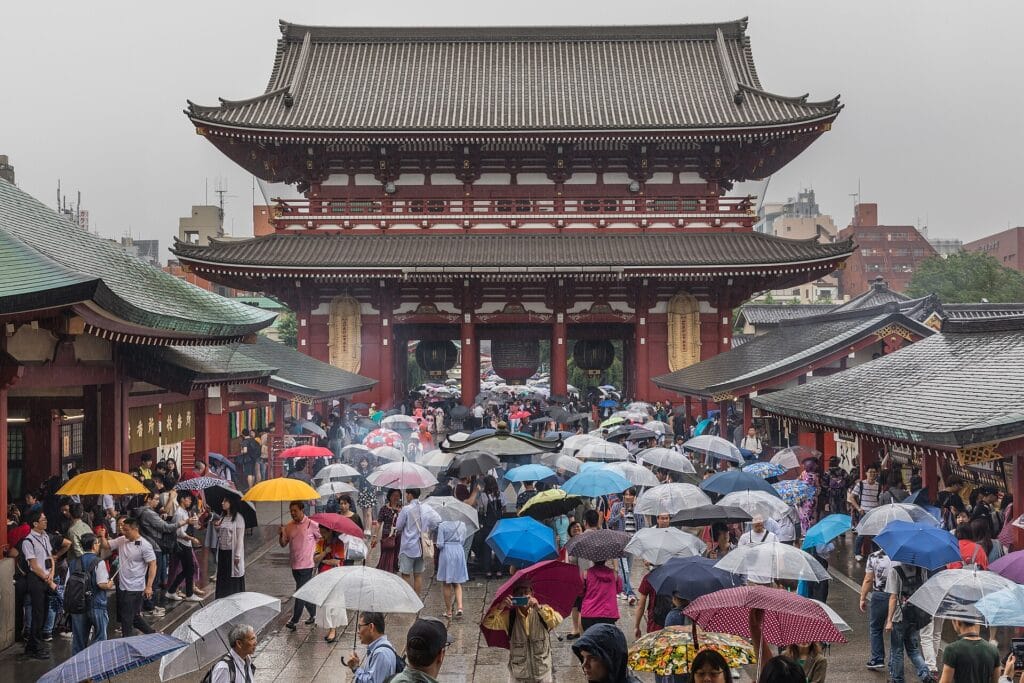
June is the rainy season, with frequent light rain. July and August are hot and humid, with daytime highs regularly in the 30s Celsius; summer is also the season of fireworks displays and neighbourhood festivals. Typhoons can disrupt travel in September and October.
Autumn brings milder, drier weather, and the foliage usually peaks from mid-November to early December. Winter, from December to February, is cold but often clear and bright, with views towards Mount Fuji on some days and a quieter atmosphere outside the New Year holidays.
Getting around
Rail is the most efficient way to move around Tokyo. The JR Yamanote Line loops around the centre, linking hubs such as Tokyo, Shinagawa, Shibuya, Shinjuku and Ueno, while two subway operators, Tokyo Metro with nine lines and Toei with four, cover the areas in between. Lines are colour-coded and stations numbered, which makes navigation straightforward. Trains generally run from around 5am until midnight; the morning and evening rush hours are best avoided with luggage.
A rechargeable IC card such as Suica or PASMO, or its mobile version on a smartphone, works across trains, subways and buses, as well as in many shops and taxis. Visitor versions of these cards are also available for short stays.
From Narita Airport, the Narita Express serves Tokyo, Shinagawa, Shibuya and Shinjuku stations, while the Keisei Skyliner runs to Nippori and Ueno. Haneda Airport, much closer to the centre, is linked by the Tokyo Monorail to Hamamatsucho and by the Keikyu Line to Shinagawa. Taxis are clean and reliable, though costly over longer distances.
Where to stay
Tokyo has no single centre, so the right base depends on the kind of stay. Marunouchi and Otemachi, around Tokyo Station, are calm, polished and exceptionally well connected, with the Imperial Palace gardens close by. This is where Aman Tokyo occupies the upper floors of Otemachi Tower.
Ginza and Nihonbashi suit travellers drawn to department stores, galleries and long-established shops. Roppongi and Toranomon offer major art institutions and newer mixed-use developments, while Aoyama and Omotesando are the city’s most design-focused districts, with flagship architecture on the main avenues and quieter residential streets behind them.
Shinjuku and Shibuya are energetic transport hubs with a wide choice of hotels and nightlife; convenient, but considerably busier. For a first visit, a central and well-connected base usually matters more than a particular view.
Where to eat
Tokyo’s dining culture is defined by specialisation. Many of the city’s most memorable meals are served at small counters devoted to a single discipline, whether sushi, tempura, soba, yakitori or kaiseki, where the cook works directly in front of the guest. Seasonality shapes everything, and menus follow the produce of the moment.
The range is just as broad at the other end of the scale, from department-store food halls and station arcades to casual izakaya. International cooking is taken seriously too, with Italian and French cuisine particularly well represented; Arva, the Italian restaurant of Aman Tokyo, is one example.
Many of the most sought-after restaurants require reservations well in advance, and some accept bookings only through a hotel concierge or dedicated platforms. Cancellation policies are generally strict and should be respected.
What to see
Rather than attempting to see everything, it is worth choosing a few districts and exploring them properly.
In the historic east, Asakusa is home to Senso-ji, Tokyo’s oldest temple, while Ueno Park gathers several major museums, including the Tokyo National Museum and the National Museum of Western Art, designed by Le Corbusier. Nearby Yanaka retains the feel of an older, low-rise city.
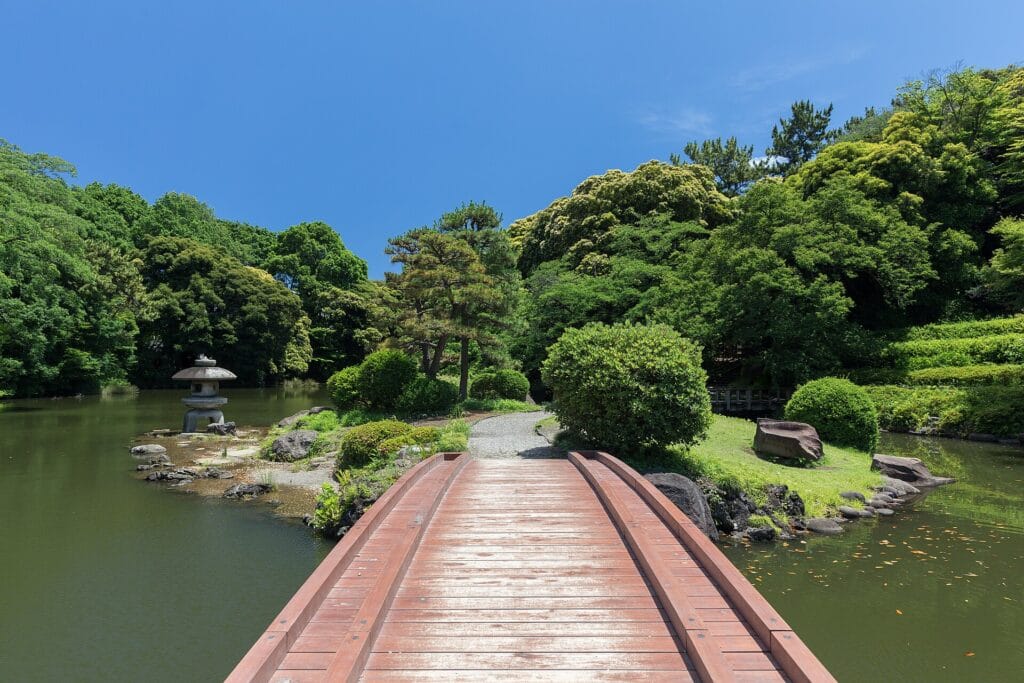
In the centre, the East Gardens of the Imperial Palace and the restored Tokyo Station building frame the Marunouchi district. To the west, Meiji Jingu sits within a large wooded precinct beside Harajuku, and Shinjuku Gyoen is among the city’s finest gardens.
For architecture and contemporary design, Omotesando and Aoyama are essential, with the Nezu Museum and its garden close by, while Roppongi offers 21_21 DESIGN SIGHT and a cluster of art museums. Our design-led guide to Tokyo explores these in more detail.
Practical notes
The currency is the Japanese yen. Cards and mobile payments are widely accepted in hotels, department stores and most restaurants, but carrying some cash remains useful for small shops, temples and older establishments.
Tipping is not customary; attentive service is simply part of the culture. On trains, quiet is expected: phone calls are avoided and eating on commuter trains is generally frowned upon.
Japan uses 100-volt electricity with two-pin plugs, so many visitors will need an adapter. Many museums close one day a week, often Monday, and the main holiday periods, around New Year, Golden Week in late April and early May, and Obon in mid-August, bring heavier crowds and higher hotel demand.
In an emergency, dial 110 for the police and 119 for fire or ambulance.