The Peninsula Tokyo
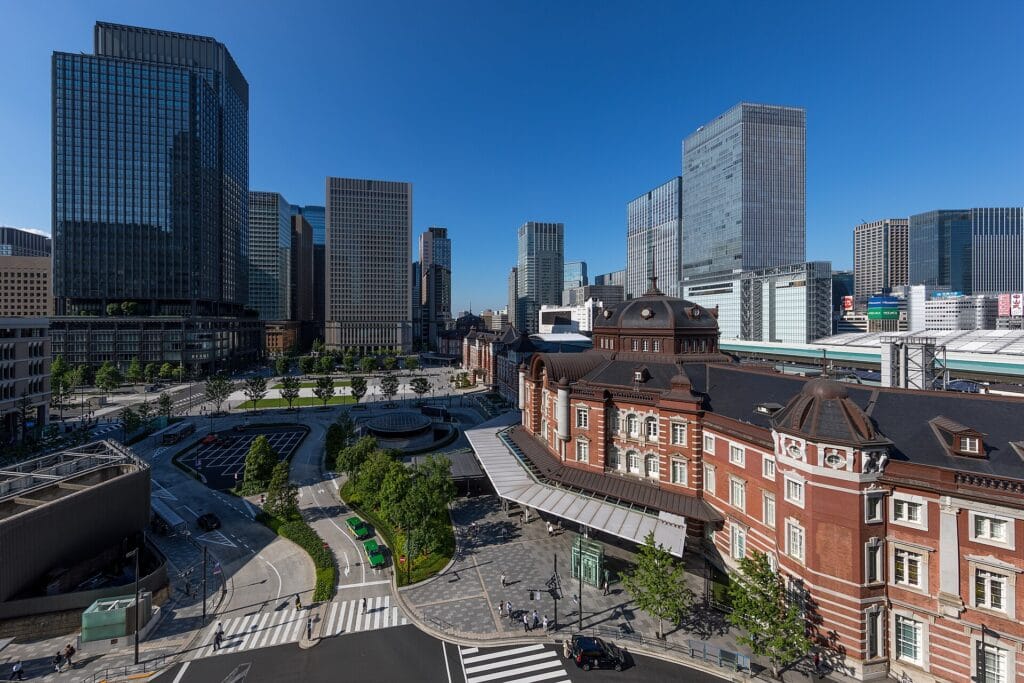
On the corner where the film studio Nikkatsu opened a luxury hotel in 1952, the Peninsula built a freestanding 24-storey tower, meant to read as a Japanese lantern, facing the Imperial Palace gardens.
- Neighbourhood
- Marunouchi
- Rooms
- 302
- Status
- Open
- Design
- Kazukiyo Sato (architecture); Yukio Hashimoto (interiors); Yabu Pushelberg (Peter)
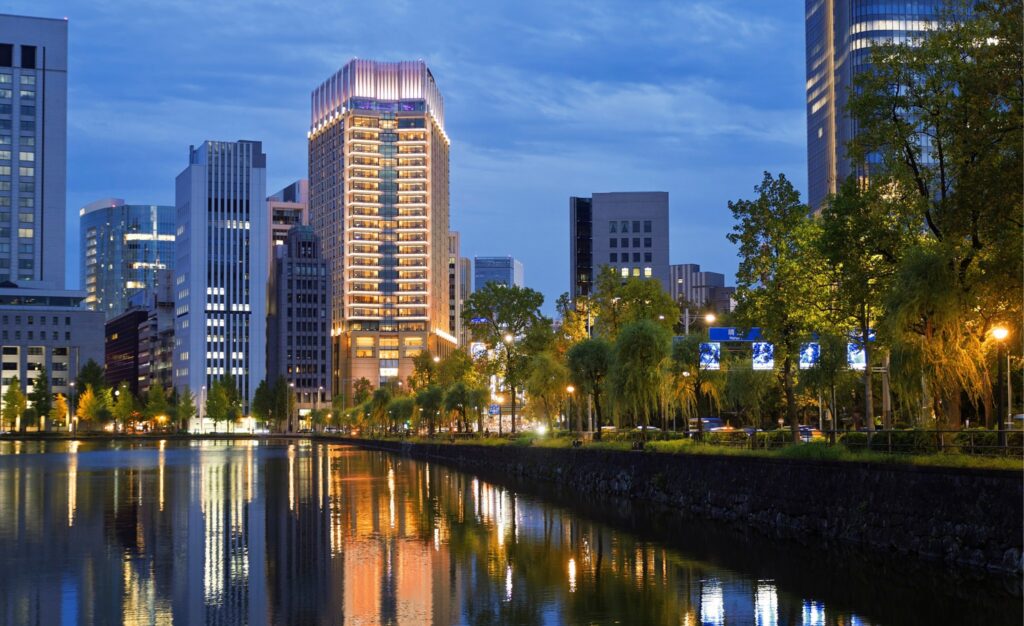
Photo: The Peninsula Hotels
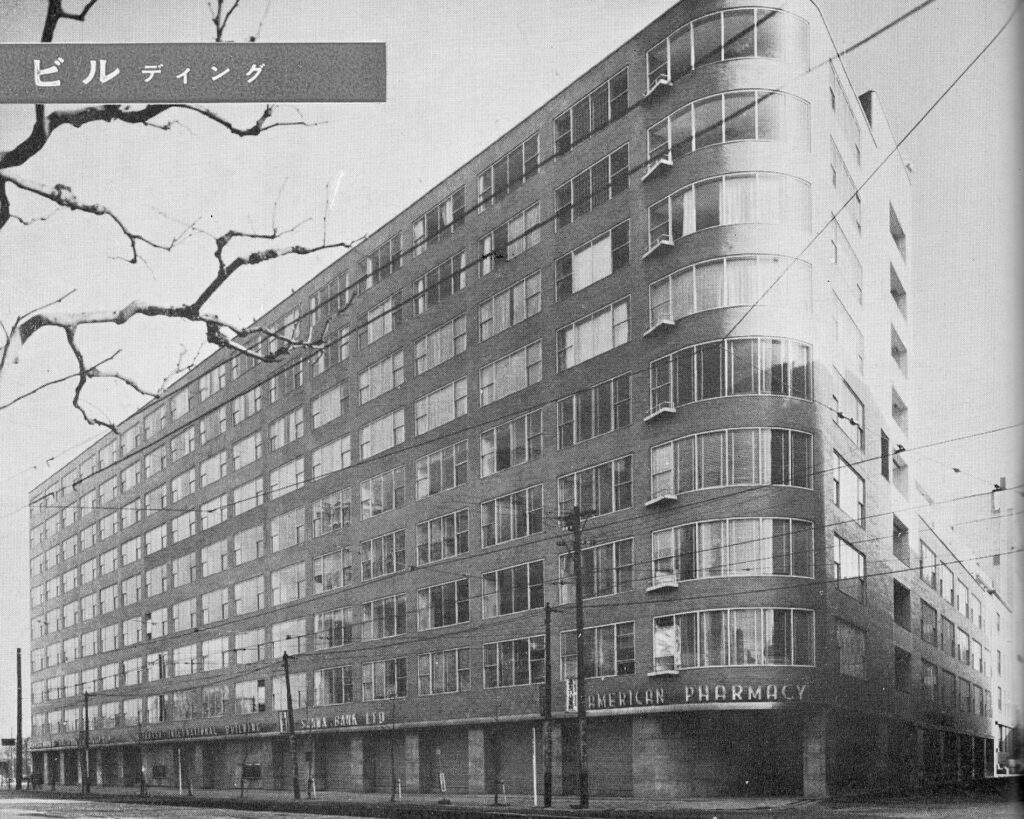
The triangular plot where Hibiya-dori meets Harumi-dori was once part of an Edo-period inlet, and after the war the occupation authorities used it as a car park. In 1948 the film studio Nikkatsu acquired it, and in 1952 it opened the Nikkatsu International Building, whose sixth to ninth floors held a hotel advertised as the most luxurious in the East. The actor Yujiro Ishihara married Mie Kitahara there in 1960, and the singer Hibari Misora married Akira Kobayashi two years later. Nikkatsu sold the building in 1970; renamed the Hibiya Park Building, it came down in 2003.
Its replacement was built by The Hongkong and Shanghai Hotels, the Kadoorie family's company, with Mitsubishi Estate, the landowner. Mitsubishi Jisho Sekkei was the architect, and the group credits the design to Kazukiyo Sato, who conceived the tower as a traditional Japanese lantern at the meeting point of Marunouchi and Ginza. When it opened on 1 September 2007, the group's first hotel in Japan, it was billed as the only freestanding luxury hotel built in Tokyo in more than a decade; its rivals occupied the upper floors of office towers.
Until December 2015 the group rented the building, then bought it from Mitsubishi Estate for ¥10.3 billion and took a lease on the land that runs to 2085. The hotel now has 302 rooms, 47 of them suites, and in August 2026 the group's board approved a renovation of both Tokyo and its Hong Kong flagship, without yet announcing dates. It connects underground to Hibiya Station; OKYTO's Marunouchi and Otemachi guide covers the streets between the palace and Tokyo Station.
The interiors are by Yukio Hashimoto, who trained with the Japanese studio Super Potato, and about nine in ten of the hotel's thousand-odd works of art are by Japanese artists. Hashimoto modelled the deluxe rooms on a ryokan, with ceilings of woven cedar bark, a door cut from a single plank of horse chestnut and a bath meant to recall an onsen. The red desks look lacquered but are not: real urushi can bring guests out in a rash, so the finish only imitates it.
Sources: Sumitomo Mitsui Trust Research Institute; HSH; HSH; HSH; Precious.jp; HSH; South China Morning Post; The Peninsula Tokyo
Location
- Address
- 1-8-1 Yurakucho, Chiyoda-ku, Tokyo, Japan
- Website
- Official website