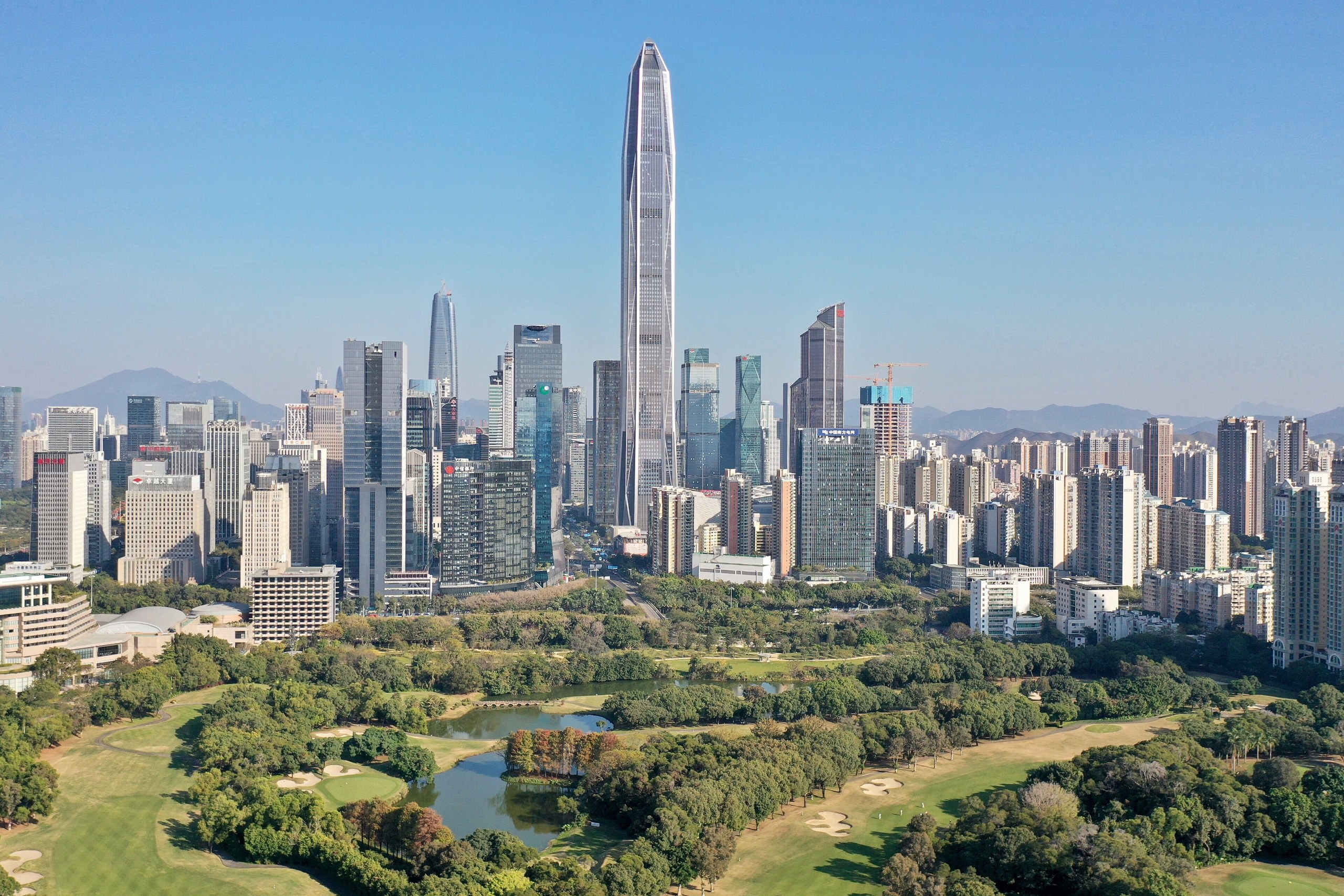
Shenzhen
China · Greater China
A young Pearl River Delta city on the Hong Kong border, known for supertall hotel towers, design institutions and a newly starred dining scene.
Photo: Charlie fong / Wikimedia Commons CC BY-SA 4.0 Resized
Why visit
Why visit Shenzhen
Go for the speed at which the city was made. Barely half a century old as an administrative entity, Shenzhen today exports more than any other mainland Chinese city, and that history explains what you see: a skyline with no old centre to preserve, and international hotel operators who took the upper floors of supertall towers rather than low-rise sites.
It is also China’s first City of Design, named by UNESCO in 2008, and in 2026 it received its first MICHELIN Guide selection. For a traveller interested in contemporary architecture, interiors and food, it is a compact case study of how a new Chinese city builds its own identity.
Explore
What to see
Design is the city’s declared identity, and its network cites more than 6,000 design firms working in graphic, industrial, interior, fashion, toy and jewellery design. The institution to see is Design Society, in the Sea World Culture and Arts Centre at Shekou. It opened in 2017 in a building by the Pritzker laureate Fumihiko Maki and houses the V&A’s first gallery outside the United Kingdom, alongside exhibitions on digital culture.
The Futian skyline is the other sight. Futian station, opened in 2015, has eight high-speed platforms 32 metres underground and was described by Railway Gazette as the largest underground station in Asia.
Outside the centre, Dapeng has the city’s main beaches, the Ming-era Dapeng Fort and Hakka heritage, and Longgang and Bao’an hold Hakka villages and fortified houses.
Hotels
Where to stay in Shenzhen
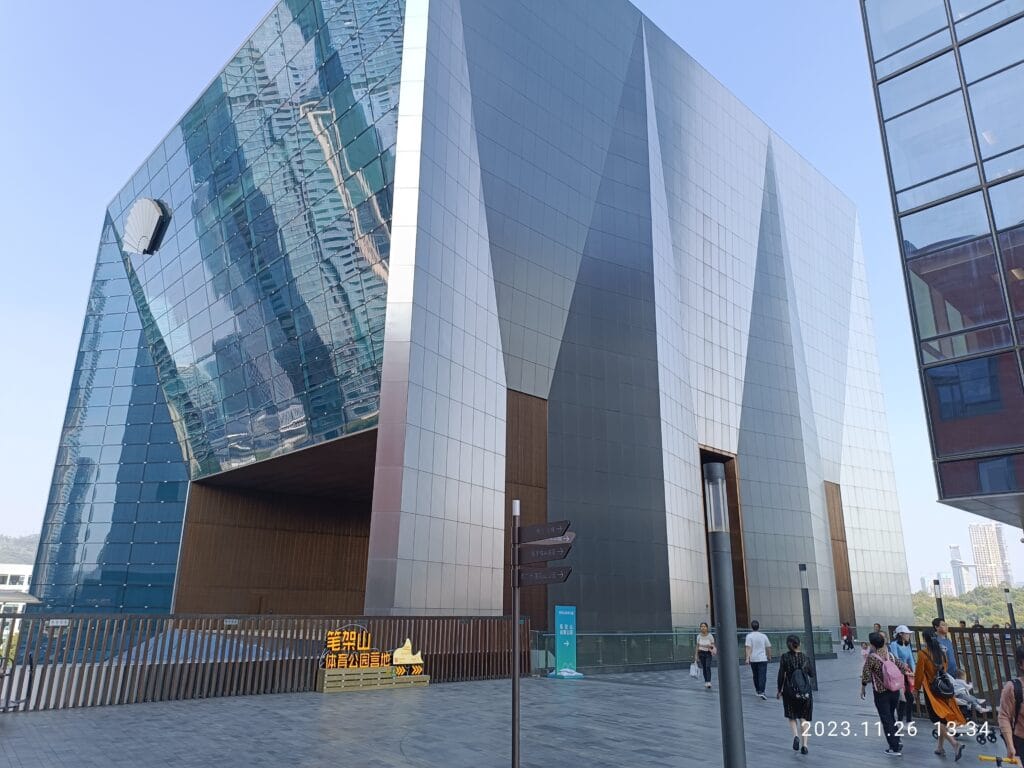
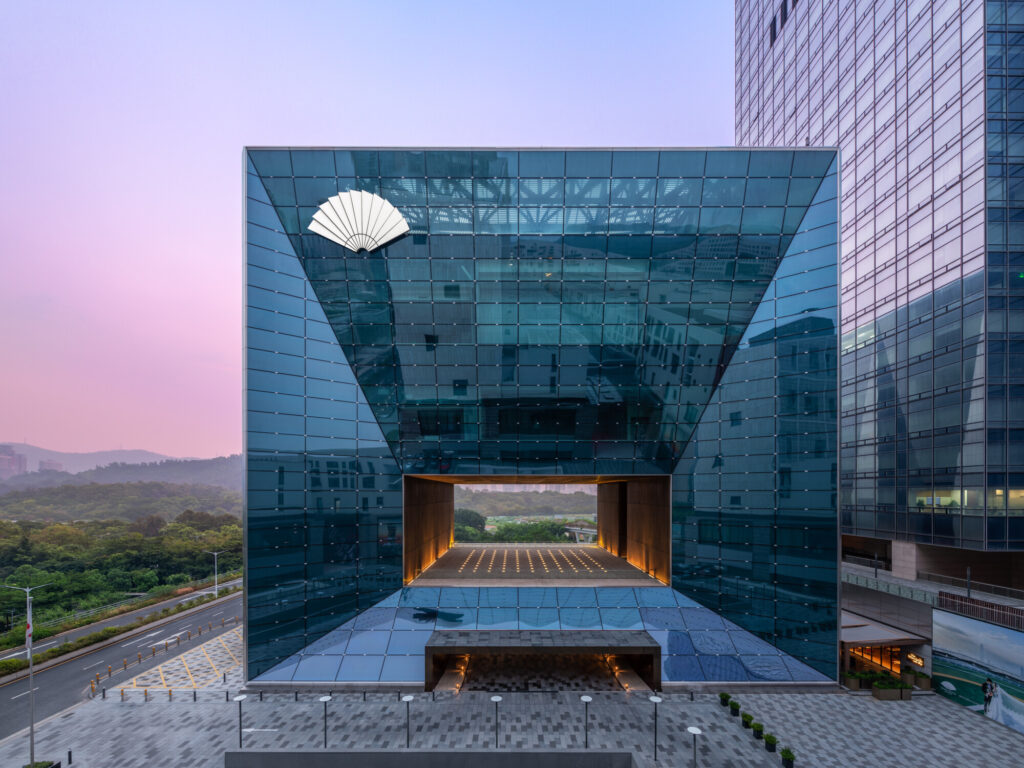
The choice is mainly about district. Futian is the business and civic centre: Park Hyatt Shenzhen occupies the top of the Ping An Finance Centre South Tower with Yabu Pushelberg interiors, and Mandarin Oriental has 178 large rooms at the top of a 79-storey tower. The Ritz-Carlton stands in the central business district.
Dining
Where to eat in Shenzhen
Shenzhen’s first MICHELIN Guide selection, a joint Guangzhou and Shenzhen edition in 2026, gave the city seven starred restaurants: two with two stars and five with one. Among the two-star addresses is The Bay by Chef Fei, from the Guangzhou chef Huang Jinghui; Yun Jing is the other.
Before you go
Practical information
Best time to visit
October to December is the most comfortable season. Summers are hot and very humid and overlap with the typhoon season, which runs from about June to October. Spring is often foggy, with heavy thunderstorms. The annual mean temperature is about 23°C.
Getting around
The metro is the simplest way to cross the city. From Hong Kong, the usual rail crossings are Luohu (Lo Wu) and Futian Kou’an (Lok Ma Chau), the latter more convenient for Futian. Shenzhen Bay has a road crossing, and ferries from Hong Kong land at Shekou. Bao’an International Airport is linked to the centre by metro line 11.
Read more
Distances are long, so check journey times on a map app rather than by eye. Visa and entry rules vary by nationality; confirm them with an official source before travelling.
Practical notes
Mandarin is the main language, with Cantonese and English also used. Taxi drivers rarely speak English, so carry destinations written in Chinese. Payment and border-crossing arrangements change, so rely on the official channels of the operators and authorities.
Continue exploring
More from China
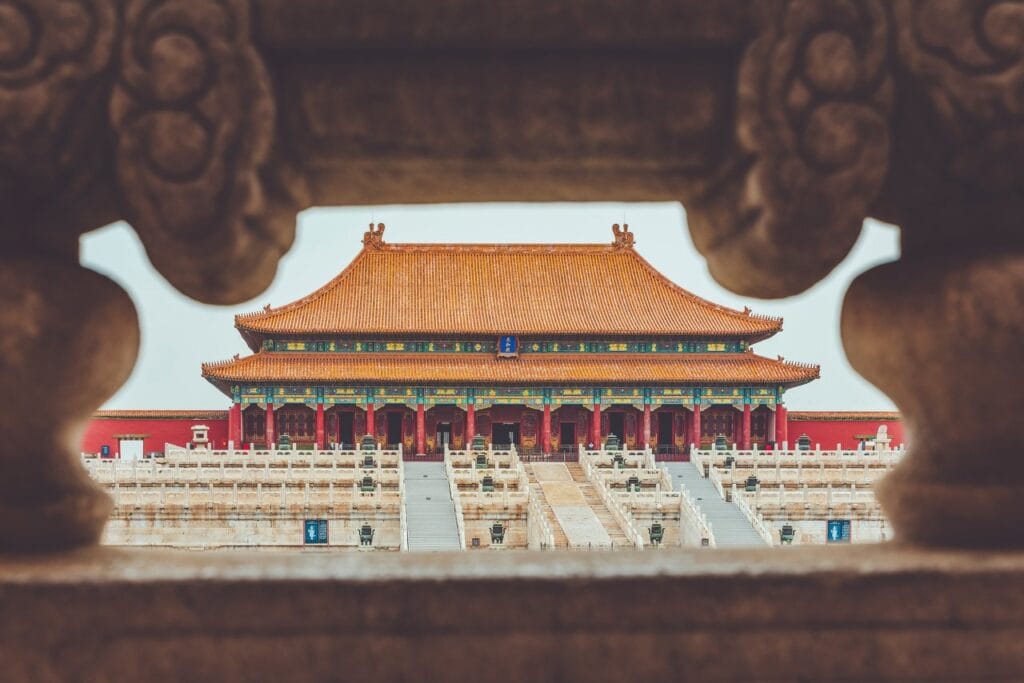 ChinaBeijingChina’s capital, laid out on a 7.8-kilometre Central Axis, with surviving hutong lanes, a contemporary-art district in a former East German-designed factory complex and a Michelin list led by Chaozhou and Taizhou kitchens.Explore Beijing →
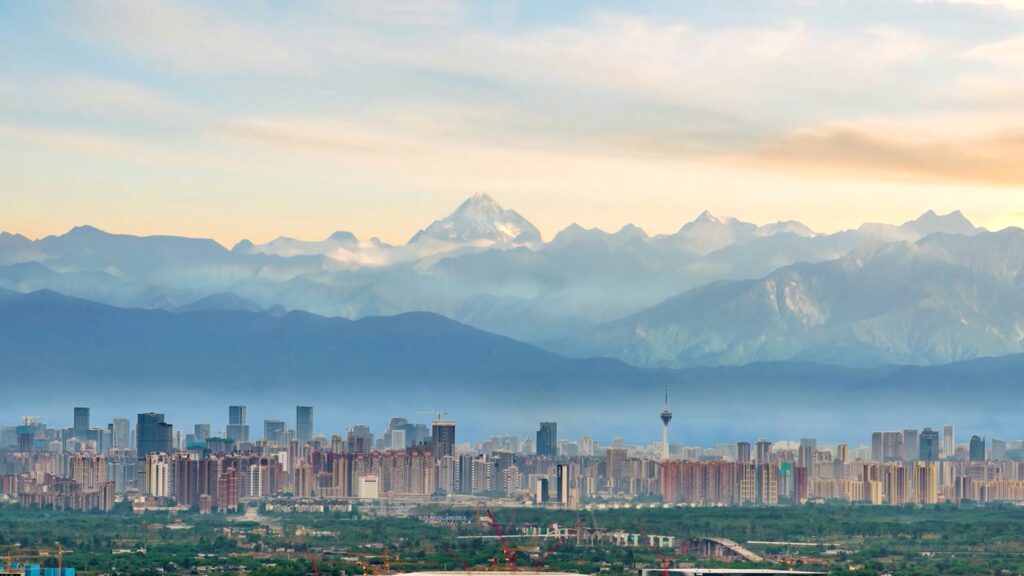 ChinaChengduThe capital of Sichuan: pandas, teahouses and the first three-star kitchen in the city’s Michelin Guide, with Leshan, Sanxingdui and Mount Qingcheng within a day’s reach.Explore Chengdu →
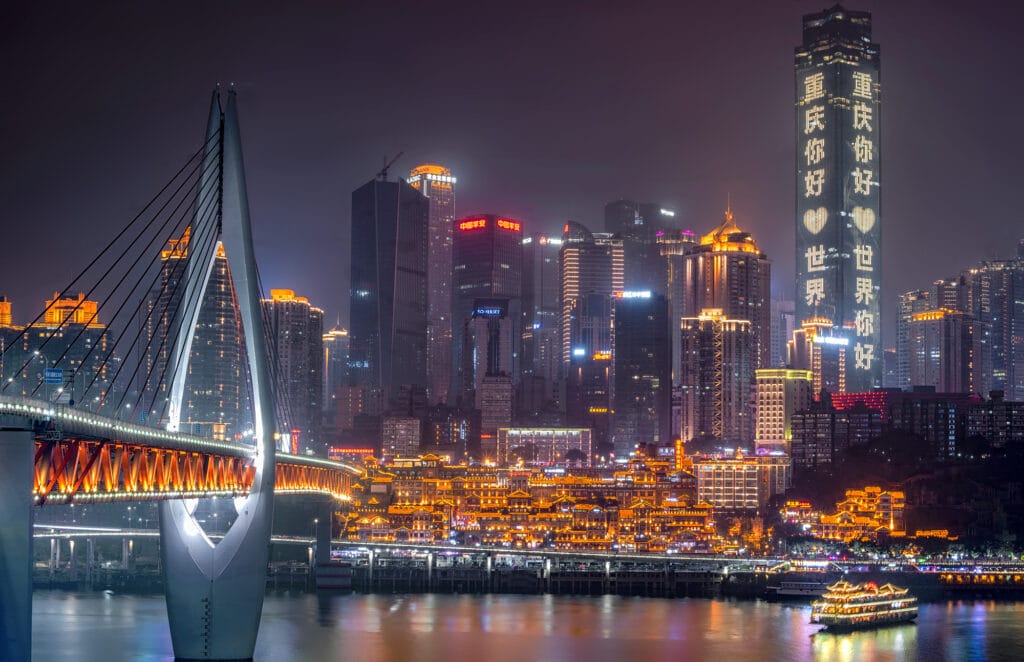 ChinaChongqingA municipality built on steep hills where the Jialing meets the Yangtze, known for hot pot, riverfront towers and the Dazu rock carvings.Explore Chongqing →