Dunhuang
China · Greater China
A Silk Road oasis in Gansu, where Buddhist cave paintings, singing dunes and the ruined gates of the Han frontier lie within a day of one another.
Why visit
Why visit Dunhuang
Dunhuang is where a thousand years of travellers left a record of what they believed. The Mogao Caves hold the largest body of Buddhist wall painting in the world, made by monks, merchants and donors who passed through the oasis, and the paintings carry their faces, their patrons and their fears.
The setting completes the visit. Dunes rise directly south of the town, a spring lies among them, and to the west the gates through which caravans left China still stand in the gravel desert. Nothing here is hurried, and two or three days are enough to understand why the Silk Road mattered.
Explore
What to see
Mogao Caves. A cliff face pierced by hundreds of caves, around five hundred of them painted with Buddhas, bodhisattvas, donor portraits and flying apsaras. Visits are timed and guided, and the number of caves seen depends on the ticket. The painted caves of Mogao are the reason to come.
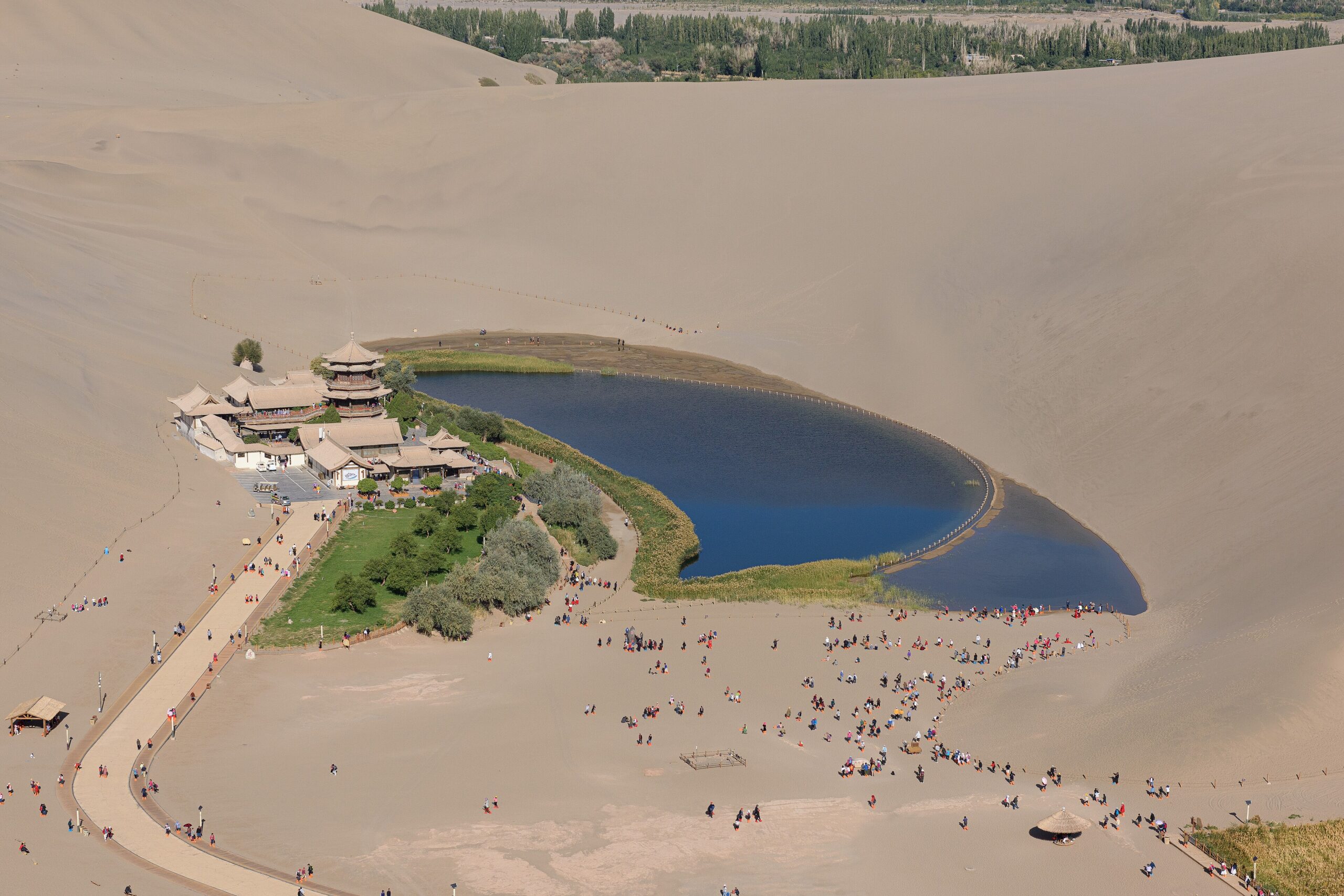
Mingsha dunes and Crescent Lake. The Singing Sand Dunes rise a few kilometres south of town, with a crescent-shaped spring at their foot. Go early or late, when the light is low and the crowds thin; the climb to Crescent Lake is the classic way to see them.
Yumen and Yangguan. The Jade Gate and the Sunny Pass were the two gateways of the Han frontier. Yumen lies some two hours north-west across the Gobi, with Hecang, an old granary, near it; of Yangguan, to the south-west, a beacon tower remains on a hill. Both are listed by UNESCO with the Silk Roads, and both reward a full day with a driver.
Shazhou night market. An evening market in the town centre, useful for dinner and a walk after the heat has gone.
Hotels
Where to stay in Dunhuang
Dunhuang has two natural bases. The first is the desert edge to the south of town, where the dunes begin and hotels borrow their setting. Jangala Dunhuang is a small, spare retreat among vineyards at the foot of the sand, for travellers who want quiet and a sense of place more than a town.
Experiences
Experiences in Dunhuang
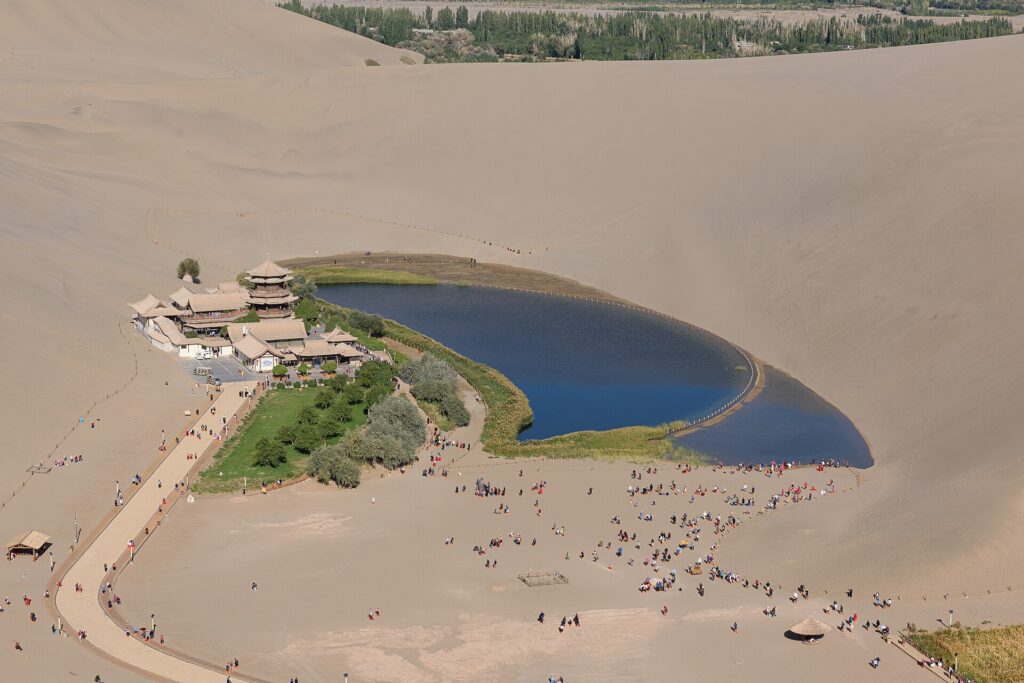 NatureClimb the singing dunes of Dunhuang to Crescent LakeClimb the Mingsha dunes at sunset and walk down to the Crescent Lake.Explore →
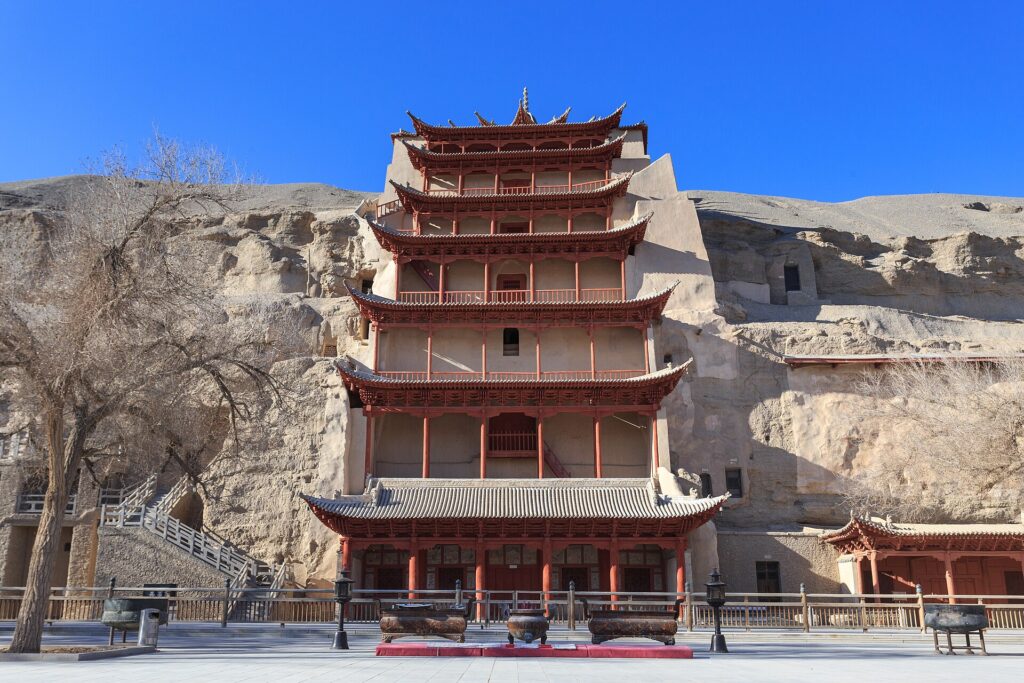 Cultural ImmersionSee the painted caves of Mogao at DunhuangA guided visit to a selection of the 735 Buddhist caves cut into a cliff at the edge of the Gobi, booked through the official channels.Explore →
Before you go
Practical information
Best time to visit
May, September and October are the best months, with warm days and clear skies. The climate is arid, with about 67 millimetres of rain a year. Summer is hot by day and July and August are the busiest, while winters are cold, with January averaging near minus 8°C and the caves quieter. Strong wind or rain can close the caves for a day.
Getting around
Dunhuang has an airport with domestic flights and a railway station with long-distance services, and the train along the Silk Road brings it within reach of Lanzhou and the east. The town is compact. The Mogao Caves are reached through the Digital Exhibition Centre, from which a shuttle runs to the cliff; the dunes are a short taxi ride; the passes need a car and a full day.
Practical notes
Allow two to three days. Book the caves first and plan the rest around the ticket: Mogao uses timed, real-name admission with daily limits, booked through the Dunhuang Academy’s official channels, which include a route for foreign passports. Use only those channels, and arrive at the Digital Exhibition Centre about half an hour before your slot. Distances in the desert are long and there is little shade, so carry water and sun protection.
Continue exploring
More from China
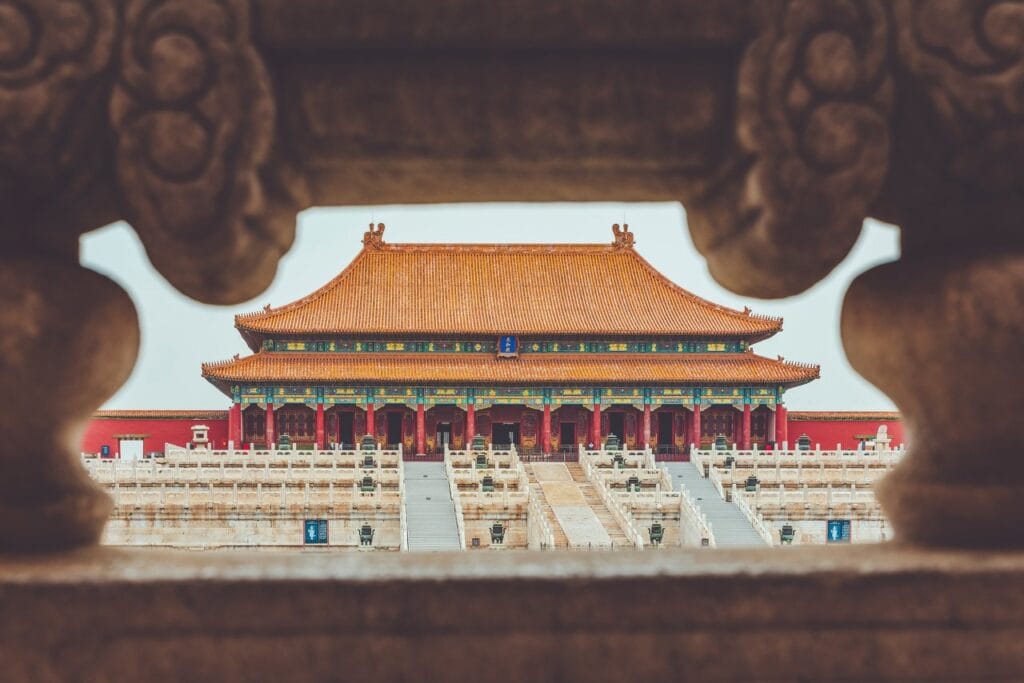 ChinaBeijingChina’s capital, laid out on a 7.8-kilometre Central Axis, with surviving hutong lanes, a contemporary-art district in a former East German-designed factory complex and a Michelin list led by Chaozhou and Taizhou kitchens.Explore Beijing →
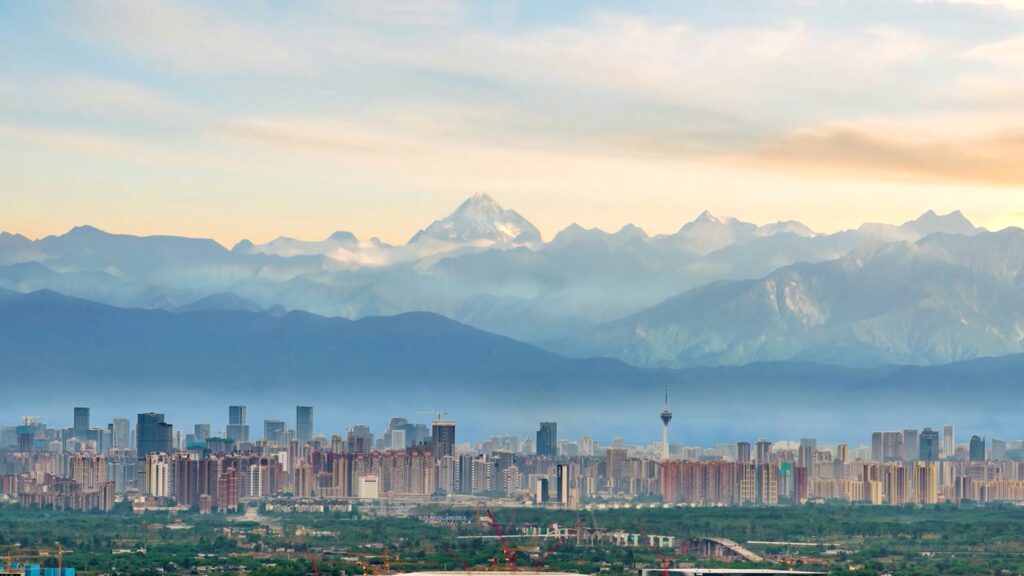 ChinaChengduThe capital of Sichuan: pandas, teahouses and the first three-star kitchen in the city’s Michelin Guide, with Leshan, Sanxingdui and Mount Qingcheng within a day’s reach.Explore Chengdu →
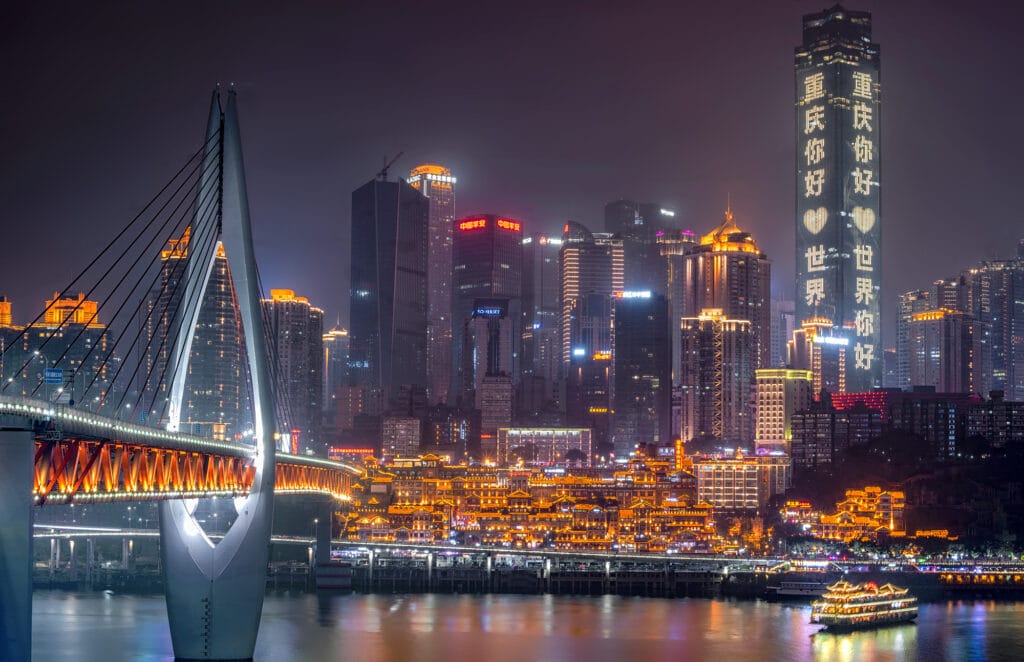 ChinaChongqingA municipality built on steep hills where the Jialing meets the Yangtze, known for hot pot, riverfront towers and the Dazu rock carvings.Explore Chongqing →