Dining · Japanese · Kyoto
Kitcho Arashiyama Honten
Teiichi Yuki turned an antiques dealer's villa into Kitcho's Arashiyama house; three generations on, kaiseki there is still tied to tea, art and the borrowed view of the hills.
A lantern and a villa
Kyoto Kitcho’s main restaurant in Arashiyama exists because of a stone lantern. Kitcho’s founder, Teiichi Yuki, had long been supported by the antiques dealer Kasuke Kojima, the man he credited with teaching him about food, art and business.
Kojima owned a lantern carved with the nine-star Kuyō crest, and when Yuki kept asking to buy it, he moved it to his villa in Arashiyama. After Kojima’s sudden death, Yuki acquired that villa from his son in 1948. The land became the restaurant that still stands there today.
From Osaka to Arashiyama
Kitcho itself began in 1930 as a small Japanese restaurant in Shinmachi, Osaka, and it has always worked under the motto that Japanese cuisine is one of the world’s specialities. The Arashiyama villa opened in 1948 as Kitcho’s Saga branch, before further houses opened in Osaka, Kobe and Tokyo.
The business later divided. In 1991 the Kyoto restaurants became a separate company, Kyoto Kitcho, with Arashiyama as its main house. Kitcho kitchens have cooked for official occasions along the way, including the luncheon of the 1978 Tokyo Summit and the opening meals of the Kyoto State Guest House in 2005.
Rooms for tea, a view of the hills
Over the decades the house has been extended and furnished with the utensils and fittings of the tea ceremony, and its rooms take the hills of Arashiyama as borrowed scenery. Besides the meal, the restaurant offers tea gatherings, boat outings and traditional zashiki entertainment.
One room has its own history. In 1962 Yuki acquired an early Meiji shoin-style building from the industrialist Konosuke Matsushita and moved it to Arashiyama as a dining room. Named Taikōtei, a room for receiving special guests, after a verse on a calligraphy card linked to the tea master Kobori Enshū, it was restored by Kyoto craftsmen in 2023.
Three generations
The house has stayed in the family. Kōji Tokuoka became manager of Arashiyama in 1966. Kunio Tokuoka, Yuki’s grandson, was born in 1960, began training there at fifteen and became its head chef in 1995, two years before his grandfather’s death. In 2009 he also became president of Kyoto Kitcho.
In a 2010 interview he described the approach he inherited from Yuki: thinking, with every skill a cook has, about how to delight the particular guest at the table, and adjusting dishes to each guest’s taste. In the same period he took the name abroad, producing a restaurant in Singapore and publishing an English-language book on Kitcho.
Kaiseki in its setting
The cooking is seasonal kaiseki, served at lunch and dinner. The Michelin Guide Kyoto-Osaka 2010 gave Arashiyama three stars, and the house still held three stars in the 2021 Kyoto guide.
The restaurant still presents itself as more than its menu: seasonal food, but also tea, boats and rooms gathered over nearly eight decades. It asks for early bookings in April and from November to January, when Arashiyama is at its busiest.
Sources: Kyoto Kitcho; Gendai Business; Last Minute Japan
Nearby
More tables in Kyoto
Hotels
Hotels in Kyoto
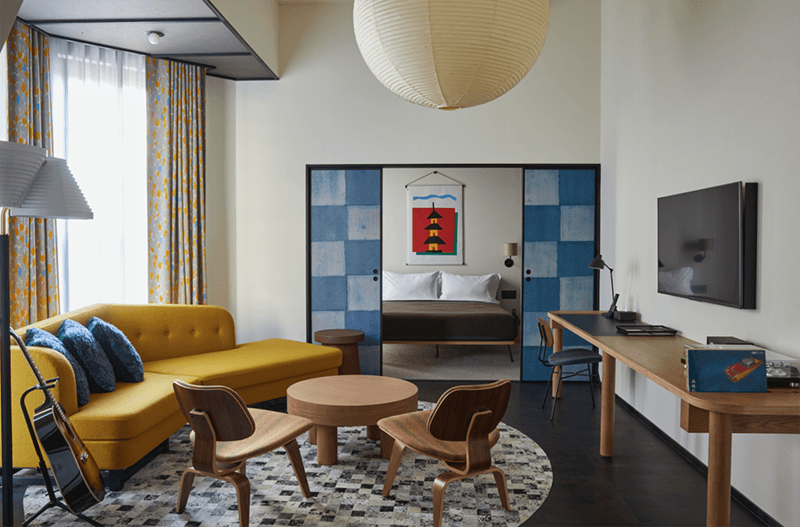 KyotoAce Hotel KyotoAce's first hotel in Asia: 213 rooms in a 1926 telephone exchange and a Kengo Kuma wing in central Kyoto.
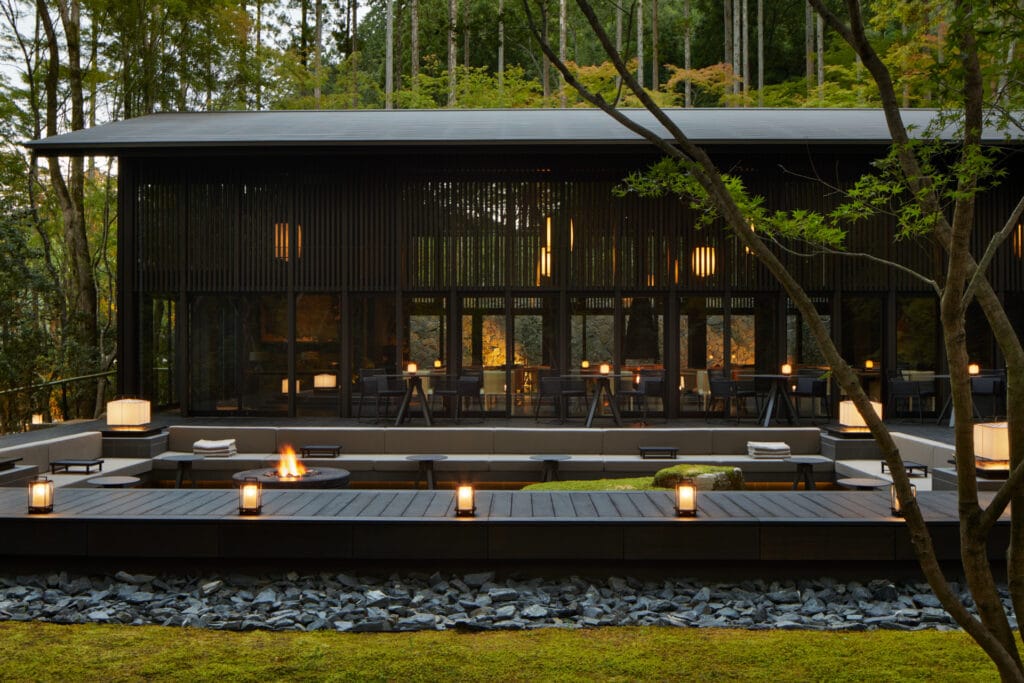 Kyoto · AmanAman KyotoTwenty-six rooms in six Kerry Hill pavilions, in a private forest garden in northern Kyoto near Kinkaku-ji.Kyoto · Four SeasonsFour Seasons Hotel KyotoA low-rise Higashiyama hotel of 110 rooms and 13 suites around an 800-year-old pond garden.
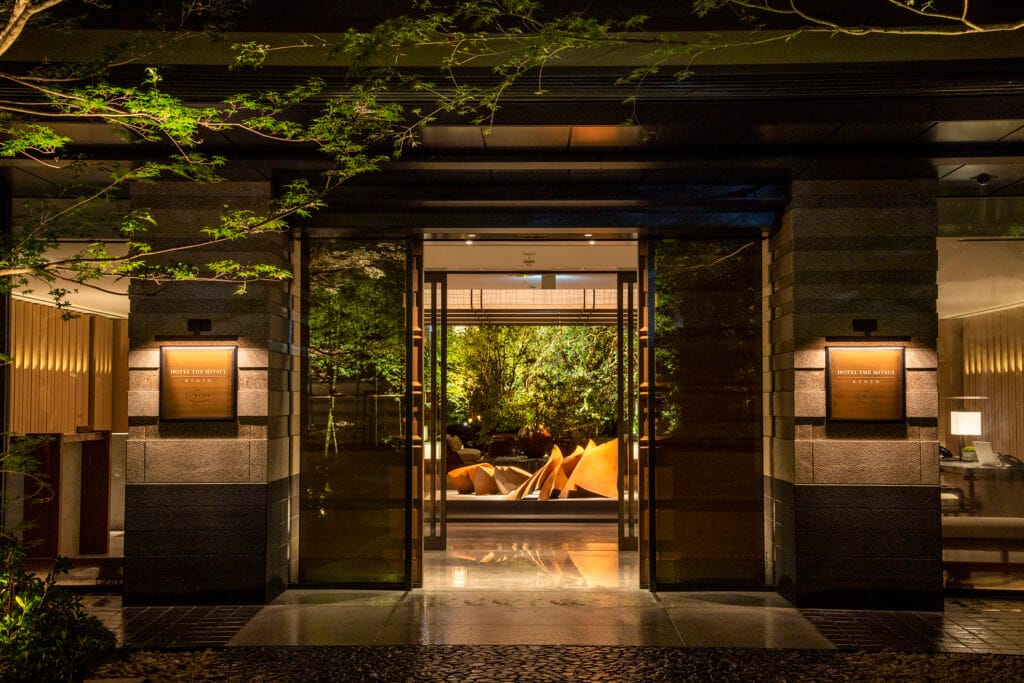 KyotoHotel The Mitsui KyotoA hotel on the Mitsui family's former Kyoto estate opposite Nijo Castle, entered through a 300-year-old gate.