Dining · Cantonese, Contemporary · Shanghai
Fabula
Three young chefs from Ningbo, Foshan and Shanghai put French technique to work on the home cooking of the Yangtze delta, in a small room in Jing'an.
Three chefs, three hometowns
Fabula belongs to three chef-owners, Zee Zheng, Charles Tan and Ricky Deng, who come from Ningbo, Foshan and Shanghai respectively and are all around thirty. Between them they have lived in the United States, Canada, Switzerland and Britain. Zheng and Deng both worked at Taian Table; Tan came from Amber in Hong Kong.
They opened on the upper floors of 720 Weihai Road, in Jing’an, in August 2025. Fabula then entered the 2026 Michelin Guide Shanghai with one star, one of three new one-star restaurants in that edition, and by spring 2026 The Peak was calling it one of the city’s most sought-after tables.
The name comes with a Latin motto, “Acta est fabula, plaudite”: the play is over, applaud. The restaurant’s own principles are plainer: home as a feeling, simplicity, and great things from small ones.
Neo-Sino-French
The restaurant calls its cooking “Neo-Sino-French”: French at the base, with flavours taken from the chefs’ hometowns and from local produce. There is a single tasting menu, by reservation only, and it begins with rice, which the restaurant presents as a source of comfort. The chefs describe the menu they built together as jazz-like.
The room is built around what it calls a “bonfire-like pass”, where the chefs finish each dish in front of the guests. Michelin, which places the restaurant in the attic of a wine bar, points to a sourdough made from a starter several years old and served with Ningbo sea salt, and to a short, carefully chosen wine list.
Leftovers, reworked
Speaking to The Peak in 2026, Tan described the starting point as the rustic food of the Wu-speaking Yangtze River Delta, where family meals were often built from leftovers. One winter dish pairs aji and saba with a sous-vide gel of fresh duck egg yolk. Regional vegetables such as luffa and bok choy, rarely seen on European tasting menus, have their place too.
Dishes from its menus show what Michelin’s “innovative” label means in practice. A rice-less congee has come with botan ebi and Shunde buffalo milk curd; tomato and scrambled egg, the Chinese home-cooking staple, has become a chaud-froid of chitarra pasta; a scallop tartare has met luffa sorbet and an oyster-yogurt sauce.
Tan sees Fabula as part of a younger wave of Shanghai chefs combining local ingredients, fermentation and Western technique. His own summary of the approach is short: “quality is defined by how something is made.”
On the ground floor, Zheng runs Alea, a casual bistro drawing on Ningbo cooking.
Sources: Fabula; Michelin Guide; The Peak; Rachel Gouk; Pearl
Nearby
More tables in Shanghai
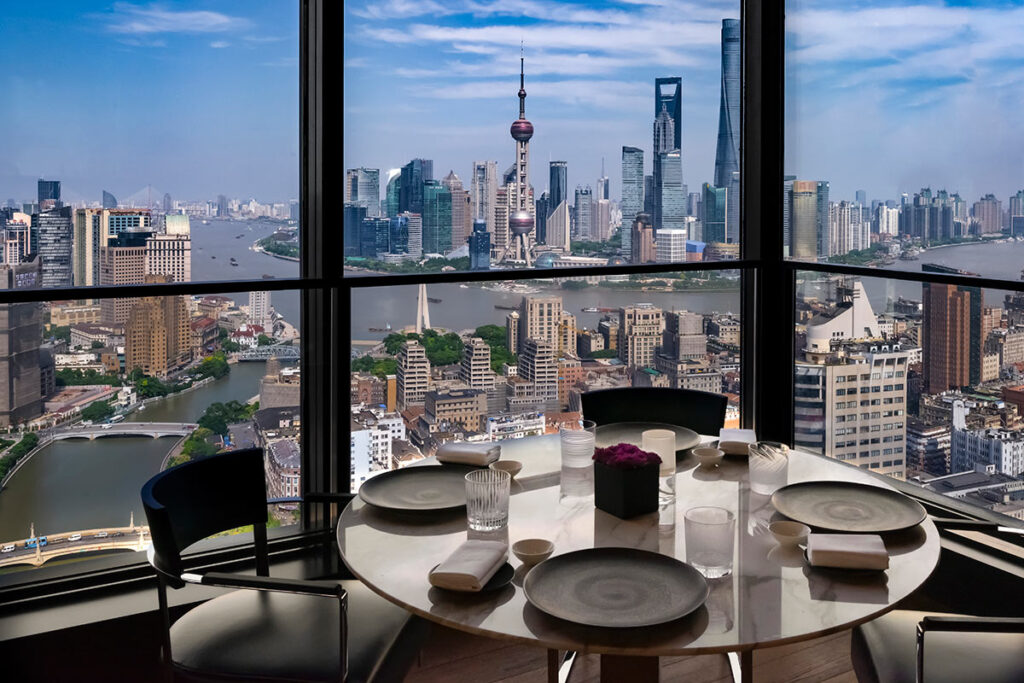 Shanghai · ItalianIl Ristorante – Niko RomitoNiko Romito's contemporary Italian cooking on the 47th floor of Bulgari Hotel Shanghai, one Michelin star.Shanghai · FrenchMr & Mrs BundPaul Pairet's French brasserie in Bund 18, Shanghai; Michelin Selected.Shanghai · Cantonese102 HouseXu Jingye's Cantonese banquet cooking on the Bund, from a Foshan private kitchen; two Michelin stars.
Hotels
Hotels in Shanghai
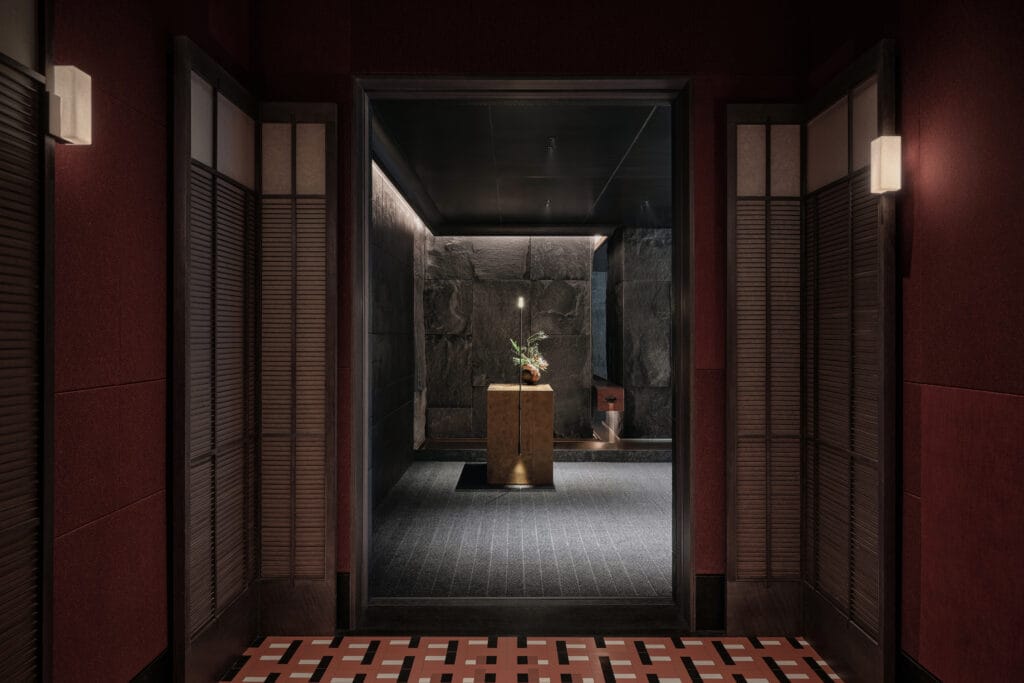 Shanghai · AlilaAlila ShanghaiAlila Shanghai is the former Four Seasons on Weihai Road.
 Shanghai · AmanAmanyangyunAmanyangyun is built from Ming and Qing houses.
 Shanghai · Bvlgari Hotels & ResortsBvlgari Hotel ShanghaiBvlgari Hotel Shanghai joins a tower on Suzhou Creek to the restored Shanghai General Chamber of Commerce.
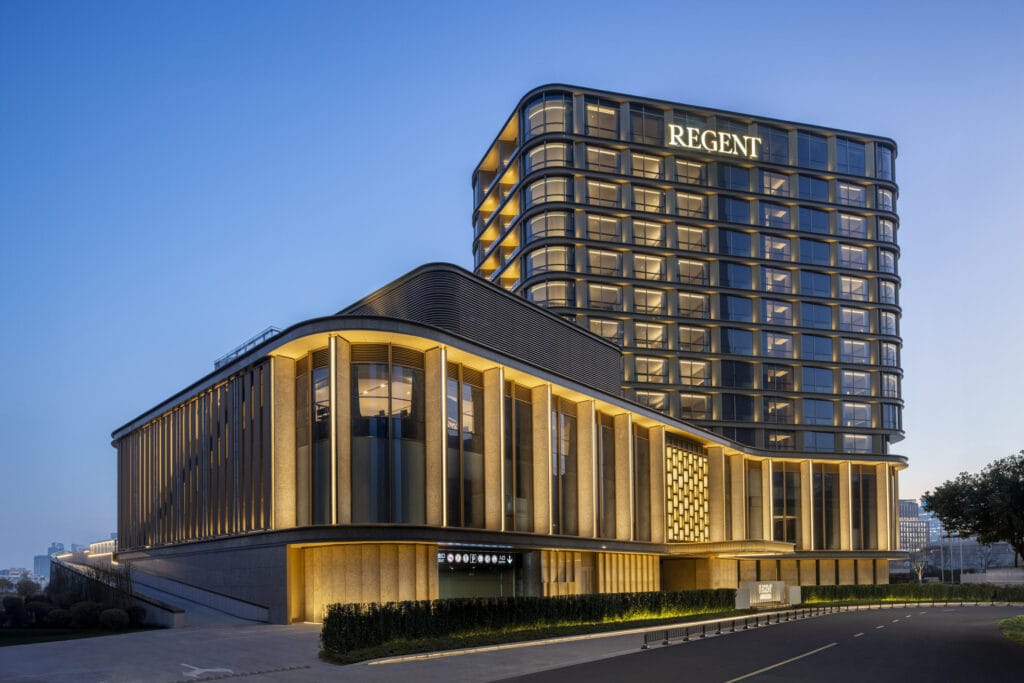 Shanghai · RegentRegent Shanghai on the BundRegent Shanghai on the Bund replaces the Seagull Hotel of 1984.