The Art Islands of the Seto Inland Sea, and the Setouchi Triennale
Every three years a festival of contemporary art spreads across twelve islands between Honshu and Shikoku. The museums of Naoshima, Teshima and Inujima are open in the years between. How to plan either visit.
The Seto Inland Sea lies between Honshu and Shikoku and holds several hundred islands. For most of the last century they were known for quarries, copper smelters and fishing villages that were losing their young. Since the 1990s some of them have become one of the great destinations for contemporary art, and every three years a festival extends the art to a dozen islands at once.
How it began
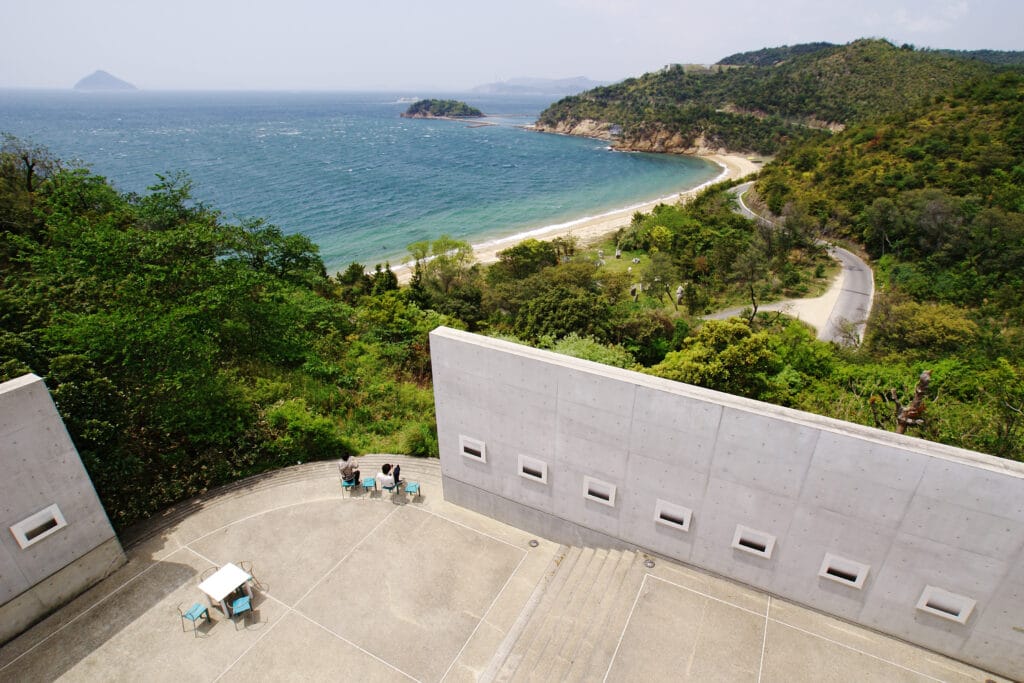
The project started with Soichiro Fukutake, head of the Benesse publishing company, who began building museums on the island of Naoshima with the architect Tadao Ando. In 2010 he and the curator Fram Kitagawa launched the Setouchi Triennale, to bring visitors, and life, to neighbouring islands that had suffered depopulation and, in one case, the illegal dumping of industrial waste. Organisers hoped for 300,000 visitors. More than 900,000 came.
How the festival works
The festival is held every three years and lasts about a hundred days, divided into three sessions: spring, from March to mid-April, summer, from mid-July to early September, and autumn, from October to early November. The sixth edition took place in 2025, and the next is due in 2028.
Twelve islands take part, with the ports of Takamatsu, on Shikoku, and Uno, on Honshu. Works are installed in empty houses, schools, rice terraces and harbours, and many are made with the islanders. A festival passport gives one entry to each work. Ferries are the only transport and their timetables govern everything. Three islands in a day is the limit, and two is better.
The islands to see in any year
Naoshima. The centre of the project. Ando’s buildings include Benesse House, which is both museum and hotel, the Chichu Art Museum, sunk into a hilltop and lit only by daylight, with rooms for Monet, James Turrell and Walter De Maria, and the Naoshima New Museum of Art, opened in 2025 and devoted to artists from Asia. In the village of Honmura, old houses have been turned into single works of art. Yayoi Kusama’s yellow pumpkin sits at the end of a pier.
Teshima. The Teshima Art Museum, by the architect Ryue Nishizawa and the artist Rei Naito, is a low concrete shell open to the air, on whose floor drops of water rise, gather and run. Many visitors consider it the finest thing in the region.
Inujima. A very small island with a museum built in the ruins of a copper refinery.
Shodoshima, Megijima and Ogijima have works that remain between festivals, and are busiest during them.
Festival year or not
The festival offers the most art and the most atmosphere, and the largest crowds. Summer is very hot. Spring and autumn are the sessions to choose. In other years the permanent museums are calmer, and the Chichu and Teshima museums, which admit visitors by timed ticket, are easier to book. Most museums close on Mondays on Naoshima and on Tuesdays on Teshima.
Planning
Allow three days: two nights on Naoshima, or in Takamatsu, with a day each for Naoshima and Teshima and a half day for Inujima. Okayama, on the shinkansen line, is the gateway from Kyoto and Osaka. Rooms on Naoshima are few and should be reserved months ahead.
The same sea offers other journeys. The floating ryokan guntû cruises among the islands, cyclists cross them on the Shimanami Kaido, and Azumi Setoda occupies a merchant’s house on Ikuchijima. On the mainland shore, the Simose Art Museum is a short journey west of Hiroshima.
Continue
More from Seto Inland Sea
 JapanSeto Inland SeaJapan's island sea: the museums of Naoshima and Teshima, the Shimanami Kaido cycle route.Read →News · CultureNaoshima New Museum of Art Opens, Dedicated to Asian ArtistsTadao Ando's tenth building for Benesse Art Site opened on 31 May 2025 beside the old village of Honmura.May 31, 2025Read →News · WellnessZenbo Seinei: Shigeru Ban’s Meditation Deck Above the Forest of AwajiCompleted in 2022 on Awaji Island, the retreat is a timber building 90 metres long.August 4, 2022Read →News · TravelAzumi Setoda Revives a 140-Year-Old Setouchi EstateAdrian Zecha's new ryokan concept takes over a salt merchant family's compound on Ikuchijima.December 11, 2020Read →