The Terracotta Army: A Guide to the First Emperor’s Buried Soldiers
In 1974 farmers digging a well east of Xi'an struck the clay guard of China's First Emperor. More than 8,000 soldiers stand in three pits beside a tomb that has never been opened.
On 29 March 1974 a group of farmers digging a well near Mount Li, east of Xi’an, broke into a pit of fired clay figures. They had found the army buried to guard Qin Shi Huang, the ruler who unified China and took the title of First Emperor. The site, Emperor Qinshihuang’s Mausoleum Site Museum, is now one of the most visited archaeological museums in China, and the mausoleum has been a World Heritage site since 1987.
The emperor and his tomb
Work on the mausoleum began in 246 BC, when the future emperor came to the throne of the state of Qin at the age of thirteen. It continued until his death around 210 BC. The tomb lies beneath an earth mound at the foot of Mount Li. The army was set in pits about a kilometre and a quarter to the east of it, facing the direction from which his enemies had come.
The burial chamber itself has not been excavated, and archaeologists have left it closed, largely out of concern for the preservation of what it contains.
The pits
Estimates published in 2007 put the contents of the three army pits at more than 8,000 soldiers, 130 chariots with 520 horses, and 150 cavalry horses. Most are still in the ground.
Pit 1 is the largest, with thousands of figures drawn up in parallel corridors roofed with timber and covered with earth; a single hall now covers the excavation. Pit 2 holds cavalry, infantry and war chariots. Pit 3 is the smallest and is understood as a command post, with about 68 high-ranking figures. A fourth pit was found empty and may never have been finished.
The figures
The soldiers are life-size, and the officers are taller than the men. The bodies were built up from standard parts, but the faces, hair and details of armour differ from one figure to the next.
They were not meant to be the colour of clay. Each was coated with lacquer and painted in pigments. The lacquer cannot survive exposure to air, and the colour is lost within minutes of excavation. Slowing that process is one of the main tasks of the conservators, and one reason why excavation is slow.
The army was armed with real weapons, and tens of thousands of bronze arrowheads have been recovered, as well as swords, spears and crossbow parts.
For travellers
The museum is in Lintong, about 40 kilometres east of central Xi’an, and takes half a day with the journey. The pits are seen from walkways around their edges. Chinese public holidays bring very large crowds; an early start on an ordinary weekday is the better choice. Tickets, hours and reservation rules change, so check them before going.
Continue
More from Xi’an
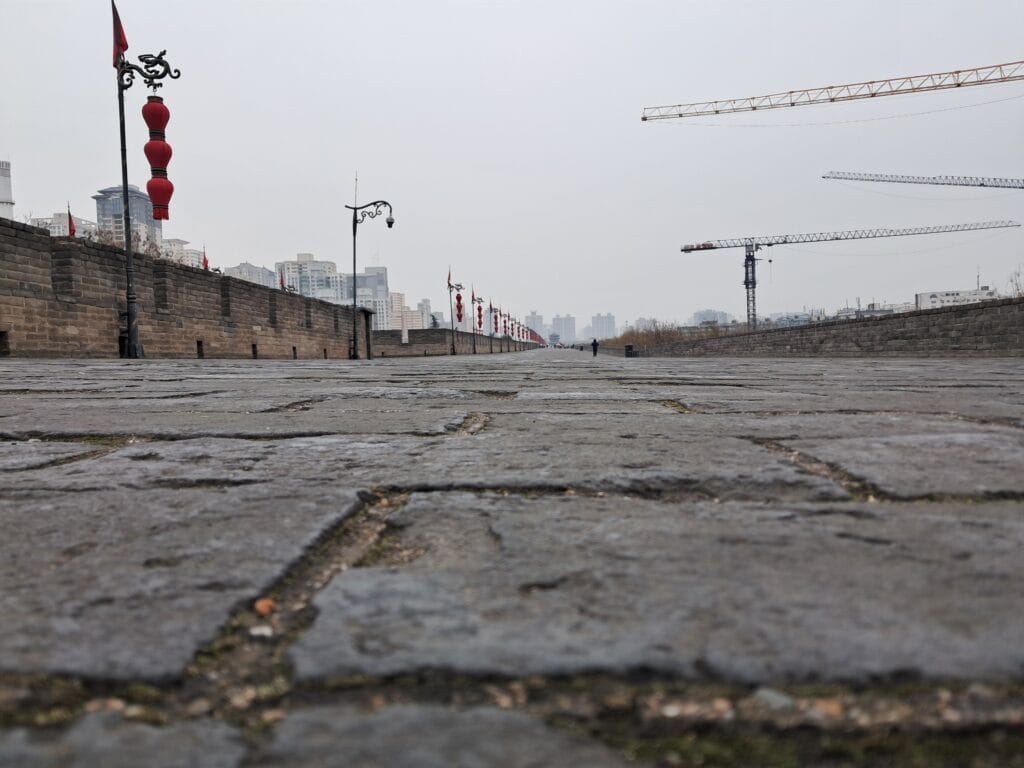 ChinaXi’anChina's old imperial capital: the Terracotta Army, a 14-kilometre Ming wall and the start of the Silk Road.Read →
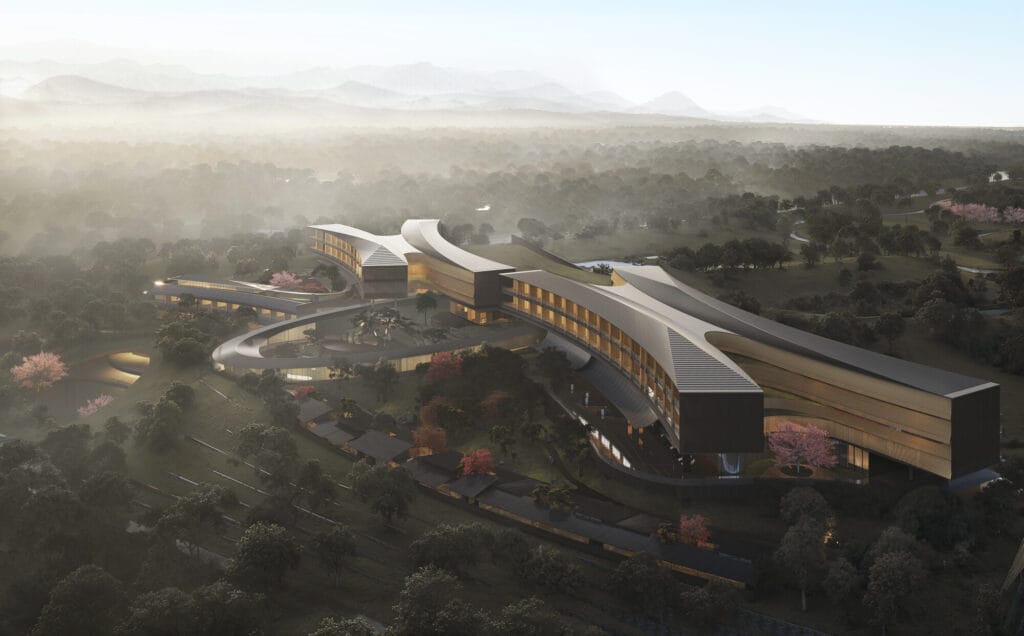 News · TravelMandarin Oriental Plans Hot Spring Resort in Xi’anThe group's planned Xi'an property is an urban resort with 166 terraced rooms.August 1, 2025Read →News · Design & ArchitectureUpper House Xi’an: Shigeru Ban Beside the Small Wild Goose PagodaAbout 115 rooms and 55 residences beside the Small Wild Goose Pagoda.October 15, 2025Read →