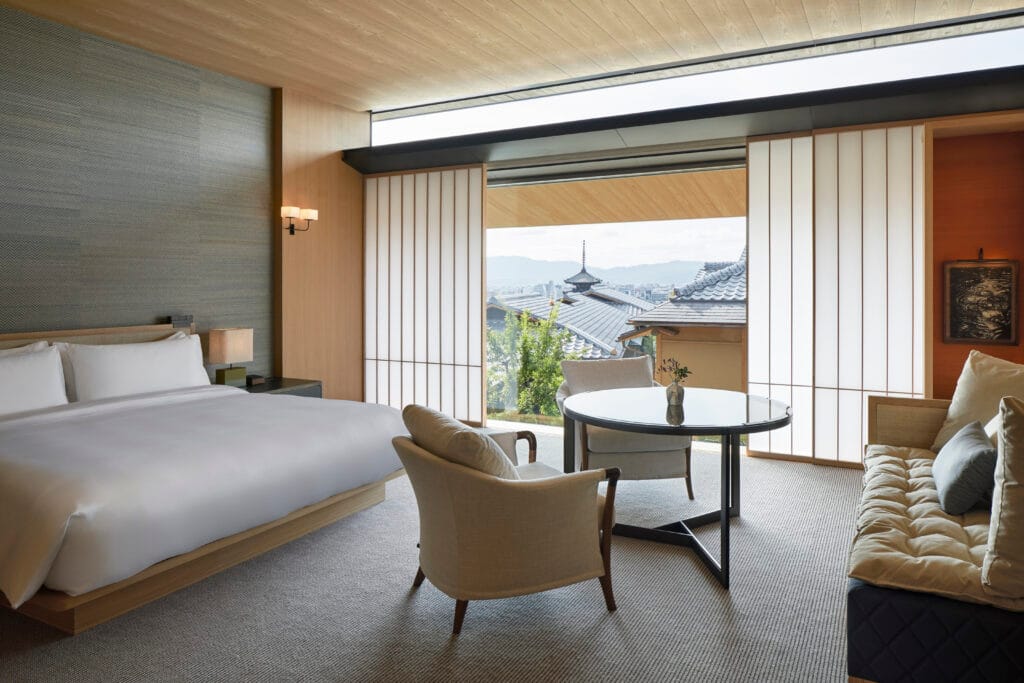
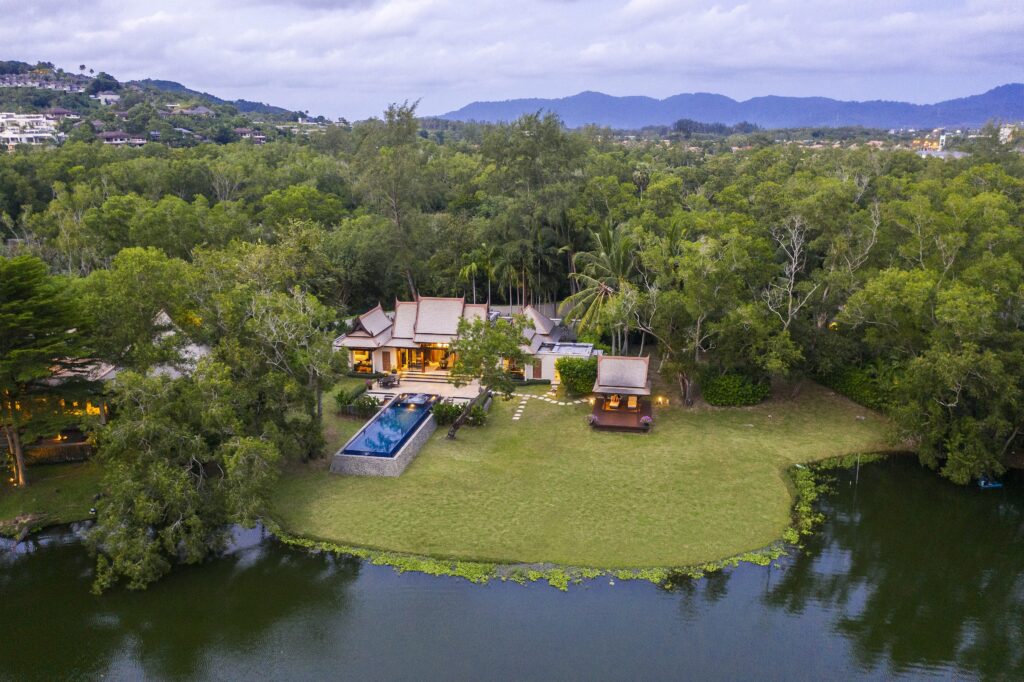
Banyan Tree Higashiyama Kyoto
On the slope of Ryozen in Higashiyama, Kengo Kuma rebuilt a long-established hotel as Banyan Tree's first in Japan, with a Noh stage left without solid walls or roof because a roofed building was not allowed there.
- Neighbourhood
- Ryozen, Higashiyama
- Opened
- August 2024
- Design
- Kengo Kuma and Associates (architecture, Noh stage); hashimoto yukio design studio (guest rooms); DWP International (public interiors)
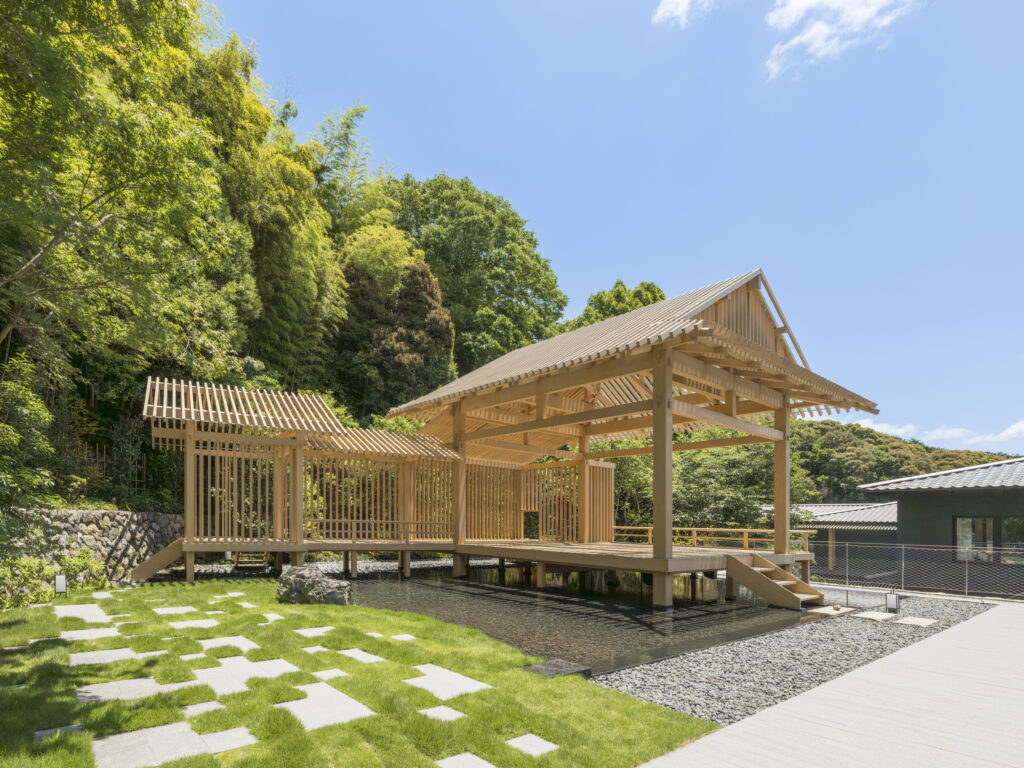
Photo: Banyan Group
Hotel Ryozen stood on the slope of Ryozen in Higashiyama, about ten minutes' walk from Kiyomizu-dera and Kodai-ji, with a hot spring of its own. In 2018 a company jointly funded by Wealth Management, a listed property group, bought its operating company; the group's chief executive later said it had bought a long-established Kyoto hotel from an owner with no successor, to rebuild it as a small luxury hotel. Banyan Tree signed to run it in 2019, with Kengo Kuma as architect, and Hotel Ryozen closed that October. The new hotel, Banyan Tree's first in Japan, received its first guests in July 2024 and held its grand opening that August, with 52 rooms. Its nearest neighbour is Park Hyatt Kyoto, beside Kōdai-ji, and both are in OKYTO's Higashiyama guide.
Kuma said the hotel was inspired by the ethereal beauty of Noh, and that the hill's association with the afterlife had led his office to the theatre of ghosts and to yūgen, the quiet, mysterious beauty that Zeami wrote about. The site is tight and drops about twelve metres, and he said that the building had to be significant in volume; it is broken into two concrete blocks under three tiers of slatted timber eaves, with a base clad in weathered stones reused from an existing wall. OKYTO's guide to Kengo Kuma's hotels sets it beside his other work in Japan.
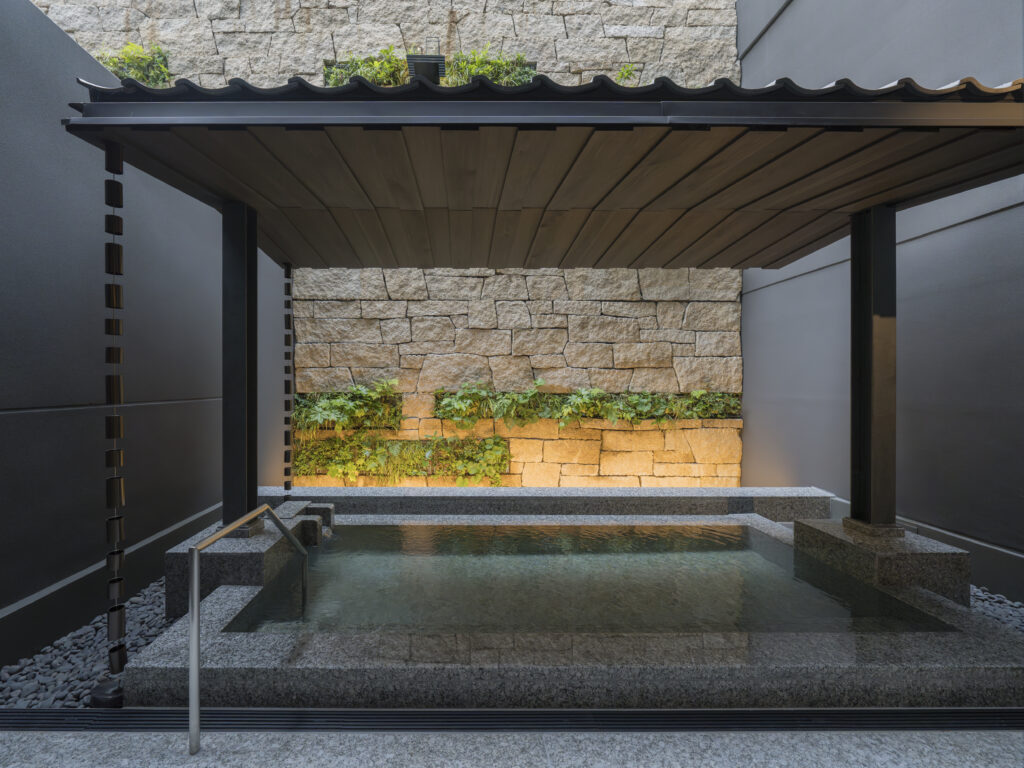
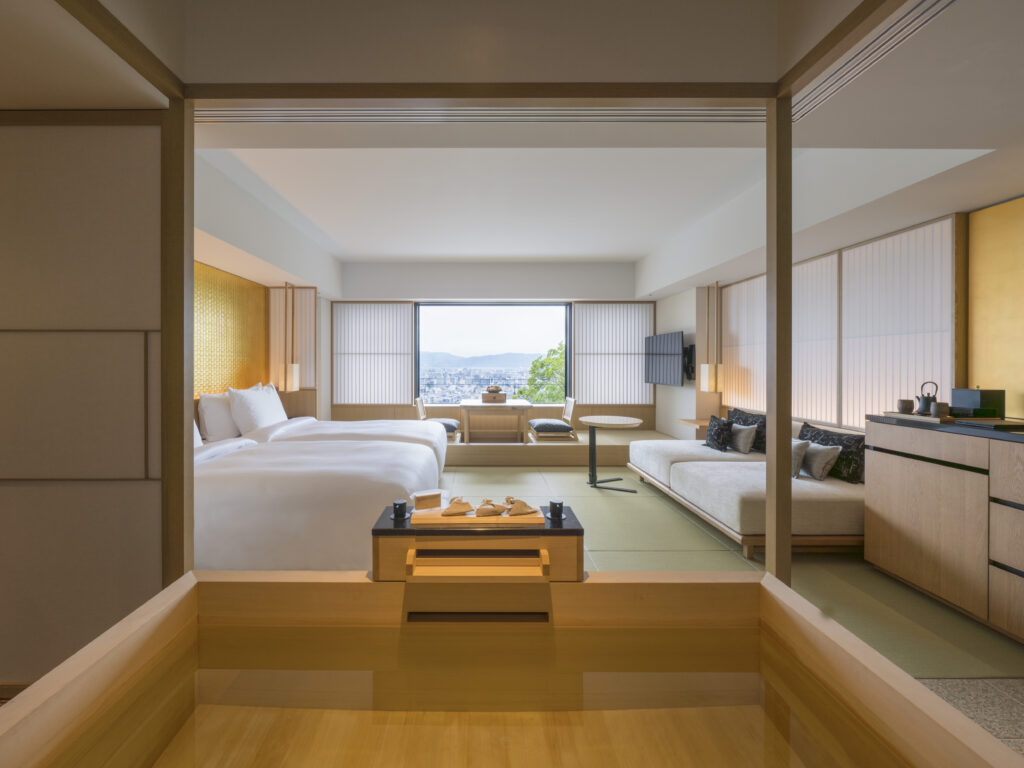
Hotel Ryozen's stone walls were preserved and strengthened, and moss was grown on them while the building went up. The guest rooms, by Yukio Hashimoto's studio, take their cue from the Noh phrase for the hidden flower, and eight of them have private baths fed by the hotel's own spring.
The Noh stage stands on stilts over a shallow pool of water, framed in yellow cedar and Kyoto cypress, with a bridge to its mirror room as on any Noh stage, and it hosts Noh, contemporary performance and music. It has no solid walls and no roof. "Constructing a roofed building was not permitted on the site where the Noh stage now stands," Kuma explained, so his office left it open. Instead of the painted pine that forms the back wall of every Noh stage, there are real trees.
Sources: Dezeen; Kengo Kuma and Associates; Banyan Group; Wealth Management; Travel Voice; Travel Voice; Samty Holdings; Travel Watch; Banyan Tree Higashiyama Kyoto
Location
- Address
- 7 Seikanji Ryozan-cho, Higashiyama-ku, Kyoto 605-0861, Japan
- Website
- Official website