Phnom Penh in Three Days: The Riverfront, Vann Molyvann’s Architecture and a Sky-High Hotel
Phnom Penh over three days: the Royal Palace and riverfront, Vann Molyvann's New Khmer architecture, the memory of the 1970s, and a hotel high above the Mekong.
Phnom Penh is a city of layers: a royal capital by the river, a modernist experiment of the 1960s, and the scars of the Khmer Rouge years. Three days is enough to see each, if you take them in that order.
The city of four faces
Phnom Penh stands where the Tonle Sap meets the Mekong, and the Khmer call the place Chaktomuk, the four faces. By tradition, a woman named Penh found four Buddha images in a floating tree, and the city takes its name from the hill raised to house them. Wat Phnom, the temple on that hill, is the city’s only high ground and a calm start.
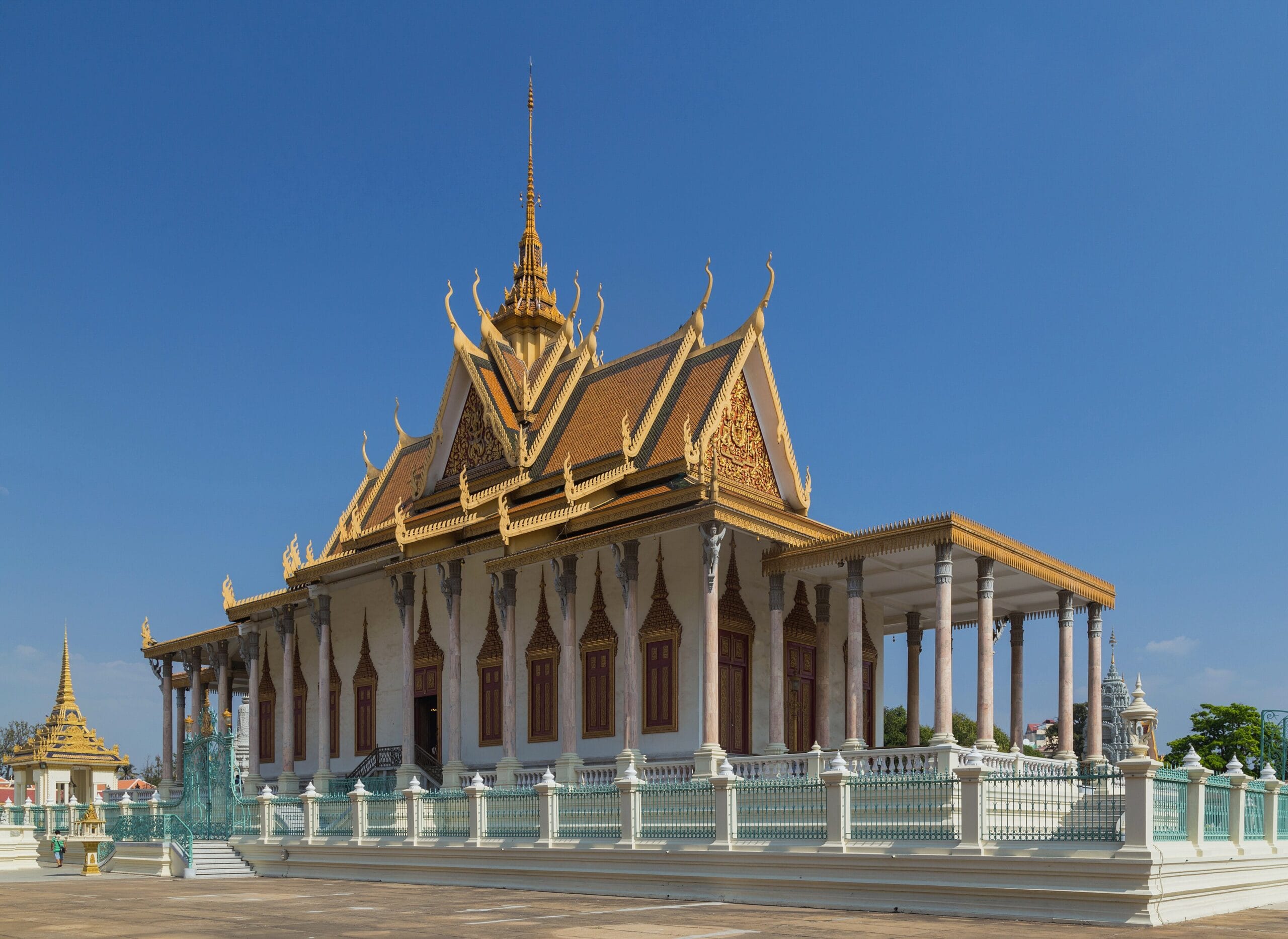
The Royal Palace is still the king’s residence, and its classic Khmer pavilions and gardens sit beside the Silver Pagoda, which has a floor of silver tiles and an Emerald Buddha. See the Royal Palace and Silver Pagoda in the morning. Cover your knees and elbows or you will be refused entry. The National Museum, with its Khmer sculpture in a courtyard building, is worth an hour.
Modern Khmer architecture
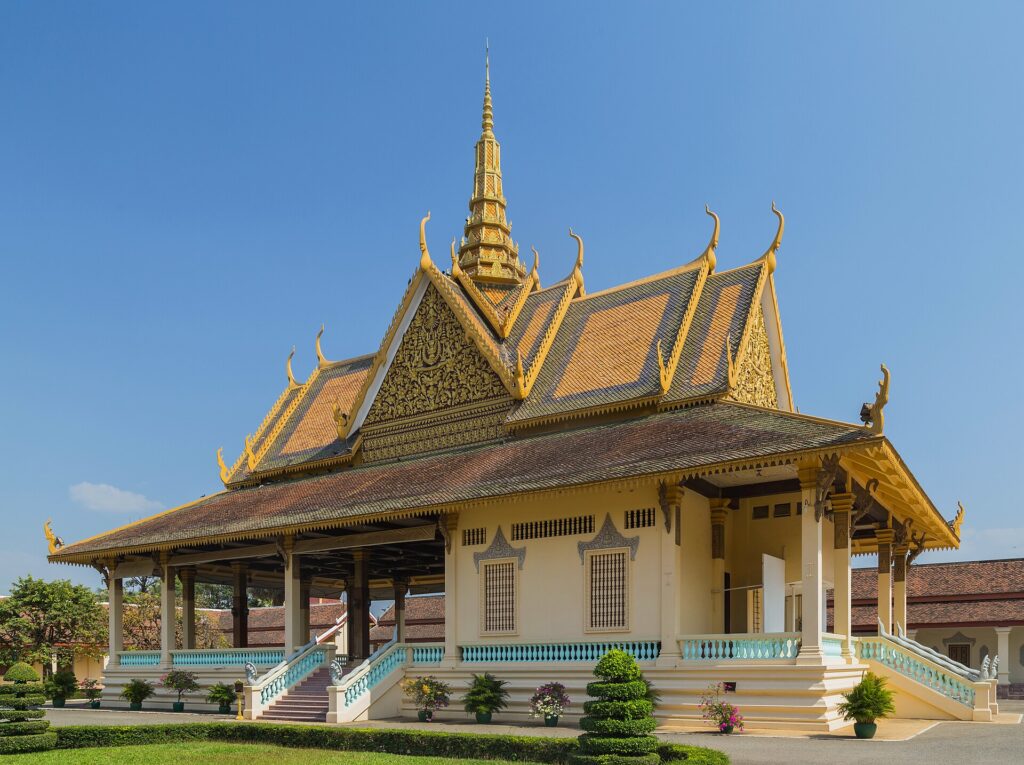
After independence in 1953, Cambodia’s State Architect from 1957 to 1970 was Vann Molyvann, who trained in Paris, studied under Le Corbusier, and developed a New Khmer architecture that combined modernism with forms from the Khmer Empire. His National Olympic Stadium, with its elliptical bowl, is the signature work; its grounds and canals echo the water management of Angkor. The Chaktomuk Conference Hall uses V-shaped trusses to reinterpret the spiked roofs of traditional buildings, and the State Palace has a concrete-plate roof over an open terrace.
His buildings are not always protected. Some were abandoned, repurposed or demolished, and many are too recent for heritage status, but the Vann Molyvann Project, begun in 2009, catalogues his legacy and offers tours.
A necessary visit
Tuol Sleng, the former S-21 prison, is a museum of the Khmer Rouge crimes of 1975 to 1978, and Choeung Ek, the Killing Fields, is where its detainees were executed and buried. Both are emotionally heavy, and the audio guides are recommended. Give them a morning of their own.
Where to stay
Rosewood Phnom Penh is Rosewood’s first city hotel in Southeast Asia, at the top of the city’s tallest tower, with a sky bar on a cantilever. It gives you the city from above. From here, continue to Siem Reap and Angkor.
Sources: Atlas Obscura: Vann Molyvann; 12Go: Phnom Penh sights. Check the official websites for current information.
Experiences
Experiences in Phnom Penh
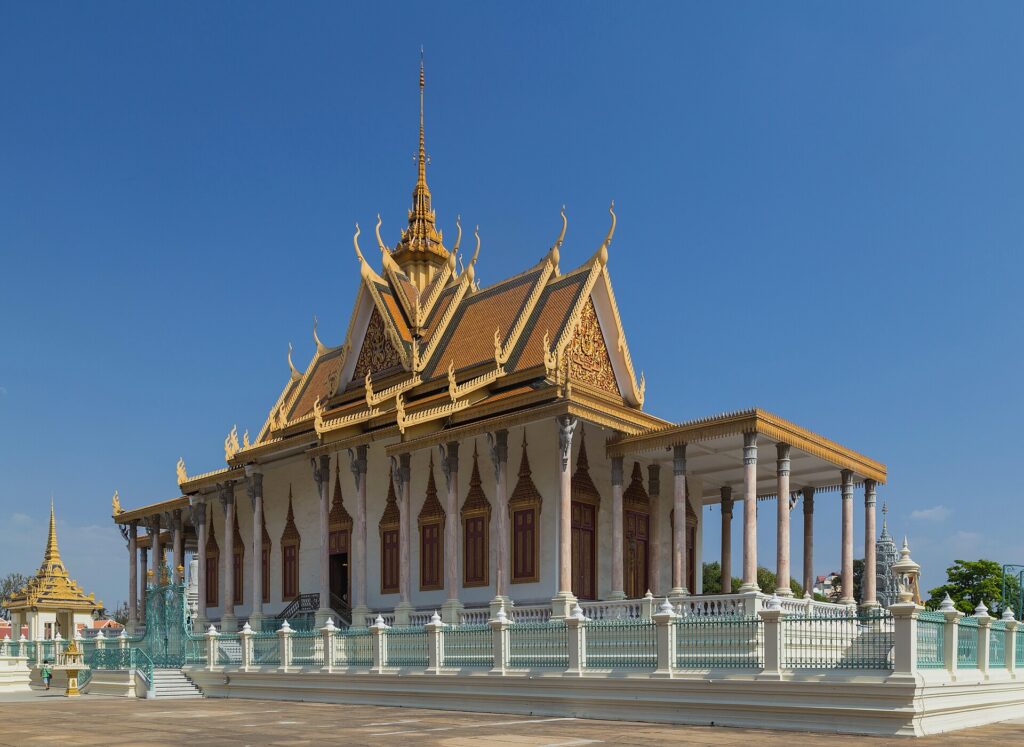 Cultural ImmersionPhnom PenhSee the Royal Palace and Silver Pagoda in Phnom PenhA morning in the palace of the Cambodian kings and the Silver Pagoda, with its floor of 5,329 silver tiles.Cruise & MaritimePhnom PenhCruise the Mekong aboard Aqua MekongThree to seven nights on a twenty-suite river ship between the Mekong delta, Phnom Penh and the Tonle Sap.
Journal
From the Journal
 Feature · TravelPhnom Penh: A Three-Day Guide to Cambodia’s CapitalMost travellers give Phnom Penh a night on the way to Angkor.October 4, 2026Feature · Design & ArchitectureVann Molyvann and the New Khmer Architecture of Phnom PenhBetween 1957 and 1970 one architect gave newly independent Cambodia a modern style of its own.October 4, 2026News · TravelPhnom Penh’s New Airport Opens Under a Roof by Foster + PartnersTecho International Airport received its first flights on 9 September 2025, replacing the old city airport.September 9, 2025