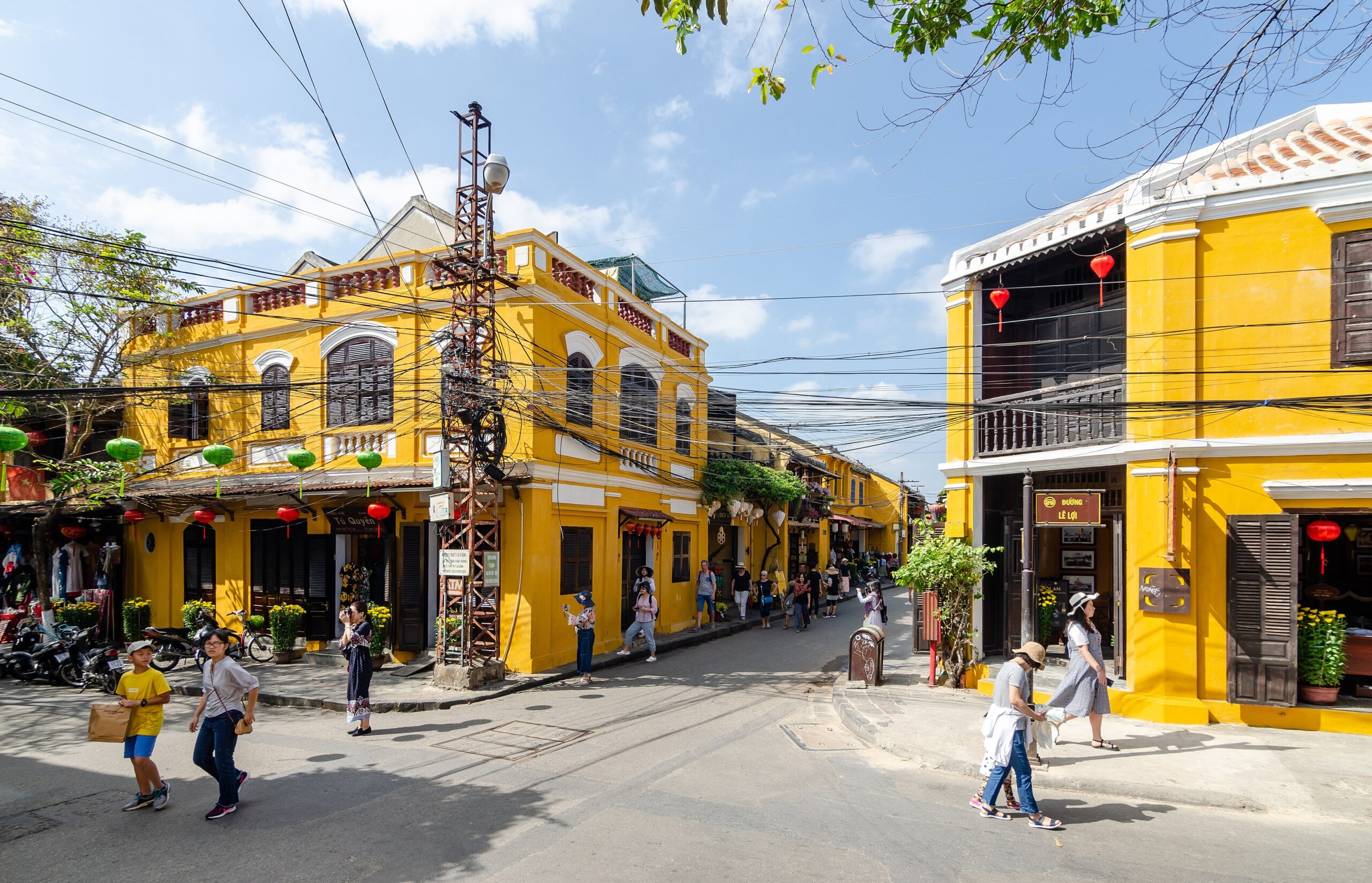
Central Vietnam: Hue, Hoi An and the Coast Between Them
Hue's imperial citadel and tombs, Hoi An's merchant port and the Hai Van coast between them, with advice on how to travel it.
Central Vietnam is a country in miniature: a short stretch of coast that holds the last imperial capital, a trading port that time passed by, and the mountain headland that has long divided north from south.
Hue, a capital built on ceremony
Hue was the capital of unified Vietnam under the Nguyen dynasty from 1802 until 1945, and the city still has the layout of a court: a walled citadel with the Imperial City and Forbidden Purple City inside it, ritual sites on the outskirts, and the emperors’ tombs scattered along the Perfume River. Much was damaged by war and weather, and most major monuments have been partly restored using traditional methods, so the experience is as much about atmosphere and scale as about intact rooms.
Give the citadel a morning and the tombs a day. The tombs are spread along the river upstream, and reaching them by boat or by bicycle is part of the point. The citadel and royal tombs are best done in that order, before the heat builds. Hue is also the home of bun bo Hue, the spicy beef noodle soup; Bún Bò Huế Bà Thương is one.
Over the Hai Van Pass
Between Hue and Da Nang the mountains drop straight into the sea. The Hai Van Pass, about 21 kilometres long, was the main road across the headland until the tunnel opened in 2005, and it is now much quieter. Mist often sits on the summit, hence the name Cloud Pass. You can cross it by car with a driver, on a guided motorbike or, more slowly, by the railway that runs around the coast instead of over it. Stop at the old gate at the top and again at Lang Co, where the lagoon and long beach make a natural lunch halt.
The railway is the most comfortable option. Two distinctive ways to make the journey are the Vietage along the central coast and the luxury train across Vietnam, both of which are built around the line itself.
Hoi An, a port that was preserved by decline
Hoi An was a significant trading port from the fifteenth to the nineteenth century, with Chinese and Japanese merchant communities that left assembly halls, shrines and a covered bridge. When trade moved elsewhere, the town stopped growing, and more than a thousand timber buildings survived on their original grid. The same pressures that protect it also threaten it: floods come every year, and visitor numbers are large.
The old town is best at the edges of the day, when the lanes empty. Walk the old town and eat cao lau, the town’s signature noodle dish, then leave the centre for the rice fields and rivers nearby.
Where to stay
Hue rewards a night or two inside the city, close to the river. Hoi An is more flexible: stay in the old town for atmosphere, or on the coast for a beach and a cooler place to retreat in the afternoon. Four Seasons Resort The Nam Hai takes the second approach, on Ha My Beach, with villas inspired by Hue’s imperial architecture. To continue north, see where to stay in Hanoi.
Sources: UNESCO: Complex of Hué Monuments; UNESCO: Hoi An Ancient Town; Local Vietnam: Hai Van Pass. Check the official websites for current information.
Experiences
Experiences in Hue & Hoi An
Journal