The Tokyo Toilet: Ando, Ban and Maki Redesign Shibuya’s Restrooms
Seventeen public toilets across Shibuya are being rebuilt by architects including four Pritzker laureates, with Shigeru Ban's colour-glass pavilions among the first to open.
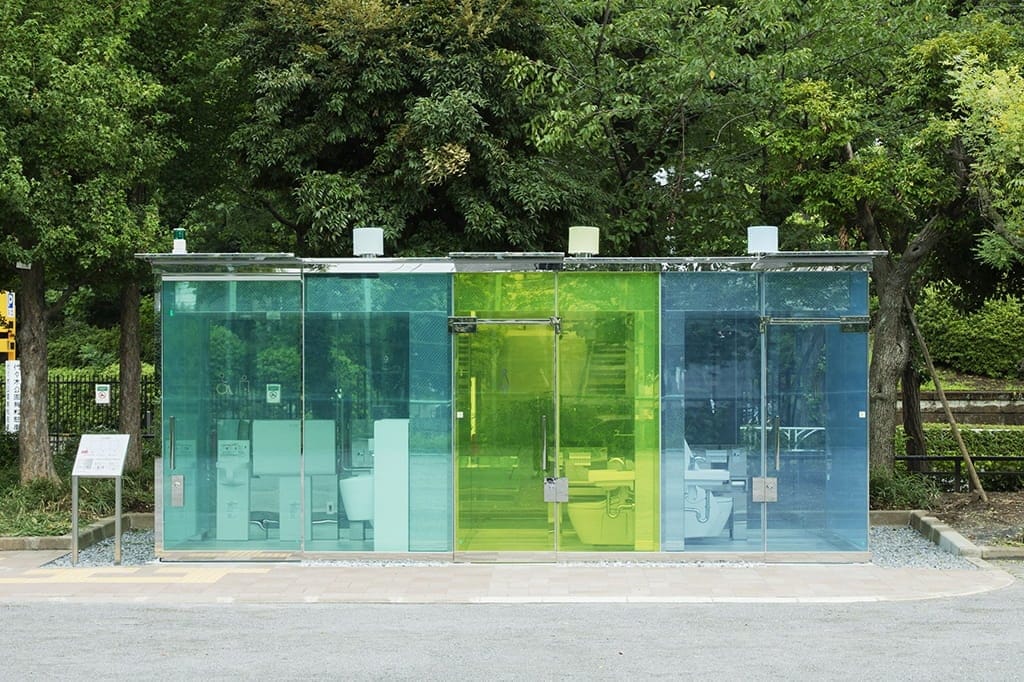 Photo: Satoshi Nagare / The Nippon Foundation Press image
The Nippon Foundation and Shibuya City have unveiled the first seven facilities of THE TOKYO TOILET, a project to rebuild 17 public toilets across the Tokyo ward with designs by leading architects and creators. The foundation presented the completed sites on 23 September 2020, with the remaining ten scheduled for 2021.
The aim is to create toilets that anyone can use regardless of gender, age or disability, and to address negative stereotypes about public restrooms in Japan. Daiwa House Industry handles construction, while TOTO supplies the equipment and advises on layout. Cleaning and maintenance are treated as part of the design, with dedicated staff and status updates posted online.
Four Pritzker Prize laureates are involved. Shigeru Ban’s two pavilions, at Yoyogi Fukamachi Mini Park and Haru-no-Ogawa Community Park, opened in August with walls of coloured glass that stay transparent until the door is locked, when they turn opaque. “There are two things we worry about when entering a public restroom, especially those located at a park,” Ban’s office explained. “The first is cleanliness, and the second is whether anyone is inside.”
Tadao Ando’s toilet at Jingu-Dori Park, named Amayadori or rain shelter, sits beneath a broad roof that juts out like the visor of a hat, with a circular passage inside for privacy. Fumihiko Maki designed the facility at Ebisu East Park, Masamichi Katayama of Wonderwall the one at Ebisu Park, Nao Tamura the Higashi Sanchome site and Takenosuke Sakakura the toilet at Nishihara Itchome Park. Toyo Ito and Kengo Kuma are among the creators of later sites.
The project extends beyond architecture. Fashion designer Nigo has created uniforms for the cleaning staff, and art director Kashiwa Sato oversees signage. Together the toilets form an informal architecture trail through Tokyo‘s Shibuya ward, from Ebisu to Yoyogi. Details of each site are published by The Nippon Foundation.