ExperienceSiem Reap, Cambodia
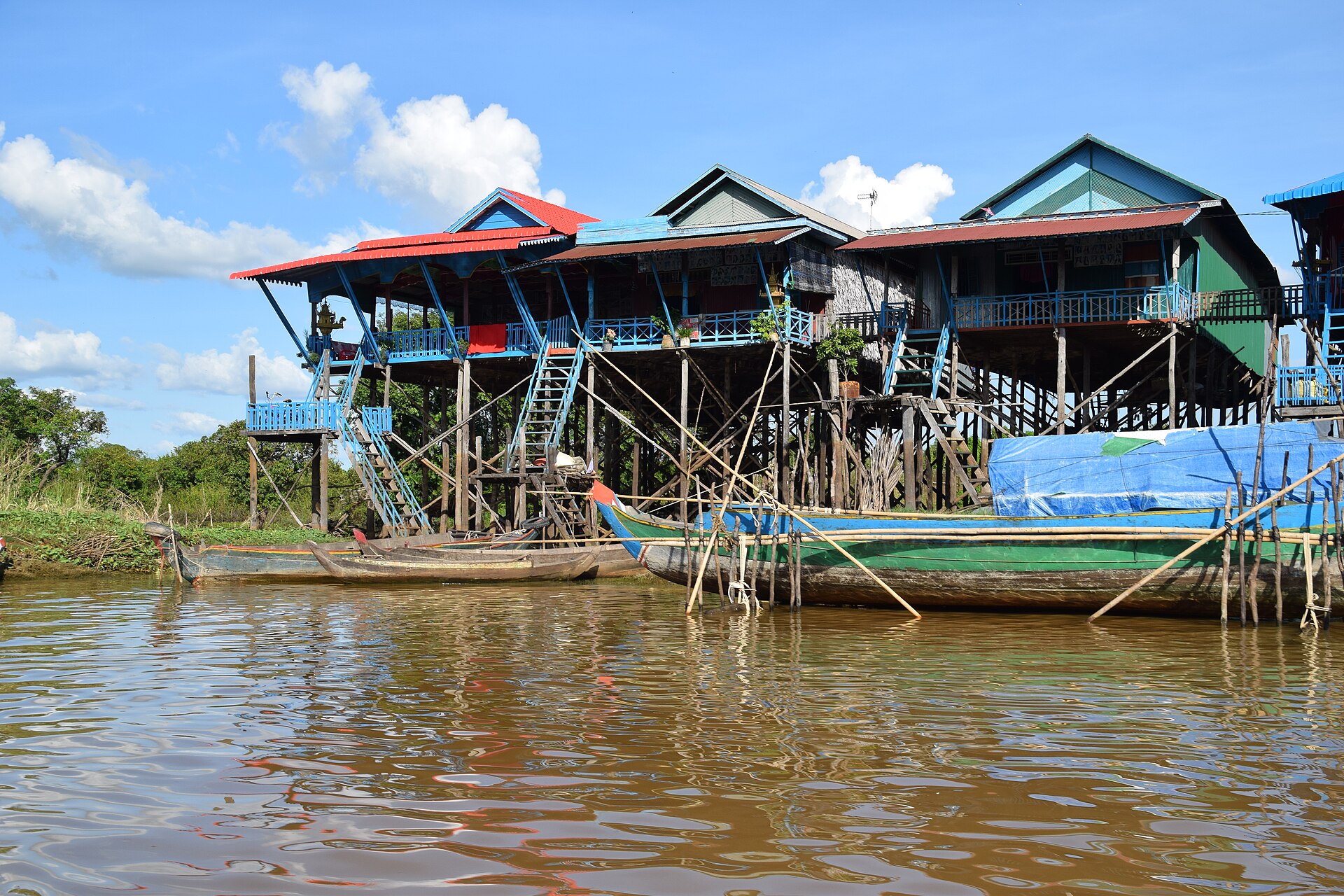
Take a boat to the stilt villages of the Tonle Sap
A half-day boat trip from Siem Reap through a stilt village and flooded forest on the Tonle Sap lake.
Cultural Immersion · Half a day · Easy
What the experience is
The Tonle Sap is a lake and a river. In the dry season the river drains the lake into the Mekong at Phnom Penh. When the monsoon swells the Mekong, the river reverses and pushes water back upstream. The lake grows from about 2,500 square kilometres to many times that, depending on the year, and its depth rises from about a metre to nine metres or more. The flood covers forest and fields and supports one of the most productive freshwater fisheries in the world, which is part of the setting in which Angkor grew.
Communities live on and around the lake in houses on stilts or on rafts, and the experience is a boat trip through one of them. They are working villages and people’s homes.
Which village
Chong Khneas is the closest to Siem Reap, about 16 kilometres away, with floating houses. It receives the most visitors and is the most commercial, with a fixed circuit that includes floating shops and a crocodile farm, and pressure on visitors to buy rice or give money “for the school”; most careful operators now skip it. Kampong Phluk is a village of houses on tall stilts, still largely a fishing community, with a flooded mangrove forest that is crossed by small rowing boat at high water; in the dry months the paddle usually stops and the street beneath the houses can be walked. The village sells its own boat ticket and charges a small community fee. Kampong Khleang is farther away, is larger, and receives fewer visitors; the drive from Siem Reap takes roughly an hour and a half to two hours. Kampong Phluk and Kampong Khleang usually give the better visit.
When to go
The rainy season runs from about May to October, and the lake is at its highest around September and October. The water then reaches the floors of the houses and boats move through the treetops. After the rains, in the dry months, the water drops and the houses stand high on their stilts above the mud; the experience is different but still worth seeing, with more of the village visible on foot. In the driest weeks, from about March to June, water levels can be low and boat access to some villages is limited, so confirm arrangements with an operator.
Good to know
The lake lies outside the Angkor park, so no Angkor Pass is needed. Go with a guide who knows the village, in a small boat, early in the morning or towards sunset. Choose operators whose boats are run by local people, and avoid arrangements that involve extra payments on the water. Photographs of people should be taken with their consent. Visits to schools and orphanages should be declined. Much of the catch is made into prahok, the fermented fish paste of Khmer cooking. Bird-watchers can go farther, to the bird sanctuary of Prek Toal in the flooded forest at the north-west of the lake, by arrangement; see the waterbirds of Prek Toal.
Why OKYTO recommends it
The temples show what the Khmer built. The lake shows what paid for it, and how a large part of Cambodia still lives. Half a day here balances three days of stone. Our three-day guide to Angkor covers the temples. The lake can also be crossed by river ship, as our guide to Aqua Mekong describes. See also Siem Reap.
Sources: Tonlé Sap, Wikipedia; Siem Reap floating villages, Adventures Cambodia (2026).
The Details
Essentials
- Location
- Chong Khneas, Kampong Phluk or Kampong Khleang; from about 40 minutes to two hours from Siem Reap
- Duration
- Half a day
- Best time
- High water from about September to October; different but possible in the dry months
Planning
- Level
- Easy
Continue
More experiences
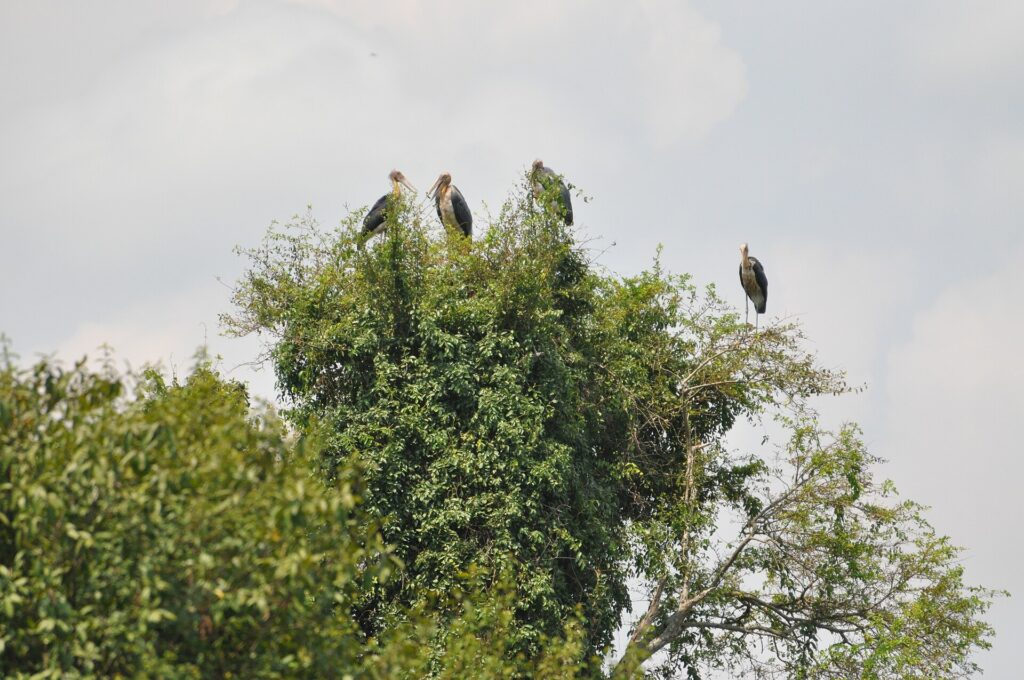 NatureSiem ReapWatch the waterbirds of Prek Toal on the Tonle SapA full day by boat from Siem Reap into the flooded forest of Prek Toal, among nesting storks.
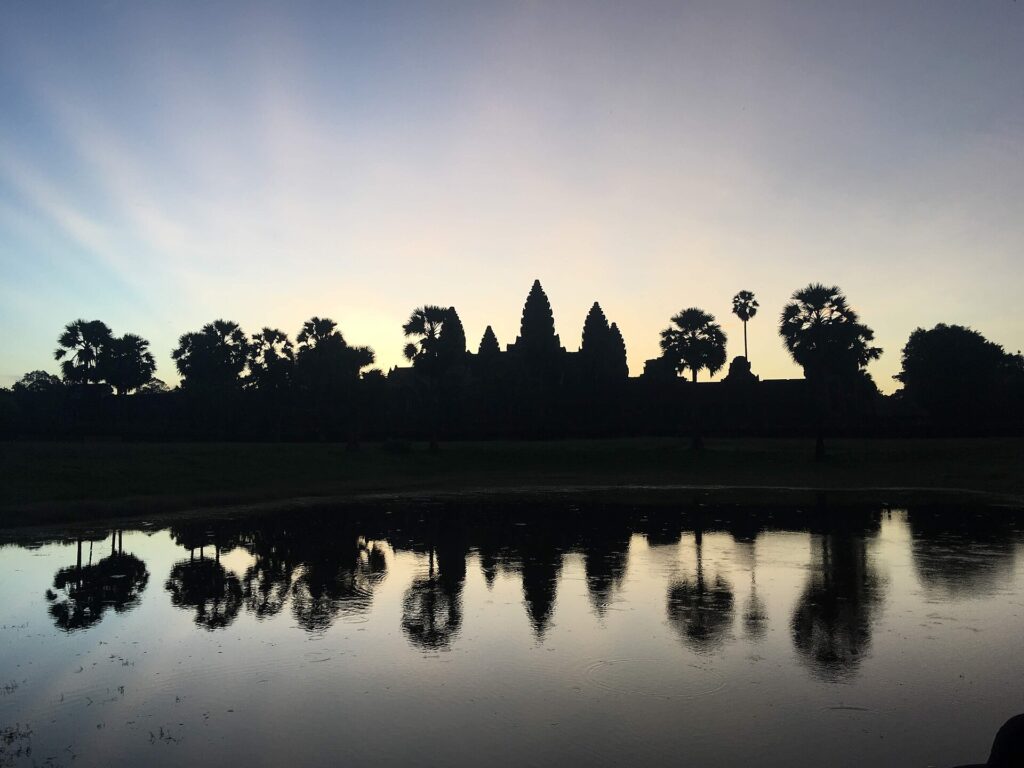 Cultural ImmersionSiem ReapSee sunrise at Angkor Wat, then walk its galleries while it is still earlyDawn at the pools in front of Angkor Wat, followed by the carved outer gallery while the morning is still early.