Desa Potato Head: How a Bali Beach Club Became a Near-Zero-Waste Village
On the beach at Seminyak, a club built from old window shutters grew into a hotel by OMA, a design workshop for recycled plastic and one of the more convincing sustainability programmes in Asian hospitality.
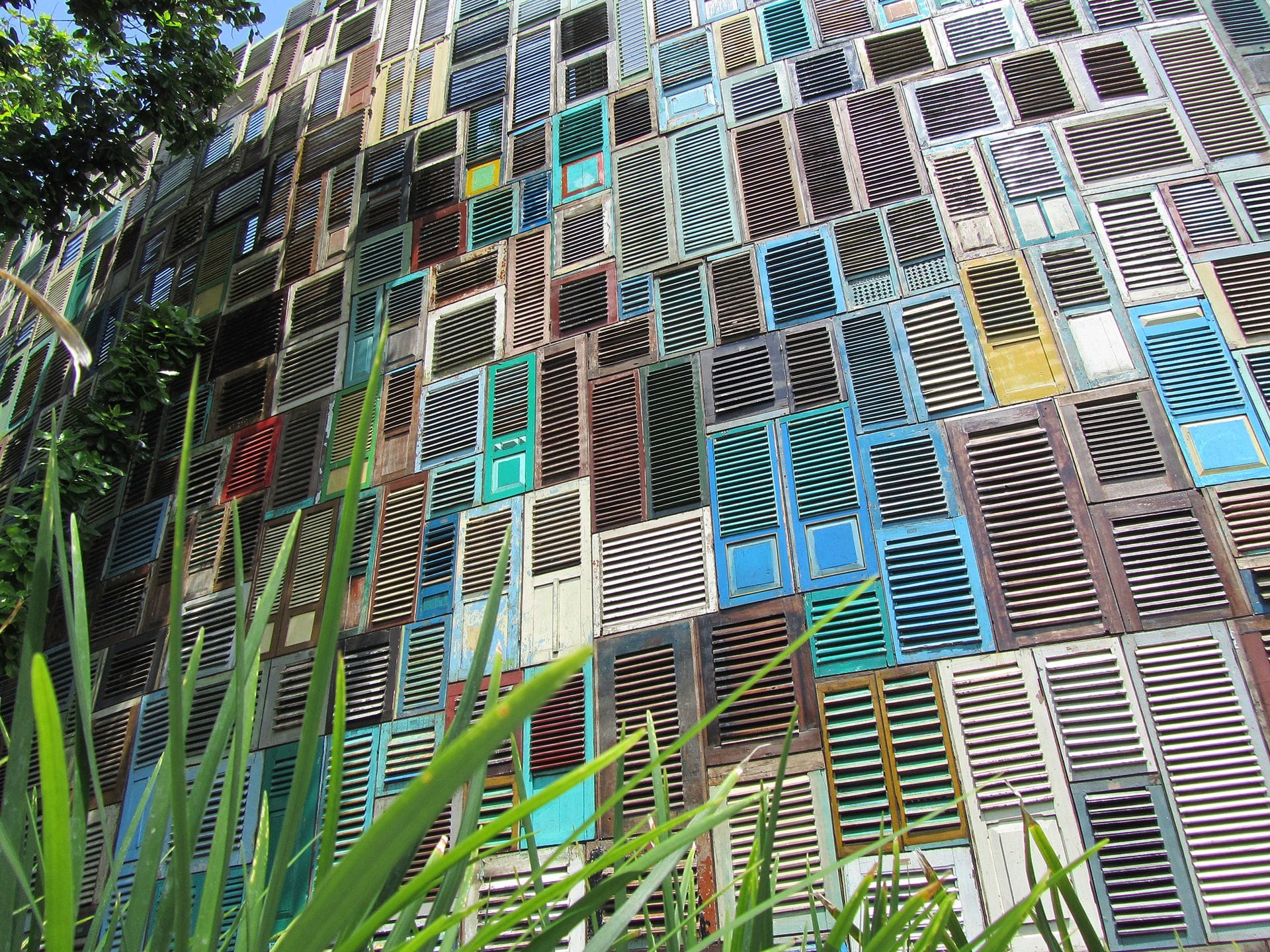
Desa Potato Head occupies a stretch of beachfront at Seminyak, on the south-west coast of Bali. It began in 2010 as a beach club. It is now a complex of two hotels with 226 rooms, six restaurants, a music venue, galleries and workshops, which its founder calls a creative village; desa is the Indonesian word for village. It has appeared on The World’s 50 Best Hotels list each year since the ranking began in 2023.
The beach club
The founder, Ronald Akili, opened the first Potato Head as a restaurant in Jakarta in 2009 and the beach club in Bali the following year. The Indonesian architect Andra Matin gave it a curved facade the height of a four-storey building, assembled from thousands of old wooden window shutters collected across the archipelago, in faded greens and blues. The amphitheatre it forms faces a lawn, an infinity pool and the sunset. It became the best-known beach club in Asia and set a style that was copied around the region.
The hotels
A first hotel, Katamama, followed in 2016, also by Andra Matin: a building of hand-made red brick, pressed in a village in the east of the island by the method used for temples, with interiors of local teak, terrazzo and hand-dyed indigo textiles. It is now called Potato Head Suites.
Potato Head Studios, completed around 2020 and 2021, is by OMA, the Rotterdam practice founded by Rem Koolhaas, with the design led by David Gianotten. The building is raised on columns above the ground, which is left open as a public route to the beach and a space for events, on the model of the open pavilions of Balinese villages. The rooms are arranged in a ring above, and a path leads up to a rooftop park. Concrete was cast against bamboo and textured boards. Ceilings are made of woven recycled plastic bottles, chairs by the British designer Max Lamb of recycled plastic sheet, and bathroom fittings of crushed shells and styrofoam.
The waste programme
What distinguishes the place is what happens to its rubbish. Bali has a severe waste problem, with much of what is thrown away ending in rivers and on beaches. Akili set a target of zero waste to landfill. Everything discarded by the hotel, the restaurants and their suppliers is sorted on site. Food waste goes to pig farms and compost. Glass, plastic, oyster shells and used cooking oil are turned in a workshop into tiles, furniture, soap dishes and candles that are used in the rooms or sold. Guests are given a refillable bottle and a tour of the facility, and by the company’s account less than five per cent of its waste now goes to landfill. In 2023 it began a project with neighbouring businesses to build a shared sorting centre.
For the visitor
Seminyak is the busiest part of the island, and this is a place for music, people and the beach at sunset. Day guests can use the beach club with a minimum spend, and the tour of the waste workshop is open to all. For quiet, the island’s interior offers the opposite, at Buahan or Hoshinoya Bali.
Continue
More from Bali
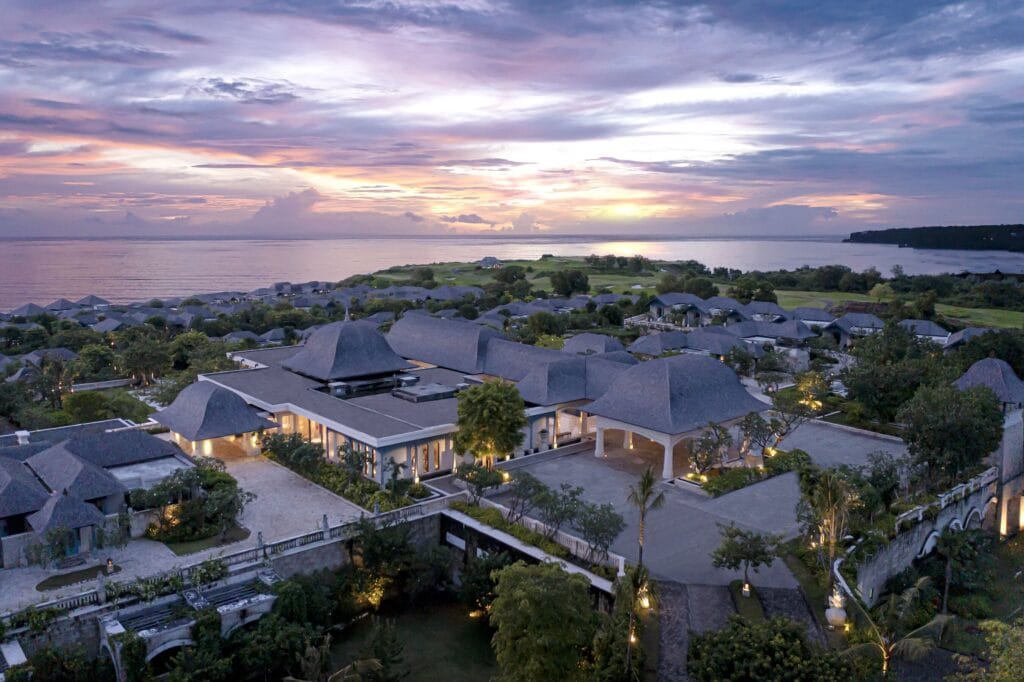 IndonesiaBaliIndonesia's island of temples, rice terraces and clifftop coastlines.Read →
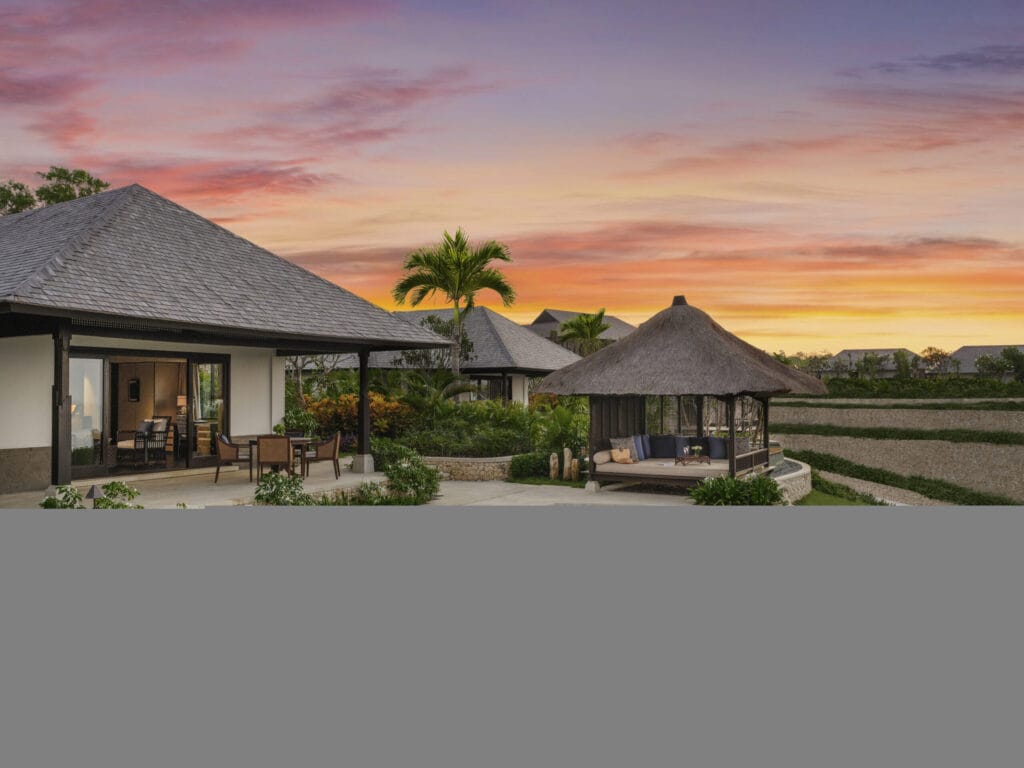 News · TravelRaffles Bali Opens on Jimbaran BayAccor's second Raffles in Indonesia arrives on a Jimbaran hillside with 32 pool villas.July 6, 2020Read →News · Design & ArchitectureFour Seasons Bali at Sayan Unveils Its First Reimagined SuitesReimagined suites mark a new chapter for the Four Seasons resort near Ubud.September 10, 2026Read →News · TravelBuahan Opens in Bali With No Walls and No DoorsBanyan Tree's first Escape opened on 14 June 2022 in the jungle north of Ubud: 16 open-sided balés.June 14, 2022Read →