Bhutan
Bhutan · South Asia
A Himalayan kingdom of dzongs, valleys and festivals, travelled lodge to lodge from Paro to Bumthang.
Why visit
Why visit Bhutan
Bhutan is among the few places where the hotel is a journey. Six Senses Bhutan is a single hotel in five lodges, in Thimphu, Punakha, Paro, Gangtey and Bumthang, and it opened in 2019 with the first three of them. In a country that had limited tourism by policy, it was an ambitious project, and the circuit it created gives visitors a way to see several valleys in one stay.
The country also has a wellness tradition that was not imported. The hot stone bath, dotsho, is a household custom practised in farmhouses across Bhutan, and visitors can take it in nearly its original form.
Explore
What to see
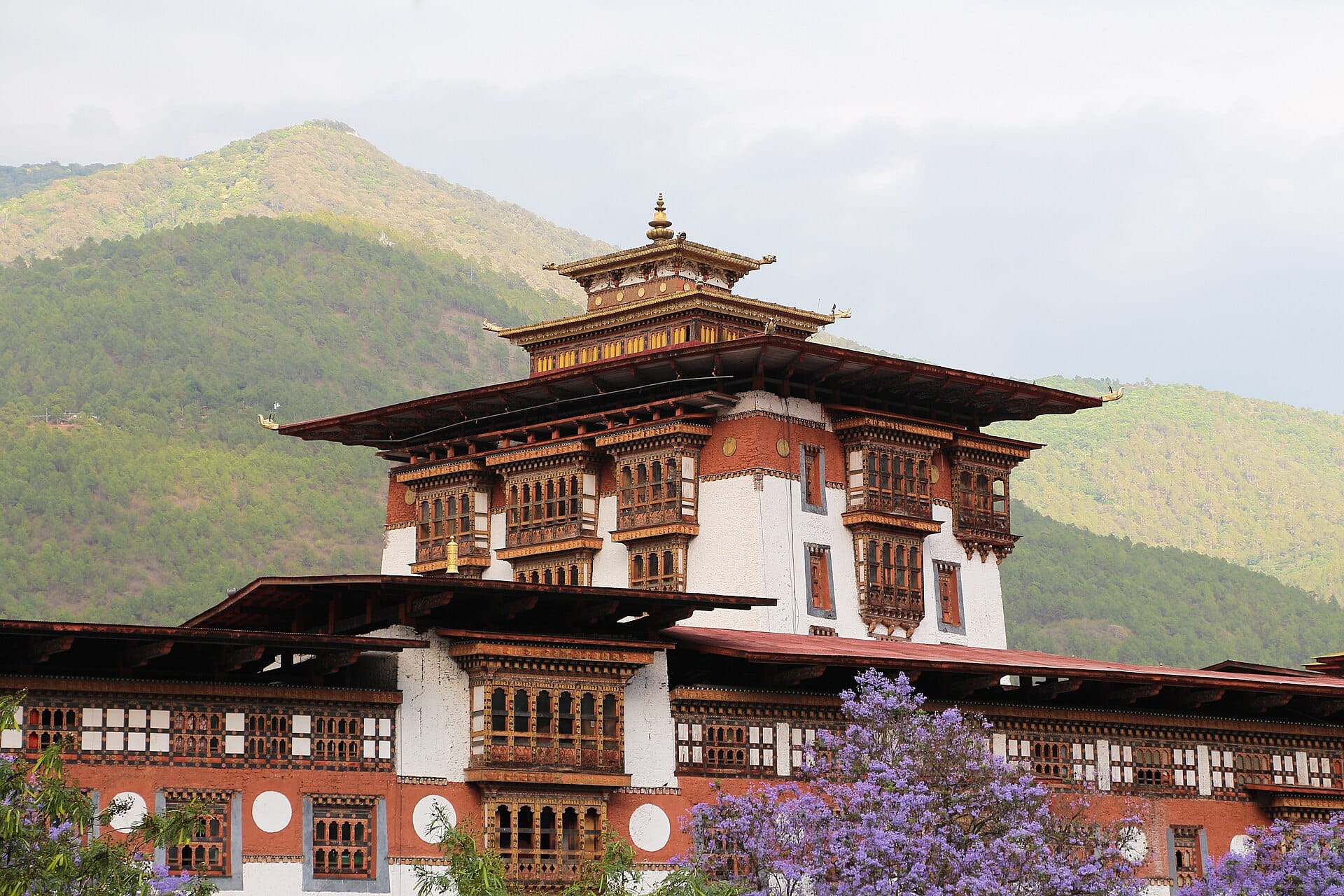
Paro is often the first stop because of the international airport. The round-trip hike to Tiger’s Nest, the monastery perched on a cliff face, takes four to five hours and reaches 2,950 metres; wear sturdy shoes and carry water. Paro also has Rinpung Dzong. Thimphu, the capital, has the Buddha Dordenma statue, Tashichho Dzong, the weekend market and the National Textile Museum, and is said to be the world’s only capital without traffic lights.
Punakha Dzong was built in 1637 at the confluence of the Pho and Mo Chhu rivers. Punakha lies at about 1,200 metres, far lower than Paro or Thimphu, and was the winter capital of Bhutan until the 1950s. The Phobjikha Valley is where visitors may see black-necked cranes. Paro and Punakha hold tshechu festivals in spring, and Thimphu Tshechu takes place in October.
Hotels
Where to stay in Bhutan
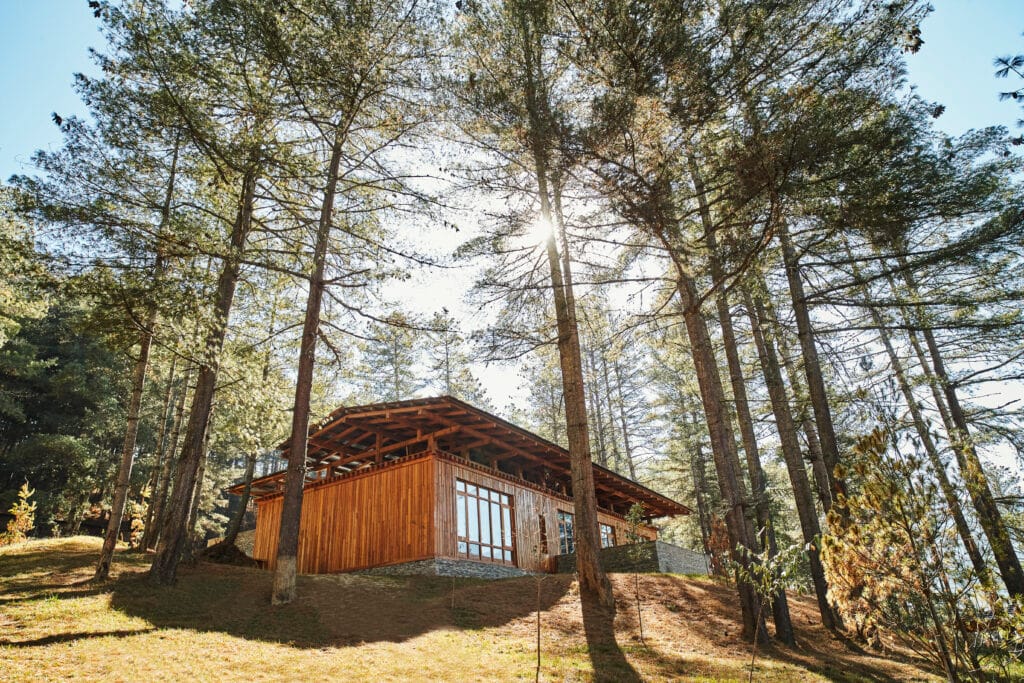
The luxury circuit is a handful of lodges. Six Senses Bhutan has 82 suites and villas across its five lodges, each built in response to its setting: a hillside of apple orchards and pine forest above the capital, the rice terraces of Punakha, the ruins of a dzong above Paro, the crane wintering grounds of the Phobjikha valley and a pine forest in Bumthang.
Dining
Where to eat in Bhutan
Bhutanese food is built on rice, chillies and cheese, with ema datshi, a stew of chillies and cheese, the national dish. Meals are mostly taken at lodges or in farmhouses, and restaurants are few. In Paro, Sonam serves home-style Bhutanese food adapted to foreign tastes, and the set lunch is the best bet. The restaurant at Uma Paro is a circular dining room with a set dinner menu that changes frequently. In Thimphu, Chula, upstairs above Norzin Lam, is known for its Indian food.
Experiences
Experiences in Bhutan
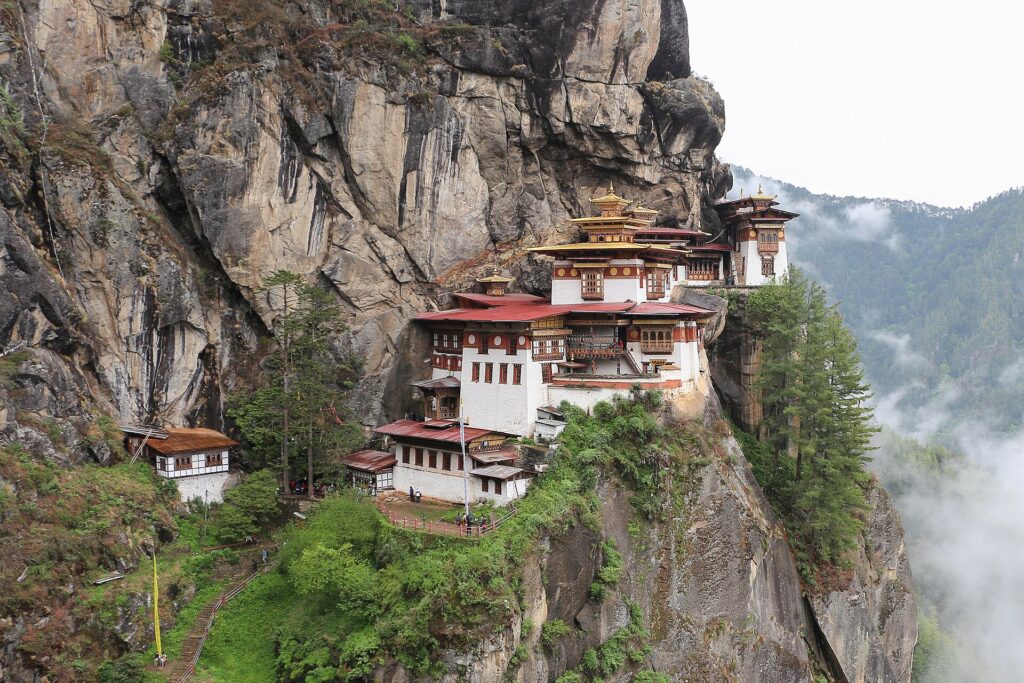 TrekHike to the Tiger’s Nest monastery in BhutanA half-day walk through pine forest to the cliffside temples of Paro Taktsang, at 3,120 metres.Explore →
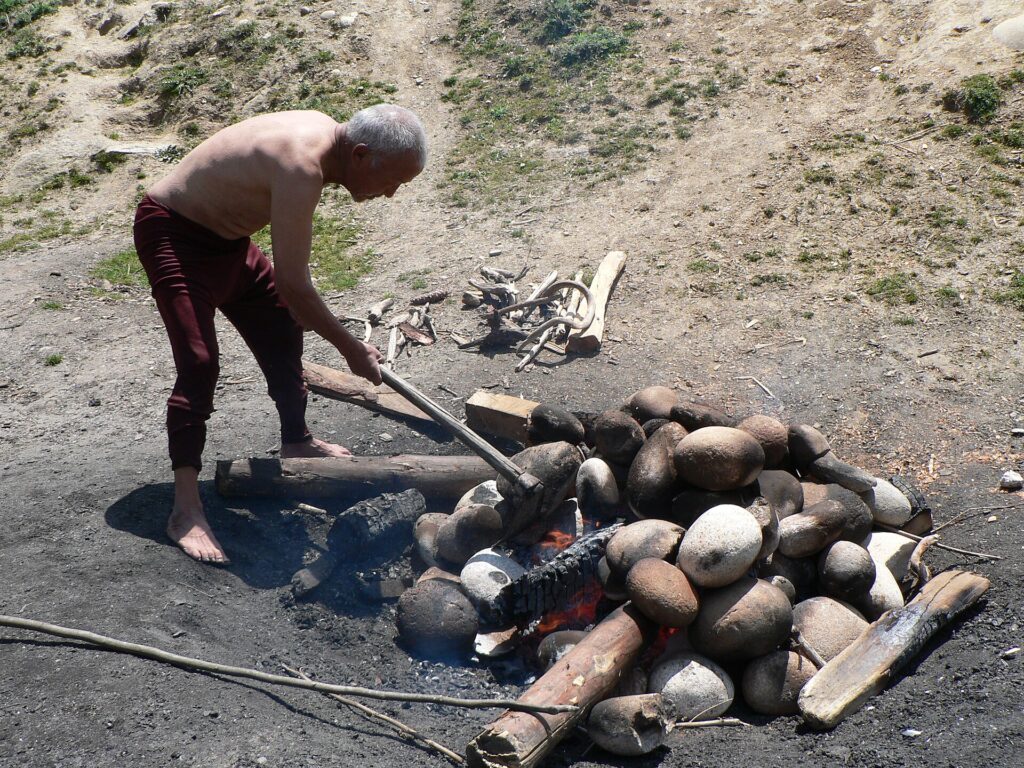 WellnessTake a hot stone bath in a Bhutanese farmhouseAn evening soak in a wooden tub heated with fire-roasted river stones and scented with wormwood, in a farmhouse or a lodge.Explore →
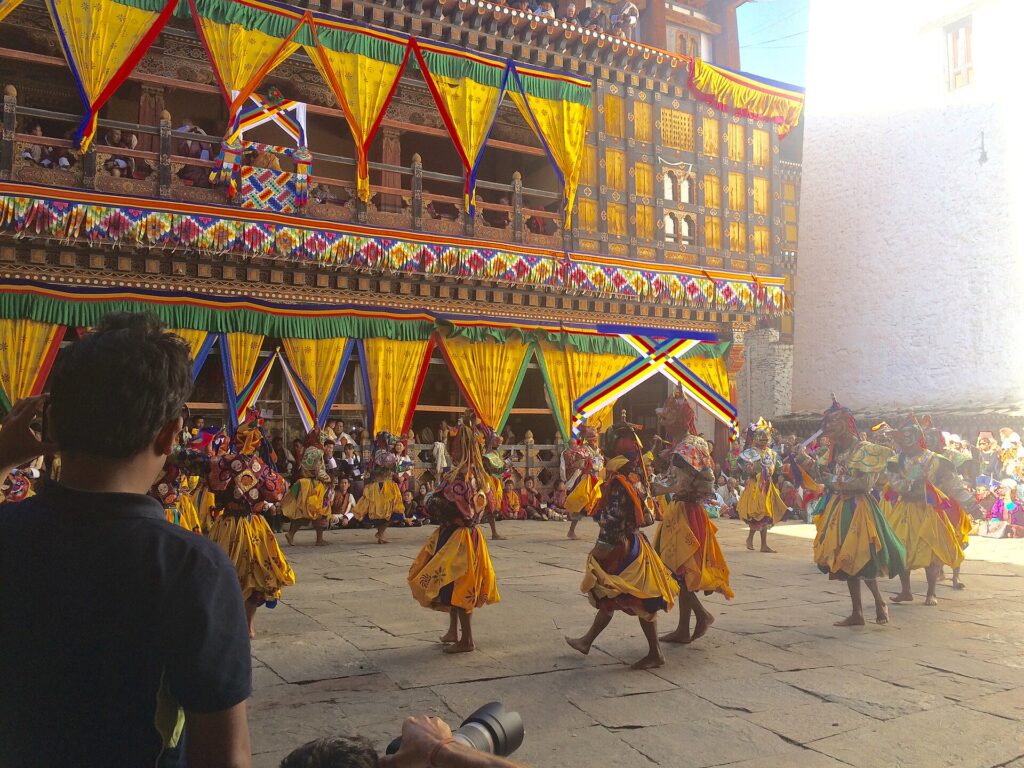 EventAttend a tshechu festival in BhutanOnce a year, each valley of Bhutan gathers in the courtyard of its fortress for several days of masked dances. The festivals of Paro in spring and Thimphu in autumn are the largest, and the dates decide the trip.Explore →
The Journal
Latest on Bhutan
Before you go
Practical information
Best time to visit
March to May and September to November are the best seasons, with mild temperatures and little rain. Spring temperatures run from about 4°C to 20°C, and autumn brings clear views of the Himalayan peaks. Thimphu Tshechu in October is the main festival of the year.
Getting around
Almost every visitor arrives at Paro, whose runway lies in a narrow valley. Drukair flies to Paro from Singapore via Guwahati, and Bhutan Airlines flies from Bangkok via Kolkata. Domestic flights connect Paro with Bumthang, Gelephu and Yongphula. A second international airport, Gelephu International, is being built in the south and is scheduled to open in 2029. On the ground, a car and driver come with the licensed operator.
Practical notes
Visas are issued only to travellers who book through a licensed Bhutanese tour operator. Clearance takes at least ten days, and passports must be valid for six months. The Sustainable Development Fee has been changed several times, so confirm the current rate with your operator.
Continue exploring
More from South Asia
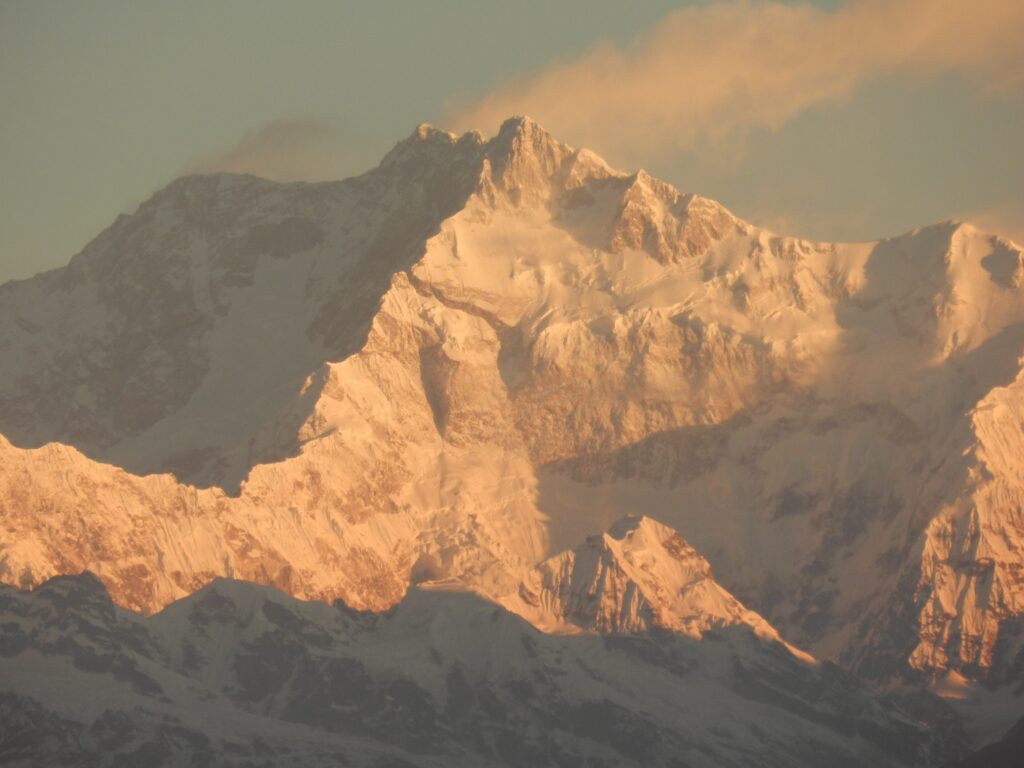 IndiaDarjeelingTea estates, a World Heritage mountain railway and views of Kangchenjunga from a ridge in northern Bengal.Explore Darjeeling →
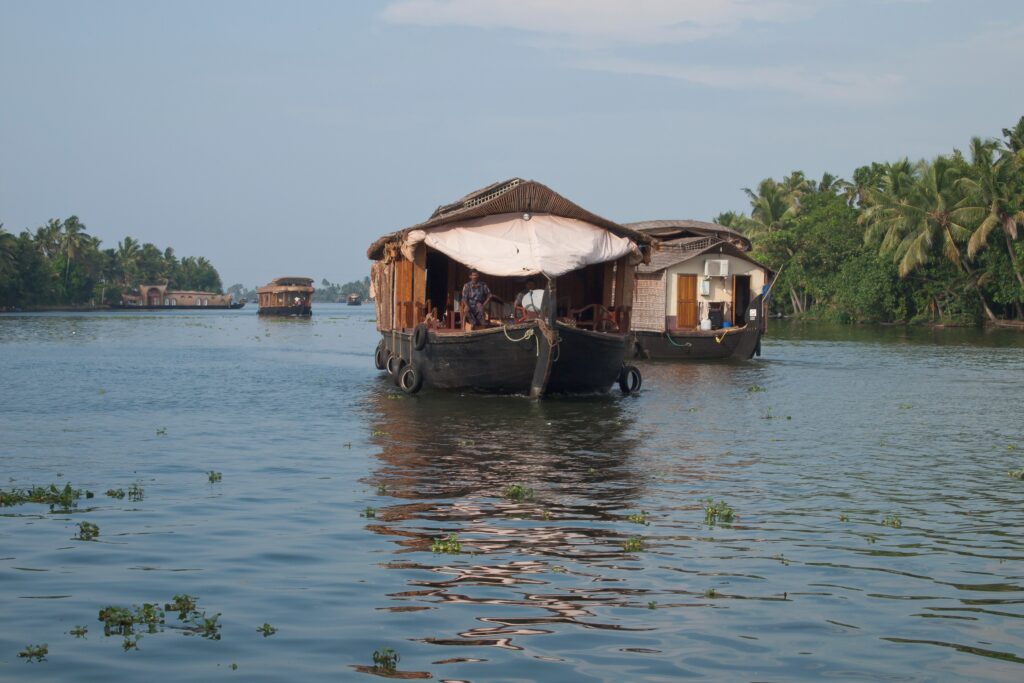 IndiaKeralaBackwaters, the old port of Kochi, the tea hills of Munnar and Ayurveda, on the south-west coast of India.Explore Kerala →
 MaldivesMaldivesIndian Ocean atolls where each resort has an island to itself, from the Malé atolls to the quieter north and south.Explore Maldives →