Six Senses Bhutan
Six Senses Bhutan is five lodges in five valleys, from a dzong-like palace above Thimphu to a wooden lodge built around the trees of Bumthang, conceived by a Thimphu-born developer and designed by Habita Architects of Bangkok.
- Neighbourhood
- Thimphu, Punakha, Paro, Gangtey (Phobjikha) and Bumthang valleys
- Status
- Open
- Design
- Habita Architects with Six Senses (architecture and interiors); Plandscape (landscape)
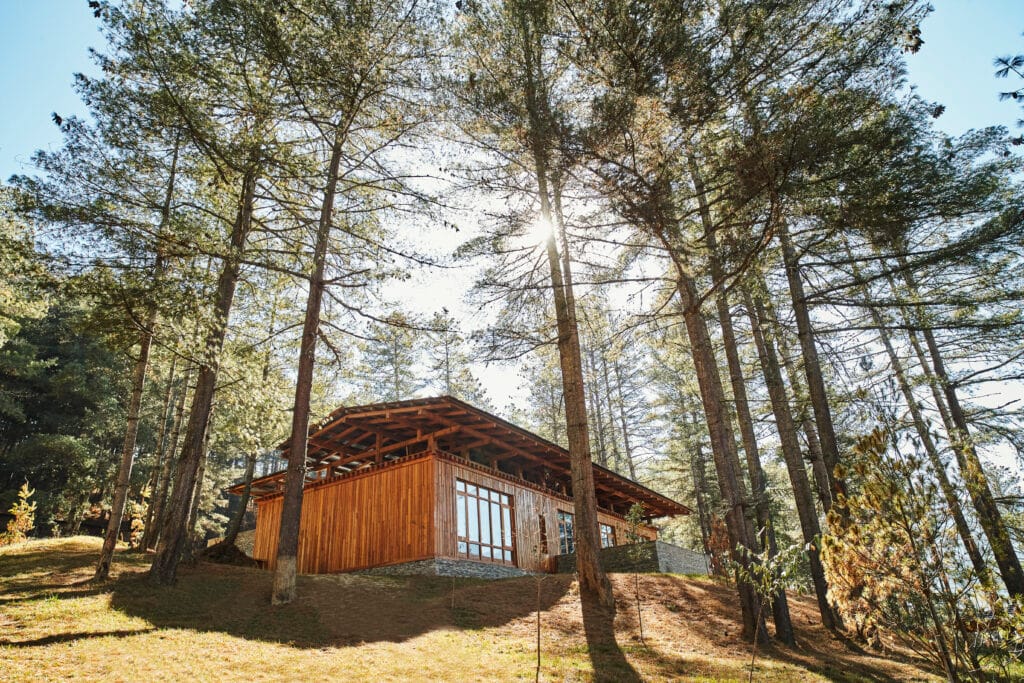
Photo: Six Senses
Six Senses Bhutan is five lodges in five valleys of western and central Bhutan, sold as a single journey, and each was given a different building. The project was conceived by Dasho Sangay Wangchuck, a Thimphu-born entrepreneur, who said he chose the sites for the landscapes and the level of calm and stillness; it took five and a half years.
Habita Architects of Bangkok designed the lodges with Six Senses, whose in-house team under Apiwat Anukularmphai did the interiors. "We wanted to give guests a different experience at each destination," he said. Thimphu, Paro and Punakha opened in early 2019, Gangtey in October 2019 and Bumthang in March 2020, days before Bhutan closed its borders.
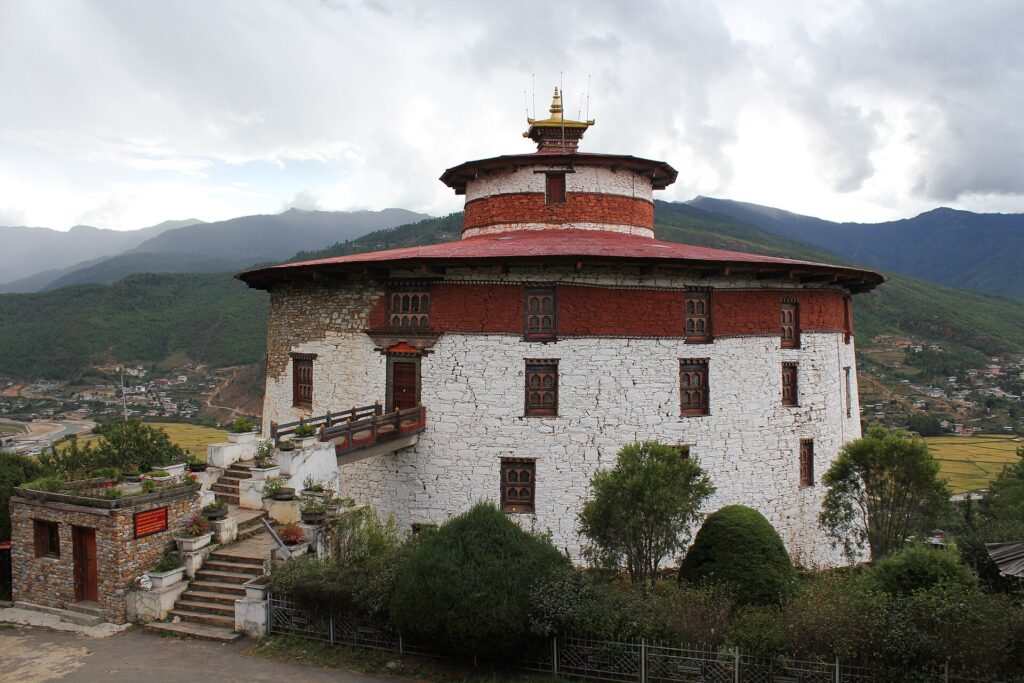
Thimphu, the largest with 25 suites and villas, is the Palace in the Sky, a building drawn from the large forms of a dzong and from clouds, with reflecting ponds in the lobby, white walls painted with clouds by local artists, and floors and ceilings of Himalayan hemlock; it stands on a hillside between apple orchards and pine forest, looking across to the Buddha Dordenma. Punakha, the lowest and warmest of the five at 1,400 metres, is the Flying Farmhouse among the rice fields, a hemlock building cantilevered over its pool. "Since Punakha is famous for its rice, we took the farmhouse as the main idea," Anukularmphai said.
At Paro the lodge sits within twelfth-century stone ruins above the National Museum in the Ta Dzong, its walls chiselled by hand in the old way, and it is the base for the dawn climb to Taktsang, the Tiger's Nest. Gangtey's eight suites and one villa stand at about 3,000 metres in a bridge-like building of local stone and hemlock, its double-height windows facing the Phobjikha valley, where the black-necked cranes spend the winter. OKYTO's Bhutan guide follows the trails and festivals between the valleys.
Furthest east, in a pine forest on a hillside above a stream, Bumthang's lodge is a wooden structure built around the trees, the Forest within a Forest. Each of its suites is built around a courtyard, with a tree of its own planted inside.
Sources: Sleeper; Six Senses Bhutan; TOPHOTEL; Hospitality Design; CLAD; CLAD; Six Senses Paro; Six Senses Bumthang; Six Senses Bhutan
Location
- Website
- Official website