Uzbekistan
Uzbekistan · Central Asia
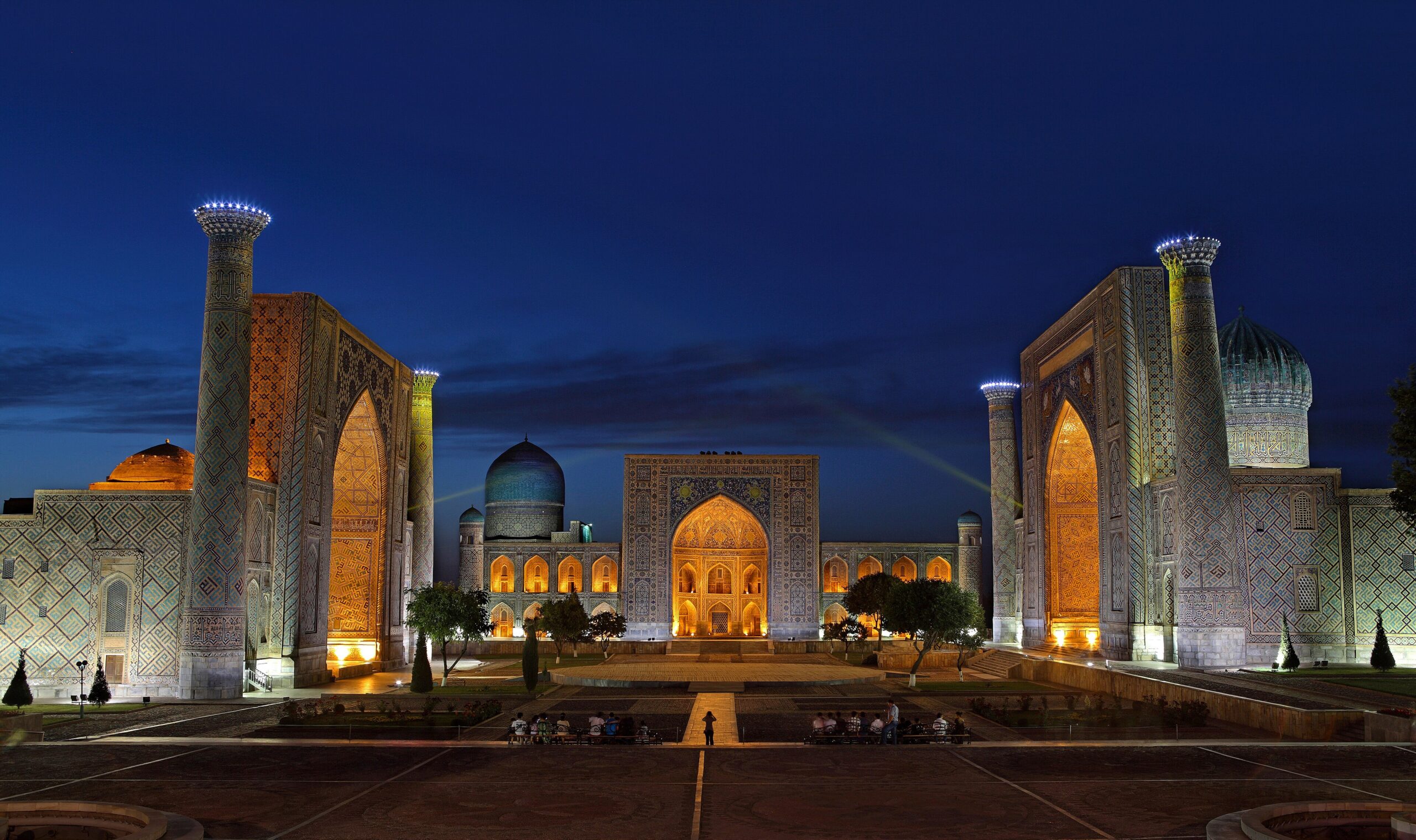
The Silk Road in tile and brick: Samarkand's Registan, Bukhara's old town and Khiva's walled Itchan Kala, linked from Tashkent by high-speed train.
Why visit
Why visit Uzbekistan
Uzbekistan offers three cities of very different character, all great trading towns of the Silk Road, along one rail line. Samarkand dates from the ancient city of Afrasiab in the seventh century BC and reached its height in the Temurid period of the fourteenth and fifteenth centuries; Alexander the Great took it in 329 BC, when it was known as Maracanda. Bukhara owes much of its layout to the Sheibanid period that began in the early 1500s, and its old town is smaller, lower and browner than Samarkand’s, which many travellers prefer. Khiva is the walled desert city at the end of the line.
Culture is also moving here: the first Bukhara Biennial, held in restored caravanserais and madrasas, opened in 2025 and ran for ten weeks.
Explore
What to see
In Samarkand, the Registan has a mosque and madrasas originally built in mud brick and covered with decorated ceramic tiles. The Bibi-Khanum Mosque and Mausoleum, the Shakhi-Zinda compound of mosques, madrasas and mausoleums, the Gur-Emir and the remains of Ulugh-Beg’s Observatory complete the core. Afrasiab, the ancient city destroyed by Genghis Khan in the thirteenth century, is preserved as an archaeological reserve.
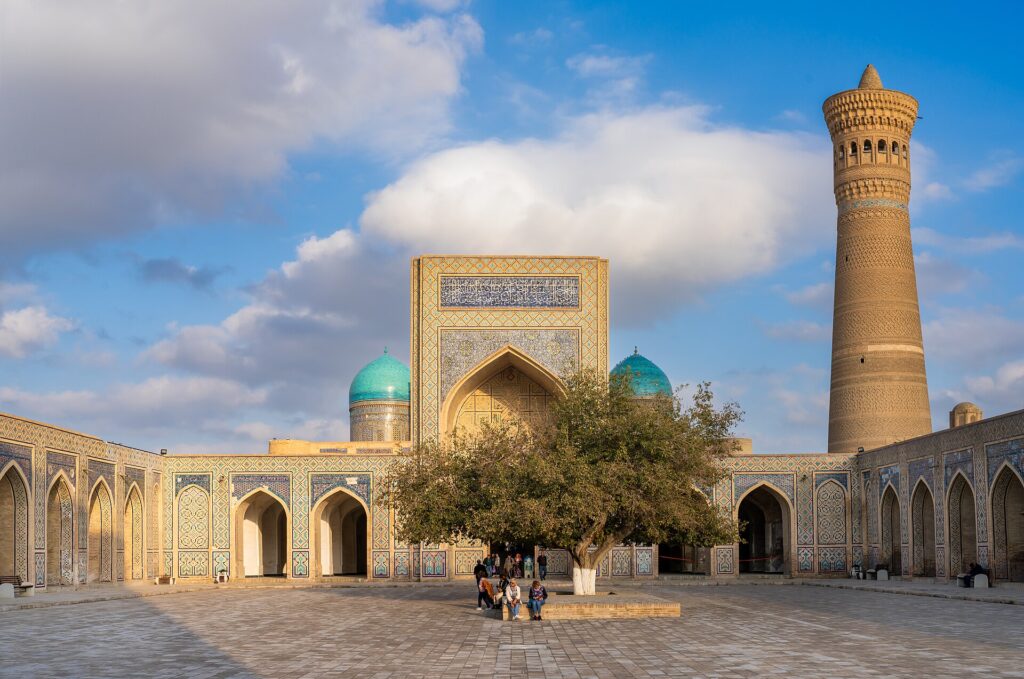
In Bukhara, the trading domes of Taki Sarafon and Taki-Tilpak-Furushan stand at major crossroads. The 17th-century madrasas include Abdullaziz-Khan (1652); the 11th-century Poi-Kalyan minaret and the Ismail Samani Mausoleum, a 10th-century tomb, are among the oldest monuments, and the Ark is a citadel rebuilt in the 16th century.
In Khiva, the inner town of Itchan Kala is closed by brick walls up to ten metres high and includes the Djuma Mosque, with a covered courtyard and 212 columns.
Dining
Where to eat in Uzbekistan
Uzbek cooking is built around plov, rice cooked with meat and carrots in a cauldron, which varies by region, with manti dumplings, samsa pastries and qurutob. In Tashkent, Caravan is a private house near the centre serving mainly Uzbek food with some European dishes; its signature dishes include plov in several regional styles, manti and qurutob.
Experiences
Experiences in Uzbekistan
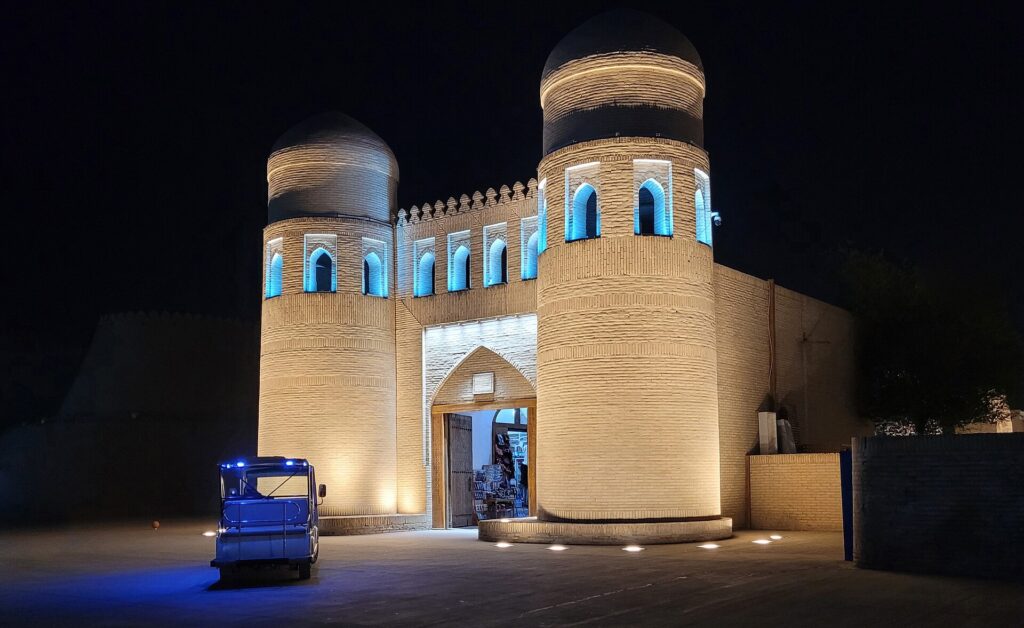 Cultural ImmersionWalk the walled town of KhivaA day on foot inside Itchan Kala, the mud-walled inner town of Khiva, among minarets, palaces and a mosque of wooden columns.Explore →
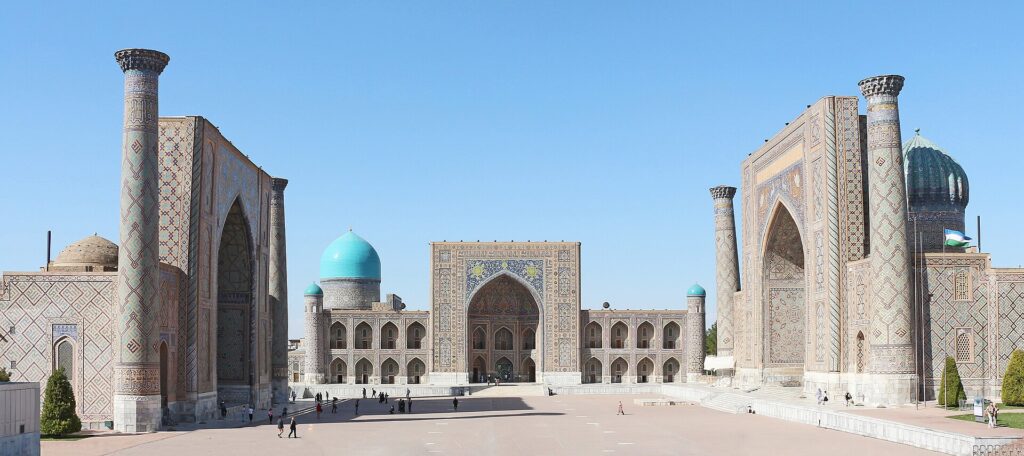 Cultural ImmersionStand in the Registan at SamarkandThe great square of Samarkand, enclosed by three tiled madrasas of the fifteenth and seventeenth centuries.Explore →
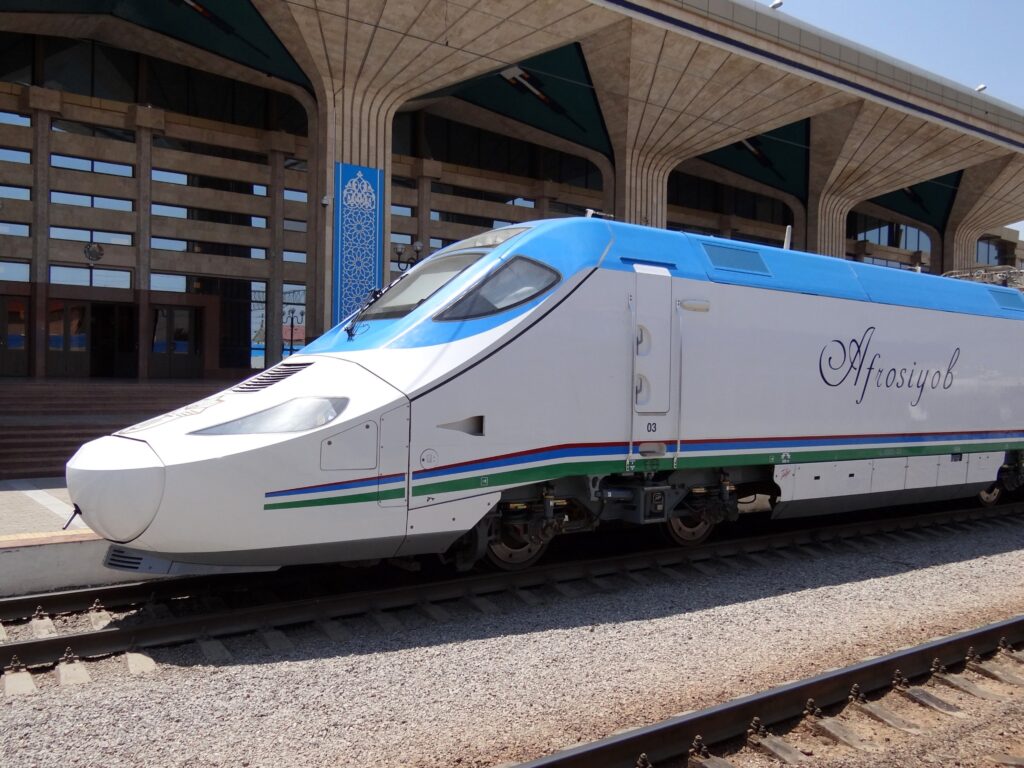
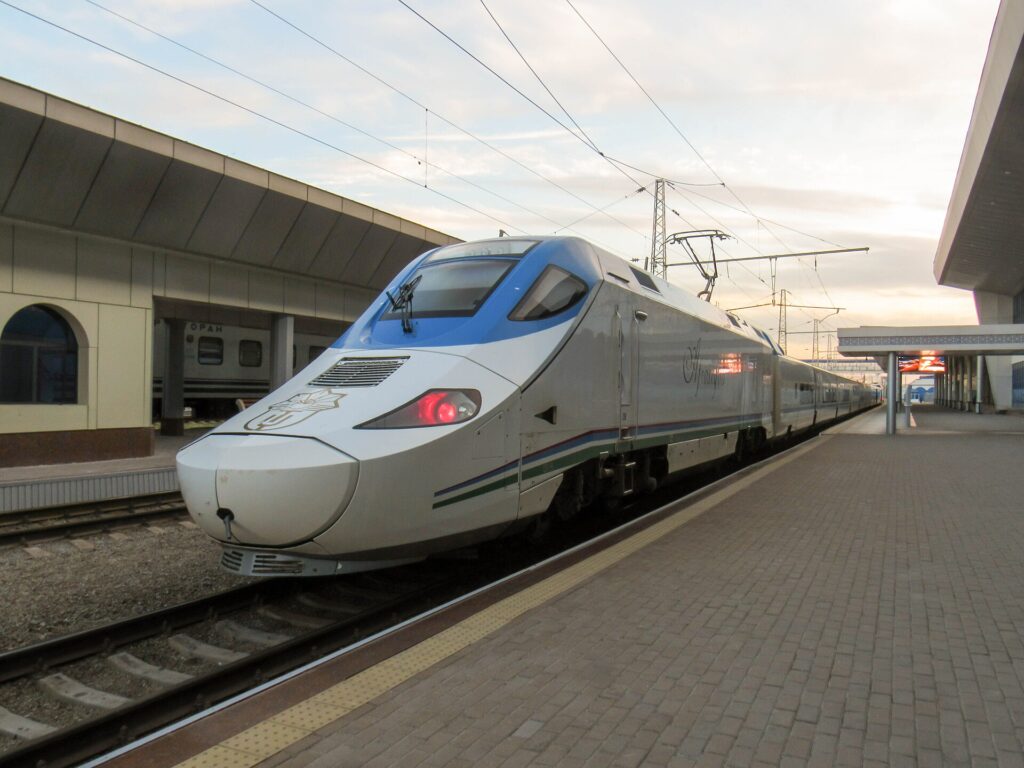 Rail JourneyTake the high-speed train along the Silk Road in UzbekistanA week by Afrosiyob high-speed train between Tashkent, Samarkand and Bukhara, with an extension to Khiva.Explore →
Before you go
Practical information
Best time to visit
Spring, late March to May, and autumn, September to early November, are the best times to visit. Summer temperatures can reach 37°C, with July often in the mid to high 30s and sometimes above 40°C, so sightseeing is best early or late in the day. January is one of the coldest months but skies are clear. Navruz is celebrated on 21 March.
Getting around
The Afrosiyob high-speed train links Tashkent and Samarkand in a little over two hours and Tashkent and Bukhara in about three hours and twenty minutes. Services now run on to Urgench and Khiva; the full journey from Tashkent to Khiva takes about seven and a half hours. Check timetables when booking, since services are new and tickets can sell out.
Practical notes
Uzbekistan has a visa-free regime with more than 90 countries, generally for up to 30 days, and an e-visa for others. Travellers must register their place of stay within three working days of arrival. Entry rules change, so confirm with the Uzbek authorities before travel. Some border zones do not allow photography.