Raja Ampat Is Chosen by Its Water: Schooner, Expedition Ship or Dive Resort
In the archipelago off New Guinea, the real decision is how to be on the sea. Each way of travelling passes through the same protected waters, and each pays for them.
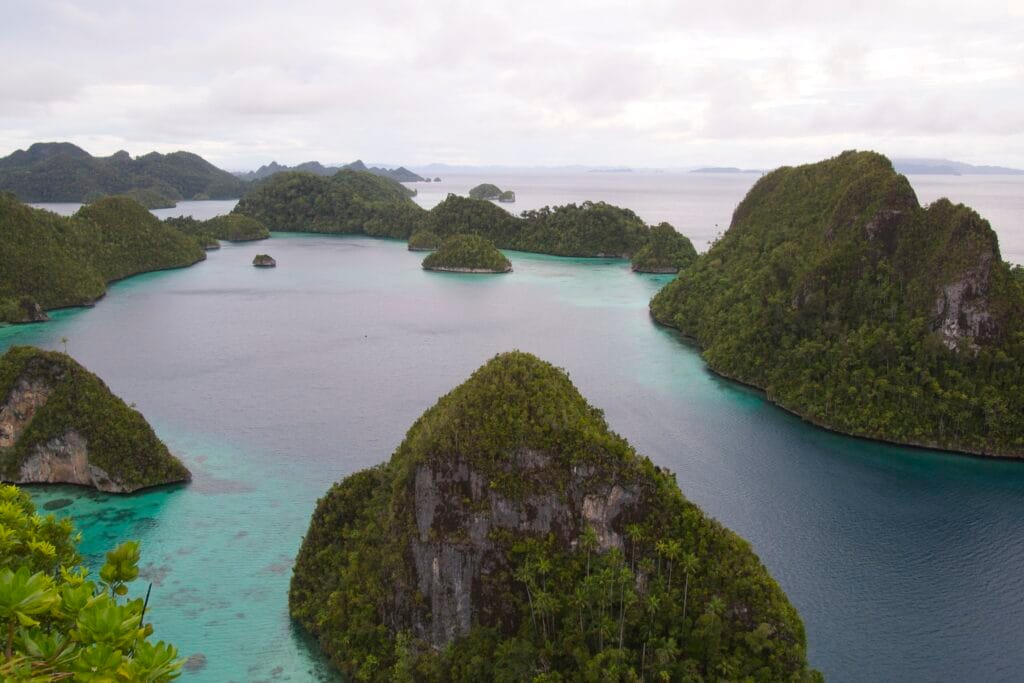
Most destinations are chosen by their hotels. Raja Ampat is chosen by its water. The archipelago off the Bird’s Head of New Guinea has more than 1,500 islands around four large ones, Waigeo, Batanta, Salawati and Misool, and almost nothing a visitor comes for is on land. The real decision is how to be on the sea: aboard a private schooner, on a small expedition ship, or from a dive resort on one of the islands. Each way of travelling passes through the same system of protected waters, and each pays for it.
A sea worth protecting
Raja Ampat lies in the Coral Triangle, and the wider Bird’s Head Seascape holds about 600 species of hard coral, some three-quarters of those known, and well over a thousand species of reef fish. The archipelago and its waters cover about 40,000 square kilometres. In 2007, after a marine survey by Conservation International four years earlier had brought local leaders and conservation groups together, ten marine protected areas were created; they now cover about two million hectares and take in close to half the reefs, seagrass beds and mangroves of Raja Ampat. Local communities patrol them, enforce the fishing rules and watch over tourism, and much of that work is paid for by visitors.
Three ways to be on the water
The first is a boat of your own. A private phinisi, the wooden schooner of South Sulawesi whose building tradition UNESCO recognises as intangible heritage, carries a handful of cabins, a crew and a dive deck, and its route is drawn around what its guests want: walls and reefs, lagoons among the limestone islets, villages, an early climb to a viewpoint. Its advantage is time, reaching a site before the day boats and leaving when the light is gone.
The second is a small expedition ship on a fixed season. Aqua Blu, a converted expedition yacht operated by Aqua Expeditions, follows the weather around eastern Indonesia and spends part of its year in Raja Ampat, among the mushroom-shaped islets, with guides for diving, snorkelling and kayaking and visits to villages ashore. It suits travellers who want the reefs and a high standard of comfort without organising a charter.
The third is to stay put and let the boats come to you. The dive resorts each sit on a single island and send their boats out to the sites around it: Sorido Bay on Kri, in the Dampier Strait, Papua Paradise on Birie, behind Batanta, and Misool in the far south, whose foundation monitors the reefs it helps to protect and reported in 2024 that fish biomass at its sites had more than doubled. A resort gives up the range of a boat for a house reef, a fixed room and a closer relationship with one stretch of sea.
The permit is the thread
Whichever way you choose, you pay twice. The marine park authority of the province sells an entry card, required before entering any of the protected areas and valid for twelve months, under a tariff set by provincial regulation in 2019; its revenue funds management and ranger patrols. Separately, the regency charges its own tourism fee, revised by regulation in 2025. Both amounts have changed in recent years, so the clear course is to ask the boat or the resort, in writing, for the total per person on the dates of travel.
The fees matter because the pressure is growing. Raja Ampat receives some 42,000 visitors a year, almost all of them from abroad, and liveaboards have multiplied: 218 tourist ships were recorded in 2024. On land, nickel has arrived. Mining began on Gag Island in 2017, and new concessions were granted on three northern islands in 2025, some inside the area UNESCO has declared a Global Geopark and near the best-known dive sites; after a public outcry four were revoked, and the concession on Gag remains.
So the choice of boat or bungalow is also a choice about who is paid and how many hulls sit in a bay at dawn. A private phinisi spreads its guests thin; an expedition ship concentrates them in season; a resort anchors its spending in one island and its villages. For a contrast in how another Indonesian marine park handles its visitors, the dragons and reefs of Komodo are reached the same way, by boat from a single gateway town.
Sources: WWF; Associated Press, via WTOP (April 2026); Raja Ampat Marine Park Authority; Bird’s Head Seascape; Raja Ampat Biodiversity.
Mentioned