Kumbhalgarh: The Fort Behind the Great Wall of India
Two hours north of Udaipur, a 15th-century fortress crowns a ridge of the Aravalli hills behind 36 kilometres of wall. It is the least crowded of the great forts of Rajasthan.
The forts of Rajasthan are among the great sights of India, and the best known of them, at Jaipur and Jodhpur, are seldom empty. Kumbhalgarh is different. It stands alone on a ridge of the Aravalli hills, 84 kilometres north of Udaipur, in country of forest and small farms, and many visitors to the state never reach it.
The fortress
Kumbhalgarh was built in the middle of the fifteenth century by Rana Kumbha, ruler of Mewar, the Rajput kingdom whose later capital was Udaipur. He is said to have built or restored thirty-two forts, and this was the strongest. His architect, Mandan, also wrote a treatise on building that survives.
The fort stands at about 1,100 metres. Its outer wall runs for 36 kilometres along the crests of thirteen hills, with rounded bastions and seven fortified gates. It is wide enough in places for several horsemen to ride abreast, and it is among the longest continuous walls in the world, which has earned it the name of the Great Wall of India. The wall encloses 268 hectares of land, with reservoirs, fields and more than 360 temples, most of them Jain.
At the highest point is the palace known as Badal Mahal, the palace of clouds, rebuilt in the nineteenth century, with painted rooms and a view on one side over the wooded hills of Mewar and on the other across the plains of Marwar towards the desert.
Its history
The rulers of Mewar withdrew to Kumbhalgarh when their capitals in the plain were threatened. The infant prince Udai Singh, who later founded Udaipur, was hidden here. His son Maharana Pratap, the Rajput hero who refused to submit to the Mughal emperor Akbar, was born in the fort. It was besieged many times and taken only once, in the 1570s, by a Mughal army, and then held only briefly. In 2013 UNESCO listed it with five others as the Hill Forts of Rajasthan.
Visiting
The drive from Udaipur takes about two hours through the hills. The climb from the main gate to the palace is steep and takes half an hour. The best time is the late afternoon, when the stone turns gold. After dark the walls are lit, and there is a sound and light show. Those who want to walk on the wall can follow it for several kilometres from the gate. The surrounding wildlife sanctuary has leopards and sloth bears, and guided walks lead through it.
Most travellers combine the fort with the Jain temple of Ranakpur, an hour to the west, whose marble hall of 1,444 carved pillars was built in the same reign. Both can be seen in a long day from Udaipur, or with a night in one of the country hotels near the fort. October to March is the season.
In Udaipur itself, Raffles Udaipur occupies an island in a lake outside the city. The luxury train described in our guide to the Maharajas’ Express stops at Udaipur on its journeys between Mumbai and Delhi.
Continue
More from Rajasthan
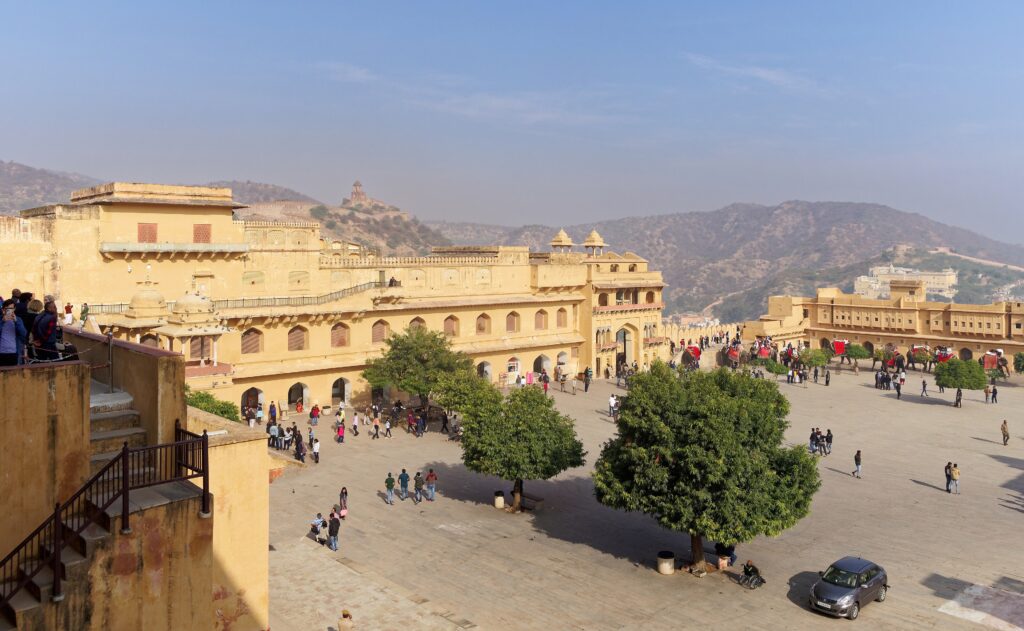 IndiaRajasthanForts, palaces and desert cities in north-west India, with fortress hotels.Read →
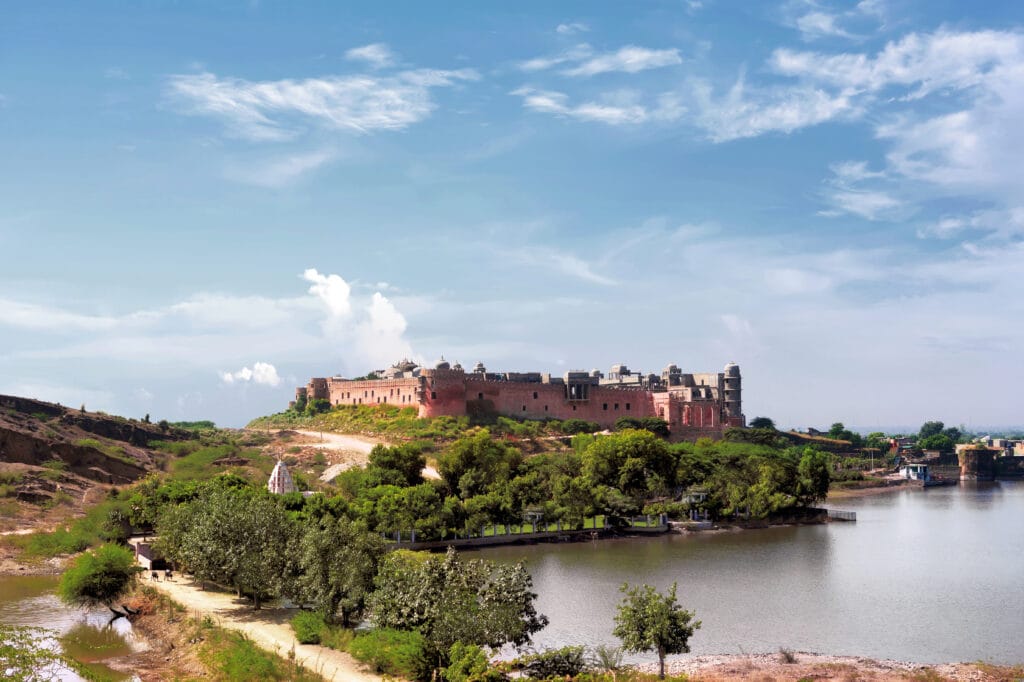 News · TravelSix Senses Fort Barwara Opens in RajasthanA decade-long conservation project turns a 14th-century Rajasthani fort.October 15, 2021Read →
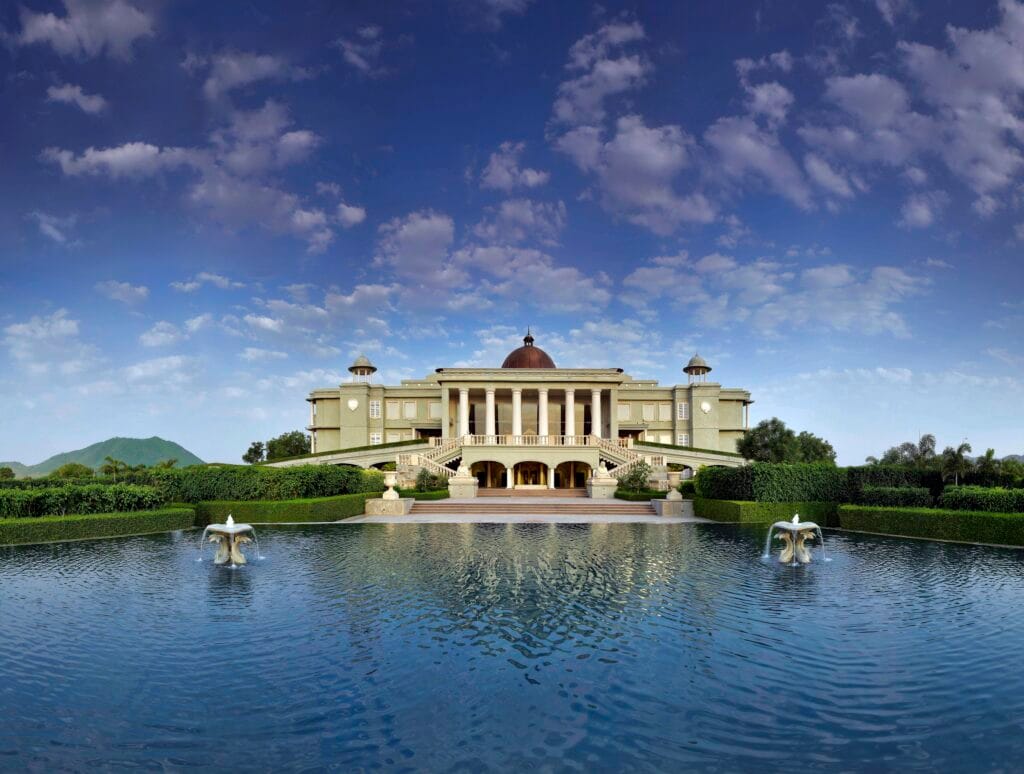 News · TravelRaffles Udaipur Opens as India’s First RafflesAccor brings the Raffles name to India with 101 rooms and suites on a 21-acre private island in Udai Sagar lake.August 4, 2021Read →News · CultureJaipur’s Walled City Joins the World Heritage ListUNESCO inscribed the walled city of Jaipur on 6 July 2019.July 6, 2019Read →