Kerry Hill, the Architect Who Gave Asian Resorts Their Roofs
From the Sukhothai in Bangkok to Aman Tokyo and Aman Kyoto, the Australian architect, who died in Singapore in 2018, shaped a tropical modernism of pavilions, water and shade.
Kerry Hill was born in Perth on 19 June 1943 and died in Singapore on 26 August 2018, at the age of 75. He studied at the University of Western Australia, graduating in 1968, joined the firm of Palmer & Turner in 1971 and managed its Jakarta branch from 1974 to 1978. In 1979 he founded Kerry Hill Architects in Singapore, the practice that would design some of the most admired hotels in Asia.
The hotels
The list begins with the Sukhothai in Bangkok in 1991 and Amanusa in Bali in 1992, followed by The Datai in Langkawi and The Chedi in Bandung in 1994. The Chedi in Chiang Mai (2003) and Amankora in Bhutan (2007) came next, then, late in his career, Aman Tokyo in 2014-15, Rah Falhu in the Maldives in 2018 and Aman Kyoto in 2019. One&Only Desaru in Malaysia followed in 2020.
The Kerry Hill touch
The tropical hotels share what is often called the Kerry Hill touch: steeply pitched pavilion roofs, shaded walkways and water features, built with local materials and local building practice. He disliked what he called plonk architecture, the identical design dropped onto any site. The Datai won him the Aga Khan Award for Architecture in 2001, and he received the Gold Medal of the Australian Institute of Architects in 2006 and was made an Officer of the Order of Australia in 2012.
Tokyo and Kyoto
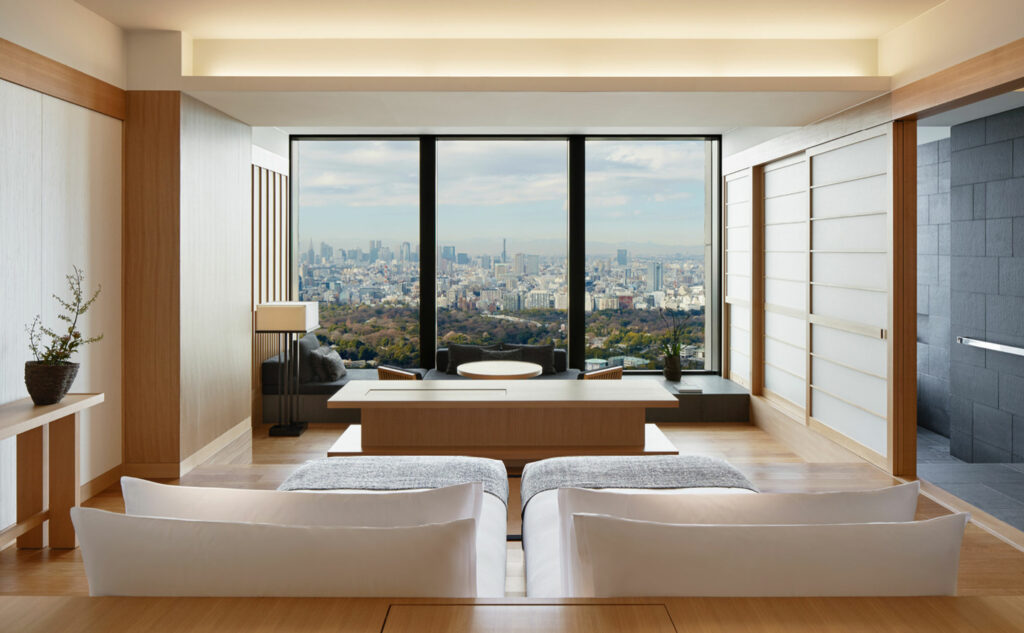
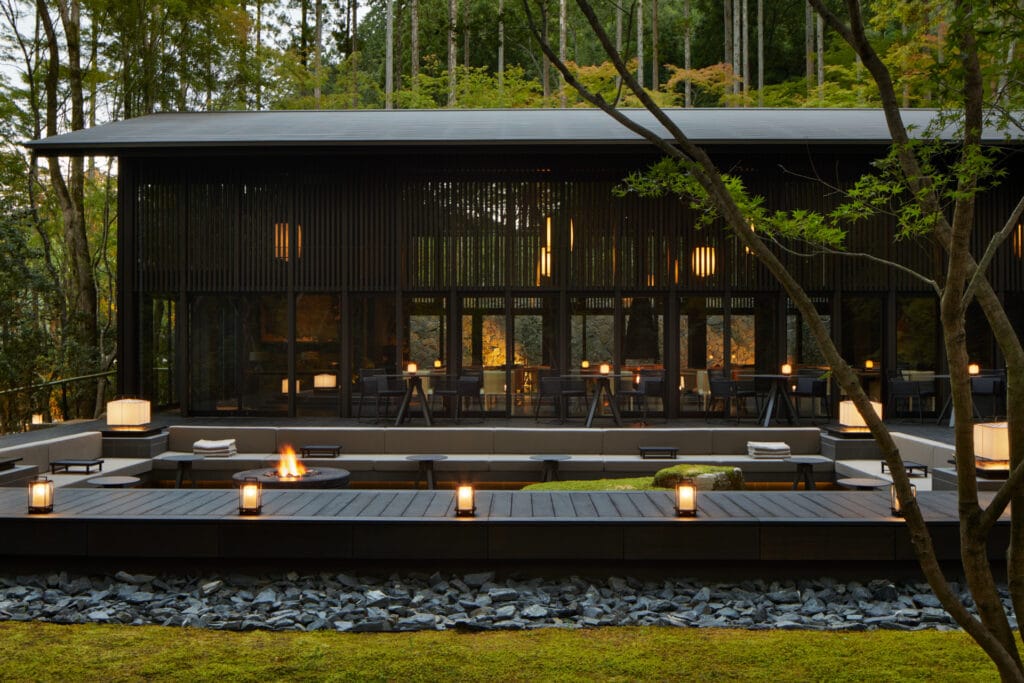
The Japanese hotels show how far the method travelled. At the top of Otemachi Tower, Aman Tokyo uses camphor wood, stone and washi paper, and has a lobby lit by a paper lantern of some 4,500 square feet. Aman Kyoto, in a forest garden near Kinkaku-ji, has six guest pavilions and 26 rooms, and the garden itself carries his name. The pavilion lineage goes back to the first Aman, designed by Ed Tuttle.