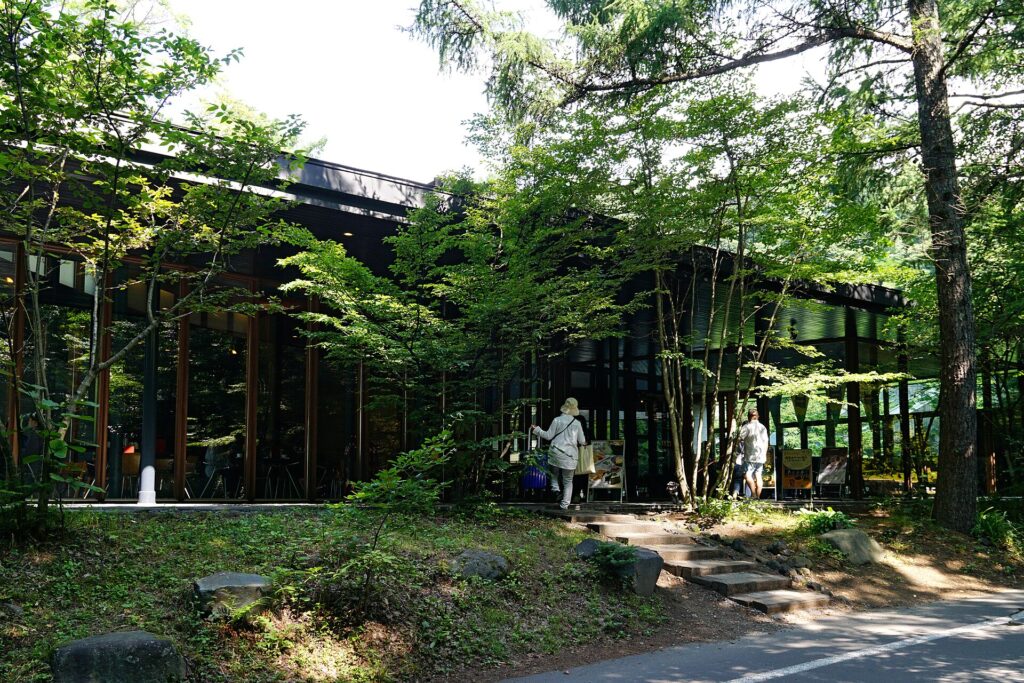
Hoshinoya Karuizawa
On the site of the Hoshino family's 1914 hot-spring inn, Rie Azuma and Hiroki Hasegawa built a village of pavilions around a century-old pond and the Yukawa stream, a Japan imagined as if it had modernised without copying the West.
- Neighbourhood
- Nagakura, Karuizawa
- Rooms
- 77
- Status
- Open
- Design
- Rie Azuma (Azuma Architect & Associates), architecture; Hiroki Hasegawa (Studio on site), landscape; Masanobu Takeishi, lighting
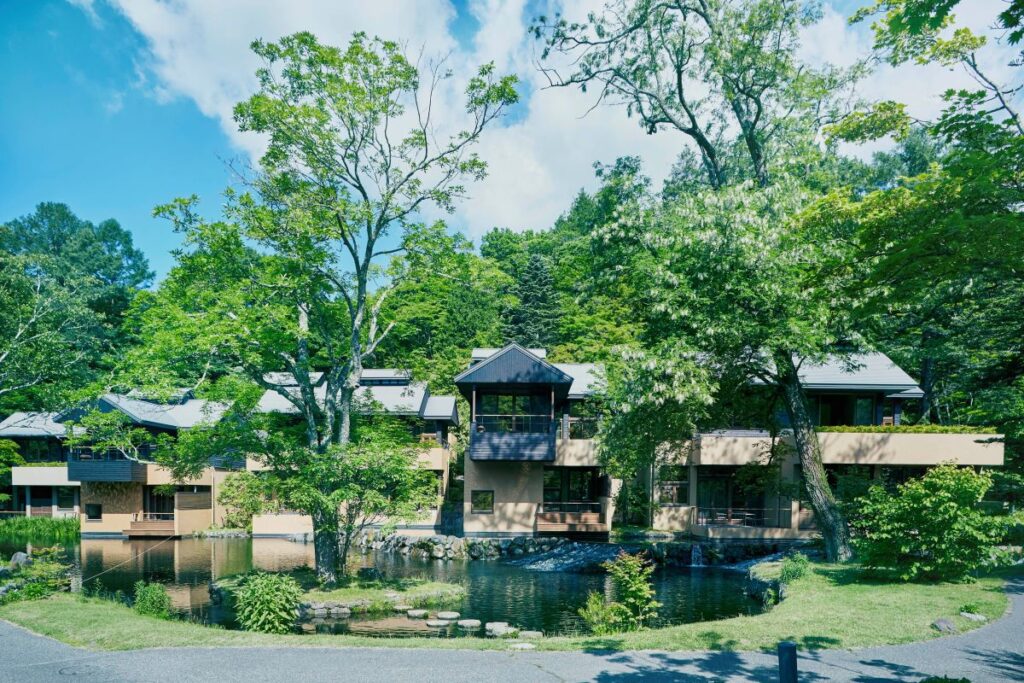
Photo: Hoshino Resorts
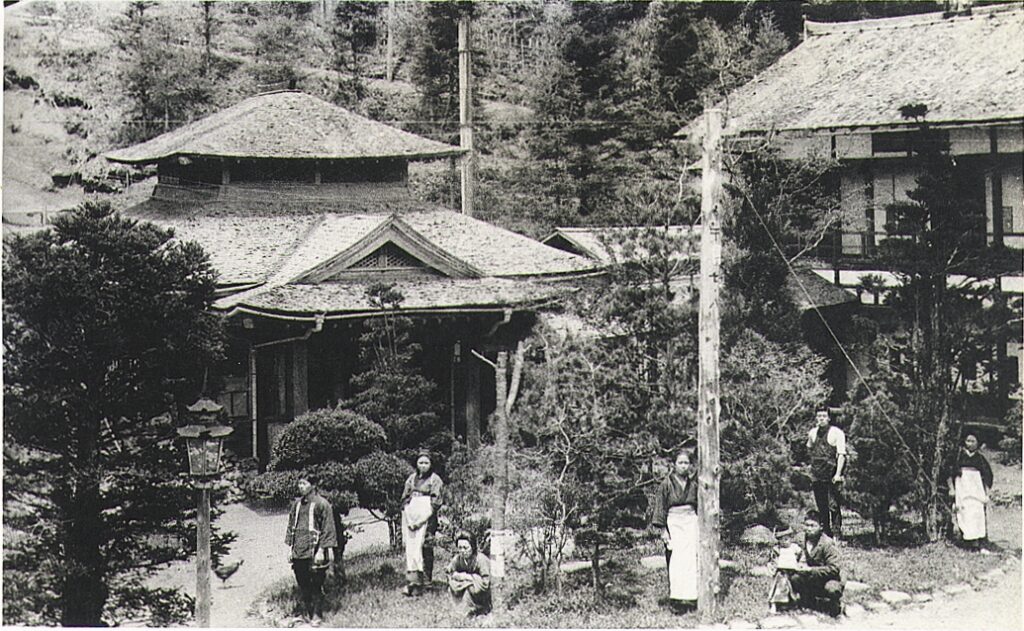
The Hoshino family, silk merchants, struck hot water at the foot of Mount Asama after years of drilling, and opened the Hoshino Onsen ryokan in 1914; OKYTO has told that story in its article on the Hoshino Resorts' Karuizawa origins. In 2005 the company rebuilt the old inn, on the same land, as the first Hoshinoya, the brand that later produced Hoshinoya Kyoto and Hoshinoya Tokyo.
The redevelopment was known inside the company as the Valley Plan. Yoshiharu Hoshino, the family's fourth-generation head, gave his architect, Rie Azuma, a classmate from Cornell, and the landscape architect Hiroki Hasegawa one instruction above all: do not pander to Western culture. Azuma read it as a call to imagine Japanese building as it might have evolved, rather than to reproduce tradition. The company describes the result as a stay in a what-if village, one that modernised while keeping its ecosystem and its own culture.
The placing of the buildings was argued over at length, and several were moved to spare trees; for Hasegawa it was the one thing that could not be compromised, because it is the foundation of the landscape. The critic Taro Igarashi wrote that it is not a hotel that stacks rooms but a set of separate buildings imagined as a village, reached once the car has been left behind.
Water organises it. The Yukawa, a clear stream of the Chikuma river system, feeds terraced paddies and a pond about a century old at the centre of the guesthouses, which step down the valley so that each looks over the roofs below. The 77 rooms are in three kinds: those by the river, whose ceilings catch the light off the water; those up the wooded slope towards the national Wild Bird Forest; and lane houses with their own waterways or courtyards. At dusk staff in a boat set lanterns floating on the stream. In the Meditation Bath a single spring links a bright room and a dark one.
About seven tenths of the energy the hotel uses comes from its own ground and water: geothermal wells, heat recovered from spent spring water, and hydro power from the river that crosses the property, where the family built what is described as Japan's first full-scale private small hydro plant in 1929. Its generators have been replaced, and it still runs. Karuizawa is a stop on the Hokuriku Shinkansen from Tokyo; for the town's restaurants, see OKYTO's guide to eating in Karuizawa.
Sources: Hoshino area; Divisare; Hoshino Resorts; Hoshino Resorts; Hoshino Resorts; artscape; FRaU; HOSHINOYA Karuizawa
Location
- Address
- 2157-428 Nagakura, Karuizawa-machi, Nagano, Japan
- Website
- Official website
- Reservations
- Check availability