The Phoenix Hotel Yogyakarta
Built in 1918 for a sugar king who lost everything in the Depression, the house has been the Splendid, the Yamato and the Merdeka before becoming the Phoenix.
- Neighbourhood
- Jalan Jenderal Sudirman, Yogyakarta
- Status
- Open
Kwik Djoen Eng was known in the Dutch East Indies as the Java Sugar King. In 1914 he and his brother founded the trading house Kwik Hoo Tong, which dealt in sugar, spices and tea and had branches across Java, and in 1918 he finished this house in the centre of Yogyakarta, on what is now Jalan Jenderal Sudirman. It is in the style the Dutch called Nieuwe Indische Bouwstijl, the New Indies style, which joined European Art Deco to Javanese building.
The Depression ruined him. In 1930 his businesses failed and De Javasche Bank foreclosed on most of his estates. The Yogyakarta house went to a local businessman, Liem Djoen Hwat, who opened it in the mid-1930s as the Hotel Splendid, and from then on its names follow the city's history.
When the Japanese army took Java in 1942 it became the Hotel Yamato and the army's headquarters in Yogyakarta. After the war, with Yogyakarta serving as the capital of the new republic, Liem recovered the building, and in 1951 he reopened it as the Hotel Merdeka, Indonesian for freedom. A suite on the second floor, still called Merdeka, was, by the hotel's account, used by Sukarno when his work brought him to the city.
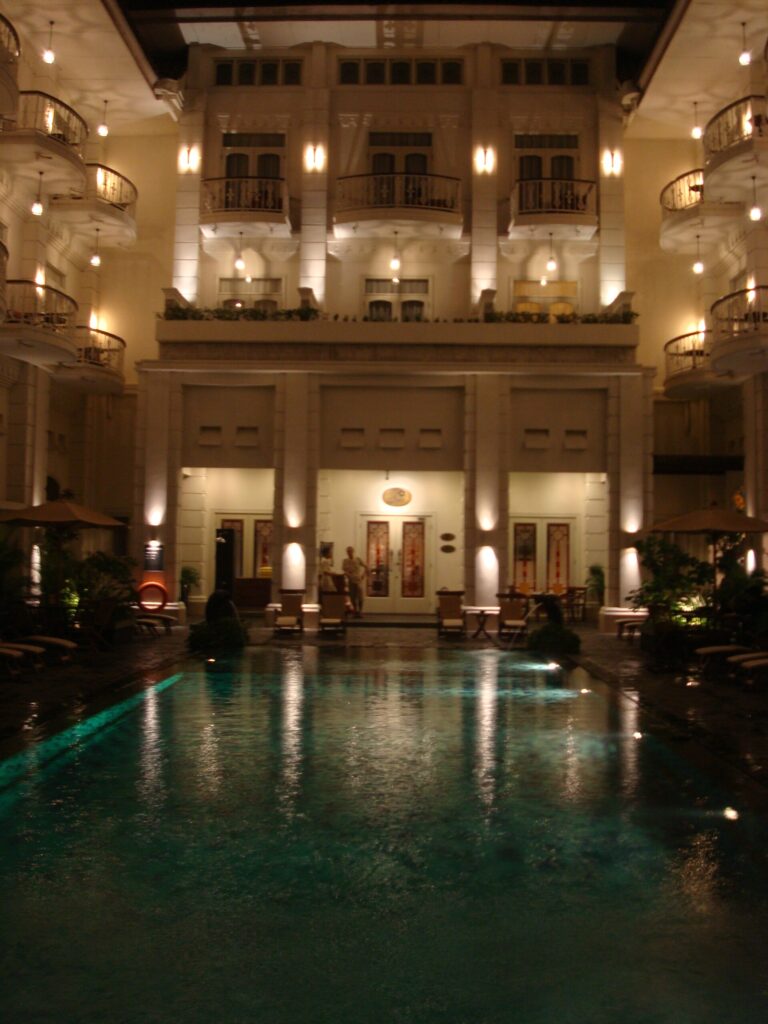
In 1996 the government listed the building as a national historical landmark, and in 2009 Accor took it over and, after a renovation, gave it its present name, The Phoenix; it now belongs to the group's Handwritten Collection. The rooms and the open-air restaurant are arranged around a courtyard pool, and the hotel runs a free tour of its own history. OKYTO's three days in Yogyakarta covers the city around it, and Tentrem is a larger, modern hotel in the city. Bale Raos cooks near the Kraton, and the temples of Prambanan and Borobudur, about 30 and 45 kilometres away, are day trips.
Kwik's name outlived his fortune in another city. In the 1920s he reclaimed land at North Point, on Hong Kong Island, for a sugar refinery that was never built. The streets near that land still carry the story: Java Road, Tong Shui Road, which means Sugar Water Road, and Chun Yeung Street, from the Cantonese reading of his name.
Sources: Historic Hotels Worldwide; Merdeka.com; Universitas Gadjah Mada; Gwulo; Accor
Location
- Address
- Jl. Jenderal Sudirman 9, Yogyakarta 55233, Indonesia
- Website
- Official website