Kyoto City KYOCERA Museum of Art Reopens After Renovation
Jun Aoki and Tezzo Nishizawa have reworked Japan's oldest public art museum still in its original building, adding a glass entrance and a contemporary wing.
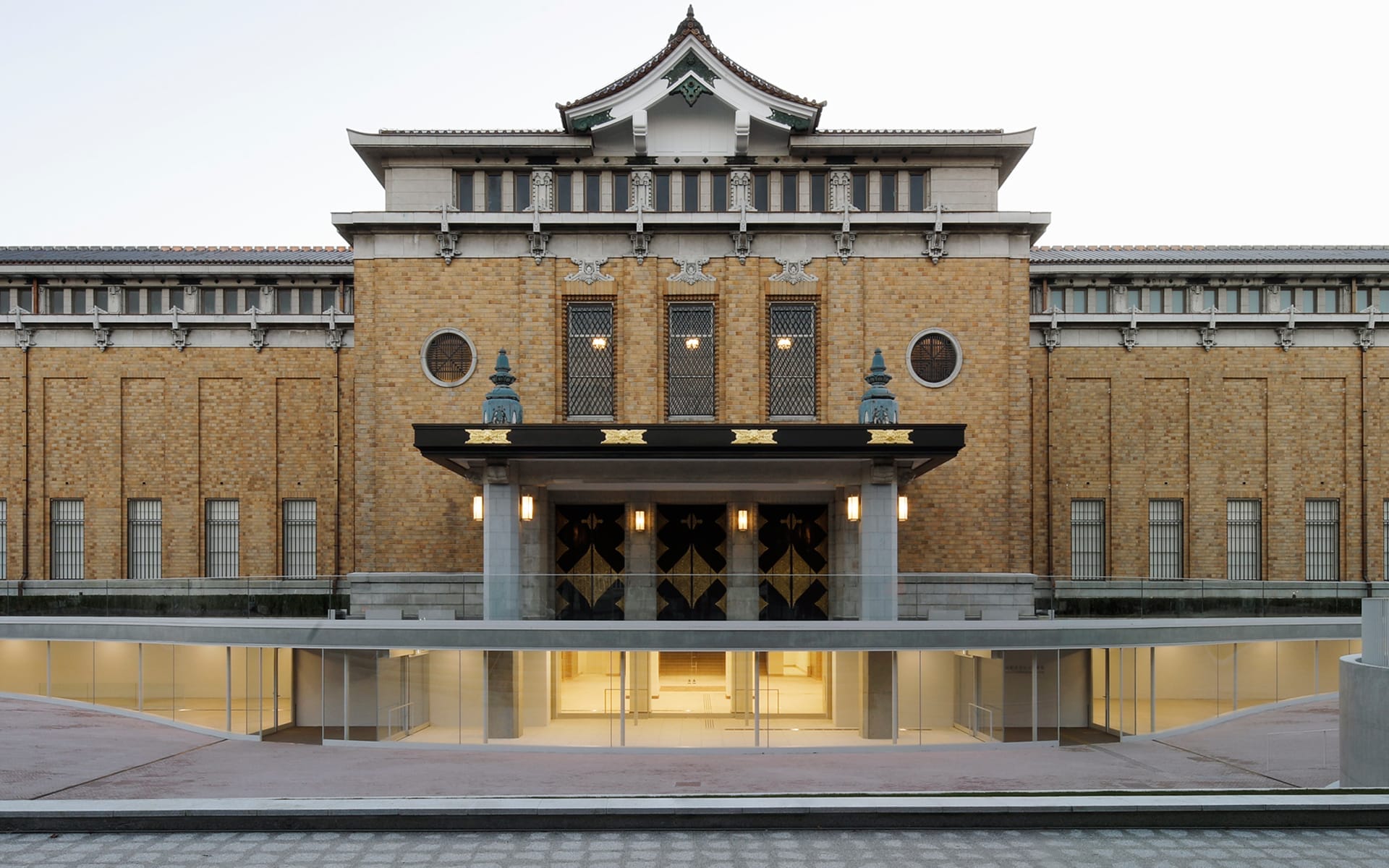 Photo: Takeru Koroda / Kyoto City KYOCERA Museum of Art
The Kyoto City KYOCERA Museum of Art reopened on 26 May 2020 after a three-year renovation led by architects Jun Aoki and Tezzo Nishizawa. The museum describes itself as Japan’s oldest public art museum still housed in its original architecture, and its reopening had been delayed by the pandemic.
The building was completed in 1933 as the Kyoto Enthronement Memorial Museum of Art, designed by Kenjiro Maeda in the Imperial Crown style, and was renamed the Kyoto Municipal Museum of Art in 1952. In 2017 Kyocera Corporation acquired the naming rights for 50 years in a ¥5 billion agreement. Aoki and Nishizawa won the redesign in a 2015 open competition against 18 other applicants, and Aoki is now also the museum’s director.
Their main intervention is a “glass ribbon”: a transparent band running along the façade below the original entrance, which creates a new way in and houses the museum café, ENFUSE, and the shop. Inside, the former large display room became a white Central Hall with oak parquet and a spiral staircase, linking three gallery levels and opening an axis to the Japanese garden, with views towards the Higashiyama mountains. The north courtyard has been covered with a glass roof, and the south courtyard restored.
Behind the original building, the new Higashiyama Cube is dedicated to contemporary art, with a roof terrace over the garden, while a smaller space called The Triangle is reserved for emerging artists. Aoki has said that carrying on the design style “doesn’t mean repeating the original design”, but reading the grammar of the old building.
The reopening programme included a survey of Kyoto art drawn from the 3,600-piece collection and “Hiroshi Sugimoto: Post Vitam” in the Higashiyama Cube, with the artist’s Glass Tea House “Mondrian” placed over the pond. Full details are on the museum’s website.