The Durbar Squares of the Kathmandu Valley: Kathmandu, Patan and Bhaktapur
Three rival kingdoms in one small valley each built a palace square crowded with temples. With four great shrines nearby, they form the seven monument zones of a World Heritage site. How to see them.
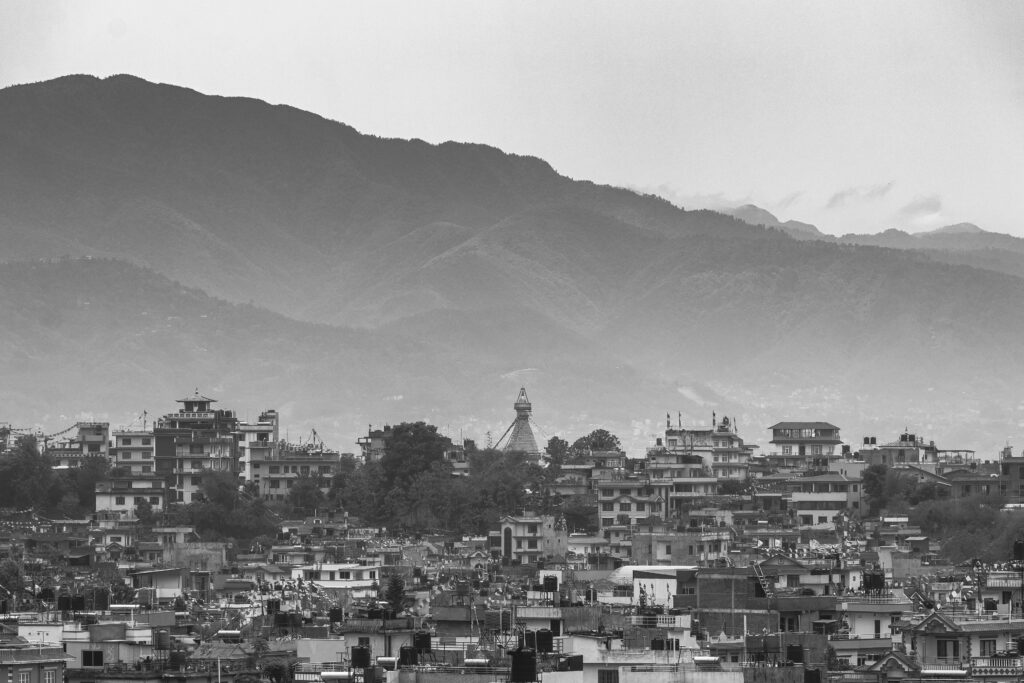
The Kathmandu Valley is a basin about 1,400 metres above sea level, ringed by hills, in the middle of Nepal. It is small. The three old cities within it, Kathmandu, Patan and Bhaktapur, are only a few kilometres apart. Yet the valley holds a dense concentration of historic monuments. UNESCO listed it as Kathmandu Valley in 1979, a single World Heritage property made up of seven monument zones: the three royal squares, the Buddhist stupas of Swayambhunath and Boudhanath, and the Hindu temples of Pashupatinath and Changu Narayan.
Who built them
The builders were the Newars, the people of the valley, who created a distinctive urban culture. Their cities are of brick and carved timber, with tiered pagoda roofs, sunken stone fountains and courtyards hidden behind the street fronts. Hindu and Buddhist shrines stand side by side and are often used by the same families.
The Malla dynasty ruled the valley from the twelfth to the eighteenth century. In its later period the kingdom was divided among three branches of the family, one in each city. The rival courts competed in building, and each laid out a square in front of its palace and filled it with temples. Durbar means a royal court, and these are the three durbar squares.
Kathmandu: Hanuman Dhoka
The square of the capital takes its name from the palace gate guarded by a figure of the monkey god Hanuman. It is the busiest of the three, with temples, a former royal palace and a house in which a young girl revered as a living goddess, the Kumari, resides. The surrounding lanes are a market, and traffic and trade press in on every side. It was badly damaged in the earthquake of 2015.
Patan
Patan, also called Lalitpur, lies across the Bagmati river to the south. Its square has the long brick front of the palace on one side, and facing it a row of temples in different styles, including a seventeenth-century temple to Krishna built entirely of stone. Part of the palace houses the Patan Museum, devoted to bronze and religious art. Patan is still a city of metalworkers, and their workshops are in the streets behind.
Bhaktapur
Bhaktapur, to the east, is the most town-like of the three squares, a living city rather than a monument zone. Beyond its palace square, with its Golden Gate, lie two further squares, one of them dominated by the five-roofed Nyatapola temple. Potters dry their work in an open square. It rewards an overnight stay.
The four shrines
Swayambhunath. A stupa on a hilltop west of Kathmandu, reached by a long stair, with the painted eyes of the Buddha on its tower.
Boudhanath. A very large white stupa on the old trade route to Tibet, now the centre of the valley’s Tibetan community, who walk around it in the evening.
Pashupatinath. The chief Hindu temple of Nepal, dedicated to Shiva, on the bank of the Bagmati, with cremation platforms on the river.
Changu Narayan. A temple of Vishnu on a ridge near Bhaktapur, and one of the oldest temple sites in the valley.
Loss and repair
The valley’s heritage has been under pressure for decades. From 2003 to 2007 UNESCO placed the site on its list of World Heritage in Danger, out of concern at uncontrolled building and the loss of authenticity around the monuments. Then, in April 2015, an earthquake killed thousands of people across the region and brought down temples in all three squares. Reconstruction has relied on the traditional crafts of the Newars, the woodcarvers, bricklayers and metalworkers whose trades are still alive, and rebuilding of the damaged monuments has been under way since. Check the current state of individual monuments before visiting, as scaffolding is possible.
For travellers
Allow three days. Give one to Kathmandu’s square and Swayambhunath, one to Patan and its museum, and one to Bhaktapur, with Changu Narayan on the way. Visit Boudhanath at dusk and Pashupatinath in the morning. The squares charge foreign visitors an entry fee; check the current arrangements locally. Non-Hindus may not enter the main temple at Pashupatinath but can watch from the opposite bank. October, November, March and April have the clearest weather.
The valley is the starting point for the mountains: the trek to Everest Base Camp usually begins with a flight from the Kathmandu region, and Shinta Mani Mustang is reached by way of Pokhara.