Imperial Hotel, Kyoto
In 1936 Gion's teahouses and geiko paid, without borrowing, for a theatre beside their dance hall; the Imperial Hotel kept two of its walls and 16,387 of its tiles, and opened 55 rooms behind them in March 2026.
- Neighbourhood
- Gion
- Opened
- March 2026
- Design
- Tokusaburo Kimura (original building, 1936); Obayashi Corporation (restoration and extension); Tomoyuki Sakakida, New Material Research Laboratory (interiors)

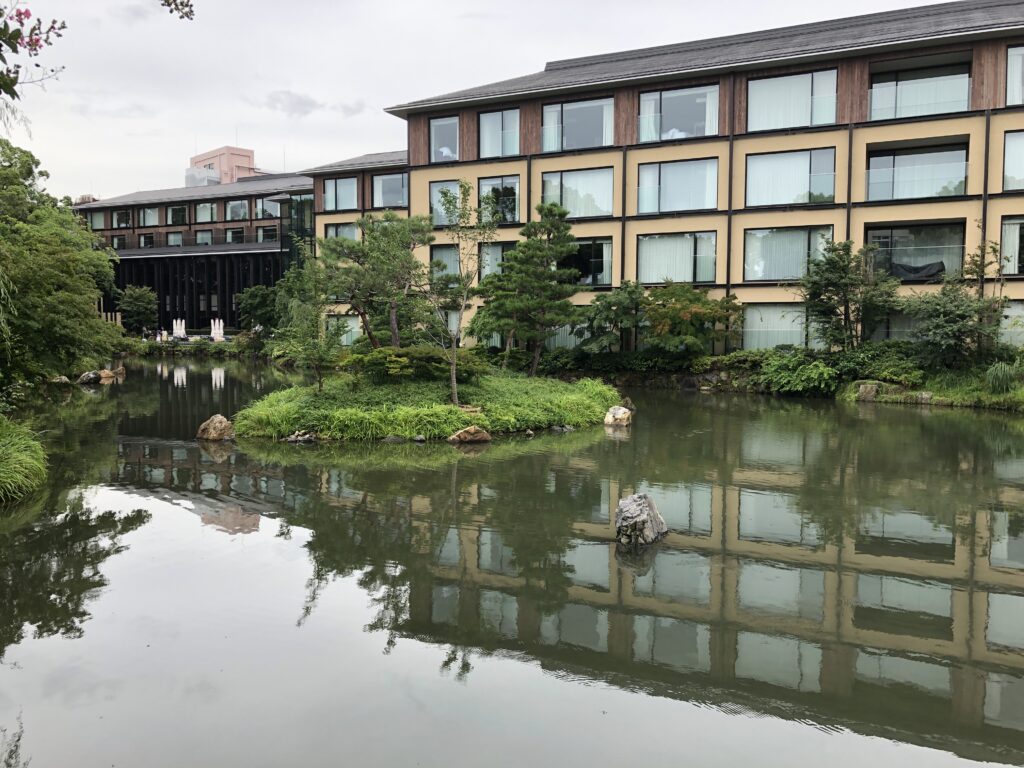
Photo: Imperial Hotel, Kyoto
The Yasaka Kaikan was finished in 1936 on the grounds of the Gion Kobu Kaburenjo, the hall where the geiko of Gion dance the Miyako Odori each spring. It was meant as a theatre for paying audiences beside it, and, in the words of Obayashi, the company that designed and built it, it was the proud hall that the teahouse guild and the geiko guild had raised together without borrowing. Its architect, Kimura Tokusaburo, was Obayashi's specialist in theatres; he gave the steel and concrete building an Art Deco body with tiers of copper-roofed eaves, and put the Gion Kobu emblem on the roof tiles.

Over the years it held plays, puppet theatre, films, a dance hall and a summer beer garden on the roof, and later Gion Corner, the nightly digest of the traditional arts. It was registered as a cultural property in 2001, but age and poor earthquake resistance had closed most of it by the time the Imperial Hotel signed an agreement in 2019 with the Yasaka Nyokoba Gakuen, the geiko school that owns the land.
The building is 31.5 metres tall; new buildings in the district may rise to twelve. Keeping its outward form let the project claim the exception for buildings of outstanding design, the first time Kyoto had granted it, and that decided the method.
Obayashi kept the south and west walls with their frame, demolished the rest under temporary steel bracing and rebuilt it to the old silhouette. Workers prised 16,387 of the original tiles off by hand, whole, and fixed them back; the terracotta reliefs, made in Tokoname like those of Frank Lloyd Wright's Imperial Hotel in Tokyo, were repaired and pinned in place. One of Obayashi's structural engineers said that in more than 35 years it was perhaps the hardest job he had done.
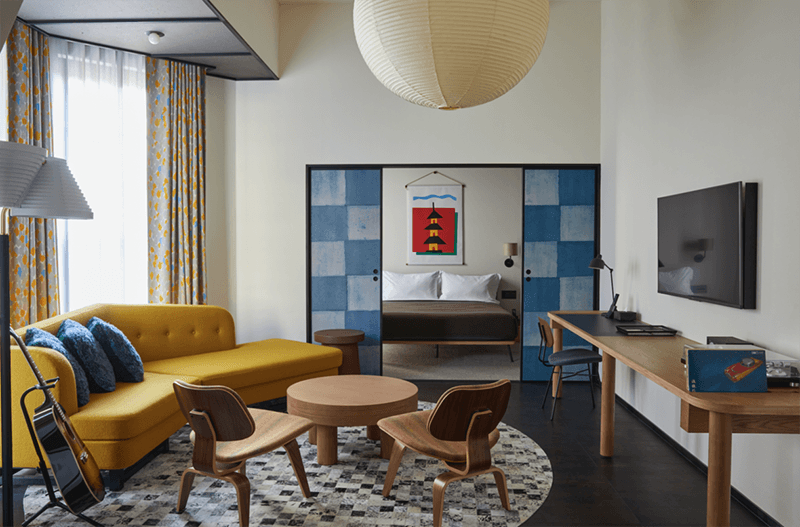
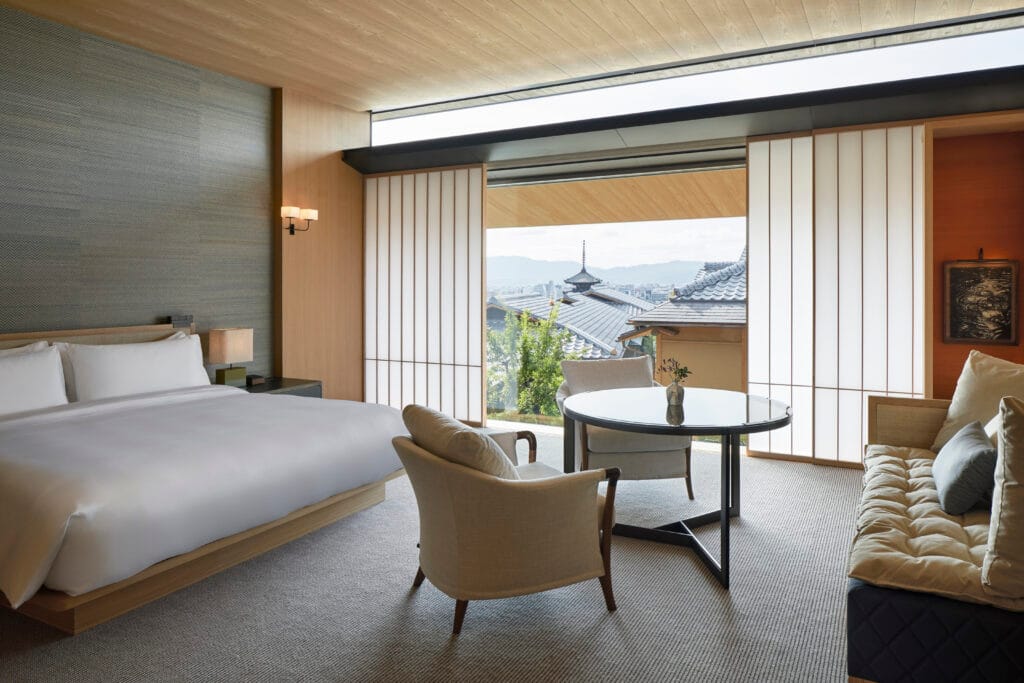
On 5 March 2026 the hotel opened with 55 rooms, the company's fourth hotel and its first new one in thirty years. Tomoyuki Sakakida of the New Material Research Laboratory, the practice he founded with Hiroshi Sugimoto, did the interiors: Ōya stone, the stone of Wright's building, at the entrance, the lounge's timber ceiling raked like a theatre's, and, in a low black-timber north wing, the first tatami rooms the Imperial Hotel has ever had. OKYTO's Kyoto architecture guide places it among the city's other conversions. In July 2026 the building kept its listing as a cultural property, under a new name: the Former Yasaka Kaikan.
Sources: Obayashi; Imperial Hotel; Imperial Hotel; Imperial Hotel; Travel Watch; Travel Voice; Wallpaper*; Imperial Hotel, Kyoto
Location
- Address
- 570-289 Gionmachi-Minamigawa, Higashiyama-ku, Kyoto 605-0074, Japan
- Website
- Official website
- Reservations
- Check availability