The Darjeeling Himalayan Railway: Riding the Toy Train
A two-foot-gauge line built in 1881 climbs 2,000 metres from the plains of Bengal to the tea gardens of Darjeeling by loops and zigzags. How to choose between the full journey and the short steam ride.
The Darjeeling Himalayan Railway was built between 1879 and 1881 to carry tea down from the hills of northern Bengal and to carry the British up to them in the hot season. Its track is two feet wide, and its small blue engines and carriages have given it the name of the toy train. In 1999 it became the first railway in Asia on the World Heritage list, to which other Indian mountain lines were later added.
The line
The railway runs for 88 kilometres from New Jalpaiguri, on the plain, to Darjeeling. It starts at about 100 metres above sea level and finishes at 2,200. The highest point is Ghum, at 2,258 metres, the highest railway station in India.
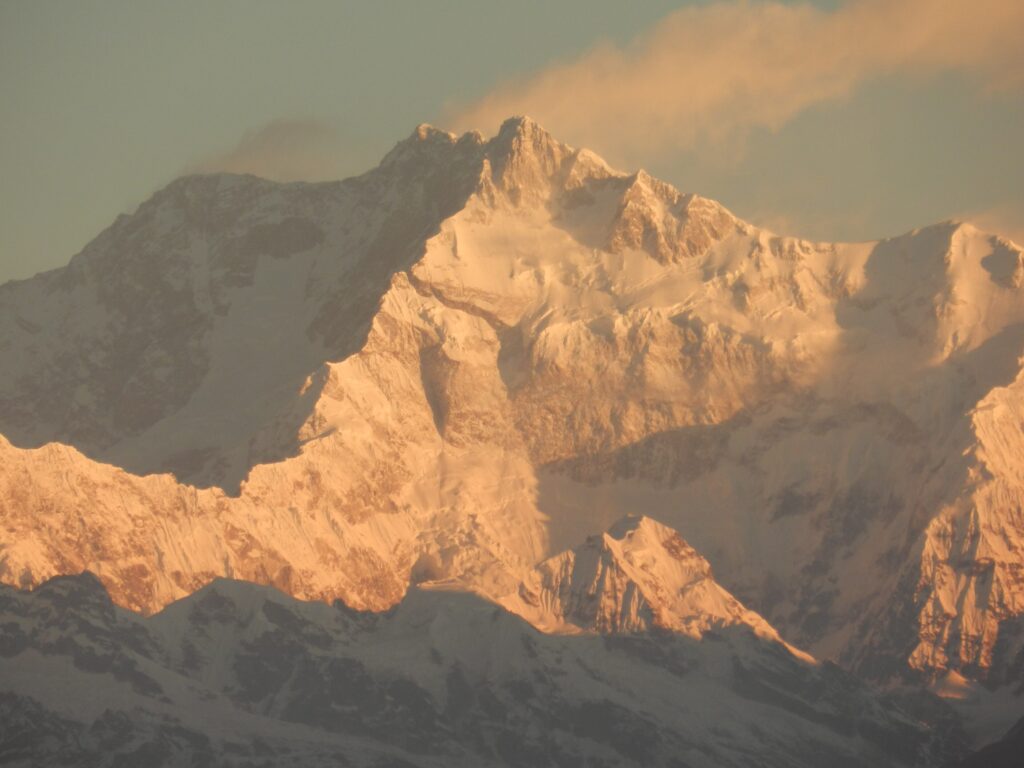
The engineers had no tunnels and little money. For much of the way the track is laid beside the road, crosses and recrosses it, and passes through the bazaars of the hill towns within reach of the shop fronts. Height is gained in two ways. At six places the train runs forwards into a dead end, reverses up a slope and goes forwards again, in a zigzag. At three places the line circles round and crosses over itself in a loop. The most famous is the Batasia Loop, just below Ghum, where the train turns through a garden with a view, on a clear day, of Kangchenjunga, the third highest mountain in the world.
The trains
The steam locomotives are of a single type, the B class, built in Britain between 1889 and 1925. A dozen or so are still in working order. They are small tank engines that carry their own coal and need a crew of several men, including one who rides at the front to drop sand on the rails. Most of the regular service is now worked by diesels built in the 1990s.
Which journey
The whole line. A daily train covers the full distance from New Jalpaiguri to Darjeeling in about seven hours, hauled by a diesel. It is a long day, and the road is twice as fast, but it is the only way to see the lower section through the forest and the zigzags. Services are sometimes suspended for months after landslides in the monsoon, so check before planning around it.
The joy ride. Several times a day a short train runs from Darjeeling to Ghum and back, a round trip of two hours. Some are hauled by steam and cost more. The train stops at the Batasia Loop for ten minutes and at Ghum for half an hour, where there is a small railway museum. This is what most visitors do, and it includes the best of the scenery.
Kurseong. A steam-hauled excursion also runs on some days between Darjeeling and Kurseong, the town halfway down, through tea gardens. It suits those who want more than the joy ride and less than the whole line.
Practical advice
Seats on all trains are reserved through the Indian Railways booking system, and the steam joy rides sell out in the high seasons of March to May and October to November. The mountains are clearest in October, November and early spring. The nearest airport is Bagdogra, close to New Jalpaiguri, with flights from Delhi and Kolkata.
Darjeeling itself is a town of tea estates, several of which take guests, a Tibetan refugee centre and a mountaineering institute founded by Tenzing Norgay. It combines with Sikkim to the north or with Bhutan, whose border is four hours to the east; our article on travel to Bhutan explains the entry rules.
For other great railways of the continent, including the tea-country line in Sri Lanka and Taiwan’s Alishan Forest Railway, see our guide to Asia by train.