Bill Bensley’s Hotels in Asia: A Guide to the Storyteller of Resort Design
An invented university in Vietnam, an explorers' camp in Bali, an opera house in Hanoi, a ranger station in Cambodia. How to read the Bangkok designer's work, and which hotel to choose.
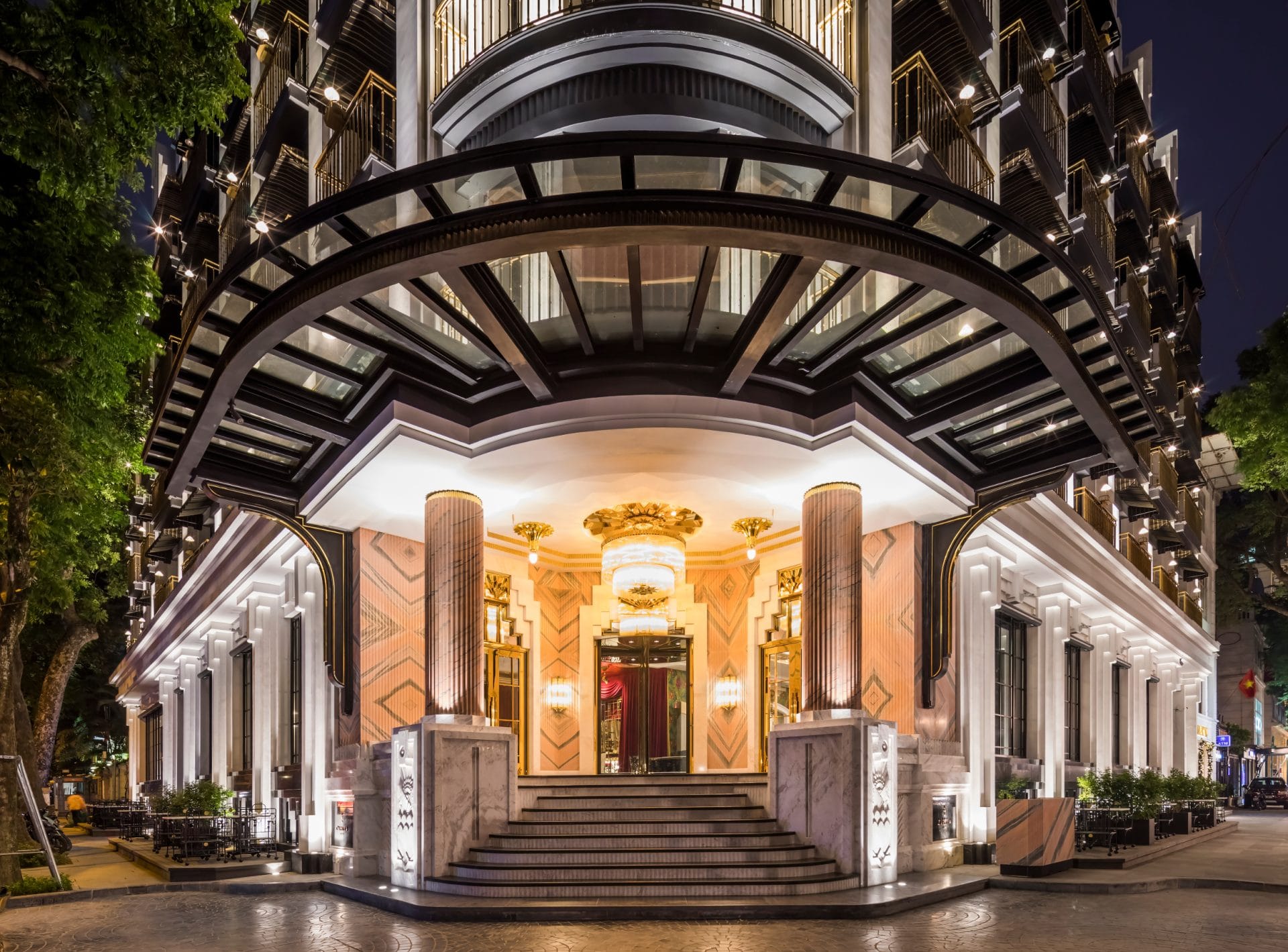 Photo: Capella Hanoi
Bill Bensley has designed more than two hundred hotels and gardens, most of them in Asia, from a studio in Bangkok that he has run since 1989. He trained as a landscape architect in California and at Harvard, and came to hotels through their gardens. His buildings are easy to recognise. Each begins with a story, usually invented, and the story is then carried into every object in the place, down to the door handles and the staff uniforms. He describes himself as a maximalist, and his motto is that more is not enough.
The six hotels below, all covered in our pages, show the range of the method.
The invented history: JW Marriott Phu Quoc
JW Marriott Phu Quoc Emerald Bay, opened in 2017, is presented as the restored campus of a French colonial university that never existed. Wings are departments, the bar is the Department of Chemistry, and thousands of antiques support the fiction. It is the fullest example of his narrative approach and the best choice for families and for anyone who enjoys a joke carried through with complete seriousness.
The camp: Capella Ubud
Capella Ubud, opened in 2018, is a camp of 22 tents in the forest north of Ubud, each furnished for an imaginary member of a 19th-century Dutch expedition: the cartographer, the naturalist, the captain’s wife. No trees were cut to build it. It is intimate, expensive and theatrical, and suited to couples. See our report on its opening.
The cause: Shinta Mani Wild
Shinta Mani Wild, opened at the end of 2018 in Cambodia’s Cardamom forest, is Bensley’s own project. He and his partner bought a logging concession to keep it standing and built 15 tents along a river to pay for its protection. Guests arrive by zip line and go on patrol with rangers. It is the hotel he is proudest of and the one where design serves a purpose beyond itself.
The city stage: Capella Hanoi
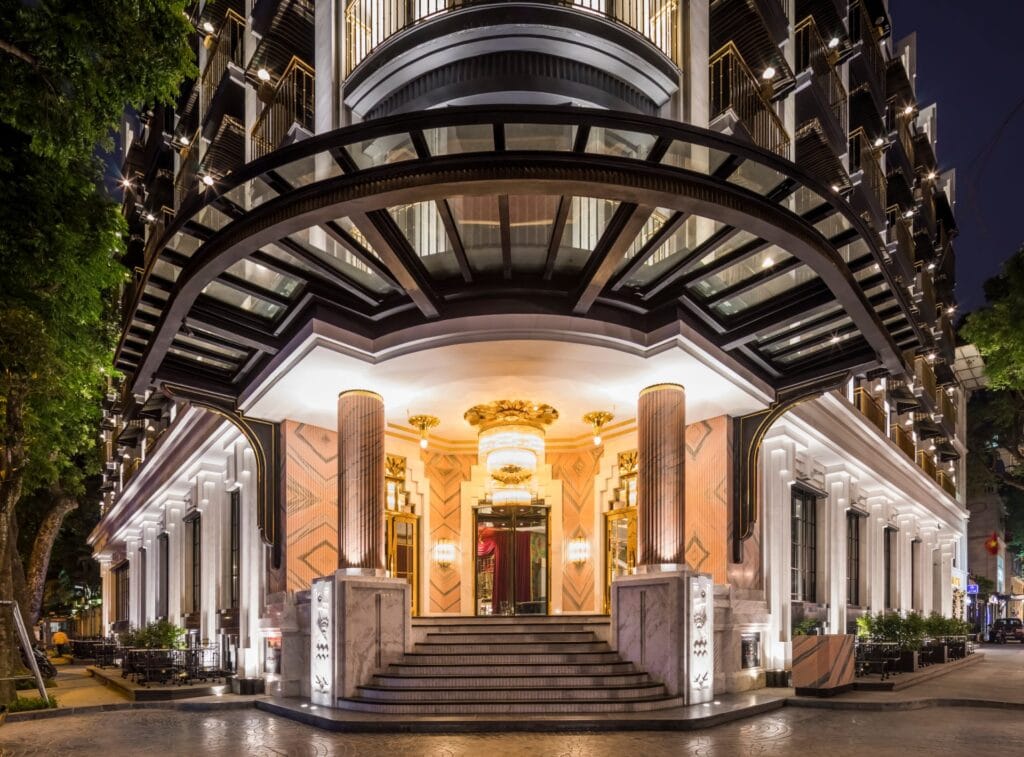
Capella Hanoi, near the Opera House, imagines a hotel of the 1920s where singers, composers and set designers stayed. Each room is dedicated to a character from that world. It shows how the method works in a small urban building, and it is the most atmospheric address in the city after the Metropole. See our report on its opening.
The heritage town: Rosewood Luang Prabang
Rosewood Luang Prabang is a group of villas and tents beside a waterfall outside the old Lao capital, designed as the hill station of a French explorer. It is quieter in tone than the others and makes a good pairing with the temples of the town.
The restrained one: JW Marriott Jeju
JW Marriott Jeju, opened in 2023 on the cliffs of Korea’s southern island, takes its theme from farming and from the island’s women divers. It is low, calm and built of basalt and timber, and shows that Bensley can work without spectacle when the landscape asks for it.
What they share
Three things recur. The gardens are as carefully designed as the buildings, as one would expect of a landscape architect. Local craftsmen are used on a large scale, and old materials and antiques are reused in quantity. And in recent years Bensley has argued, in a manifesto addressed to hotel owners, that resorts should leave their sites richer in nature than they found them, a principle he applied at Shinta Mani Wild and Capella Ubud.
His earlier work includes several Four Seasons resorts in Thailand and the gardens of many hotels now considered classics. For travellers, the simplest guide is this: choose Phu Quoc for fun, Ubud for romance, the Cardamoms for adventure and Hanoi for a city break.