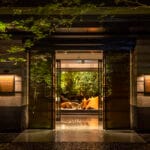
In this small hot-spring town near the Sea of Japan, the whole street is the spa. Guests leave their ryokan in a cotton robe and wooden sandals and walk from one public bathhouse to the next along a willow-lined river.
Duration1 to 2 nights
Best periodAll year; November to March for snow crab and winter bathing, spring for cherry blossom
StartsKinosaki Onsen station, Toyooka, Hyogo (about 2.5 hours from Kyoto or Osaka by limited express)
LevelEasy: flat walking between bathhouses; communal bathing without swimwear, separated by gender
Kinosaki Onsen is a hot-spring town in Toyooka, in the north of Hyogo prefecture, close to the Sea of Japan. Its history as a bathing place goes back some 1,300 years, and it has kept a way of doing things that most onsen resorts have lost: here, people do not stay inside their hotel to bathe. They go out.
What the experience is
The town has seven public bathhouses, called sotoyu: Satono-yu, Jizo-yu, Yanagi-yu, Ichino-yu, Goshono-yu, Mandara-yu and Kono-yu. Each has its own architecture and its own story. Goshono-yu is modelled on the Kyoto Imperial Palace and has an outdoor bath facing a waterfall; Ichino-yu looks like a kabuki theatre and has a bath set into the rock; Kono-yu, at the quiet end of town, is the oldest; Satono-yu, beside the station, is the largest and most modern.
The custom is called sotoyu meguri, the tour of the outside baths. Your ryokan lends you a yukata, a light cotton robe, and a pair of geta, wooden sandals, and gives you a pass to all seven baths. You then walk from one to the next along the Otani River, under willows and over small stone bridges, at your own pace. The town describes itself as a single inn: the station is the entrance, the street is the corridor, the ryokan are the rooms and the bathhouses are the bath. Nobody expects you to visit all seven; three or four in an evening and a morning is plenty.
The rest of the stay follows the same rhythm: a kaiseki dinner served at the inn, a ride on the ropeway to Onsen-ji temple on the hill above the town, and, in winter, snow crab from the nearby coast.
When to go
Kinosaki works all year. Winter is the season for crab and for bathing outdoors in cold air, and it is the busiest time. Spring brings cherry blossom along the river, and summer evenings have fireworks.
Getting there
Direct limited express trains run from Kyoto and from Osaka in about two and a half hours. The town is small and flat, and everything is within a 15-minute walk of the station.
Why OKYTO recommends it
Because it is the clearest introduction to Japanese bathing culture there is, and because the pleasure is shared: by dusk the whole street is in yukata, and the sound of wooden sandals on the bridges is part of the stay.